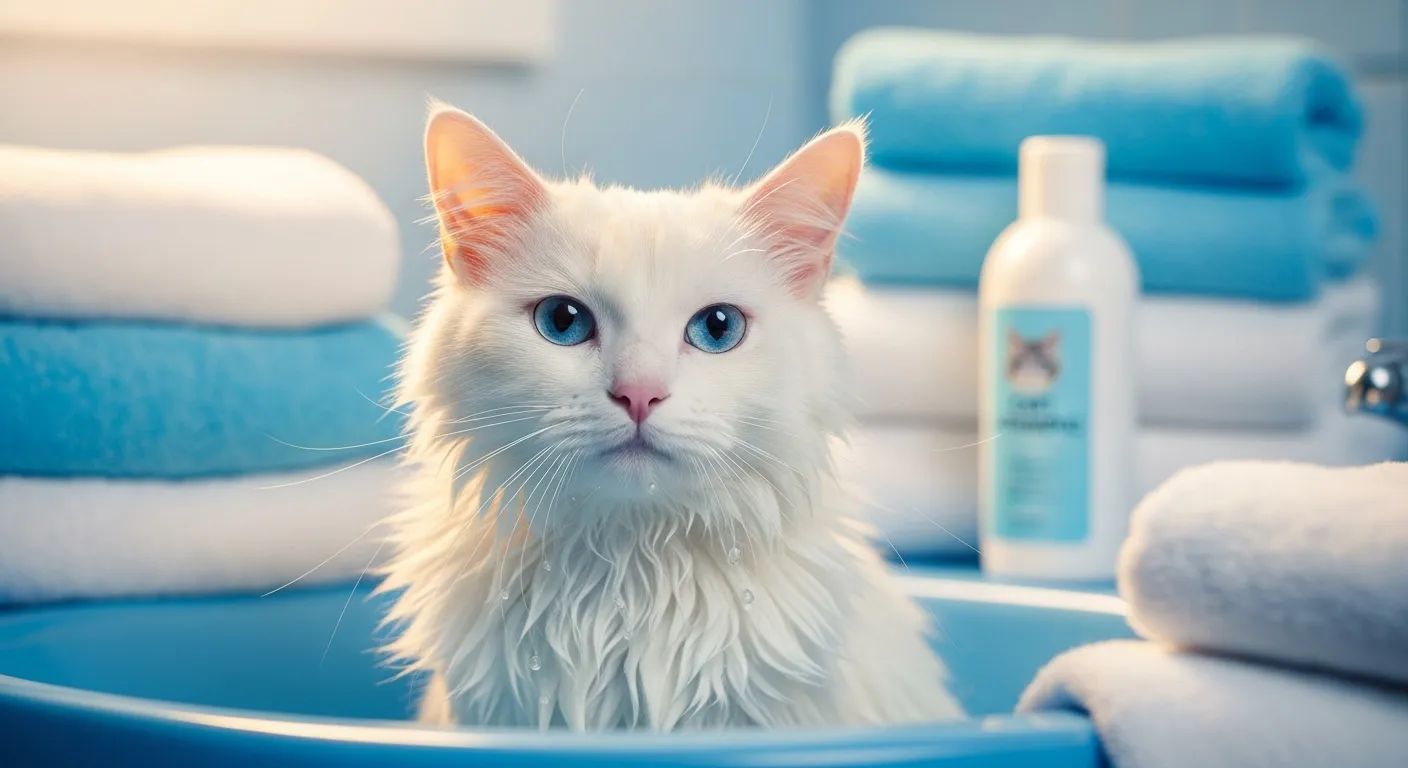
Bathing a cat can seem tough, but with the right approach, it stays calm and secure. Most cats handle their own cleaning well through licking and grooming. Still, certain cases call for a bath, like when they get into dirt or sticky spots. This guide covers the basics to make the process smooth, based on advice from vets and pet care groups.
When a Bath Makes Sense
Cats rarely need baths since they groom themselves daily. Vets note that their natural habits keep them clean in most situations.
- Give a bath if your cat rolls in something harmful, such as oil or paint. Quick action removes toxins before they cause issues.
- For cats with skin problems, like infections or allergies, a medicated wash might help. Always check with a vet first for the right product. If you notice signs of discomfort, try our pet symptom checker for initial insights.
- Hairless breeds, such as the Sphynx, build up oils on their skin and may need weekly washes. Learn more in our Sphynx cat grooming needs guide. Long-haired types benefit from one every few months to avoid mats. Older or heavy cats that struggle with self-care could use more frequent help.
- If someone in your home has allergies, bathing reduces dander and saliva on the fur. Limit to once a week to prevent dry skin. Use wipes between sessions. For dandruff concerns, see our post on why does my cat have dandruff.
If your cat fights water strongly, try wipes or visit a groomer instead. Some cats never adjust, so force could lead to stress or harm. Curious about their aversion? Read our piece on why do cats hate water.
Gather What You Need
Set up everything ahead to keep things quick and reduce worry. A helper can hold the cat while you wash.
- Pick a closed space, like a bathroom, warmed to about 80 degrees or more. Run hot water first to steam up the room for young kittens.
- Use a sink, tub, or large basin with a non-slip mat at the bottom. Fill with 4 to 8 inches of warm water—not hot—to let the cat stand steady.
- Have cat-safe shampoo ready. Avoid human products due to pH differences that irritate skin. Opt for fragrance-free, tearless types or mild dish soap like Dawn for tough dirt.
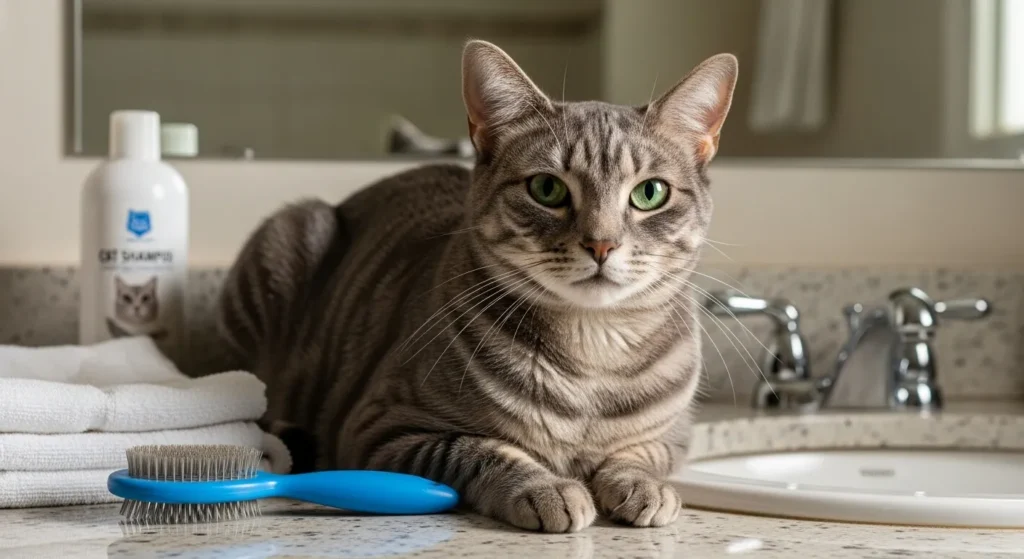
- Other items: Towels for drying, a cup or pitcher for rinsing, washcloth for the face, comb or brush, nail clippers. Put cotton balls in ears and mineral oil drops in eyes to shield from water.
Trim nails and brush the coat first to remove loose fur or knots. Skip the bath if mats remain, as they trap soap. For nail care details, check our guide on how to trim cat nails safely.
Steps for the Bath
Keep sessions brief. Speak softly to reassure your cat throughout.
- Place the cat gently into the water, holding the scruff lightly for support while backing them in to face away from you. This cuts scratch risks.
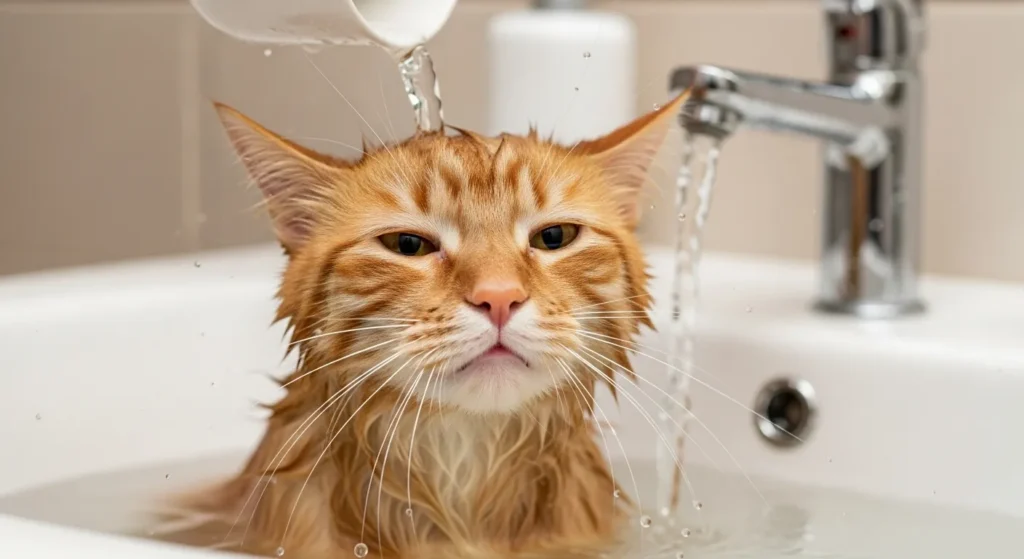
- Wet the fur starting from the neck down to the tail, using a cup, pitcher, or low-pressure spray. Avoid the head, eyes, and ears. Use a damp cloth for the face.
- Apply a small bit of shampoo, working it in with soft rubs from back to front. Let medicated ones sit if directed by a vet. Stay steady to help the cat relax.
- Rinse well with warm water until no suds show. Leftover soap can bother the skin.
If the cat gets upset, pause and try again later. For very young ones, support their body fully.
Dry and Reward After
Drying fully prevents chills, mainly for kittens or short-haired types.
- Wrap in a towel and pat softly to soak up water. Avoid hard rubs that tangle fur. Use more towels for longer coats.
- If the cat allows, dry with a blower on low heat and speed. Keep your hand near to check warmth. Aim air under the belly and chest through a wire crate if needed.
- Offer a treat or play time right after to link baths with good feelings.
Watch for signs of cold, like shivering, and warm the cat if so.
Extra Advice for Better Results
- Start baths young to build comfort over time.
- Use pheromone sprays in the room to ease nerves. Wear thick clothes for protection.
- For partial cleans, wipe with a cloth or do a “half bath” on dirty spots only. Brush often between full washes.
- If baths turn too hard, seek a vet or groomer. They handle tough cases with less fuss.
Follow these points, and bathing becomes a simple part of care when required. Always talk to a vet for tailored tips on your cat’s needs. To find the right breed for your lifestyle, take our pet breed finder quiz.