
Does your dog’s tongue feel like it never stops moving? You’re not alone. Most dog parents wonder why their furry friend seems to lick everything and everyone constantly. While some licking is normal, too much can signal different needs or problems.
Understanding why dogs lick helps you know when it’s cute behavior and when you should pay attention. Let’s look at the real reasons behind all that licking.
Normal Dog Licking vs. Problem Licking
Normal licking happens when dogs:
- Greet you after being apart
- Show affection during calm moments
- Clean themselves after meals or walks
- Explore new smells or tastes
Problem licking includes:
- Licking the same spot for hours
- Licking until skin gets raw or damaged
- Sudden increase in licking behavior
- Licking paired with other symptoms like whining or restlessness
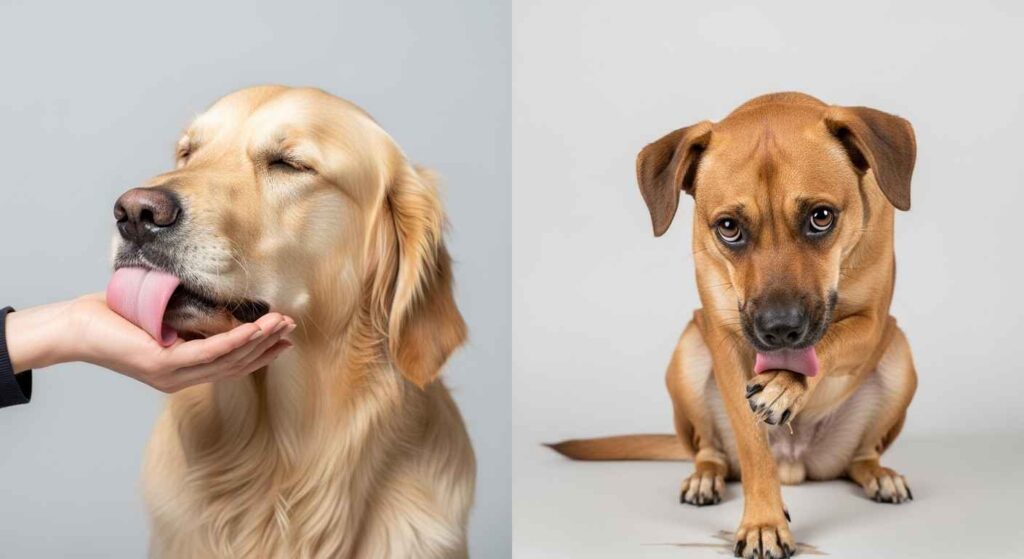
8 Main Reasons Dogs Lick So Much
1. Showing Love and Affection
Dogs often use licking as a way to show affection. This behavior is learned from an early age when puppies lick their mothers and siblings. Your dog sees you as family. Licking releases feel-good chemicals in their brain, making both of you feel closer.
This type of licking usually happens:
- When you come home
- During quiet bonding time
- Before bedtime
- After they’ve done something good
2. Getting Your Attention
Smart dogs learn that licking gets results. If you pet, talk to, or even gently push them away when they lick, they learn this behavior works to get your focus.
Signs your dog licks for attention:
- They stop when you ignore them
- Licking increases when you’re busy
- They watch your reaction while licking
- Other attention-seeking behaviors happen too
3. You Taste Good
Dogs might be licking the salt off your skin. Human skin has salt from sweat, which dogs find tasty. Lotions, food smells on your hands, or even soap residue can attract their tongues.
This explains why dogs often lick:
- Hands and arms after exercise
- Face after eating
- Feet and ankles
- Anywhere you’ve applied lotion
4. Natural Grooming Instinct
Just like cats, dogs lick themselves to maintain their hygiene. Dogs will often groom themselves and their loved ones to stay clean. When they lick you, they might be trying to “groom” their pack member.
5. Stress and Anxiety
Obsessive licking can be a sign that they are stressed or anxious, or could suggest that they are in pain, feeling nauseous, uncomfortable or itchy. Licking is soothing to dogs and may help to make them feel better.
Common stress triggers include:
- Being left alone too long
- Loud noises like storms
- Changes in routine
- New people or pets in the home
- Moving to a new place

6. Boredom and Lack of Stimulation
Dogs need mental and physical activity. Without enough exercise or interesting things to do, licking becomes a way to pass time. Bored dogs might lick:
- The same spot on furniture
- Their paws repeatedly
- You more than usual
- Random objects around the house
7. Medical Problems
Allergies, infections, or gastrointestinal problems can make a dog uncomfortable, leading them to lick excessively as a way to soothe themselves. Medical problems can cause excessive licking. For example, gastrointestinal disorders such as nausea or acid reflux are two common culprits underlying lip-licking.
Health issues that cause licking include:
- Skin allergies or infections
- Digestive problems
- Dental pain
- Nausea
- Pain in joints or muscles
8. Habit and Compulsive Behavior
In general, a dog’s licking is considered excessive if they cause trauma to themselves or if the behavior interrupts their normal daily activities. Some dogs develop licking as a compulsive habit, similar to nail-biting in humans.
When Dog Licking Becomes a Problem
You should worry about your dog’s licking when:
Frequency changes suddenly
- Much more licking than before
- Licking at odd times (middle of night)
- Can’t seem to stop once they start
Physical signs appear
- Red, raw, or damaged skin
- Hair loss from constant licking
- Infections or sores
- Swelling or bad smells
Behavior changes too
- Less interested in food or play
- Restless or can’t settle down
- Whining while licking
- Avoiding normal activities
It disrupts daily life
- Won’t stop to eat or sleep
- Interferes with walks or play
- You can’t redirect their attention
- Family members feel overwhelmed
If you notice these signs, your dog might need help. Consider using our pet symptom checker to track what you’re seeing before visiting your vet.
Medical Causes That Need Attention
Several health problems show up as increased licking:
Skin conditions:
- Allergies to food or environment
- Bacterial or fungal infections
- Dry skin or dermatitis
- Parasites like fleas or mites
Digestive issues:
- Acid reflux
- Nausea
- Inflammatory bowel disease
- Intestinal parasites
Pain and discomfort:
- Arthritis in older dogs
- Dental problems
- Injuries you can’t see
- General illness
Neurological problems:
- Seizure disorders
- Cognitive dysfunction in senior dogs
- Compulsive disorders

How to Stop Problem Licking
Address the Root Cause
For attention-seeking licking:
- Ignore the behavior completely
- Don’t look at, talk to, or touch your dog while they lick
- Give attention when they’re calm and not licking
- Redirect to appropriate activities
For boredom-related licking:
- Increase daily exercise
- Provide puzzle toys and mental challenges
- Rotate toys to keep things interesting
- Consider doggy daycare or playdates
For anxiety licking:
- Create a calm environment
- Use calming aids like pheromone diffusers
- Maintain consistent routines
- Consider professional training help
Training and Management
Teach the “leave it” command:
- Hold a treat in your closed fist
- Wait for your dog to stop trying to get it
- Say “leave it” and give the treat when they back away
- Practice with different objects
- Use this command when they start licking
Redirect to appropriate activities:
- Offer a favorite toy when licking starts
- Use lick mats with healthy spreads
- Practice basic commands for mental stimulation
- Reward good behavior with treats and praise
Environmental management:
- Remove or block access to favorite licking spots
- Use bitter apple spray on furniture (test first)
- Provide comfortable resting areas
- Keep your dog’s environment enriching but not overwhelming
Professional Help Options
When to call your vet:
- Licking started suddenly
- Skin damage or infections present
- Other symptoms like vomiting or lethargy
- Behavior doesn’t improve with training
When to work with a trainer:
- Licking is purely behavioral
- You need help with redirecting techniques
- Your dog has other behavioral issues
- Family members disagree on handling methods
Understanding your dog’s breed tendencies can also help. Use our pet breed finder quiz to learn more about breed-specific behaviors.
Prevention Tips for Dog Parents
Keep your dog mentally stimulated:
- Daily training sessions
- New walking routes
- Interactive toys that challenge their brain
- Social time with other dogs
Maintain good health:
- Regular vet checkups
- Proper dental care
- High-quality diet appropriate for their age
- Keep up with flea and parasite prevention
Create positive associations:
- Reward calm behavior
- Make being alone less stressful
- Establish predictable routines
- Provide safe spaces for relaxation
Monitor for changes:
- Notice when licking increases
- Track what triggers the behavior
- Watch for other symptoms
- Keep notes to share with your vet

Living with a Licky Dog
Some dogs will always be more “licky” than others. That’s okay! Here’s how to manage it:
Set boundaries:
- Teach “no licking” for face and hands if you prefer
- Allow licking in certain situations only
- Make sure all family members follow the same rules
- Be consistent with your responses
Keep everyone comfortable:
- Warn guests about your dog’s licking habits
- Have towels handy for after-licking cleanup
- Consider your dog’s feelings when setting limits
- Find compromise solutions that work for everyone
Appreciate the love:
- Remember that most licking comes from affection
- Your dog is trying to bond with you
- It’s a sign of trust and comfort
- Many dog parents miss the licking when their pets get older
Related Concerns Dog Parents Ask About
“My dog licks other pets too much” This usually shows social behavior or dominance. Monitor to make sure the other pet isn’t stressed. Our pet compatibility checker can help if you’re introducing new pets.
“Should I let my dog lick my baby?” Most experts recommend against this due to bacteria transfer. Teach your dog gentle behavior around children early.
“My senior dog started licking more” Older dogs may lick more due to cognitive changes, arthritis pain, or other age-related issues. Check with your vet about senior care needs.
“Is dog saliva clean?” Dog mouths contain bacteria that can be harmful to humans. While occasional licks won’t hurt most people, avoid letting dogs lick open wounds or your face frequently.
When Licking Might Signal Other Issues
Pay attention if excessive licking happens along with:
- Changes in appetite or energy
- Digestive problems
- Skin irritations
- Sleep disruptions
- Social withdrawal
These combinations often point to underlying health or behavioral problems that need professional attention.
For more insights into dog behavior, you might find our article about common dog owner mistakes helpful in understanding your pet better.
The Bottom Line
Most dog licking is normal and shows affection. Problems arise when licking becomes excessive, causes damage, or suddenly increases without obvious reasons.
Understanding why your dog licks helps you respond appropriately. Whether it’s providing more exercise, addressing anxiety, or seeking medical care, you can help your furry friend feel their best.
Remember that every dog is different. What works for one might not work for another. Be patient as you figure out your dog’s specific needs and triggers.
If you’re concerned about any changes in your dog’s behavior, trust your instincts. You know your pet better than anyone else. When in doubt, consult with your veterinarian or a certified dog trainer for personalized guidance.
Use our pet age calculator to better understand how your dog’s life stage might influence their licking behavior, as needs change throughout their lifetime.