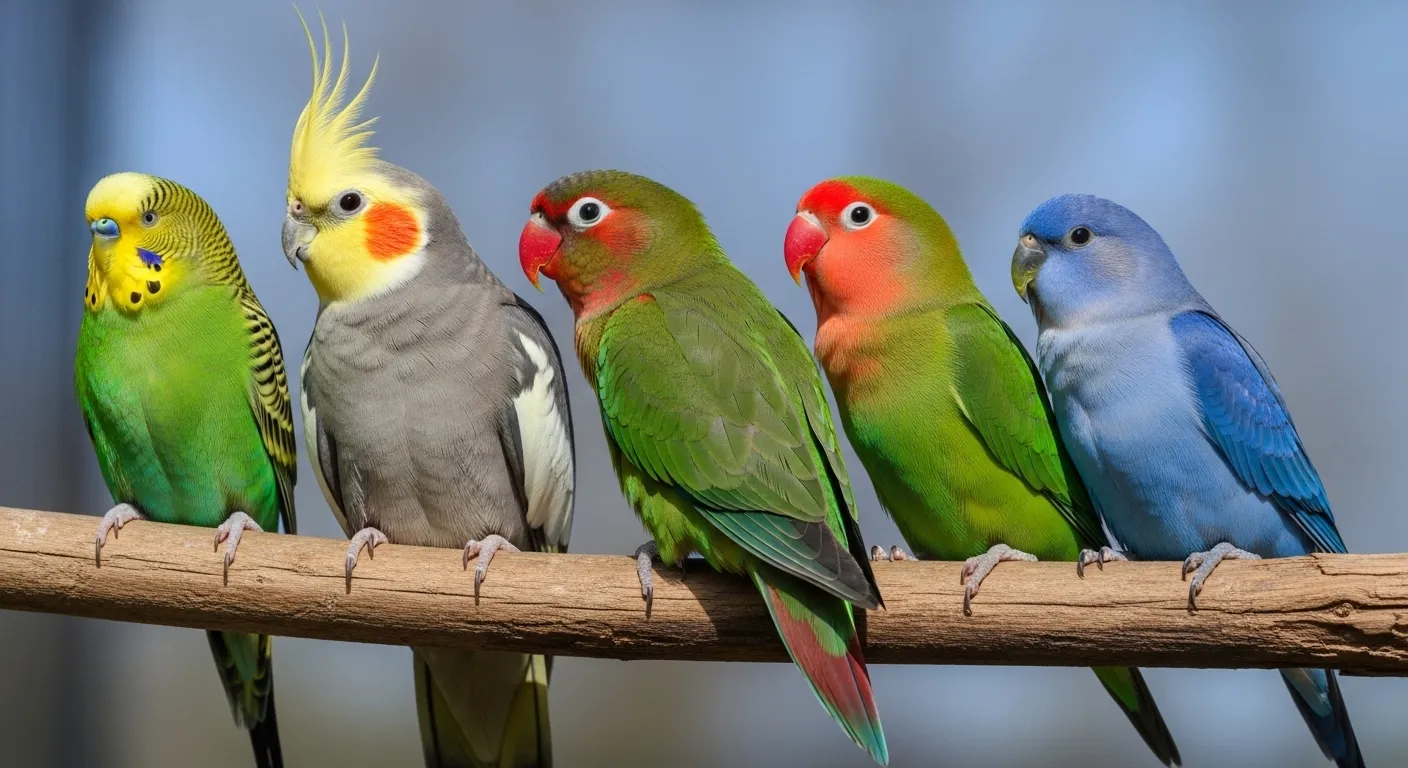
Parrots bring color and life to a home. For those new to bird care, certain breeds stand out. They offer manageable needs and friendly traits. This guide covers five options. Each one suits beginners with basic setups. If you’re unsure which breed fits your lifestyle, try our pet breed finder quiz.
Budgerigar
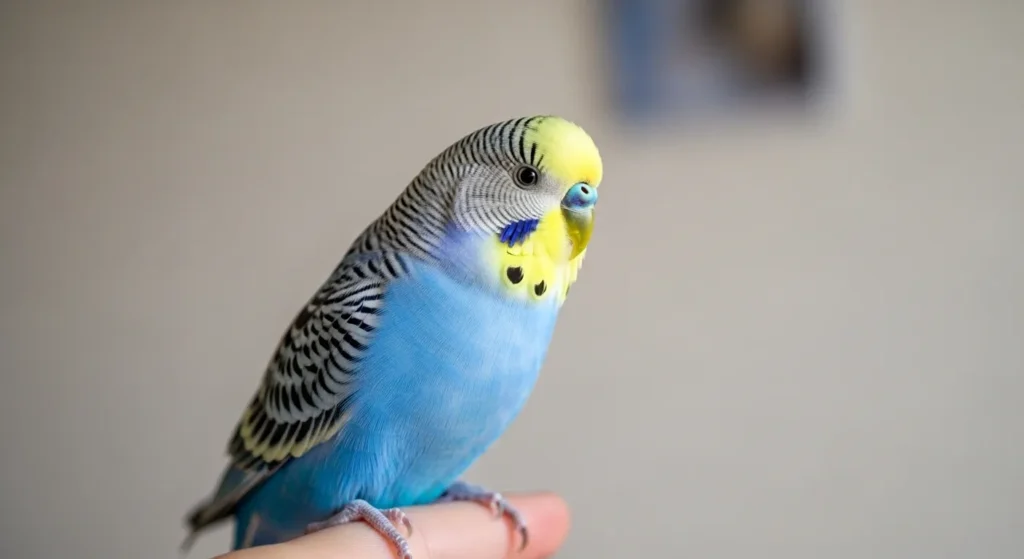
Budgerigars, often called budgies, rank high among starter birds. These small parrots come in shades like blue, green, and yellow. They fit well in most homes due to their size.
Males often pick up words and sounds. Their voices stay soft and pleasant. With good care, they live five to ten years, sometimes longer. They need a cage with space to move, plus toys for play.
Daily time outside the cage helps them thrive. Feed them seeds, fruits, and greens. They bond with people but also do fine in pairs. Some may nip, but patience fixes that. For more tips on handling and setup, check our parakeet care guide.
- Key traits: Active and social.
- Noise level: Low.
- Best for: People with limited space.
Cockatiel
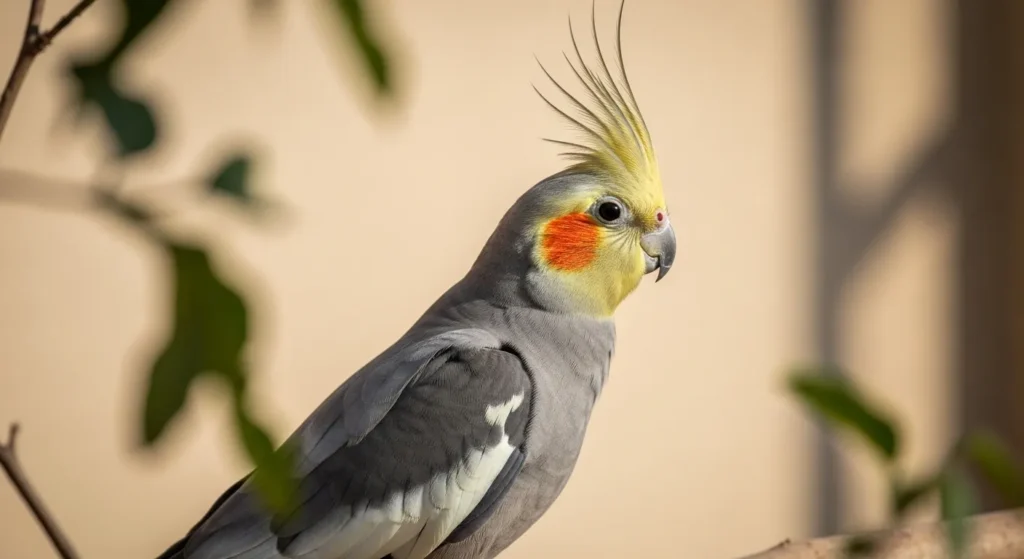
Cockatiels charm with their crests and cheek spots. Males show bright yellow faces and orange cheeks. Females have softer tones. These birds grow to about banana length.
They whistle tunes and may say a few words. Expect a lifespan of ten to fifteen years, up to twenty-five in top conditions. A large cage with perches and toys keeps them content.
Let them out daily for exercise. Their diet includes pellets, seeds, and fresh produce. Well-socialized ones stay gentle and enjoy handling. They suit families who can give attention. See more options in our list of best pet birds for beginners.
- Key traits: Comical and affectionate.
- Noise level: Moderate.
- Best for: Those who like interactive pets.
Green-Cheeked Conure
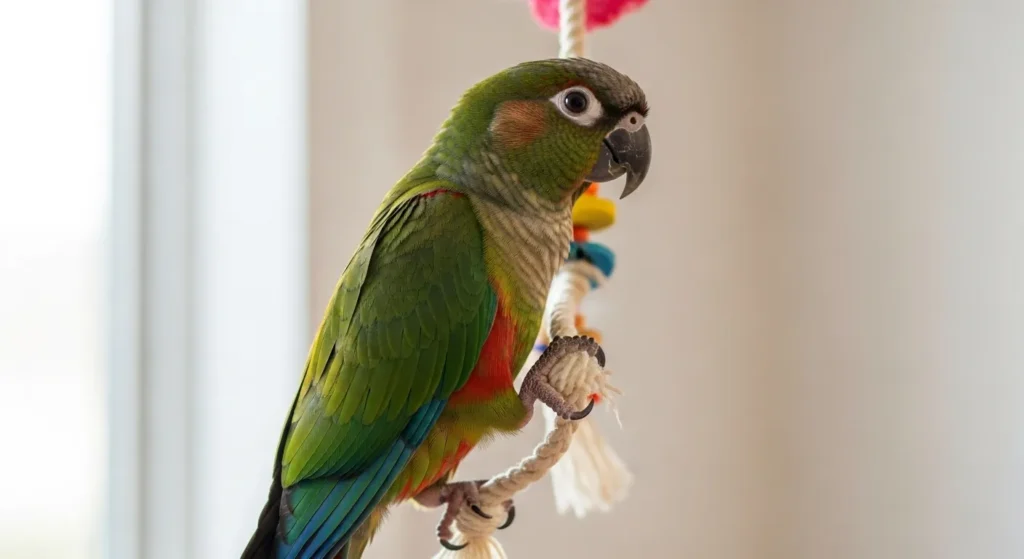
Green-cheeked conures glow with green bodies and red tails. Some have blue or yellow hints. They stay small, making them easy to house.
These parrots play a lot but keep noise down. They reach twenty years or more with care. Provide a cage big enough for activity, full of chew toys.
Out-of-cage time builds bonds. Mix pellets, fruits, and veggies in their meals. Early handling keeps them tame and less likely to bite. They work for owners ready for some training.
- Key traits: Playful and trainable.
- Noise level: Quiet for their type.
- Best for: Active households.
Lovebird
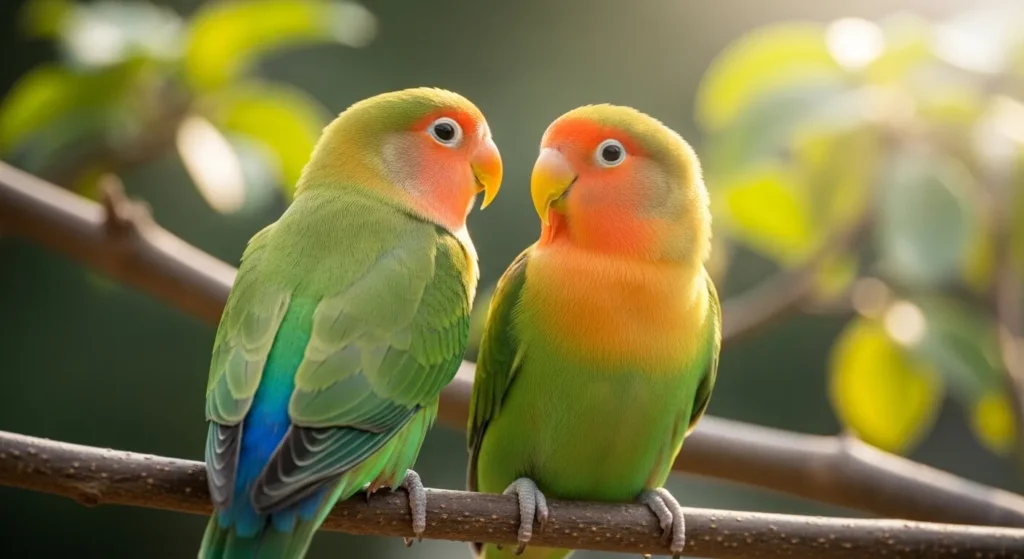
Lovebirds shine in mixes of green, orange, blue, and yellow. Their compact size appeals to many. They pack big personalities into little frames.
They form strong ties with owners. Lifespans hover around ten to fifteen years. A medium cage with spots to climb suits them.
Daily play prevents boredom. Offer a varied diet of seeds, pellets, and fresh items. Single birds bond closely, while pairs entertain each other. Watch for nips during moods. Learn about different types in our lovebird species guide.
- Key traits: Affectionate and smart.
- Noise level: Average.
- Best for: Solo or pair keepers.
Parrotlet
Parrotlets display bold greens, blues, and yellows. They mimic larger parrots in spirit but stay tiny. This makes them simple to manage.
Quiet nature helps in small spaces. They live ten to fifteen years on average. Use a cage with toys to spark interest.
Time with owners keeps them happy. Balance their food with pellets and fresh choices. They love play and often seek human contact. Proper start avoids aggression. Once settled, use our pet name generator to pick a fun name.
- Key traits: Friendly and playful.
- Noise level: Low.
- Best for: First-time parrot fans.