

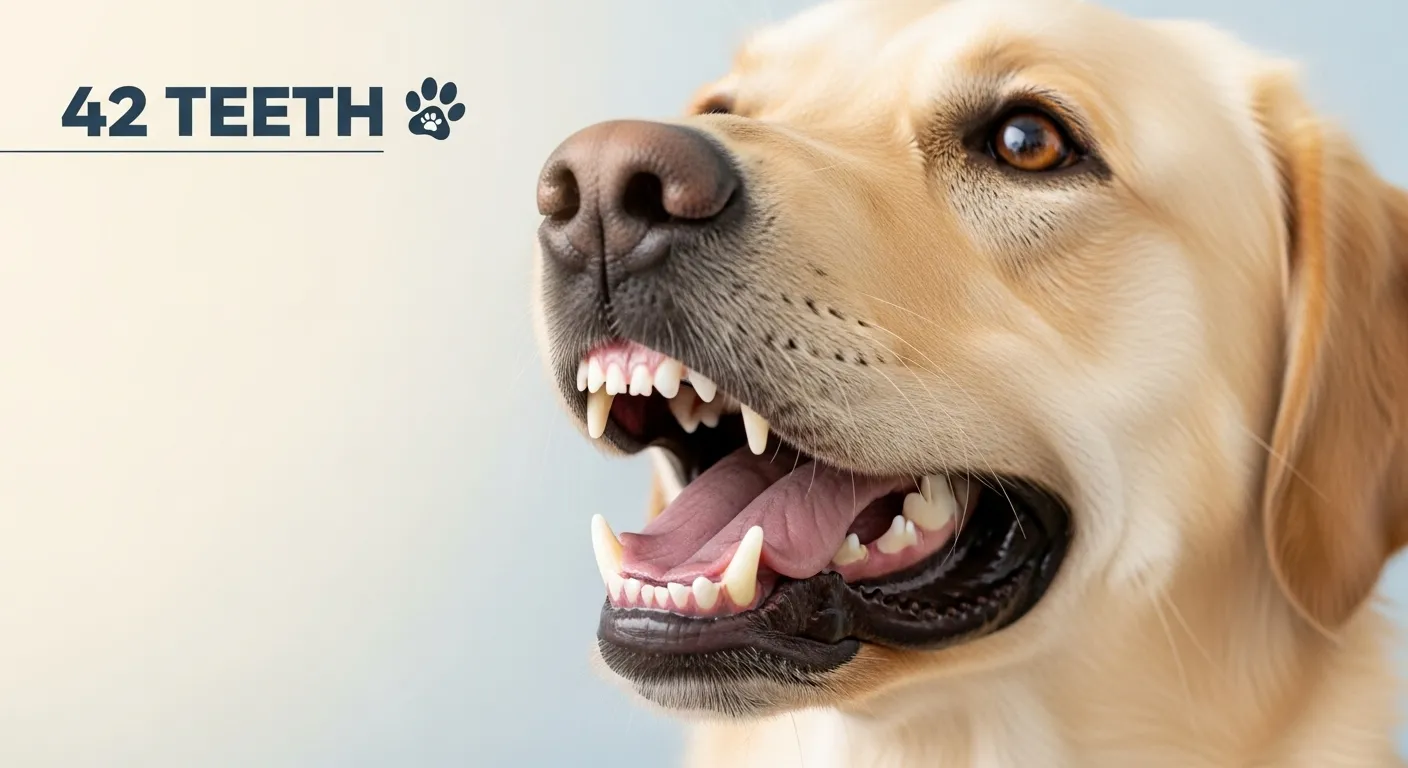
Adult dogs have 42 teeth, which is 10 more than humans. This includes 12 incisors, 4 canines, 16 premolars, and 10 molars. Understanding your dog’s dental structure helps you provide better oral care and spot potential problems early.
Dog Teeth Basics: What Every Owner Should Know
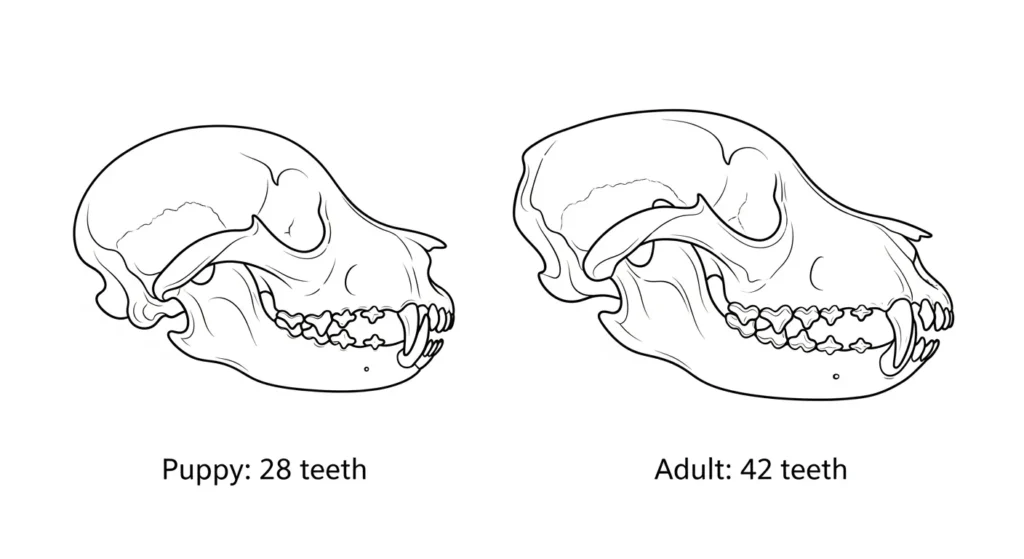
Dogs go through two sets of teeth during their lifetime, similar to humans. Puppies start with 28 baby teeth, which fall out and get replaced by 42 permanent adult teeth by six months of age.

Puppy Teeth vs Adult Teeth
Puppies are born without teeth. Their first baby teeth (also called deciduous teeth) start appearing around 2-4 weeks of age. These 28 milk teeth include:
- 12 incisors (front teeth)
- 4 canines (pointed teeth)
- 12 premolars (back teeth)
Puppies don’t get baby molars. The adult molars come in directly when permanent teeth develop.
The Complete Breakdown: 42 Adult Dog Teeth
Here’s exactly how many teeth dogs have in each category:
Incisors (12 total)
- 6 on top, 6 on bottom
- Small, sharp front teeth
- Used for nibbling and grooming
- First to appear in puppies
Canines (4 total)
- 2 on top, 2 on bottom
- Long, pointed teeth
- Strongest teeth in the mouth
- Used for gripping and tearing
Premolars (16 total)
- 8 on top, 8 on bottom
- Located behind the canines
- Used for shearing and cutting food
- Have sharp edges for slicing
Molars (10 total)
- 4 on top, 6 on bottom
- Flat grinding surfaces
- Used for crushing and grinding
- Last teeth to come in
When Do Dogs Get Their Adult Teeth?
The teething process follows a predictable timeline:
2-4 weeks: First baby teeth appear 4-6 weeks: All 28 baby teeth are present 3-4 months: Adult teeth start pushing through 4-6 months: Most adult teeth are in place 6-7 months: All 42 adult teeth should be present
During this time, puppies experience discomfort and may chew more than usual. Providing appropriate chew toys helps manage this behavior safely.
Do All Dogs Have the Same Number of Teeth?
While 42 is the standard number, some variations occur:
Breed Differences
Small breeds like Chihuahuas sometimes have fewer teeth due to limited jaw space. Brachycephalic breeds (flat-faced dogs) like Bulldogs may have crowded or missing teeth.
Common Dental Issues
- Retained baby teeth: Baby teeth that don’t fall out naturally
- Missing teeth: Some dogs are born without certain teeth
- Extra teeth: Rare condition where dogs develop additional teeth
If you notice any dental abnormalities, consult your veterinarian. Our pet symptom checker can help you identify when professional care is needed.
Signs of Dental Problems in Dogs
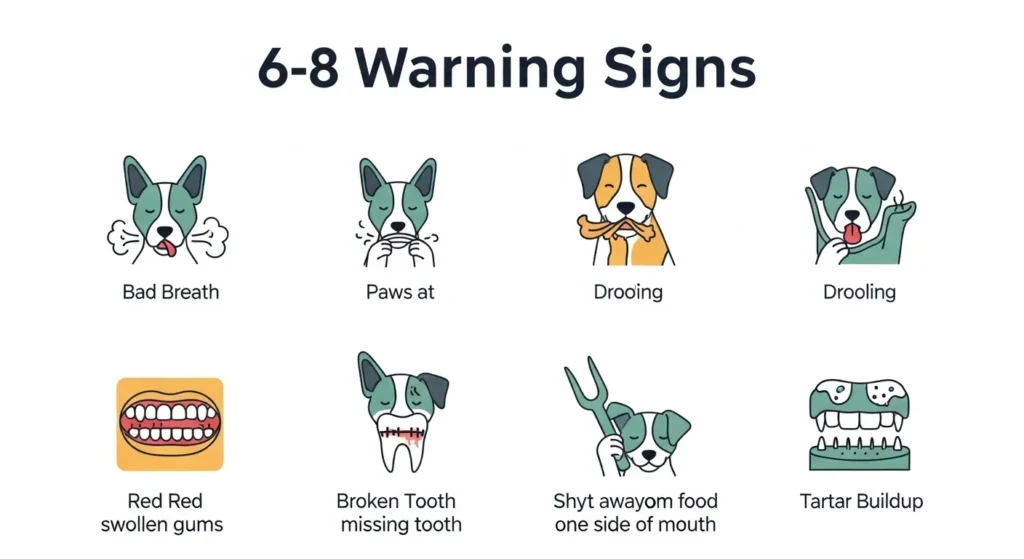
Watch for these warning signs:
- Bad breath that gets worse over time
- Yellow or brown tartar buildup
- Red, swollen, or bleeding gums
- Difficulty eating or chewing
- Pawing at the face or mouth
- Loose or missing teeth
- Excessive drooling
How to Care for Your Dog’s Teeth
Proper dental care prevents most tooth problems:
Daily Brushing
Use dog-specific toothpaste (never human toothpaste, which contains toxic xylitol). Start slowly and make it a positive experience.
Dental Chews and Toys
Choose products approved by the Veterinary Oral Health Council. Hard bones can crack teeth, so select appropriate hardness levels.
Professional Cleanings
Most dogs need professional dental cleanings every 1-3 years, depending on their breed, age, and oral health status.
Diet Considerations
Dry food helps remove some plaque, but it’s not enough alone. Special dental diets can provide additional benefits. Check our pet food safety checker before introducing new foods.
Age-Related Dental Changes
Puppy Stage (0-6 months)
Focus on gentle handling and positive associations with mouth touching. Teething toys help manage discomfort.
Young Adult (6 months – 3 years)
Establish good dental care routines. This is the best time to prevent future problems.
Senior Dogs (7+ years)
Dental issues become more common. Regular veterinary checkups help catch problems early.

Frequently Asked Questions
Do dogs lose teeth as they age?
Adult dogs shouldn’t lose teeth naturally. Tooth loss usually indicates dental disease, injury, or other health problems requiring veterinary attention.
Can dogs live without teeth?
Yes, dogs can live comfortable lives without teeth. They adapt well to eating soft foods, though prevention is always better than tooth loss.
How do I know if my dog’s teeth are healthy?
Healthy dog teeth are white or slightly off-white, with pink gums. Bad breath, discoloration, or gum problems indicate potential issues.
What happens if baby teeth don’t fall out?
Retained baby teeth can cause crowding and dental problems. Your veterinarian may need to remove them surgically.
When to See a Veterinarian
Contact your vet if you notice:
- Persistent bad breath
- Difficulty eating or drinking
- Visible pain when touching the mouth
- Bleeding from the mouth
- Loose or broken teeth
- Unusual growths in the mouth
Regular dental checkups during routine veterinary visits help prevent serious problems. Many issues are easier and less expensive to treat when caught early.
The Bottom Line
Dogs have 42 adult teeth designed for their omnivorous diet and natural behaviors. Understanding your dog’s dental needs helps you provide proper care and catch problems before they become serious.
Start dental care early, maintain consistent routines, and work with your veterinarian to keep your dog’s mouth healthy throughout their life. Good dental health contributes to overall wellbeing and can prevent more serious health problems down the road.
For more pet health information, explore our related guides on how many teeth cats have and common dog owner mistakes to avoid.