


As a pet owner, you might run into times when your dog swallows something it shouldn’t have. Learning the proper way to handle this can make a difference. This guide draws from reliable advice to explain when and how to proceed. Remember, your dog’s well-being comes first, so reach out to a vet without delay.
When to Consider Inducing Vomiting
This approach helps clear out harmful substances from the stomach if acted on quickly, within two hours of the dog eating them. The dog needs to be awake, breathing well, and without major health problems.
It suits cases like certain toxins, such as chocolate or specific plants. If more than two hours have gone by, the item might already be past the stomach, so hold off.
Dogs with short snouts, like pugs or bulldogs, have added risks. In those situations, go directly to a veterinary clinic.
For more on what might cause vomiting in the first place, check out our post on why your dog might be vomiting.
Key Warnings and When Not to Do It
Always call a vet or animal poison control line before trying anything. Tell them what was ingested, the amount, the time it happened, and details about your dog, including weight, breed, age, and current state.
Stay away from this if the dog took in sharp objects like bones or pins, strong chemicals such as cleaners or batteries, or fuels like gasoline. These could do more damage coming back up.
Skip it if you notice symptoms like fits, unsteadiness, tiredness, trouble breathing, pale or blue gums, or if the dog falls over. Head to a vet immediately then.
This is just for dogs. Do not use it on cats or other animals.
If you’re spotting odd signs, our pet symptom checker can help you figure out possible issues fast, though it’s no substitute for a vet visit.

Step-by-Step Process to Induce Vomiting
Stick to 3 percent hydrogen peroxide from your first aid supplies. Make sure it’s not old or past its date.
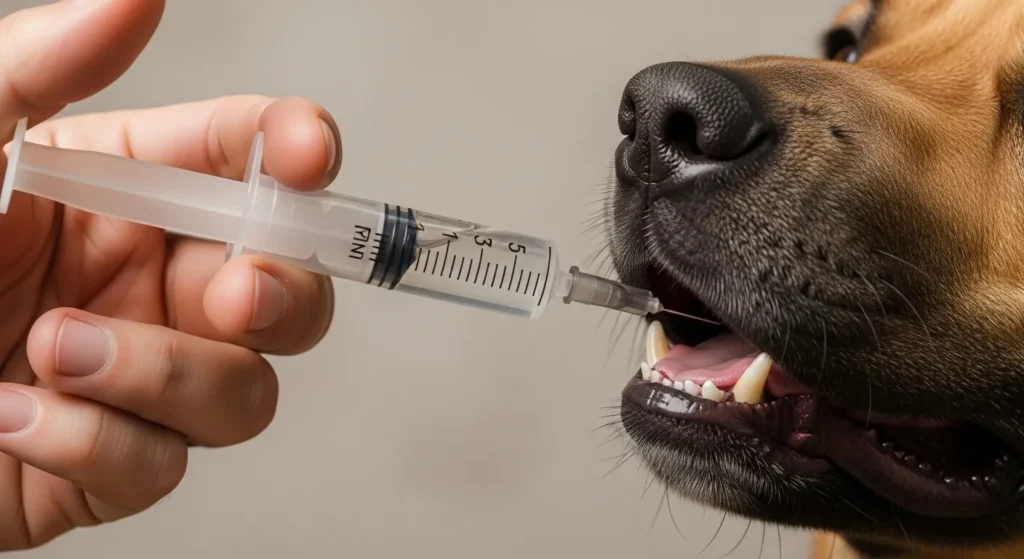
Dose it at one teaspoon per five pounds of body weight. Cap it at three tablespoons, no matter the dog’s size.
- Squirt it into the side of the mouth with a syringe or baster, aiming between cheek and teeth.
- Lift the head slightly to aid swallowing, but keep it from going down the wrong way.
- Take the dog for a light walk, about ten to fifteen minutes, to get things moving.
- Expect results in fifteen to twenty minutes.
If no response after fifteen minutes, one repeat dose is okay, but only with vet approval. Stop there.
Keep watch for problems like non-stop vomiting or hard breathing. Misuse of hydrogen peroxide can upset the stomach or lead to other concerns.
To avoid these emergencies, use our pet food safety checker to confirm if foods are okay for dogs.
What to Do Next If Vomiting Happens
Gather the vomit to see if the bad item came out. Bring a sample or picture to show the vet.
Offer water in tiny amounts every thirty minutes. Start small, like a few tablespoons for little dogs or a quarter cup for bigger ones.
Monitor for fresh symptoms, such as more vomiting or pain.
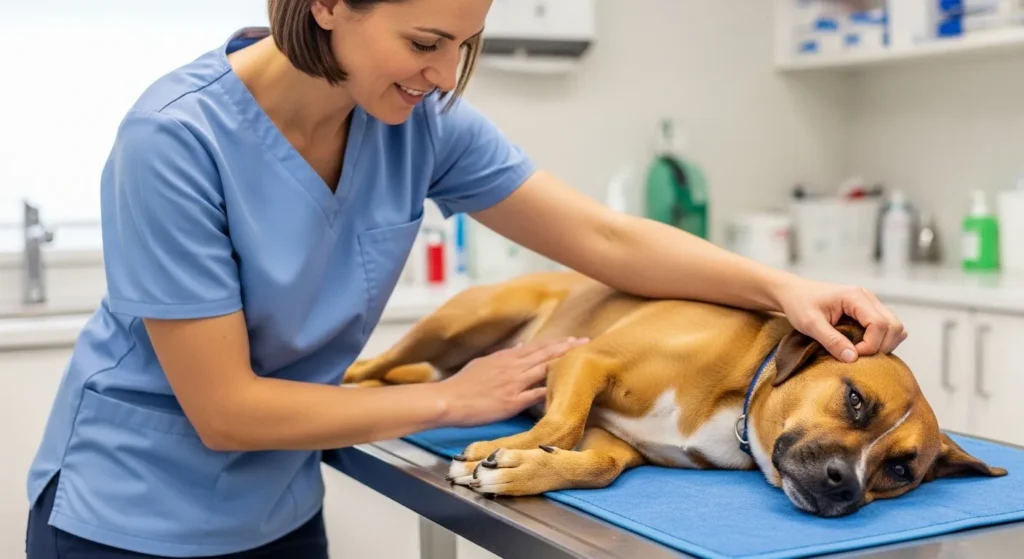
Visit the vet anyway, even if it seemed to work. Some poisons show effects later.
Signs That Call for Immediate Vet Help
Get emergency care for brain-related problems, tough breathing, constant vomiting, or collapse.
Vets can use safer methods, like drops in the eyes or shots, to bring on vomiting without as much risk.
Avoid other substances like salt or ipecac. They might cause bigger issues.
A common reason dogs get into trouble is munching on grass. Learn more in our guide to why dogs eat grass. Stock a pet first aid kit with hydrogen peroxide and emergency contacts. Fast response and pro advice keep your dog secure.