
Benadryl is generally safe for dogs when used correctly and at the right dose. Most healthy adult dogs can tolerate it without serious problems. But the wrong formulation, the wrong dose, or the wrong medical situation can make it dangerous fast.
Here is everything you need to know — what it does, how much to give, which formulas to avoid, and when it actually works.
Not sure if your dog’s symptoms even call for Benadryl? Use our Pet Symptom Checker to get a clearer picture before you reach for the medicine cabinet.
What Is Benadryl and How Does It Work in Dogs?
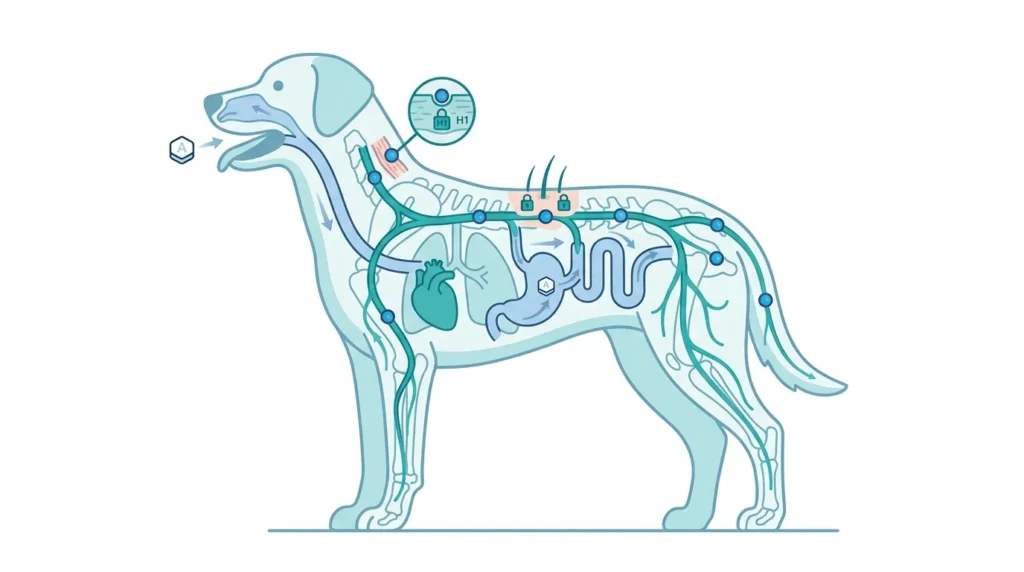
Benadryl is a brand name. The active ingredient is diphenhydramine HCl — a first-generation antihistamine that has been used in both human and veterinary medicine for decades.
Diphenhydramine and the H1 Receptor
When a dog has an allergic reaction, the immune system releases histamine. Histamine binds to H1 receptors throughout the body, triggering itching, swelling, hives, and runny eyes. Diphenhydramine works by blocking those H1 receptors before histamine can bind to them. The body still produces histamine — but the receptors can’t respond to it.
Diphenhydramine is classified as an ethanolamine derivative, which matters because molecules in this class can cross the blood-brain barrier. That’s why Benadryl causes drowsiness. It’s also why it can cause neurological side effects at high doses.
Why Benadryl Isn’t FDA-Approved for Dogs — and Why That’s Okay
Benadryl is not FDA-approved for use in dogs. That sounds alarming but it isn’t. It means the drug was tested and approved for humans — not that it’s been tested and found unsafe for dogs. Veterinarians use it “off-label,” which is standard practice in animal medicine. According to Dr. Jerry Klein, DVM, Chief Veterinarian for the American Kennel Club, diphenhydramine is used off-label in dogs, cats, ferrets, horses, birds, and cattle when directed by a veterinarian. Off-label does not mean unproven. It means the approval process was built for a different species.
What Can You Use Benadryl for in Dogs?
Allergies and Acute Hives
Benadryl works best for acute allergic reactions — situations where histamine floods the body suddenly. Bee stings, vaccine reactions, insect bites, and contact allergies that cause hives (urticaria) respond well. If your dog breaks out in raised welts after touching something, Benadryl is a reasonable first step while you contact your vet.
Bee Stings and Insect Bites
A single bee sting on a healthy dog usually causes localized swelling. Benadryl can reduce that response. If the swelling spreads to the face, your dog starts vomiting, or breathing changes — that’s anaphylaxis. Do not wait. Get to a vet immediately. Benadryl alone is not enough for anaphylaxis.
Motion Sickness
Diphenhydramine has a strong anti-nausea effect. It’s one of the better over-the-counter options for dogs that get car sick. Give it 30 minutes before the trip. Note: this anti-nausea effect does not apply to cats.
Mild Anxiety and Travel Sedation
Because Benadryl causes drowsiness, some owners use it to calm anxious dogs before car rides, grooming, or fireworks. It can take the edge off mild anxiety. It’s not a reliable sedative, though. Some dogs barely get sleepy. And it does nothing to address the root cause of the anxiety.
If your dog panics during storms, these vet-approved tips for calming a dog during a storm cover more effective, longer-term approaches alongside short-term options like Benadryl.
For true anxiety disorders, talk to your vet about dedicated prescription options.
Mast Cell Tumors and Heartworm Treatment
This is a use most pet owners don’t know about. Mast cell tumors release large amounts of histamine when they degrade. Diphenhydramine helps control that histamine release and reduces its effects. Vets also use it during heartworm treatment to lower the risk of an allergic reaction to the therapy itself. If you want to understand more about how dogs contract heartworm in the first place, our guide on how dogs get heartworm explains the full cycle. These are vet-supervised uses — not something to manage at home.

When Benadryl Doesn’t Work — What the Research Actually Shows
Here’s what most articles don’t tell you: Benadryl is a weak option for chronic itchy skin.
A 2020 randomized, double-blinded study published in PubMed (PMID 31899570) tested oral diphenhydramine on Beagles with allergies. The result: diphenhydramine failed to show a meaningful inhibitory effect on histamine response. Another drug, oral cetirizine (the active ingredient in Zyrtec), was significantly more effective at reducing histamine and preventing allergic reactions.
Why does this matter? Because most dogs who end up on Benadryl have seasonal skin allergies — chronic, ongoing itching caused by environmental triggers. That’s exactly the situation where Benadryl underperforms.
Benadryl may reduce scratching in these dogs not because it’s controlling histamine well, but because the sedation makes the dog less active. That’s not treating the allergy. It’s making the dog too tired to scratch.
For acute reactions — hives, bee stings, vaccine reactions — Benadryl still makes sense. For long-term itch management, there are better options. We cover those in the alternatives section below.
Benadryl Dosage for Dogs
Standard Dosage Rule
The standard dose is 1 mg of diphenhydramine per pound of body weight, given every 8 to 12 hours.
Most standard Benadryl tablets contain 25 mg of diphenhydramine. A 25-pound dog would get one tablet. A 50-pound dog would get two. Always confirm with your vet before dosing — especially the first time.
For a complete weight-based breakdown with more specific scenarios (large breeds, small breeds, liquid dosing), see our dedicated guide: How Much Benadryl Can I Give My Dog?
Dosage Table by Weight
| Dog’s Weight | Dose | Tablet (25 mg) |
|---|---|---|
| 5 lbs | 5 mg | 1/5 tablet |
| 10 lbs | 10 mg | ~1/3 tablet |
| 15 lbs | 15 mg | ~1/2 tablet |
| 25 lbs | 25 mg | 1 tablet |
| 50 lbs | 50 mg | 2 tablets |
| 75 lbs | 50 mg | 2 tablets (capped) |
| 100 lbs | 50 mg | 2 tablets (capped) |
Maximum dose: 50 mg per dose, regardless of body weight. Large and giant breed dogs do not get more than two standard tablets at a time.
How Often Can You Give Benadryl to a Dog?
No more than every 8 hours. Three doses in 24 hours is the upper limit. Most situations call for one or two doses. If your dog still needs Benadryl after 24–48 hours, something is wrong — contact your vet rather than continuing to dose at home.
Tablets vs. Liquid — Which Is Safer?
Tablets are safer and easier to dose accurately. Liquid Benadryl is trickier for two reasons: first, it often contains alcohol, which is toxic to dogs; second, the concentration varies between products, making accurate dosing harder.
If you use liquid, choose alcohol-free and verify the exact mg/mL concentration before calculating the dose.
Children’s Benadryl vs. Adult Tablets
Children’s Benadryl is sometimes suggested for small dogs because the lower dose per tablet is easier to split. However, many children’s formulas contain xylitol — a sugar substitute that is highly toxic to dogs. Do not assume a children’s formula is safer. Read the label every time.

Which Benadryl Formulas Are Dangerous for Dogs?
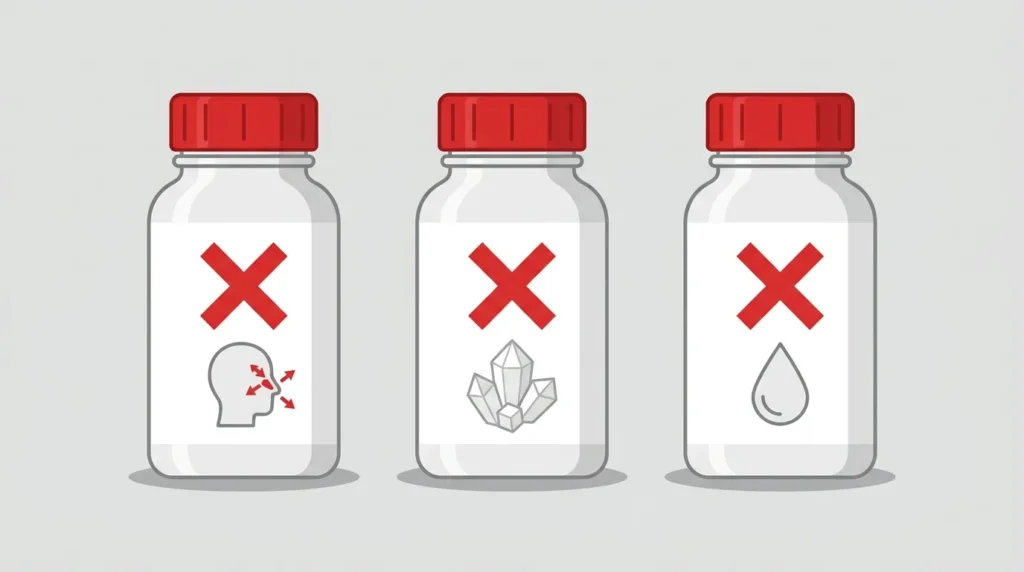
This is the most important safety section. Not all Benadryl products are the same.
The Xylitol Problem
Xylitol is a sugar alcohol used as a sweetener in many liquid and chewable medications. In dogs, xylitol causes a rapid and severe drop in blood sugar (hypoglycemia) by triggering a sudden insulin release from the pancreas. Even small amounts can cause seizures, liver failure, and death.
Check every label. Xylitol can appear as “xylitol,” “birch sugar,” or “wood sugar.” If it’s listed in any form, do not give that product to your dog. The same caution applies to many OTC human products you might give dogs — it’s a habit worth building across the board. Our Pet Food Safety Checker can help you quickly verify whether an ingredient is safe for your pet.
Benadryl-D and Decongestant Combinations
Benadryl-D contains pseudoephedrine, a decongestant. In dogs, pseudoephedrine causes rapid heart rate, dangerously high blood pressure, and potentially fatal cardiovascular effects. Never use any Benadryl product with a “-D” suffix or any formula listing a decongestant.
Alcohol in Liquid Formulas
Many liquid antihistamines contain alcohol as a preservative or solubilizer. Alcohol is toxic to dogs at doses far lower than what affects humans. Always choose alcohol-free liquid formulations, and verify with the label — not just the marketing.
The rule: only give plain diphenhydramine with no other active ingredients. Combination products are the most common cause of Benadryl-related toxicity in dogs.
If you’re already cautious about what goes into your dog — which you should be — it’s worth reading our guide on safe essential oils for dogs and whether peppermint oil is safe for dogs. The same label-reading discipline applies.
When Should You NOT Give Your Dog Benadryl?
Benadryl has real contraindications. Do not give it without vet guidance if your dog has any of the following:
- Glaucoma — diphenhydramine raises intraocular pressure
- Cardiovascular disease or high blood pressure — the anticholinergic effects stress the heart
- Hyperthyroidism — the sedative effect interacts unpredictably with thyroid hormone levels
- Enlarged prostate (prostatic hypertrophy) — can cause urinary retention
- Bladder disease or urinary obstruction — same risk
- Seizure disorder or history of seizures
- Pregnancy or nursing — neonatal dogs are highly sensitive to diphenhydramine
- Young puppies — immature liver cannot metabolize diphenhydramine efficiently
- Known allergy to diphenhydramine or similar antihistamines
Also avoid if your dog is taking other CNS depressants, sedatives, or certain antifungal medications. These can amplify sedation to dangerous levels.
Giving medication to dogs without understanding their full health picture is one of the most common dog owner mistakes — and one of the most easily avoided.
Side Effects of Benadryl in Dogs
Common Side Effects
Most dogs experience at least mild sedation. Other common effects include:
- Dry mouth
- Urinary retention (difficulty urinating)
- Reduced gastrointestinal motility (constipation)
- Decreased appetite
- Mild incoordination
These are usually mild and resolve as the drug clears the system. If they’re severe or lasting, call your vet.
Paradoxical Excitation — The One Nobody Expects
Here’s something most Benadryl guides don’t mention: a subset of dogs have the opposite reaction. Instead of getting sleepy, they become hyperactive, agitated, or restless. This is called paradoxical excitation, and it’s a known property of first-generation antihistamines — especially in young dogs and puppies.
If you give Benadryl to calm your dog and the dog becomes more wound up, stop dosing and contact your vet. Giving more will not reverse this effect.
Signs of Benadryl Overdose in Dogs
How Much Is Too Much?
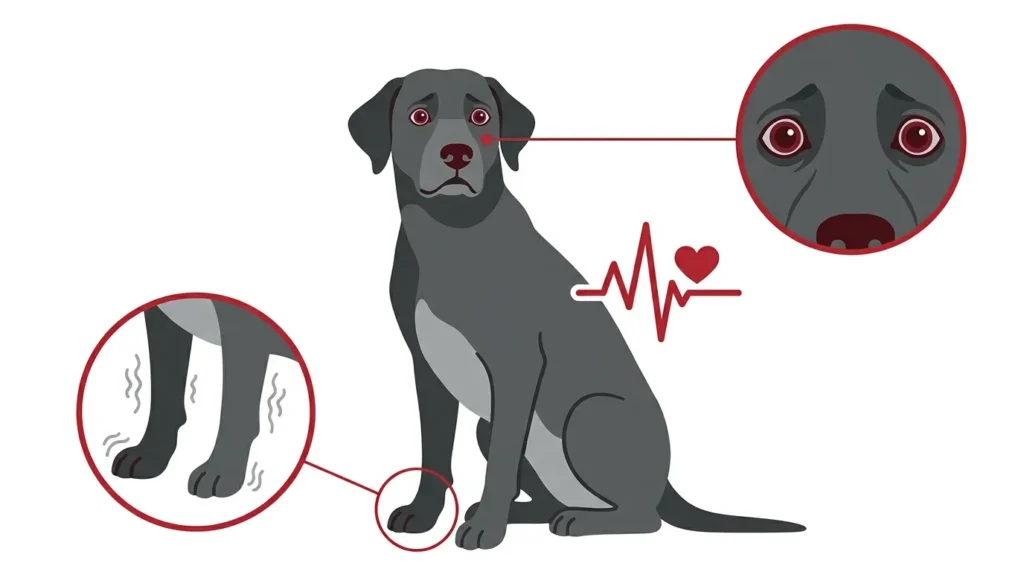
Toxicity in dogs begins at roughly 2–4 mg per pound of body weight — two to four times the therapeutic dose. A 25-pound dog receiving more than 100 mg is at real overdose risk.
Signs of overdose include:
- Extreme sedation or unresponsiveness
- Dilated pupils
- Rapid or irregular heart rate
- Dry mouth and flushed skin
- Tremors or muscle twitching
- Seizures
- Severe agitation or disorientation (paradoxical excitation at overdose levels)
If your dog is shaking or trembling after taking Benadryl, that’s a warning sign — shaking in dogs can signal toxicity and shouldn’t be waited out. Similarly, heavy panting after medication warrants immediate attention. And if your dog is vomiting, that’s another urgent signal — read about why dogs vomit to understand when it needs emergency care.
What to Do Immediately
Do not wait to see if the symptoms improve.
- Call your veterinarian immediately
- If your vet is unavailable, contact ASPCA Animal Poison Control: (888) 426-4435 (a consultation fee applies)
- Tell them your dog’s weight, how much Benadryl was ingested, and the formulation (tablet vs. liquid, active ingredients)
- Do not induce vomiting unless specifically instructed to do so — read our guide on how to make a dog throw up safely so you understand exactly when this is and isn’t appropriate
Time matters. The faster you get professional guidance, the better the outcome.
Better Alternatives to Benadryl for Dogs
Cetirizine (Zyrtec) — What the Research Prefers
Based on the 2020 Beagle study, cetirizine outperformed diphenhydramine at reducing histamine and preventing allergic reactions. Cetirizine is a second-generation antihistamine, which means it doesn’t cross the blood-brain barrier as efficiently. The result: less sedation, better allergy control.
The standard dose is approximately 0.5 mg per pound, once daily. But like all OTC human medications, confirm the dose and formula with your vet before using. Many Zyrtec formulas contain xylitol — the same label-reading rule applies.
Loratadine (Claritin)
Loratadine is another second-generation antihistamine. It’s less sedating than diphenhydramine and generally considered safe for dogs under veterinary guidance. Many formulations still require label checking for xylitol and other additives.
Prescription Options: Apoquel and Cytopoint
For dogs with chronic skin allergies, neither Benadryl nor Zyrtec is the long-term answer. Vets now have targeted prescription options:
- Apoquel (oclacitinib) — a JAK inhibitor that blocks the itch signal at a cellular level. Works within hours. Used daily for chronic itch.
- Cytopoint — a monoclonal antibody injection that targets and neutralizes IL-31, a specific itch-signaling protein. Lasts 4–8 weeks per injection.
These are not home remedies. They require a prescription. But for dogs who suffer with seasonal or chronic allergies, they are substantially more effective than any antihistamine.
When to Call the Vet Instead
Call your vet rather than reaching for Benadryl if:
- The reaction involves facial swelling, difficulty breathing, or vomiting
- Your dog has any of the contraindications listed above
- The itching or allergic symptoms have lasted more than 2–3 days
- This is the first time you’re considering Benadryl for your dog
- Your dog is a puppy, pregnant, nursing, or elderly with other health conditions
Also worth knowing: if your dog is in pain rather than having an allergic reaction, Benadryl is the wrong tool entirely. See our guide on what you can give a dog for pain for appropriate options.
Frequently Asked Questions
Can I give my dog Benadryl every day?
Not without veterinary guidance. Daily use isn’t recommended as a long-term plan because Benadryl is a weak option for chronic itching, and daily diphenhydramine can cause urinary retention, constipation, and dry mouth over time. If your dog needs daily antihistamine support, ask your vet about cetirizine, prescription antihistamines, or targeted treatments like Apoquel.
How long does Benadryl take to work in dogs?
Most dogs show a response within 30 minutes. Full effect generally peaks around 1–2 hours after administration. The drug typically stays active for 8–12 hours.
Can puppies take Benadryl?
Not without direct veterinary instruction. Puppies have immature liver function and metabolize diphenhydramine more slowly. The risk of overdose and paradoxical excitation is significantly higher. Do not dose puppies based on the standard weight-based formula for adult dogs.
Can dogs take children’s liquid Benadryl?
Only if the formula is free of xylitol, alcohol, and decongestants. Many children’s liquid Benadryl products contain at least one of these. Read the full ingredient list — not just the active ingredients. If you see xylitol in any form, do not use it.
My dog ate multiple Benadryl tablets — what do I do?
Call your vet or ASPCA Poison Control immediately: (888) 426-4435. Do not wait for symptoms. Tell them the exact number of tablets, the mg strength, your dog’s weight, and whether the tablets contained any other active ingredients. Before you act, understand when it’s safe to induce vomiting in a dog and when it isn’t — doing it wrong can cause additional harm.
The Bottom Line
Benadryl is a reasonable short-term option for acute allergic reactions in healthy adult dogs — bee stings, sudden hives, mild vaccine reactions, and motion sickness. Given as plain diphenhydramine at 1 mg per pound every 8–12 hours, with a maximum of 50 mg per dose, most dogs handle it without problems.
The limits are real. It’s weak for chronic itching. The wrong formula can be fatal. And several common health conditions make it genuinely dangerous. Before you reach into the medicine cabinet, check the label for xylitol and decongestants, confirm your dog has no contraindications, and when in doubt — call your vet first.
For dogs with ongoing allergic skin disease, there are better tools available. Benadryl is a first-aid stopgap, not a long-term plan.
Still unsure whether your dog’s symptoms warrant Benadryl or a vet visit? Our Pet Symptom Checker can help you figure out the right next step.