
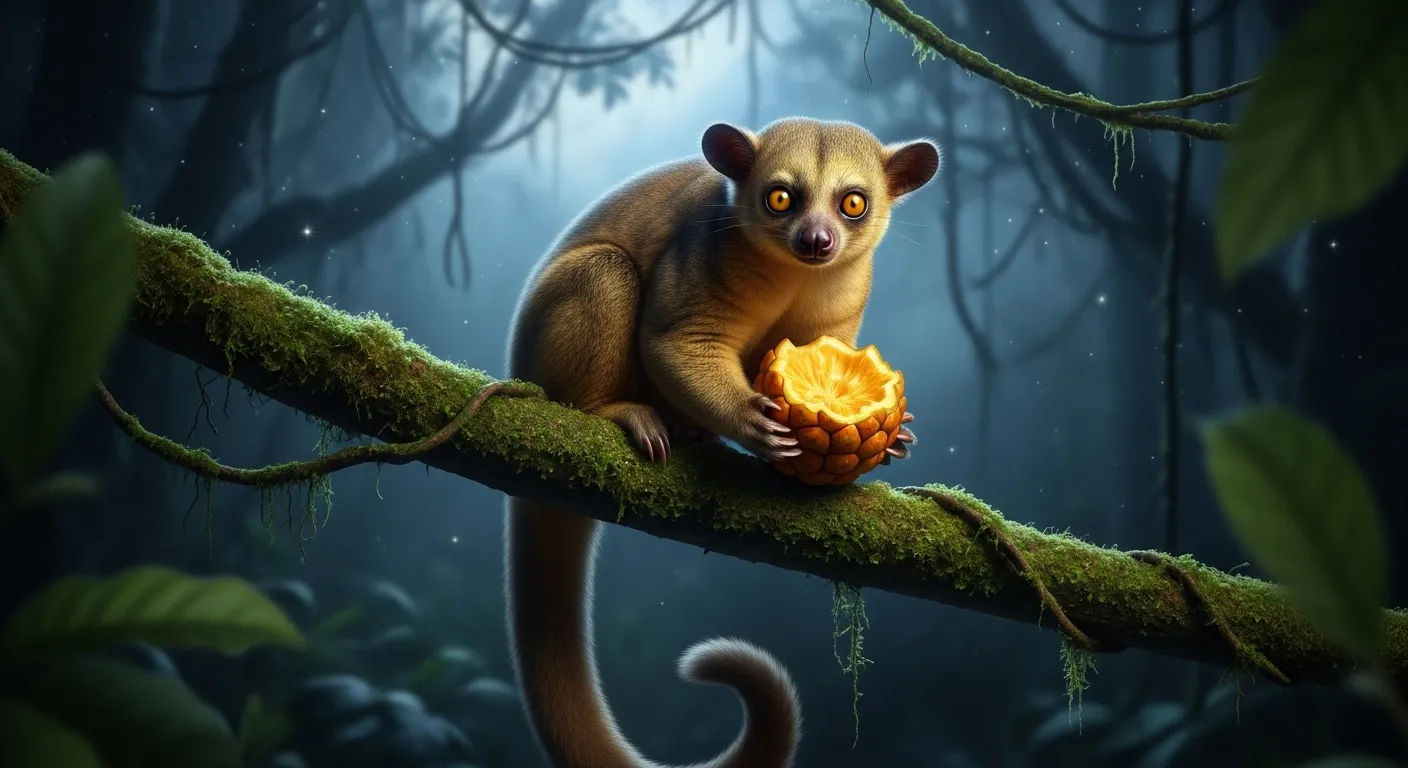
Kinkajous live in the rainforests of Central and South America. These mammals belong to the same family as raccoons. They stand out with their long tails that grip branches and feet that turn backward for easy climbing. Their fur is soft and brown or gray, with big eyes suited for low light.
Why Kinkajous Stay Active at Night
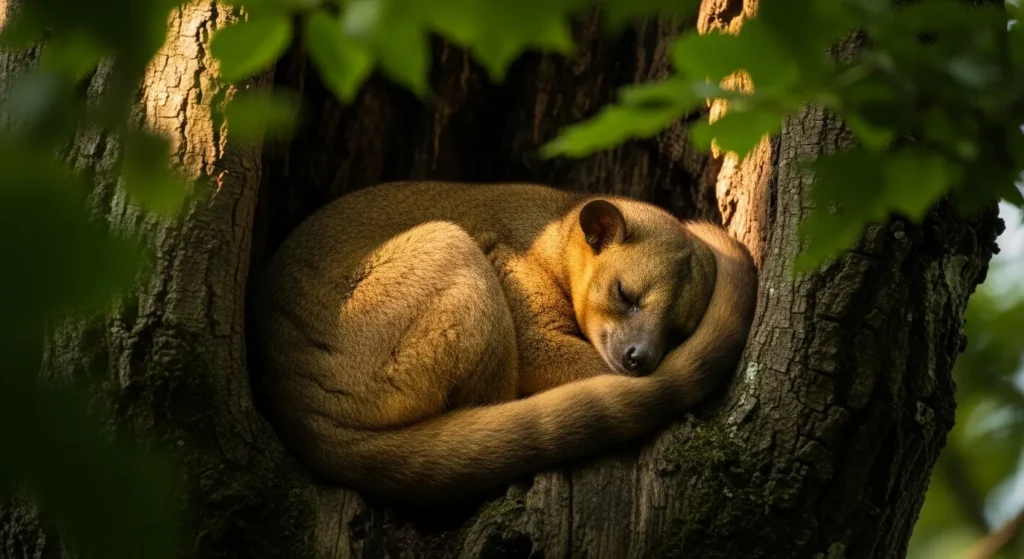
Kinkajous rest during daylight hours to avoid danger. Predators like birds spot them more easily in bright conditions. Nighttime offers fewer risks in the trees. This routine helps them thrive in their natural settings.
They wake as the sun sets. Peak times for movement fall between evening and early morning. This includes hours from around 7 p.m. until midnight, plus a bit before dawn. During these periods, they search for food and interact with others.
In the wild, they sleep in hollow trees or shaded spots. Groups often share these resting places. At dusk, they groom one another before heading out alone or in pairs to eat.
Nighttime Behavior in the Wild
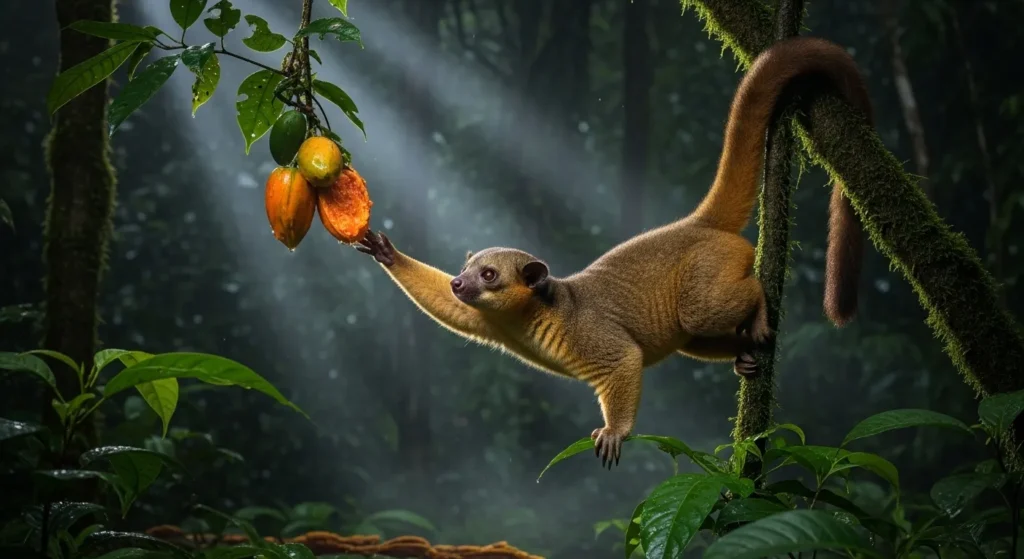
Kinkajous move through the upper branches with skill. Their tails act as an extra hand for balance. They rarely touch the ground, sticking to the canopy for safety and food.
They make various sounds to communicate. These include loud calls like barks or screams, plus softer noises. Such vocal habits help them connect in the dark forest.
Their diet focuses on fruit, but they also take insects and nectar. By eating and moving seeds, they aid plant growth. Some flowers rely on them for pollination during dry times.
While mostly alone, they form loose groups. Females raise one or two young born in warmer months. Males may join for grooming or shared dens.
Considerations for Pet Owners
Kinkajous sometimes end up as pets, often called honey bears. Their night-based schedule poses challenges. They stay awake and lively when most people sleep, leading to noise from jumps and calls.
Changing their routine proves hard. They resist shifts to daytime activity. Owners must provide playtime in the evenings to meet their needs. For help with health concerns, try our pet symptom checker.
Care requires large spaces for climbing. A varied diet mirrors their wild meals, with plenty of fruit. They bond closely but can turn unpredictable or mark areas. If you plan to add a kinkajou to a home with other animals, use the pet compatibility checker to assess fits.
They live up to 20 years or more in homes. This demands long-term plans. Not all areas allow them, so check rules first. New owners might enjoy the pet name generator for ideas.
Tips for Potential Owners
- Set up a quiet night area to reduce disturbances.
- Offer branches and toys for natural movement.
- Stick to a steady schedule to keep them calm.
- Find vets familiar with such animals for health checks.
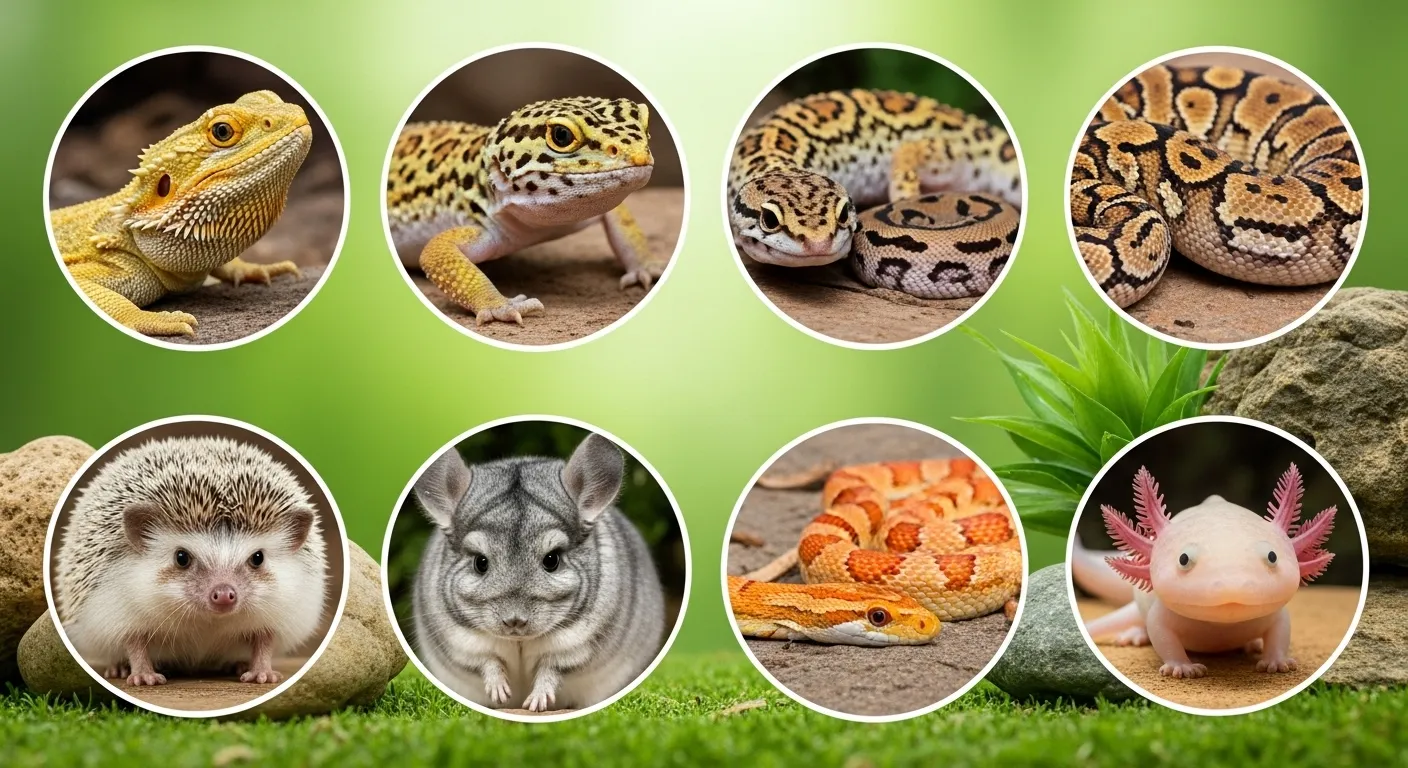
If kinkajous seem complex, look at other options in our guide to 7 easy-care exotic pets for beginners, which covers animals like hedgehogs with similar nocturnal traits.
Insights for Wildlife Fans
Spotting kinkajous means joining night tours in their ranges. Their eyes reflect light, making them visible with flashlights. Guides help locate them without harm.
Numbers drop due to hunting and habitat loss. They face threats from fur trade or capture for pets. Supporting protected areas helps their survival.
These animals play a role in forest health. Their habits spread plants and maintain balance. Watching them reveals the busy night life of rainforests. Connect with others through top 10 must-attend pet meetups for shared stories.