


The Short Answer
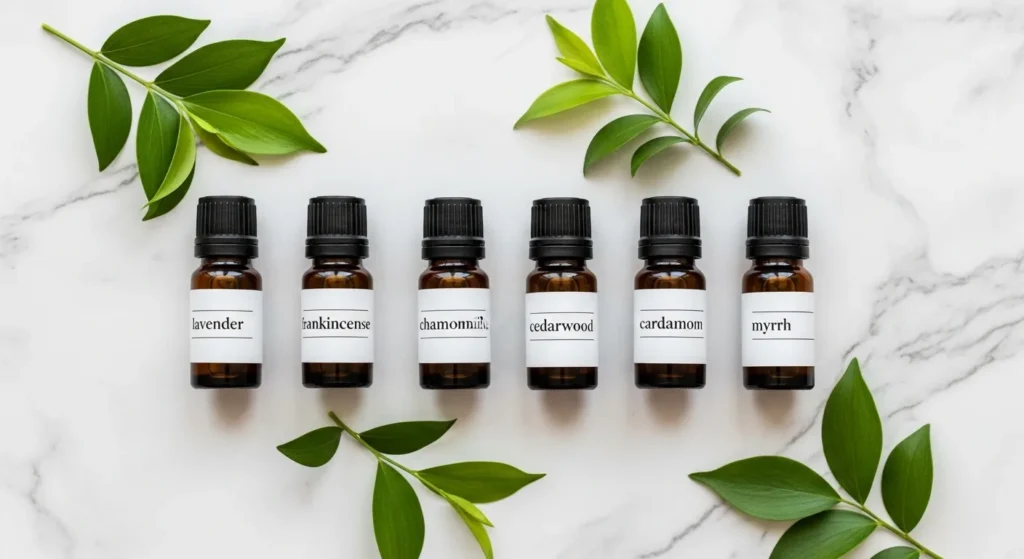
A few essential oils are considered relatively safe for dogs when used correctly — lavender, frankincense, Roman chamomile, cedarwood, cardamom, and myrrh are the most commonly cited. But “safe” comes with conditions. Dilution matters. Method of exposure matters. Your dog’s age, breed, and health status matter.
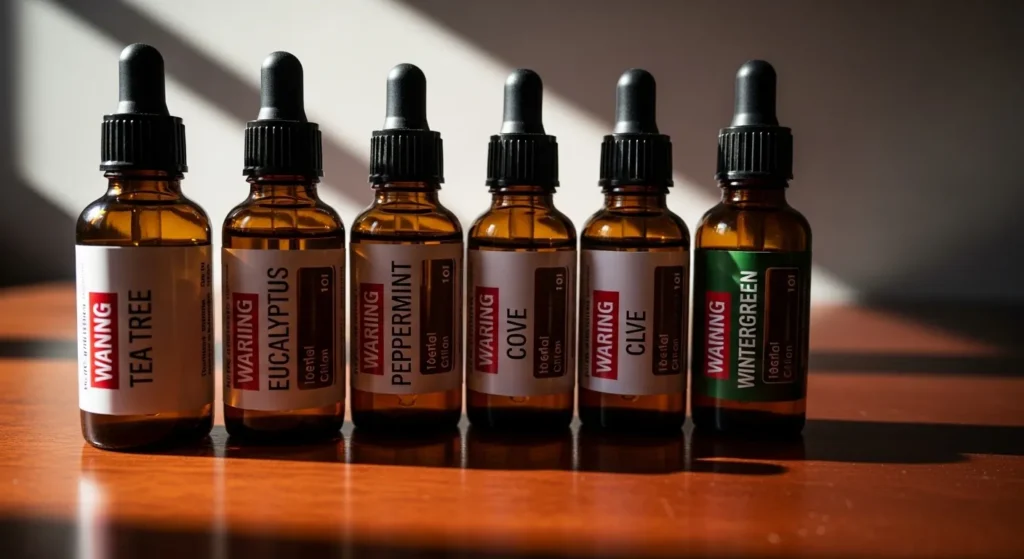
Many oils that are harmless to humans are genuinely toxic to dogs. Tea tree, eucalyptus, pennyroyal, wintergreen, and peppermint can cause serious harm — even in small amounts. Some can damage the liver. Others affect the nervous system.
If you use essential oils at home, your dog is already being exposed. Here’s what you need to know.
Why Dogs React Differently to Essential Oils Than Humans
Dogs have roughly 300 million olfactory receptors. Humans have about 6 million. What smells mild to you can be overwhelming — and physiologically stressful — to a dog.
Beyond scent sensitivity, dogs process certain chemical compounds differently than humans do. Their livers lack some of the enzymes needed to metabolize phenols and specific terpenes efficiently. These are common compounds in many popular essential oils.
When a dog inhales, absorbs, or ingests an oil containing phenols — like tea tree or clove — those compounds build up faster than the liver can clear them. That’s what makes certain oils hepatotoxic to dogs even at concentrations that wouldn’t affect a human.
There are three routes of exposure:
- Inhalation — breathing in diffused or airborne oil particles
- Topical absorption — skin contact, either direct application or contact with surfaces where oil has been applied
- Ingestion — licking oil off fur, skin, or surfaces
Each route carries different risks. Ingestion is the most serious. Inhalation is the most common route in households that use diffusers. If your dog is already showing unusual symptoms and you’re not sure why, the Pet Symptom Checker can help you identify what might be going on before you call the vet.
Essential Oils That Are Generally Safe for Dogs
These oils have the lowest reported toxicity risk and appear most frequently in veterinary and holistic animal care literature as conditionally acceptable. That said, no essential oil is completely without risk, and none should be applied to dogs without veterinary guidance. For a deeper look at how specific oils interact with canine health, our guide on safe essential oils for dogs covers additional options and context.
Lavender
Lavender is the most frequently referenced safe option. Its primary active compound, linalool, is present at low concentrations and is generally tolerated by dogs. Some veterinary behaviorists use diluted lavender in clinical settings to reduce anxiety. It should never be applied undiluted to skin or fur. We cover this in much more detail in our dedicated guide — is lavender safe for dogs? — including risks, benefits, and exactly how to use it.
Frankincense
Frankincense has low volatility and doesn’t carry the phenol load that makes many other oils dangerous. It’s used in some integrative veterinary practices. Keep concentrations low and diffusion sessions short.
Roman Chamomile
Different from German chamomile. Roman chamomile has anti-inflammatory properties and a well-documented low toxicity profile in dogs. It’s one of the oils used by some holistic vets for skin-related issues. Always verify you have the Roman, not German, variety — labeling matters.
Cedarwood
Cedarwood (specifically Atlas or Virginia varieties) is used in some pet-safe flea-repellent products. It has a relatively low risk profile compared to most oils. Avoid mixing it with other oils before confirming safety of the full combination.
Cardamom
Cardamom appears in several holistic vet resources as a lower-risk oil. It contains 1,8-cineole, which in large amounts can be irritating, so small concentrations and brief exposure apply here.
Myrrh
Myrrh has low volatility and a long history in traditional medicine. It shows up in vet-reviewed lists of conditionally acceptable oils. Like the others, dilution and limited exposure time are non-negotiable.
Essential Oils That Are Toxic to Dogs
This list is not exhaustive, but these are the oils most frequently implicated in poisoning cases and flagged by the ASPCA Animal Poison Control Center and Pet Poison Helpline.
Tea Tree Oil (Melaleuca)
Tea tree oil is one of the most dangerous oils for dogs. It contains terpinen-4-ol and other compounds that are highly toxic to the canine liver and nervous system. Even a few drops applied topically have caused paralysis and death in small dogs. It should never be used on or around dogs — in any form, at any dilution.
Eucalyptus
Eucalyptus contains eucalyptol, which dogs cannot metabolize safely. Exposure causes drooling, vomiting, lethargy, and in severe cases, seizures. It’s found in many household products — cleaning sprays, chest rubs, air fresheners — so check labels, not just oil bottles.
Peppermint
Despite appearing in some “pet-safe” marketing, peppermint oil is consistently flagged as toxic by veterinary toxicologists. It can cause vomiting, diarrhea, weakness, and liver damage. The high menthol concentration is especially problematic for small dogs. Our full breakdown of peppermint oil safety for dogs explains the specific risks and what to do if your dog is exposed.
Pennyroyal
Pennyroyal is one of the most acutely toxic oils for dogs. It was historically used as a natural flea repellent — a dangerous practice. It causes severe liver damage and has been linked to deaths in dogs. Avoid entirely.
Cinnamon (Bark and Leaf)
Both bark and leaf varieties of cinnamon oil contain cinnamaldehyde, which irritates mucous membranes and can cause low blood sugar, liver disease, vomiting, and diarrhea. Ground cinnamon and cinnamon oil are different risks — oil is far more concentrated. If you’ve been using cinnamon products around your dog, read is cinnamon bad for dogs for a full breakdown.
Citrus Oils
Lemon, lime, orange, and grapefruit oils contain d-limonene and linalool. In small amounts, some citrus exposure produces mild GI upset. In larger quantities, it causes depression of the central nervous system. The peels and plant material are also toxic — this isn’t limited to distilled oil. This is also worth considering if your dog has ever been around orange slices or citrus fruit.
Clove
Clove oil contains eugenol, a phenol compound. Dogs lack the liver enzyme (glucuronyl transferase) needed to process phenols efficiently. Clove causes liver damage, low blood sugar, vomiting, and can lead to liver failure in sufficient doses.
Ylang Ylang
Ylang ylang is a respiratory irritant for dogs and has been linked to vomiting, hypersalivation, weakness, and ataxia. It’s heavily used in perfumes and home fragrance products — passive exposure in heavily scented rooms is enough to cause symptoms in sensitive animals.
Wintergreen
Wintergreen contains methyl salicylate — essentially a concentrated form of the active ingredient in aspirin. Dogs are highly sensitive to salicylates. Even small topical exposures can cause GI bleeding, kidney damage, and respiratory failure.
Pine and Fir
Pine oil and fir needle oil are toxic to dogs through both inhalation and skin contact. They affect the central nervous system and can cause vomiting, ataxia, low body temperature, and in severe cases, kidney or liver damage. Pine-based cleaning products carry similar risks.
Signs of Essential Oil Poisoning in Dogs
Symptoms can appear within minutes of exposure or develop over several hours, depending on the oil, the amount, and the route of exposure.

Mild Symptoms
- Drooling or hypersalivation
- Watery eyes or squinting
- Pawing at the face or mouth
- Sneezing or coughing
- Vomiting or diarrhea
- Reluctance to move or general lethargy
- Skin redness or irritation at contact point
If your dog is vomiting repeatedly, that alone warrants attention — here’s a closer look at why dogs vomit and when it’s serious.
Severe Symptoms
- Muscle tremors
- Difficulty walking (ataxia)
- Seizures
- Collapse
- Difficulty breathing or labored respiration
- Jaundice (yellowing of eyes, gums, or skin)
- Loss of consciousness
When to Call Emergency Poison Control
Don’t wait for symptoms to worsen. Call immediately if your dog has ingested any essential oil, was directly exposed to a known toxic oil, or is showing any symptom from the severe list above.
ASPCA Animal Poison Control Center: (888) 426-4435 (24/7, consultation fee may apply) Pet Poison Helpline: (855) 764-7661 (24/7)
Save these numbers in your phone now.
How to Use Essential Oils Safely Around Dogs
If you choose to continue using essential oils in your home, these rules reduce — but do not eliminate — the risk to your dog.
Diffuser Safety Rules
Passive diffusers (reed diffusers, room sprays) disperse oil slowly and at lower concentrations than active ultrasonic or heat-based diffusers. Ultrasonic diffusers push oil particles actively into the air — they produce higher airborne concentrations and carry more risk.
- Never diffuse in a closed room where the dog cannot leave
- Limit sessions to 30–60 minutes maximum
- Run diffusers in rooms your dog doesn’t regularly occupy
- Keep the diffuser out of reach — spilled diffuser water contains undiluted or lightly diluted oil
- Turn off diffusing if your dog shows any unusual behavior
Topical Use and Dilution Ratios
Most veterinary aromatherapy guidelines recommend a maximum dilution of 0.5% to 1% for dogs, compared to the 2–3% commonly used for adult humans. That translates to roughly 1 drop of essential oil per 1 teaspoon (5 ml) of carrier oil for a 1% dilution.
Never apply essential oil directly to a dog’s skin, coat, ears, or nose without diluting in a carrier oil first. Coconut oil, jojoba, and fractionated coconut oil are commonly used. Before reaching for coconut oil as a carrier, check whether coconut oil is safe for dogs — there are some caveats worth knowing. Avoid the face, ears, genital area, and any broken skin entirely.
Even with safe oils and proper dilution, consult a veterinarian before any topical application. A holistic vet or a veterinarian with training through the American Holistic Veterinary Medical Association (AHVMA) is the right resource here.
Rooms, Ventilation, and Exit Routes
Your dog needs an exit. This is the single most important rule for diffuser use. If a scent is overwhelming or irritating, a dog that can’t leave the room has no choice but to keep breathing it.
- Always leave doors open when diffusing
- Use diffusers in rooms with windows that can be cracked
- Watch your dog’s behavior — leaving the room, hiding, or acting restless are signals
- Avoid diffusing near your dog’s sleeping or eating areas
Dogs at Higher Risk
Not all dogs face the same level of risk from essential oil exposure. Some categories require extra caution.
Puppies have immature liver function. Their ability to metabolize any foreign compound is reduced, which makes even low-level exposure riskier than it would be for a healthy adult dog. If you’re unsure how old your dog is, the Pet Age Calculator can give you a clearer picture of where they are developmentally.
Senior dogs often have diminished liver and kidney function due to age-related changes. Their detox capacity is lower, meaning toxins accumulate faster.
Toy and small breeds — dogs under 10–15 lbs — face disproportionate risk because the same amount of toxin represents a much higher dose relative to their body weight. If you have a small breed dog and aren’t sure which category they fall into, the Pet Breed Finder Quiz can help you identify breed-specific traits and sensitivities. Those considering adding a small breed to their home can also browse 7 small dog breeds that barely shed — breed characteristics matter for health management too.
Brachycephalic breeds (bulldogs, pugs, French bulldogs, shih tzus, Boston terriers) already have compromised respiratory anatomy. Airborne irritants — including essential oil particles — can trigger breathing difficulty faster and more severely than in breeds with normal airways.
Dogs with liver disease, kidney disease, or epilepsy should never be exposed to essential oils without direct veterinary supervision. Several oils are known seizure triggers, and a compromised liver processes toxins far less efficiently.

What to Do If Your Dog Is Exposed
Act quickly. Do not wait to see if symptoms develop.
- Remove your dog from the area immediately. Fresh air is the first step for inhalation exposure.
- If the oil is on the skin or coat, put on gloves and wash the area thoroughly with mild dish soap and warm water. Do not use more oil to “dilute” it.
- Do not induce vomiting unless a veterinarian or poison control specialist instructs you to. Some oils cause additional damage coming back up. If you do receive guidance to induce vomiting, read how to make a dog throw up safely before attempting it — method matters.
- Call ASPCA Poison Control at (888) 426-4435 or Pet Poison Helpline at (855) 764-7661. Have the oil name, concentration, approximate amount, and your dog’s weight ready.
- Go to an emergency vet if your dog is showing severe symptoms. Don’t wait on hold.
- Bring the oil bottle or take a photo of the label. The specific compounds listed matter for treatment decisions.
Also think about what else your dog may have been exposed to. Many household items that seem harmless — certain foods, plants, cleaning products — carry real risks. The Pet Food Safety Checker is a quick way to verify whether something your dog got into is dangerous.
Frequently Asked Questions
Can I diffuse essential oils around my dog? Yes, with restrictions. Use only oils with low toxicity profiles, diffuse in well-ventilated rooms with open doors, limit sessions to under an hour, and watch your dog’s behavior closely. Never diffuse oils from the toxic list above.
Is lavender safe for dogs? Lavender is one of the safest options, but it still carries risk if used incorrectly. Diffused lavender in a ventilated room with an exit available is low-risk for most adult dogs. Topical application requires dilution to 0.5–1%. Ingestion should be avoided. See our complete guide on lavender and dog safety for full details.
What happens if a dog licks essential oil? Ingestion is the most serious route of exposure. Even a small lick of a concentrated or toxic oil can cause vomiting, liver stress, or neurological symptoms. Call Pet Poison Helpline or ASPCA Poison Control immediately — don’t wait for symptoms.
Are essential oil diffusers bad for dogs? Diffusers aren’t automatically dangerous, but they’re not automatically safe either. Closed rooms, long sessions, toxic oils, and dogs with no exit route are the risk factors. Manage those variables and risk drops significantly.
Can puppies be around essential oils? Puppies should generally not be in rooms where essential oils are being actively diffused. Their immature liver function makes them more vulnerable. Wait until your vet gives guidance specific to your dog’s age and health status.
What is the most toxic essential oil for dogs? Tea tree oil and pennyroyal are consistently identified as the most dangerous. Both have caused deaths in dogs at small doses. Neither should be used anywhere near dogs in any concentration.
Is peppermint oil ever safe for dogs? No. Despite claims in some product marketing, peppermint oil is not safe for dogs. Full details are in our vet guide on peppermint oil and dogs.
Bottom Line
A handful of essential oils — lavender, frankincense, Roman chamomile, cedarwood, cardamom, myrrh — are considered lower-risk for dogs when used responsibly. Most others carry real danger, and several are capable of causing liver failure or death.
“Natural” doesn’t mean safe. Essential oils are highly concentrated plant extracts. Dogs metabolize them differently than humans do, and their sensitivity to airborne compounds is far higher than ours.
If you use essential oils at home, save the ASPCA Poison Control number ((888) 426-4435) in your phone. Keep your dog’s exit routes open. Know the toxic list. And when in doubt, ask your vet before introducing anything new into your dog’s environment. For ongoing peace of mind about what your dog eats, breathes, or comes into contact with, the Pet Symptom Checker is a useful first step before your vet call.