
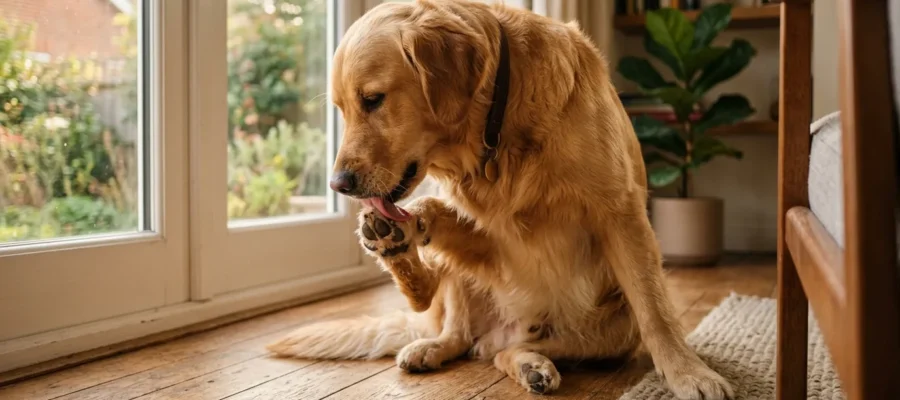
Dogs lick their paws. Most of the time, it means nothing. A quick lick after a walk, a little grooming before a nap — that’s normal dog behavior. But when it becomes constant, when you hear that wet slurping sound every night, or when you notice red skin and a faint funky smell between the toes, something else is going on.
This article breaks down every major reason dogs lick their paws, what warning signs matter, and what vets actually do to find the cause — so you know when to wait and when to call the clinic. If you’re already worried about what you’re seeing, our Pet Symptom Checker can help you narrow things down before your appointment.
Is It Normal for Dogs to Lick Their Paws?
Yes — up to a point.
What Normal Paw Licking Looks Like
Occasional licking is part of how dogs clean themselves. They’ll lick off mud, check a minor scrape, or just groom like any animal does. A few seconds here and there is nothing to flag.
Some breeds groom more than others. Retrievers and Spaniels tend to be oral fixators. They mouth and lick more than, say, a Doberman would. If you’re unsure whether your dog’s breed is naturally more prone to this behavior, the Pet Breed Finder Quiz can give you useful context about your dog’s typical traits.
When Licking Becomes Excessive
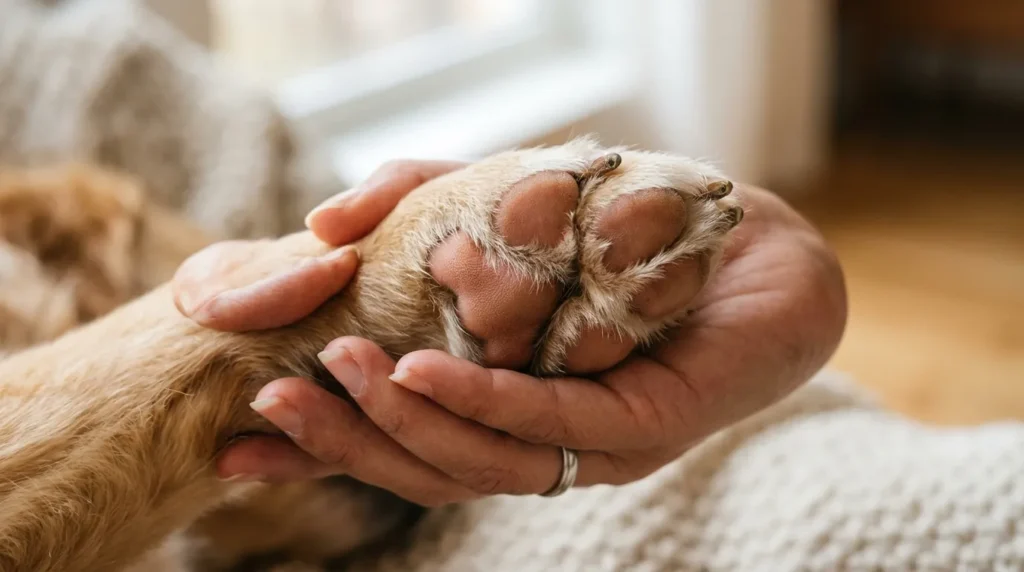
Excessive means: they won’t stop when you call their name. It means they’re licking the same paw repeatedly, for long stretches, day after day. You may notice the fur around the paw turning reddish-brown — that’s from a compound in saliva called porphyrin, which oxidizes and stains light-colored fur. It’s one of the earliest visible signs that licking has gone past normal.
Other signals that it’s excessive: broken skin, hair loss between the toes, swelling, odor, or limping. If your dog is also showing signs like shaking or panting more than usual, those are additional clues that something physical or emotional is driving the behavior.
7 Reasons Dogs Lick Their Paws
1. Allergies — Environmental and Food
This is the most common cause. Allergies account for the majority of chronic paw licking cases seen in vet clinics.
Environmental allergies (also called atopy or atopic dermatitis) are triggered by things like grass pollen, dust mites, mold spores, and tree pollen. The paws pick up allergens during every outdoor walk. The skin reacts. The dog licks to relieve the itch. It becomes a cycle.
Food allergies can cause identical symptoms. The most common food allergens in dogs are beef, chicken, dairy, wheat, and eggs. One important note: food allergies can develop even after years of eating the same food. A dog who’s eaten chicken kibble for four years can still develop a chicken allergy. Use the Pet Food Safety Checker to quickly check whether any ingredient in your dog’s current diet is a known allergen concern.
Allergy-related licking usually affects both front paws. It often gets worse in spring and fall. Some dogs outgrow seasonal spikes; most don’t without intervention.
In mild allergy cases, your vet may initially recommend an antihistamine. If you’re wondering about over-the-counter options, read our guide on whether Benadryl is safe for dogs before giving your dog anything.
2. Yeast and Bacterial Skin Infections
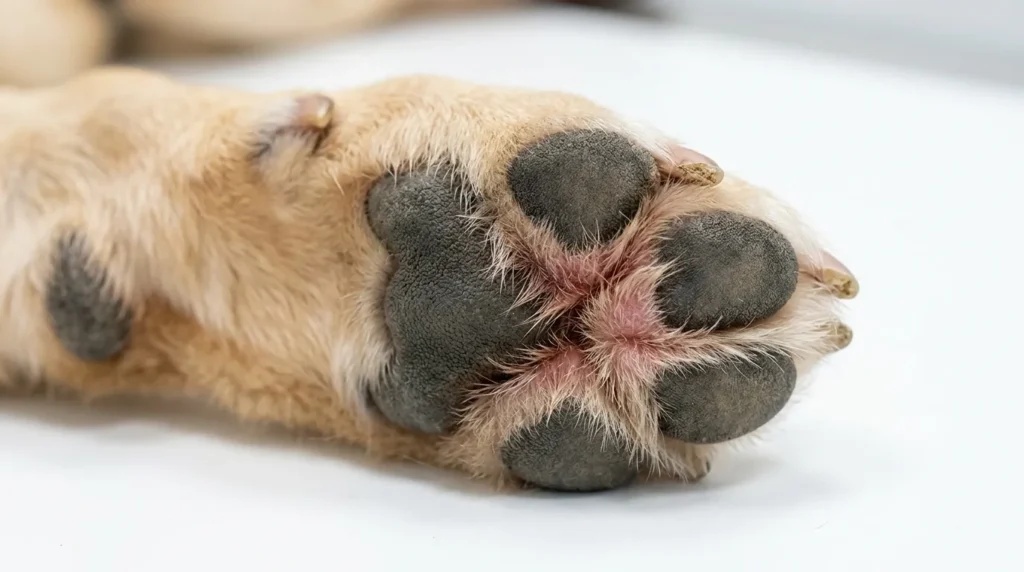
Yeast infections — usually caused by Malassezia pachydermatis — are extremely common in dogs with skin folds, floppy ears, or allergies. The paws are a prime location. Warm, moist spaces between the toes are ideal conditions for yeast to overgrow.
Signs of a yeast infection on the paw: reddish-brown staining of the fur, a musty or “corn chip” odor, thickened skin, and sometimes a greasy texture to the pad area.
Bacterial infections (pyoderma) often follow. The skin breaks down from repeated licking, bacteria enter through micro-abrasions, and the infection takes hold. You’ll notice pustules, discharge, or crusting.
Both conditions require prescription treatment. Antifungal shampoos and topical sprays can help early cases, but moderate to severe infections need oral medication.
3. Injuries, Cuts, and Foreign Objects
Sometimes the answer is simple. A small cut from a rock. A thorn embedded between the toes. A cracked nail. A bee sting.
Dogs instinctively lick injuries. It’s not entirely unhelpful — saliva has minor antimicrobial properties — but it delays healing and introduces bacteria. If your dog is suddenly licking one specific paw aggressively, especially after a walk, check it closely. Use good lighting. Look between each toe and pad.
Things to look for: swelling, a visible puncture, bleeding, a foreign object, a cracked or broken nail, or a nail growing into the pad. Keeping nails trimmed is one simple prevention step — here’s how to cut dog nails safely at home if you’ve been putting that off.
4. Fleas, Mites, and Other Parasites
Flea allergy dermatitis is one of the most intensely itchy conditions a dog can experience. Just one flea bite can trigger a reaction that lasts for days in a sensitive dog. Licking and chewing at the feet and lower body is a classic sign.
Mites — specifically mange mites (Sarcoptes scabiei for sarcoptic mange, Demodex canis for demodectic mange) — burrow into the skin and cause severe irritation. Demodex often presents first on the paws and face in young dogs.
Dogs on year-round parasite prevention fare significantly better here. To understand how parasites enter a dog’s life more broadly, our guide on how dogs get heartworm covers the full parasite prevention picture worth reading alongside this.
5. Dry, Cracked, or Burned Paw Pads
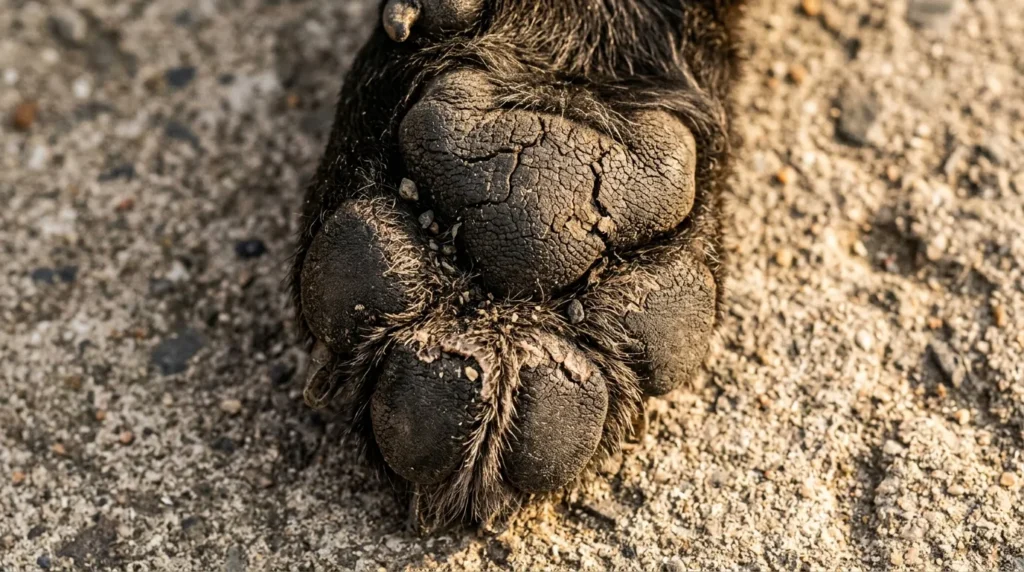
Paw pads take a beating. Hot asphalt in summer can cause burns — pavement above 125°F (52°C) can damage pads within 60 seconds. Ice melt chemicals in winter cause chemical irritation and dryness. Repeated exposure to rough terrain gradually dries and cracks the pad surface.
A dog with cracked pads will lick to soothe the discomfort, which worsens the cracking over time. Check pads regularly for fissures, especially in seasonal transitions.
Dog-safe paw balms containing beeswax, shea butter, or vitamin E can help restore moisture. Coconut oil is another option many owners use — it’s generally safe in small amounts, but read that guide first so you know the limits. Avoid human moisturizers — many contain xylitol or other compounds toxic to dogs.
6. Anxiety, Boredom, and Compulsive Behavior
Paw licking is a self-soothing behavior. Dogs under chronic stress — separation anxiety, loud environments, lack of mental stimulation — often develop repetitive behaviors as an outlet. Paw licking is one of the most common.
The behavior reinforces itself. It releases low-level endorphins. The dog starts doing it even when the original stressor is gone. Over time it becomes a habit — or progresses into a compulsive disorder that requires behavioral intervention.
Signs this is the cause: licking primarily happens when the dog is alone, bored, or after stressful events. No visible skin changes initially. Licking is easily interrupted early on.
Bored dogs in under-stimulated environments — especially working breeds kept in small spaces — are at high risk. Knowing how much exercise your dog actually needs each day is a good starting point. Puzzle feeders, longer exercise sessions, and environmental enrichment can help significantly. If noise or storms are a trigger, our guide on calming dogs during storms has practical tools that work for anxiety-driven behaviors beyond just thunder.
7. Pain from Joint Issues or Arthritis
Dogs sometimes lick a paw because the pain is local — arthritis, a joint injury, or a soft tissue problem in the leg or foot. They lick the area closest to where it hurts.
This is easy to miss. No visible wound. No infection. But the dog keeps returning to the same paw, often one of the front feet. Watch for stiffness, reluctance to climb stairs, or a slight limp alongside the licking.
Older dogs and large breeds — Labradors, German Shepherds, Golden Retrievers — are disproportionately affected by osteoarthritis. In these cases, treating the underlying pain stops the licking. Our guide on what you can give a dog for pain covers both vet-prescribed and supportive options worth knowing about.
Lick Granuloma: When Licking Becomes a Wound
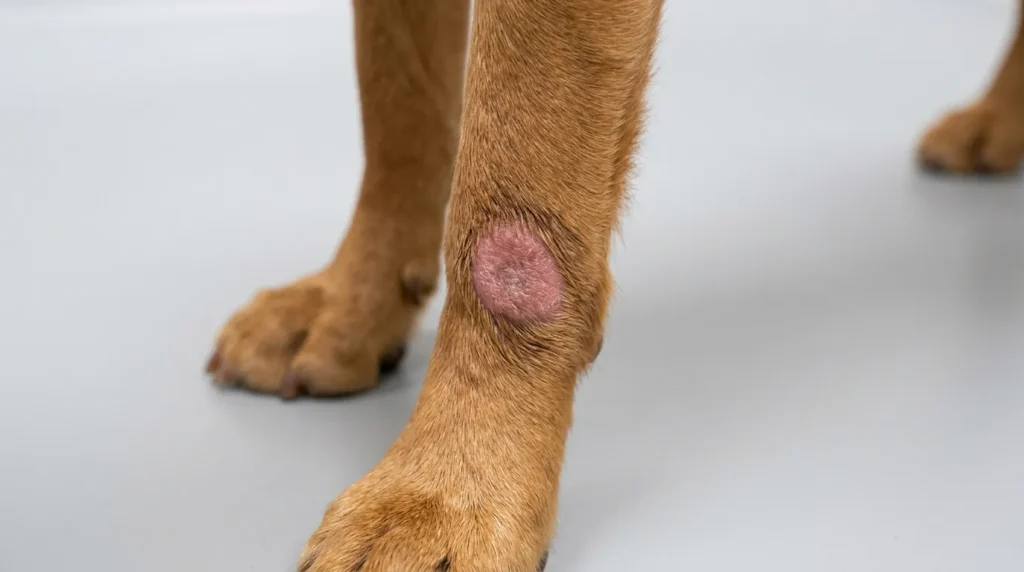
A lick granuloma (also called acral lick dermatitis) is a firm, hairless, raised lesion — usually on the front of the wrist or lower leg — caused by repeated, compulsive licking of the same spot. The skin thickens and becomes permanently inflamed.
What Causes It
The trigger can be physical (an old injury, arthritis, nerve damage) or behavioral (anxiety, compulsion). Often it starts as one and becomes the other. The dog licks because something hurts. Then it licks out of habit even after the pain resolves. The wound never fully heals because the licking never stops.
Certain breeds are more prone: Doberman Pinschers, Labrador Retrievers, Golden Retrievers, Great Danes, and German Shepherds show higher rates in clinical literature.
How Vets Treat It
Treatment is rarely one thing. Vets often combine:
- Antibiotics for secondary bacterial infection (almost always present)
- Anti-itch medication — Apoquel or Cytopoint to break the itch cycle
- Behavioral support — anti-anxiety medication (fluoxetine, clomipramine) in confirmed compulsive cases
- Physical barriers — bandaging or an e-collar to prevent continued licking while tissue heals
- Laser therapy in some clinics for accelerated wound healing
Resolution takes weeks to months. Recurrence is common if the underlying cause isn’t addressed.
Atopic Dermatitis — The Most Overlooked Cause
Atopic dermatitis is the second most common allergic skin disease in dogs, behind only flea allergy dermatitis. It’s chronic, it’s manageable, but it’s rarely cured.
Symptoms and Age of Onset
Symptoms typically begin between 1 and 5 years of age. The classic presentation: itchy paws, face, ears, armpits, and groin. Paw licking is often the first noticeable sign owners bring to the vet.
Skin becomes red and inflamed. Chronic cases show thickening (lichenification) and darkening (hyperpigmentation) of affected skin. Secondary yeast and bacterial infections are common.
Diagnosing Atopic Dermatitis
There is no single definitive test. Diagnosis is made by ruling out other causes first:
- Rule out parasites — full skin exam, possibly skin scraping
- Rule out food allergy — strict elimination diet for 8–12 weeks using a novel protein or hydrolyzed protein diet
- Evaluate environment — seasonal patterns, indoor vs. outdoor exposure
- Allergy testing — intradermal testing (injecting ~60 allergens under sedated skin) or blood serum IgE testing. Both have limitations; intradermal is considered more reliable but requires a veterinary dermatologist
Treatment Options
Atopic dermatitis is managed, not cured. Current options:
- Apoquel (oclacitinib): FDA-approved, fast-acting (within 4 hours), targets JAK1 pathways to suppress itch. Daily oral tablet. Most widely prescribed.
- Cytopoint (lokivetmab): Monthly injectable antibody that neutralizes IL-31, a key itch signaling molecule. Preferred for dogs where daily tablets are difficult. Effects last 4–8 weeks.
- Atopica (cyclosporine): Older immunosuppressant option. Effective but slower-acting. Less commonly used now that Apoquel and Cytopoint exist.
- Allergen-specific immunotherapy (ASIT): Allergy shots or sublingual drops customized to the dog’s specific allergens. The only treatment that can reduce long-term sensitivity. Takes 6–12 months to show full effect.
- Topical therapy: Medicated shampoos, sprays, and mousses reduce surface allergens and control secondary infections. Bathing 2–3 times weekly during flares is often recommended.
- Omega-3 fatty acids: EPA and DHA supplementation (typically 20–55 mg/kg/day of combined EPA+DHA) supports skin barrier function and reduces inflammatory response. Results take 6–8 weeks.
Warning Signs That Need a Vet Visit
Stop waiting and call your vet if you see any of these:
- Redness or swelling between the toes or on the pad
- Brown or rust-colored staining of the fur from chronic saliva exposure
- Odor — musty, yeasty, or foul smells coming from the paw
- Discharge — any pus, fluid, or crust
- Hair loss between or around the toes
- Open sores or wounds that aren’t healing
- Limping alongside the licking
- Licking that has lasted more than 2 days without improvement
Any combination of these means there’s likely an infection, allergy, or injury that home care won’t fix. Not sure if what you’re seeing counts? Run it through the Pet Symptom Checker to get a clearer picture before you call.
How Vets Find the Root Cause
A vet doesn’t guess. They work through a process.
Physical Exam and Skin Cytology
First step is a thorough paw exam — between every toe, under the pads, around the nail beds. If infection is suspected, a cytology swab is taken from the affected area and examined under a microscope. This confirms whether the infection is bacterial, fungal, or both. Results are available same-day and directly determine which medication is needed.
Elimination Diet Protocol
If allergies are suspected and parasites are ruled out, an elimination diet trial begins. The dog eats only a novel protein and carbohydrate — something it has never eaten before (rabbit and potato, for example) — for a minimum of 8 weeks. No treats. No flavored chews. No table scraps. If symptoms resolve, food allergy is confirmed. Then foods are reintroduced one at a time to identify the trigger.
Allergy Testing — Intradermal vs. Blood
Intradermal allergy testing requires sedation and a veterinary dermatologist. Small amounts of roughly 60 allergens are injected just under the skin. Positive reactions appear within 15–20 minutes. It’s considered the most reliable method, but it’s costly and not available at every clinic.
Blood serum testing measures IgE antibody levels against specific allergens. It’s less invasive and available at most practices. Sensitivity and specificity are lower than intradermal testing, but it’s a reasonable starting point. Both types of testing inform allergen-specific immunotherapy — the customized treatment plan aimed at reducing long-term sensitivity.
What You Can Do at Home
These won’t replace veterinary care for infections or allergies, but they help with prevention and mild cases.
Paw Wipes After Outdoor Time
Wiping your dog’s paws after walks removes environmental allergens before they absorb into the skin. Use fragrance-free, dog-safe wipes. Pay attention to between the toes — that’s where allergens accumulate most.
During high pollen seasons, this one step can noticeably reduce licking in mildly allergic dogs. It’s also a good time to check for cuts or debris — part of a broader home grooming routine that keeps small problems from becoming big ones.
Dog-Safe Moisturizers for Cracked Pads
If pads are dry or cracked, apply a dog-safe paw balm before bed. Products with beeswax, shea butter, or coconut oil are well-tolerated. Applying at night and putting a sock over the paw for 10 minutes helps absorption. Avoid anything containing zinc oxide, salicylic acid, or xylitol.
Before using any essential oil-based balm, double-check it’s actually safe. Some oils marketed as “natural” are harmful to dogs. Our guide to safe essential oils for dogs is worth a quick read — and separately, if you’ve seen peppermint listed as an ingredient, check the peppermint oil safety guide specifically.
Omega-3 Supplements and Skin Health
Fish oil supplements — specifically products with high EPA and DHA content — support the skin barrier from the inside. A typical starting dose for a medium-sized dog (25–40 lbs) is around 1,000–2,000 mg of combined EPA+DHA daily. Check with your vet before starting, especially if your dog is on any blood-thinning medications.
Improvement takes time. Expect 6–8 weeks before seeing a difference in skin condition.
Reducing Anxiety Triggers
If the licking seems behavioral, start with the basics: more exercise, more mental stimulation, consistent daily routine. Puzzle feeders, sniff walks, and training sessions burn mental energy that anxious dogs often redirect into compulsive behaviors. This pairs directly with the daily exercise needs guide — under-exercised dogs are far more likely to self-soothe through repetitive behaviors.
For dogs with separation anxiety, gradual desensitization protocols and behavioral consultation are more effective than any product. In some cases, your vet may recommend short-term anti-anxiety medication to break the cycle while behavioral training takes effect.
Frequently Asked Questions
Why does my dog lick their paws at night?
It’s usually quieter and less stimulating at night. Dogs with allergies or anxiety that are distracted during the day have nothing competing for their attention at night. The itch is still there — they just act on it more. Nighttime licking is also common in dogs with pain, since arthritis stiffens with inactivity and ramps up discomfort when lying still.
Why is my dog only licking one paw?
Single-paw licking usually points to a localized cause: a foreign object, a cut, a broken nail, an insect sting, an interdigital cyst, or early joint pain in that leg. Bilateral (both paws) licking is more typical of allergies, infections, or anxiety.
Can anxiety cause paw licking in dogs?
Yes. Anxiety-driven licking is well-documented. It functions as a self-soothing mechanism — similar to how humans bite nails or tap their feet. Dogs with separation anxiety, noise phobias, or chronic understimulation are most at risk. The key diagnostic clue is that licking coincides with stressful events or periods of inactivity. It’s also worth knowing that dogs licking people excessively can stem from the same anxiety-driven patterns.
What does brown staining between the toes mean?
Brown or rust-colored staining is caused by porphyrins in dog saliva. Porphyrins are iron-containing compounds excreted through saliva, tears, and urine. When saliva contacts light-colored fur repeatedly, the porphyrins oxidize and create a reddish-brown discoloration. The staining itself isn’t harmful, but it’s a reliable indicator of chronic, repeated licking.
When should I take my dog to the vet for paw licking?
Take your dog to the vet if the licking has continued for more than 2 days, there is any visible redness, swelling, odor, discharge, or hair loss, your dog is limping or seems in pain, or home measures haven’t changed anything. Early treatment leads to faster recovery and lower cost than waiting.
Final Thoughts
Most paw licking has a fixable cause. Allergies, infections, injuries, parasites — these are all manageable with the right diagnosis. The key is not waiting too long. Brown staining, a funky smell, or raw skin between the toes are signals that something has been going on for a while.
Start by looking at the paw closely. Check for visible injuries. Wipe the paws after walks. Watch the pattern — is it one paw or both? After walks or at night? If it doesn’t improve in a couple of days, or if there’s any visible skin change, your vet is the right next call.
Avoiding common dog owner mistakes — like ignoring low-grade symptoms or guessing at treatments — makes a big difference in how quickly your dog gets relief. The sooner you know what’s causing it, the sooner your dog is comfortable again.