
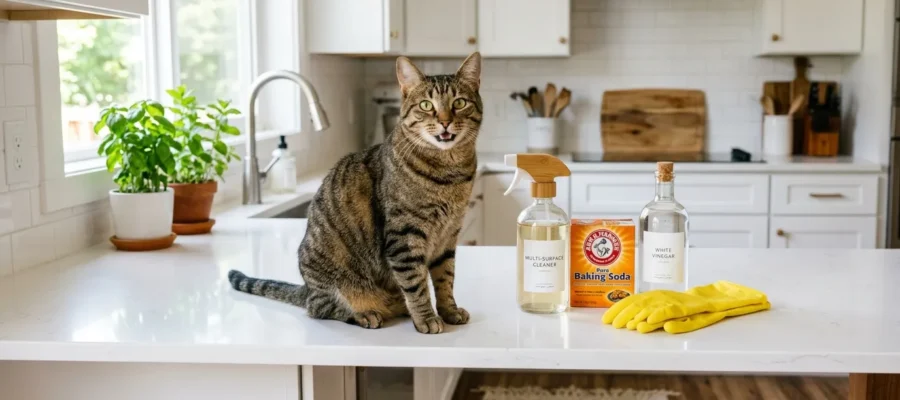
If you own a cat, you already know regular cleaning products weren’t designed with you in mind. The fur sticks to everything. The litter tracks across three rooms. And that smell — the one you stopped noticing until a guest walked in — doesn’t budge no matter how many times you mop the floor.
Most people grab whatever’s under the sink. It doesn’t work. Then they buy an air freshener. That doesn’t work either.
The problem isn’t effort. It’s using the wrong tools for a very specific type of mess.
These 13 cleaning solutions are built around how cat-related dirt actually behaves — the proteins in urine, the static in fur, the scatter from litter. Some are products. Some are ingredient combinations. A few cost almost nothing.
None of them are obvious. All of them work.
Why Standard Cleaners Fail in Cat Homes
The Enzyme Gap
Regular household cleaners — multipurpose sprays, floor cleaners, scented detergents — are designed to lift dirt and kill surface bacteria. Cat urine is a different problem entirely.
Cat urine contains urea, urobilin, uric acid, creatinine, and pheromones. When it dries, uric acid forms crystals that bond to fabric and flooring at a microscopic level. Standard cleaners don’t break those crystals down. They mask the smell temporarily. When humidity rises — from rain, cooking steam, even body heat — the crystals reactivate and the odor returns.
Only enzyme-based cleaners break the bond. Everything else is temporary.
If you’ve already dealt with repeated accidents in the same spot, there’s a good chance your cat is returning because they can still detect traces you can’t. Understanding why cats spray in the first place can help you address the behavior alongside the cleanup.
This gap explains why so many cat owners feel like they’re losing the battle. They’re using the right amount of effort with the wrong chemistry.
The 13 Solutions
1. Enzyme Cleaners — The Only Permanent Fix for Cat Urine
Enzyme cleaners are the single most important cleaning tool a cat owner can own.
They contain protease enzymes — biological compounds that digest the proteins and uric acid crystals in cat waste at a molecular level. Once those crystals are broken down, the odor source is gone. Not covered. Gone.
Brands like Nature’s Miracle, Rocco & Roxie, and Zero Odor are widely available and tested specifically for cat urine.
How to use it correctly:
- Blot the area first. Never scrub — scrubbing spreads urine deeper into fibers.
- Saturate the stain fully. The enzyme cleaner needs to reach every layer the urine reached.
- Let it sit for a minimum of 15 minutes. For dried or old stains, 30–45 minutes is better.
- Blot dry. Don’t rinse immediately — rinsing before the enzymes finish working reduces effectiveness.
Works on carpet, upholstery, mattresses, hardwood (with care), and concrete. For a full step-by-step guide on tackling carpet specifically, see how to get cat pee out of carpet.
2. UV / Blacklight Flashlight — Find What You Can’t See
Most cat owners are cleaning the wrong spots.
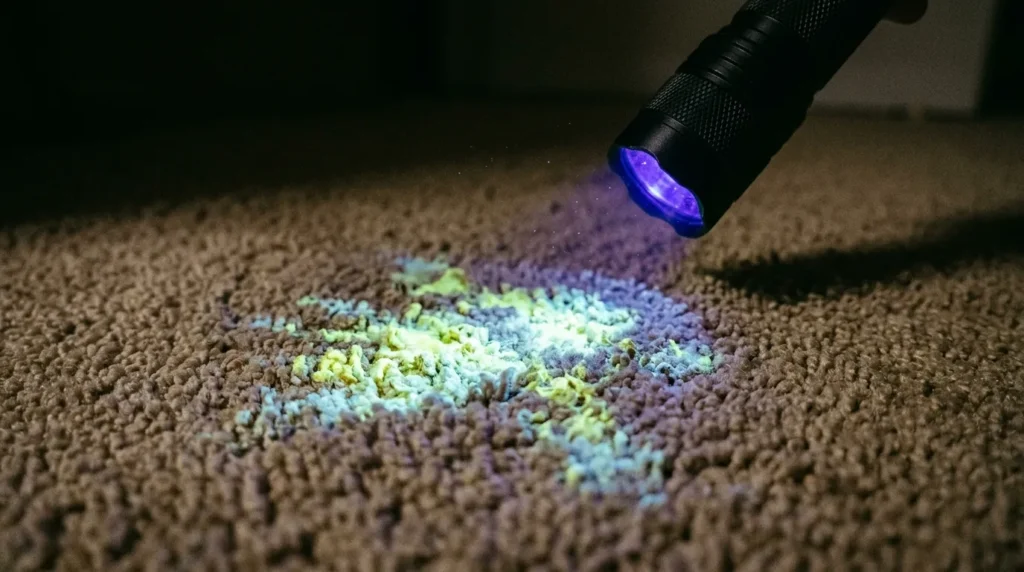
A UV blacklight flashlight makes dried cat urine glow yellow-green in the dark. Urine soaks into baseboards, under furniture legs, along wall edges, and into grout lines — places you’d never think to clean because you can’t see or smell them from a standing position.
A basic UV flashlight costs $10–$15 on most retail sites.
How to use it:
- Turn off the lights completely.
- Scan slowly across floors, walls, and furniture.
- Mark glowing spots with a piece of tape before turning the lights back on.
- Treat each marked spot with an enzyme cleaner.
This one step alone can eliminate chronic odor that seemed impossible to locate. It’s the most underused tool in cat owner cleaning.
3. Hydrogen Peroxide + Baking Soda + Dish Soap — The Urine Stain Trifecta
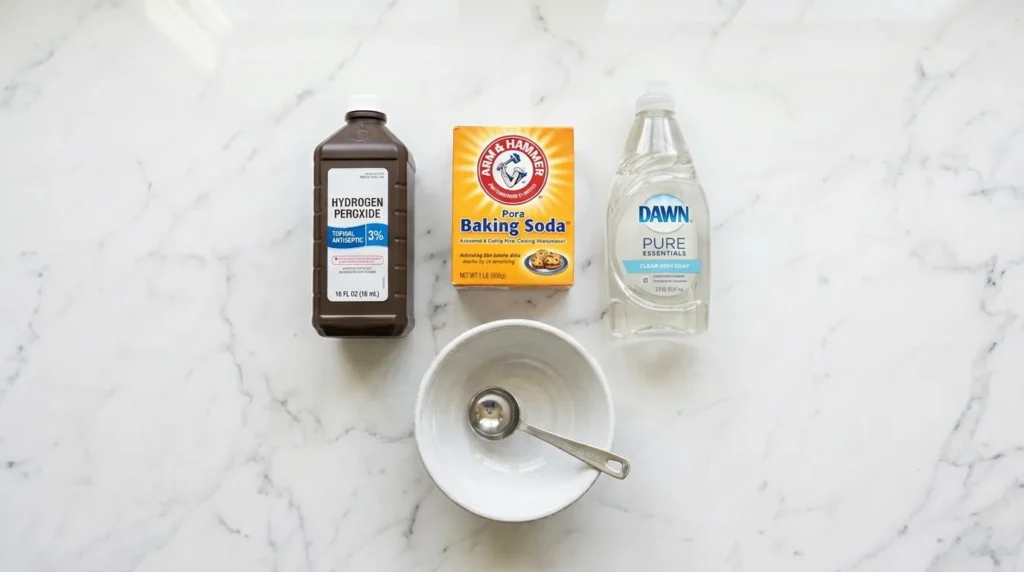
For set-in stains on carpet or upholstery, this DIY combination outperforms many commercial products.
The formula:
- 1 cup 3% hydrogen peroxide (standard drugstore concentration)
- 1 tablespoon baking soda
- 1 teaspoon dish soap (unscented preferred)
Mix gently — it will fizz. Apply immediately, as the reaction weakens within minutes.
Why it works: Hydrogen peroxide oxidizes the color compounds in the stain. Baking soda neutralizes the acidic pH of urine. Dish soap lifts the residue from fibers so it can be blotted away.
Important: Test on a hidden area first. 3% hydrogen peroxide can lighten colored fabrics. Do not use on wool or silk. Do not use this on cat-accessible surfaces while wet — let it dry and air out fully before allowing contact.
4. White Vinegar Solution — Odor Neutralizer, Not Masker
White vinegar doesn’t just cover odors — it neutralizes alkaline odor compounds through a pH reaction.
Cat urine is slightly alkaline when fresh. Vinegar is acidic (pH 2.4–3.4). When they meet, the reaction breaks down the ammonia-based compounds responsible for the sharp urine smell.
Correct dilution: 1 part white vinegar to 1 part water. Using full-strength vinegar on fabric can damage fibers and leave its own residue.
Spray, let sit for 5–10 minutes, then blot.
Vinegar is safe around cats once dry. The smell dissipates within 20–30 minutes. Do not use on marble, granite, or natural stone — the acidity etches the surface.
5. Rubber Gloves for Fur Removal — Faster Than Any Lint Roller
This surprises most people. A damp rubber glove — the kind used for washing dishes — is one of the most effective fur removal tools available.
Run a damp rubber-gloved hand across upholstery, car seats, curtains, or carpet. The rubber creates friction and static that clumps cat hair into rolls you can pick up by hand or vacuum away.
It covers large areas in under two minutes. No replacement sheets, no running out of tape, no waste.
Works best on velvet, microfiber, linen, and woven fabrics. Less effective on very smooth surfaces.
6. Baking Soda — The Carpet Deodorizer That Costs Almost Nothing
Baking soda absorbs odor rather than covering it. Sprinkled generously over carpet or a litter mat, left for 15–20 minutes, then vacuumed up, it pulls trapped odor compounds from fibers.
For litter box odor specifically: sprinkle a thin layer of baking soda at the bottom of the litter box before adding fresh litter. It reduces ammonia buildup between full cleanings.
Note: Some cats dislike the texture or scent of baking soda. If your cat avoids the litter box after this, skip the litter box application and use it only on surrounding floors and mats. Sudden litter box avoidance can sometimes point to other issues — our guide on why cats spray covers behavioral triggers worth ruling out.
7. Activated Charcoal — The Odor Absorber for Enclosed Spaces
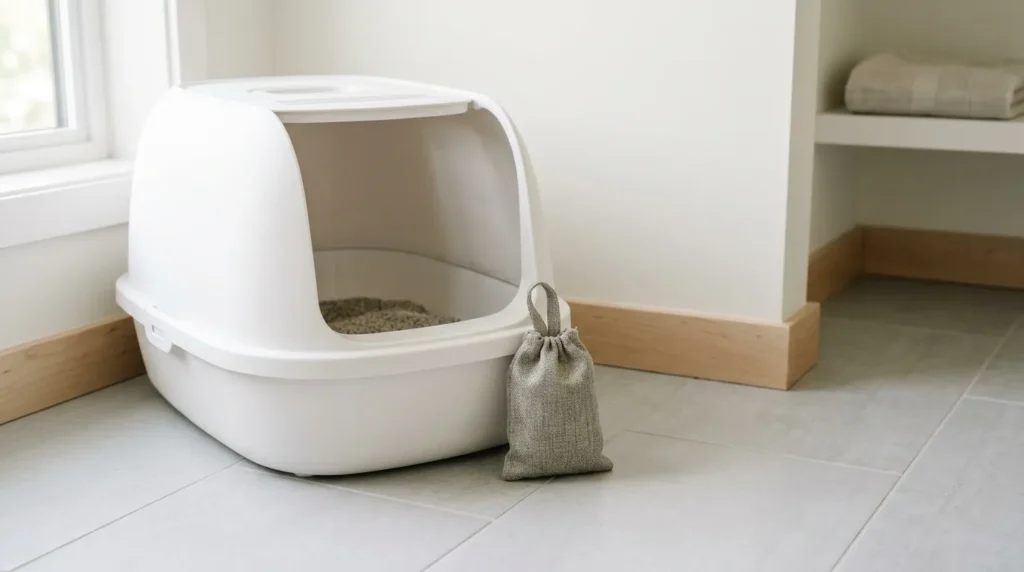
Activated charcoal is baking soda’s more powerful counterpart for enclosed, high-odor spaces.
It works through adsorption — odor molecules physically bond to the surface of the charcoal, trapping them rather than masking them. One activated charcoal pouch placed near a litter box, inside a cabinet where food is stored, or in a small laundry room where cat bedding sits absorbs a significant amount of ambient odor.
Brands like Moso Natural and NonScents are designed specifically for this use. Most pouches last 1–2 years and can be “recharged” by placing them in direct sunlight for a few hours monthly.
No sprays, no chemicals, no fragrance.
8. Coconut Oil — For Paw Print Smudges on Glass and Mirrors
Cat paw prints on glass surfaces are oily. Standard glass cleaners smear them before removing them.
A small amount of coconut oil on a microfiber cloth, rubbed gently over the smudge, dissolves the oils in the paw print first. Wipe away with a clean cloth, then follow with a standard glass cleaner or diluted white vinegar for streak-free results.
This works because like dissolves like — the natural oils in coconut oil cut through the lipids in the paw print residue without scratching the glass.
Keep coconut oil away from fabric surfaces — it will leave a grease stain.
9. Foam Carpet Cleaner + Cold Water Protocol — For Fresh Accidents
Speed matters with fresh accidents. The faster you act, the less the liquid penetrates into carpet backing and subfloor.
The cold water protocol:
- Blot immediately with a clean cloth. Press firmly — don’t rub.
- Pour a small amount of cold water over the spot to dilute what remains.
- Blot again.
- Apply foam carpet cleaner (Bissell, Woolite, or similar).
- Let foam sit for 3–5 minutes.
- Blot dry.
- Follow up with enzyme cleaner once the area is dry.
Critical: Never use hot water on fresh urine stains. Heat sets the proteins in urine permanently into fibers, the same way heat sets an egg. Cold water dilutes without bonding.
For recurring accidents, also check whether your cat might be experiencing a health issue — a pet symptom checker can help you identify patterns before a vet visit.
10. Used Dryer Sheets — Static-Bonded Fur on Hard Furniture
Already-used dryer sheets (not fresh ones) reduce static on wooden furniture, shelving, and baseboards. Cat hair clings to these surfaces through static charge. Wiping with a used dryer sheet neutralizes the charge, causing hair to release from the surface so it can be wiped or vacuumed away.
Fresh dryer sheets contain fragrance compounds that can irritate cats’ respiratory systems. Used sheets have most of the coating depleted and are far safer. Even so, keep them out of reach — ingestion is harmful.
This also works on TV screens, monitor screens, and air vents where fur accumulates.
11. Silicone Litter Mats — Stop Scatter Before It Starts
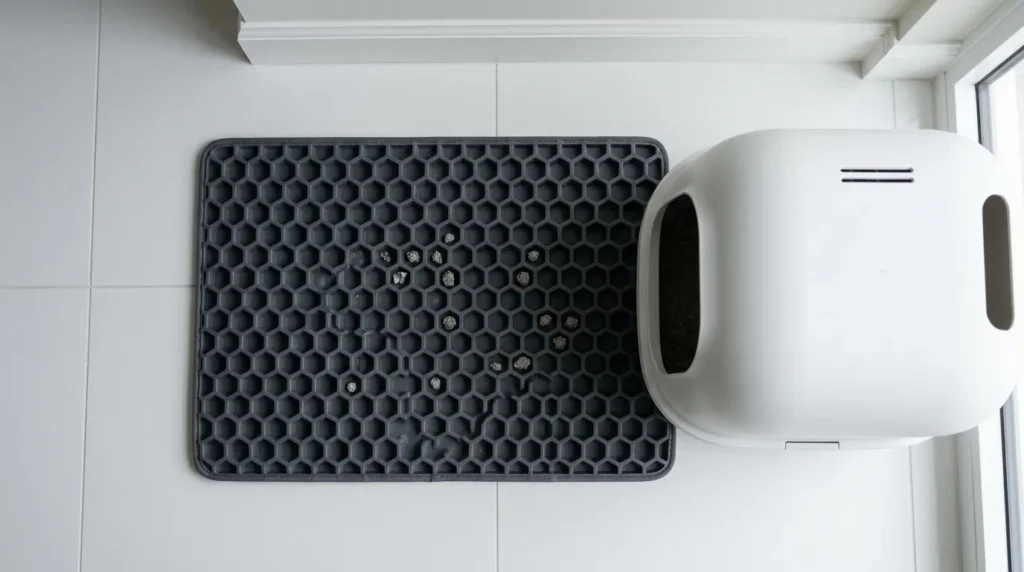
Litter scatter is one of the most persistent daily cleaning problems for cat owners. A silicone litter mat with deep honeycomb grooves captures litter from paws as the cat exits the box. Most plastic litter mats trap some litter but become impossible to clean over time — litter embeds in the texture.
Silicone mats flex. Pick them up, fold them slightly, and the trapped litter falls out in one pour. Rinse with water. Done.
Measure the exit area of your litter box before purchasing — the mat should extend at least 18–24 inches from the box opening to be effective.
12. OxiClean Free — Unscented Cat-Safe Laundry Booster
Cat bedding, washable litter mats, and fabric toys collect odor that regular detergent doesn’t remove.
OxiClean Free (the unscented, dye-free version) added to a regular laundry cycle breaks down organic compounds — including urine, dander, and biological residue — through oxygen-based chemistry. It’s significantly more effective at odor removal from fabrics than scented detergents, which only add fragrance on top of the smell.
Why not scented OxiClean or scented detergents? Many fragrance compounds in laundry products — particularly linalool and limonene — are irritants for cats. A cat sleeping on freshly washed bedding is in direct contact with those residues for hours. This is the same reason lavender is not safe around cats despite being a popular home fragrance — concentration in enclosed spaces matters.
One scoop per load is sufficient. No need to pre-soak for most items.
13. The Lint Roller Wet + Dry Combo — For Deep Upholstery Fur
A dry lint roller works on the surface layer of cat fur. But fur that’s worked deep into upholstery fibers — especially on heavily used cat spots on sofas — needs a two-step approach.
Step 1: Lightly dampen the surface of the upholstery with a water-misted cloth. This relaxes the fibers and releases the static holding deeper fur in place.
Step 2: Immediately run a lint roller over the damp surface. The combination of relaxed fibers and roller adhesion pulls fur from deeper in the fabric than either method alone.
Let the upholstery dry fully before use. This method works especially well on velvet, chenille, and microfiber.
What to Avoid — Cleaning Products Toxic to Cats
This section matters as much as any solution above.
Phenol-based cleaners — including Pine-Sol, Lysol (original formula), and many disinfectant sprays — are hepatotoxic to cats. Cats lack the liver enzyme (glucuronyl transferase) needed to metabolize phenolic compounds. Exposure through paw contact or inhalation can cause liver damage.
Essential oil-based cleaners — tea tree oil, eucalyptus, lavender, peppermint — are increasingly common in “natural” cleaning products. All are toxic to cats in varying concentrations. Avoid any product listing essential oils in its ingredients. If you want a complete breakdown of which scents pose the biggest risk, what smells cats hate also covers scents that stress cats even below toxic thresholds.
Ammonia-based cleaners — the smell of ammonia mimics cat urine, which can encourage cats to remark the same spot. It also doesn’t eliminate urine odor compounds.
Bleach — effective as a disinfectant, but the chlorine fumes are a respiratory irritant for cats. If you use bleach in a bathroom or laundry area, ensure full ventilation and keep cats out until surfaces are completely dry and the room has aired out.
The ASPCA Animal Poison Control Center maintains an updated list of toxic household chemicals. It’s worth bookmarking. If you’re ever unsure whether something your cat was exposed to is dangerous, our pet symptom checker can help you assess warning signs before calling your vet.
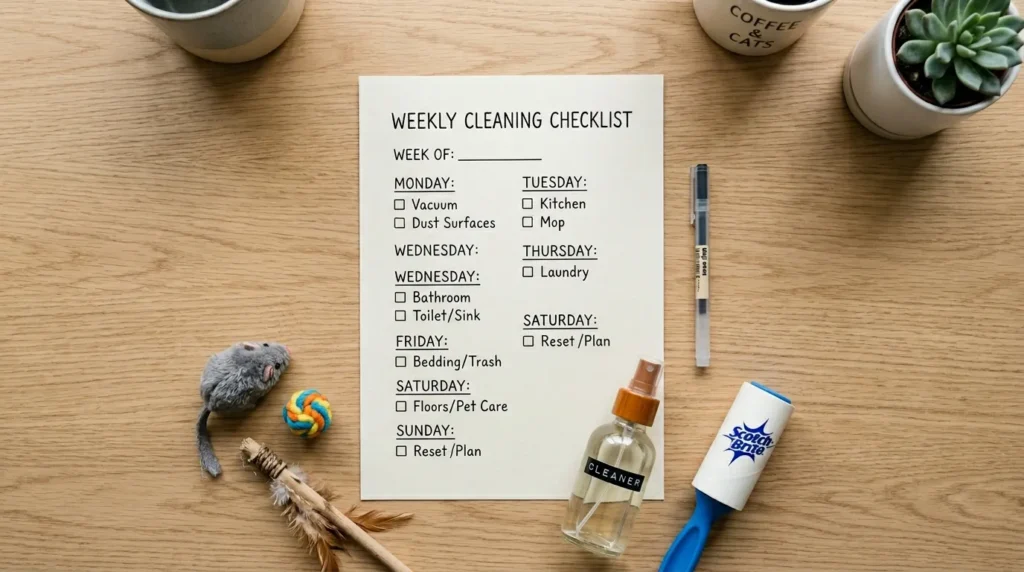
A Simple Weekly Cleaning Routine for Cat Owners
You don’t need to clean everything every day. A consistent short routine beats occasional deep cleans.
Daily (5 minutes):
- Scoop litter box
- Quick lint roll on the sofa or main cat furniture spot
- Wipe food and water bowl
Every 2–3 days:
- Sweep or vacuum floors, focusing on baseboards
- Wipe down litter mat
Weekly:
- Full litter box change + baking soda layer at the base
- Enzyme cleaner on any spots identified during the week
- Wash cat bedding with OxiClean Free
- UV flashlight scan if you suspect new accidents
Monthly:
- Recharge activated charcoal pouches
- Deep clean litter box with diluted white vinegar (rinse thoroughly)
- Check and clean air vents near litter area
Keeping your cat well-groomed also reduces how much cleaning you’re doing in the first place. Regular brushing cuts down on shed fur dramatically. If your cat has specific coat care needs — like a Sphynx or a Persian — check out the Sphynx cat grooming needs guide or our breakdown of Persian cat health problems that can affect coat and skin condition.
Frequently Asked Questions
What is the best cleaner for cat urine on carpet? Enzyme cleaners are the only type that permanently eliminate cat urine odor from carpet. They break down uric acid crystals rather than masking the smell. Saturate the area fully, let it dwell for at least 15 minutes, and blot dry. For full details, see how to get cat pee out of carpet.
Is white vinegar safe to use around cats? Yes, once it dries. The acetic acid in vinegar evaporates as it dries and poses no risk to cats. Don’t apply it to surfaces while your cat is nearby, and ensure the area dries fully before cat contact.
How do I get cat smell out of a couch permanently? Identify all urine spots with a UV flashlight first. Treat each spot with an enzyme cleaner using full saturation. Follow up by sprinkling baking soda, letting it sit for 20 minutes, then vacuuming. For maintenance, use the lint roller wet + dry combo weekly and wash removable cushion covers with OxiClean Free.
Can I use hydrogen peroxide on cat urine stains? 3% hydrogen peroxide (standard drugstore strength) is effective on cat urine stains when combined with baking soda and dish soap. Do not use higher concentrations. Test on hidden fabric areas first — it can lighten some colors. Always let it dry fully before your cat accesses the surface.
Why does my house still smell like cat after cleaning? In most cases, there are urine deposits in spots that haven’t been located yet — under furniture, along baseboards, in grout lines. Use a UV flashlight in a darkened room to find them. Also check that any cleaners used were enzyme-based, not just scented sprays. If the odor is coming from your cat’s coat itself, why does my cat have dandruff may also be relevant — skin issues can cause persistent body odor in cats.
Final Thought
Cat ownership and a clean home aren’t in conflict. The problem has always been using general-purpose products on a very specific type of mess.
Enzyme cleaners handle the chemistry that standard products can’t. A UV flashlight finds what your nose can’t locate. Rubber gloves and silicone mats address the daily scatter before it builds up. Knowing what to avoid keeps your cat safe while you clean.
Pick two or three solutions from this list and start there. The results are immediate enough that you’ll want to work through the rest.
And if you want to go further, our 13 genius cleaning hacks for cat owners covers even more shortcuts worth bookmarking — including tools that make cat ownership significantly easier long-term.