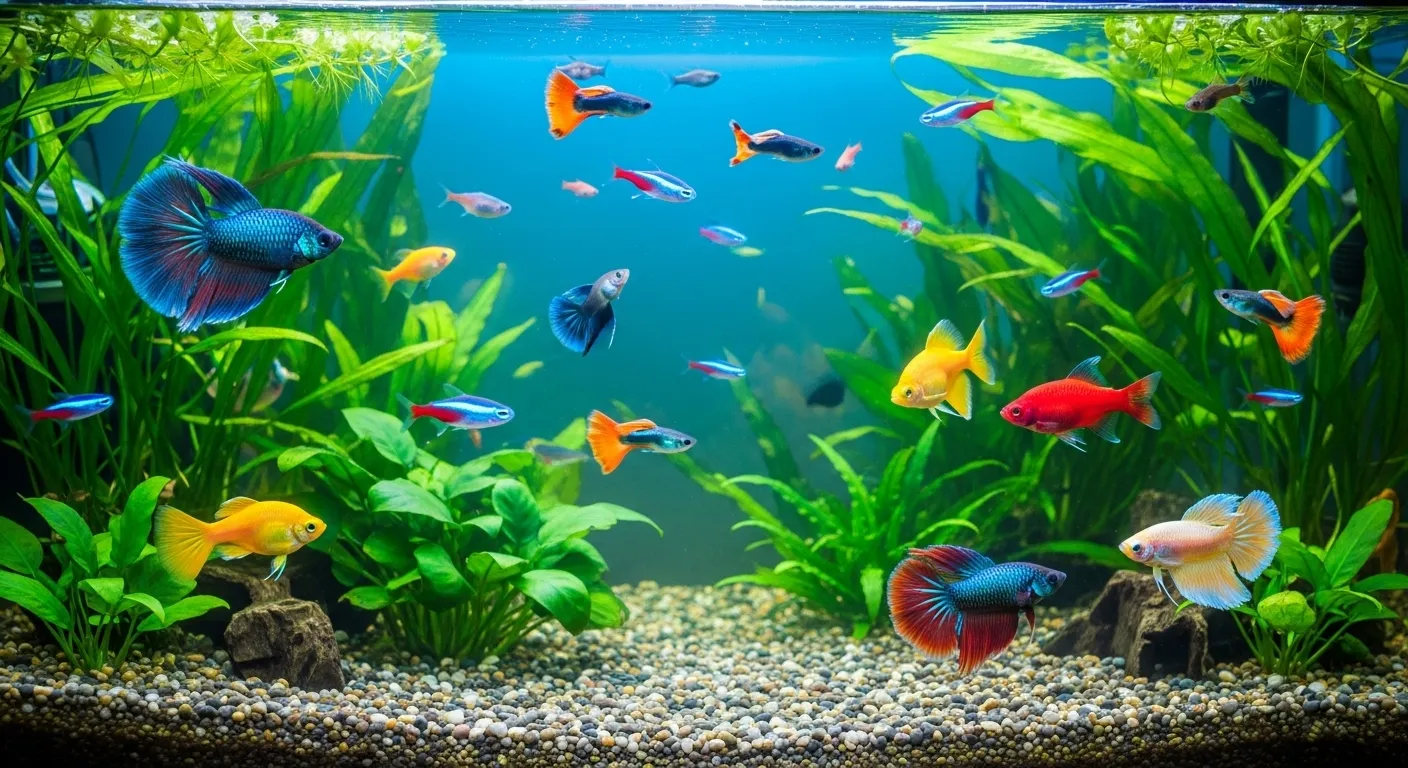

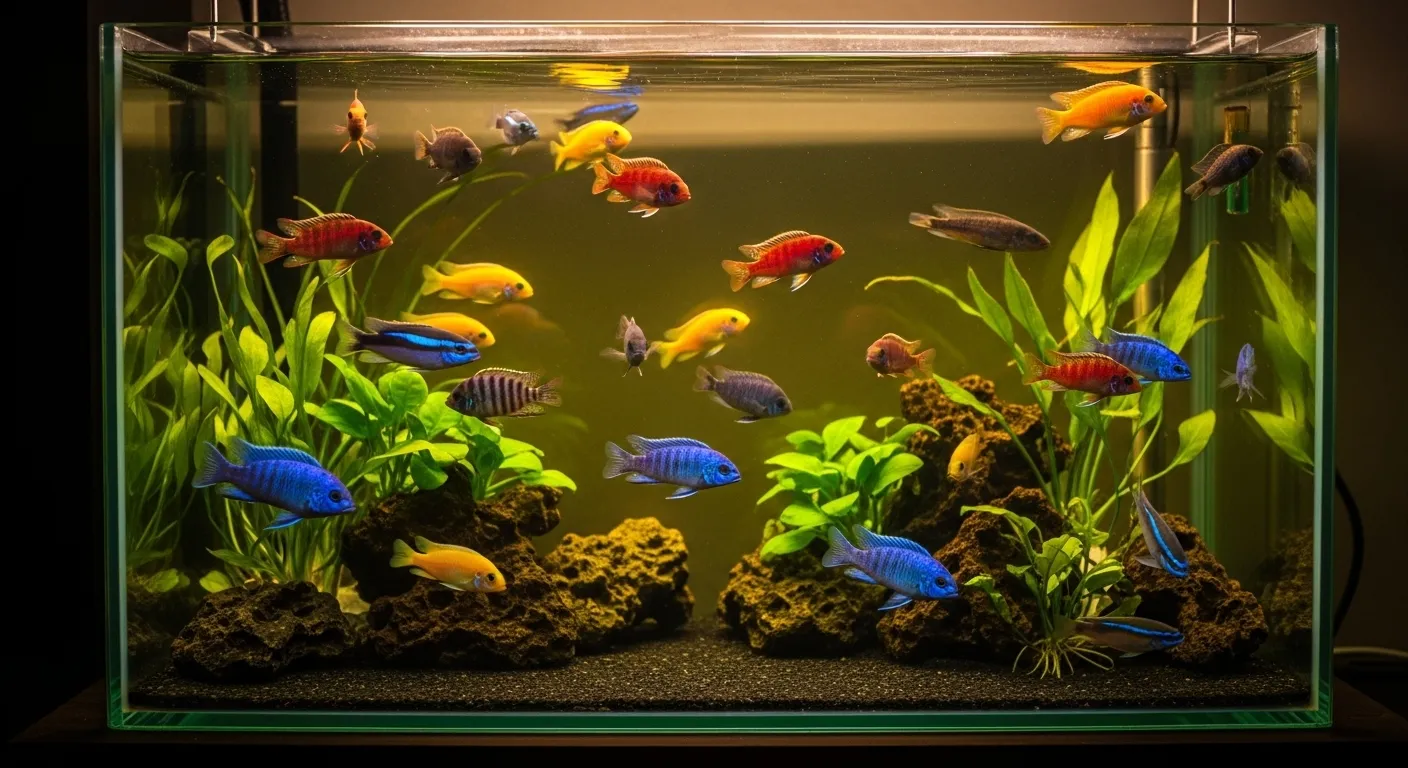
Starting a home aquarium can bring life and color to any space. For those new to fishkeeping, choosing species that need little upkeep helps build confidence. These seven options stand out for their hardiness and bright appearances. They suit small setups and community groups. Each one adds movement and charm without much hassle.
Before you pick your fish, try our pet breed finder quiz to see what fits your style.
1. Betta Fish
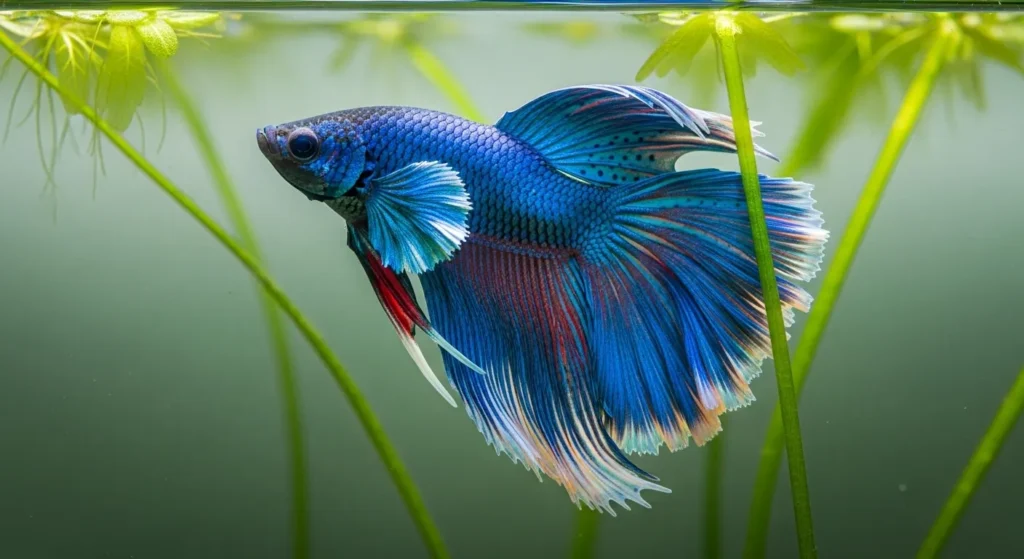
Betta fish catch the eye with their flowing fins and bold colors, like blues and reds. They show unique traits, such as building bubble nests or exploring their space. These fish come from warm waters and can take in air from the surface, which makes them tough in basic tanks.
- Keep just one male per tank to avoid fights.
- Use a heater to hold water at around 78 degrees Fahrenheit.
- Add a filter and some plants for cover.
Bettas do well in nano tanks and show their best sides when content.
2. Guppies
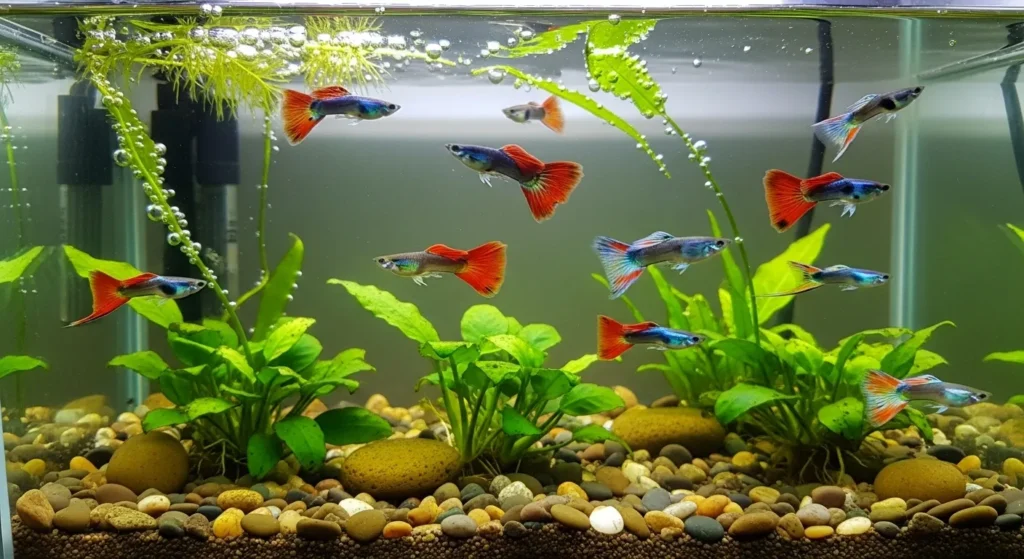
Guppies bring pops of color with their patterned tails and active swimming. Males often display brighter shades than females, and they adjust quickly to new homes. These small fish breed without much effort, leading to fry that hide in plants.
- Feed them flake or pellet food, plus frozen treats now and then.
- Aim for a tank of at least 10 gallons with temperatures from 68 to 78 degrees Fahrenheit.
- Maintain a pH between 6.5 and 8.0 for health.
Guppies thrive in planted spaces. Check our pet food safety checker to confirm safe treats for them.
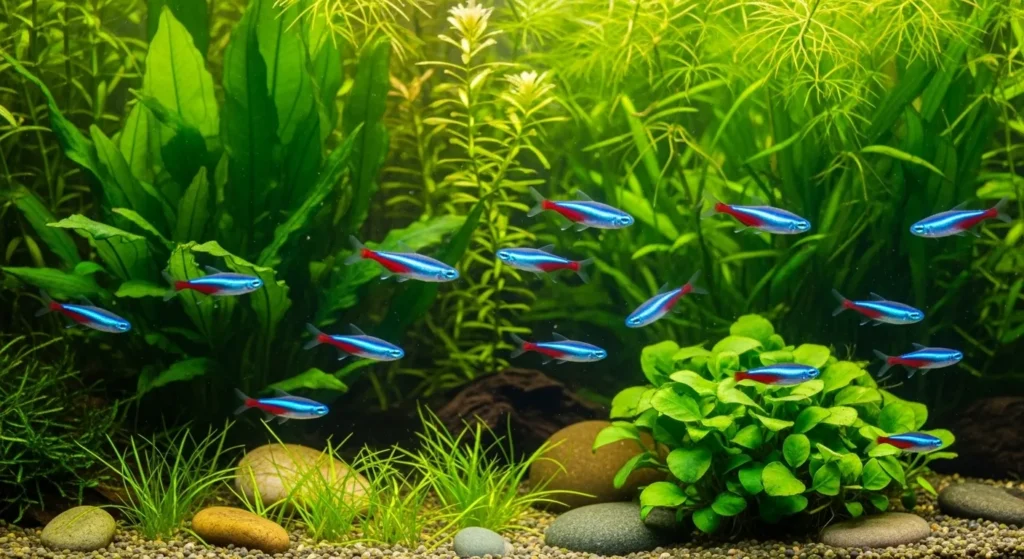
3. Neon Tetras
Neon tetras shine with their blue and red stripes, creating a school that lights up the tank. They stay small, about 1.5 inches, and prefer to move in groups. Peaceful by nature, they fit well in calm environments with greenery.
- House them in schools of six or more.
- Use small flake or pellet foods that suit their size.
- Plant the tank heavily for comfort.
Neons offer low needs and visual impact.
4. Cory Catfish
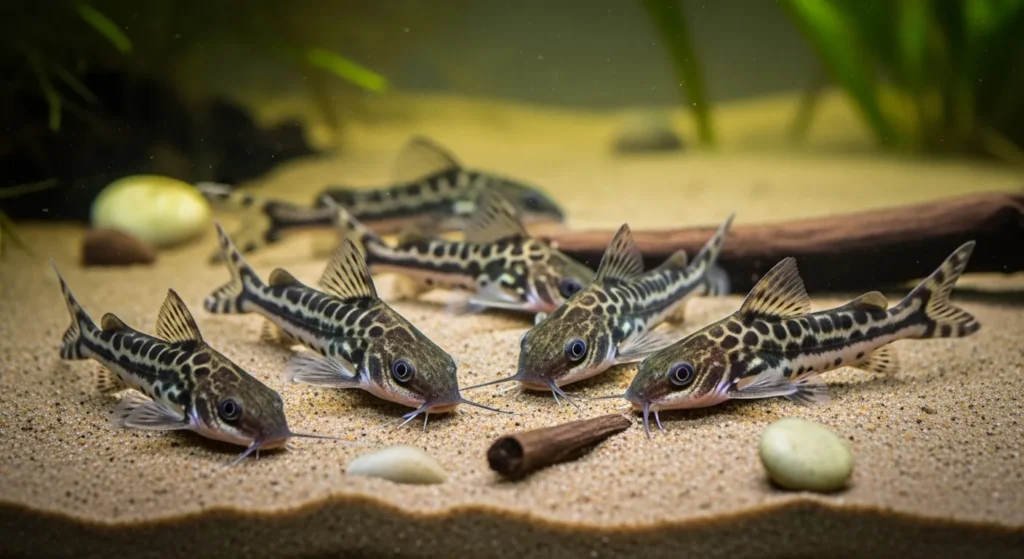
Cory catfish work the bottom of the tank, sifting through substrate for bits of food. They come in patterns like spotted or plain, and grow to 1 or 2 inches. These social fish do best in groups and handle a range of conditions.
- Keep four or more of the same type together.
- Offer sinking pellets or worms as main meals.
- Set tank size to 20 gallons or larger, with temperatures from 72 to 82 degrees Fahrenheit.
Corys help clean up and stay easy.
5. Platies
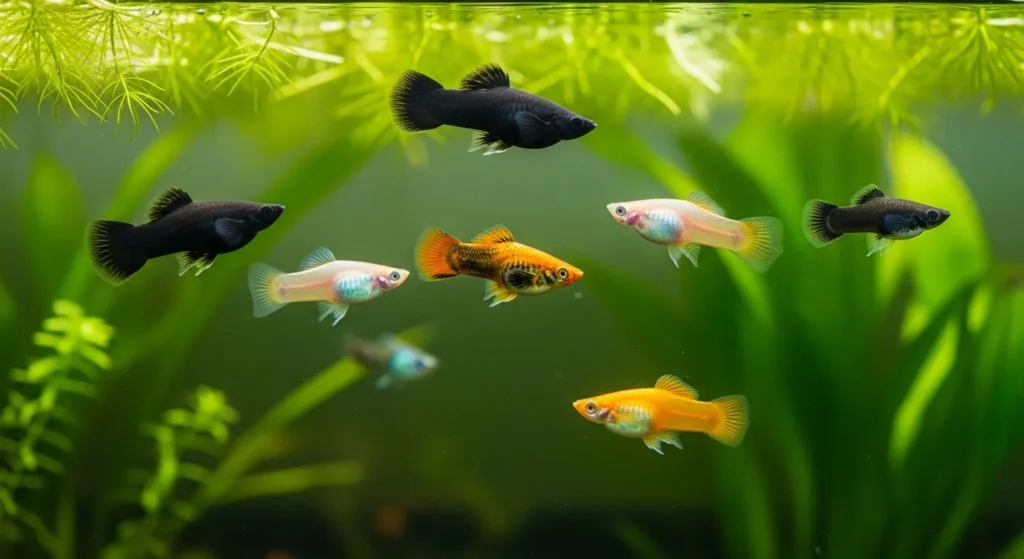
Platies add energy with their quick darts and varied colors, such as reds and yellows. They eat algae and breed live young, making them fun to observe. Peaceful overall, they like company without crowding.
- Ratio two to three females per male.
- Provide mineral-rich water with a slightly higher pH.
- Include algae in their diet for natural foraging.
Platies show adaptability and tank activity.
6. Harlequin Rasboras
Harlequin rasboras feature a soft pink hue with a black mark, forming loose schools. They max out at 2 inches and hang in the middle of the water. Hardy and flexible, they mix well in most setups.
- Group three to five for best behavior.
- They adapt to various water types.
- Find them easily at local stores.
These make reliable choices for beginners.
7. Cherry Barbs
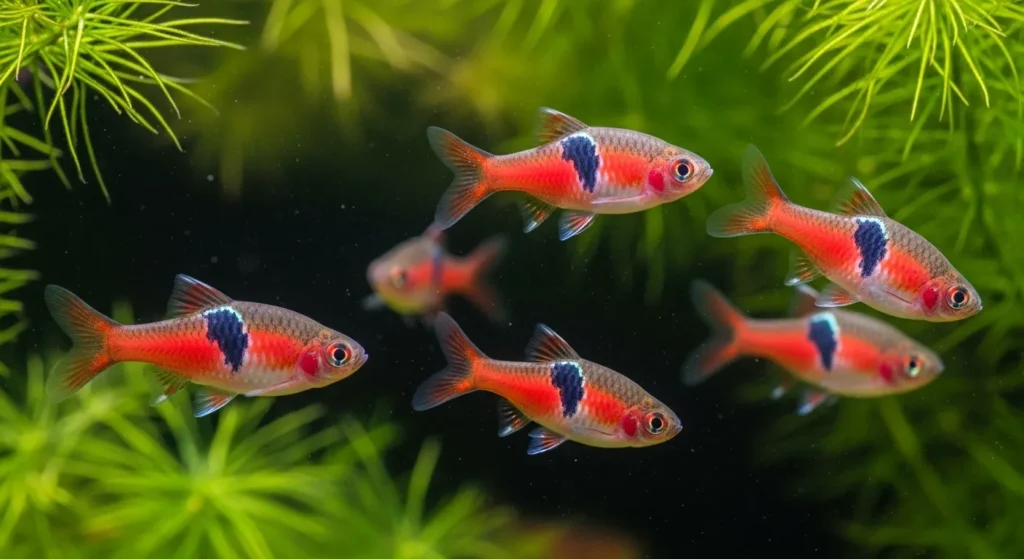
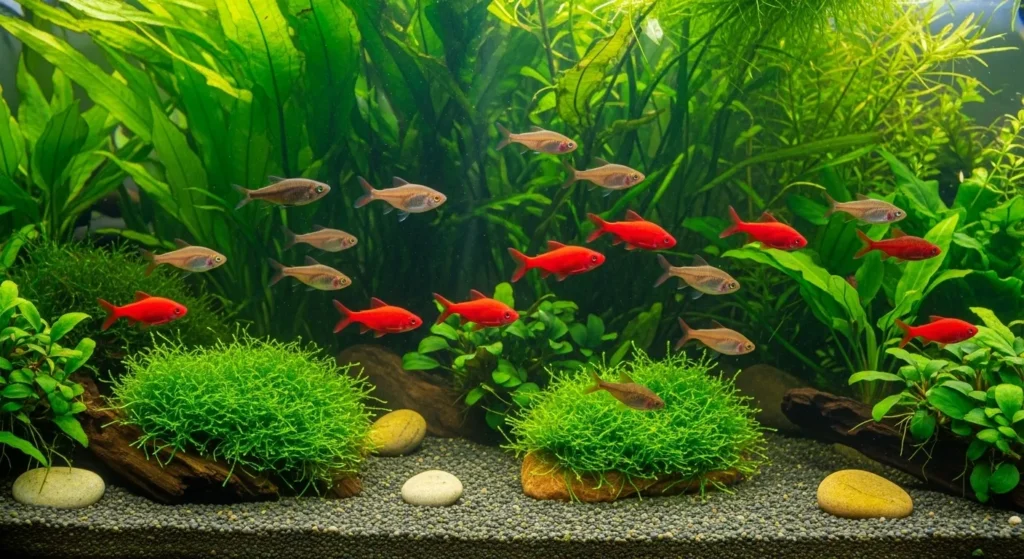
Cherry barbs glow with red tones, especially in males, against their slim bodies. They swim actively and reach about 2 inches. In groups, they create a lively display without much trouble.
- Keep six or more, with more females.
- Use a 20-gallon tank at 74 to 80 degrees Fahrenheit.
- Feed pellets and add veggies or frozen foods occasionally.
Cherry barbs suit simple maintenance.
Once your tank is set up, use our pet name generator to pick fun names for your new fish. Curious about their age in human terms? Try the pet age calculator.
For more on similar species, read our post on the best tropical fish for beginner aquariums. If you want to branch out, check 7 easy-care exotic pets for beginners, which includes aquatic options like axolotls.