


Dogs are omnivores. Their bodies can digest both animal and plant material — fruit included. But their digestive systems handle sugar and certain plant compounds very differently than ours do. Some fruits are genuinely good for them. Others can cause kidney failure.
This guide covers exactly which fruits are safe, which are dangerous, how to prepare each one, and what to do if something goes wrong. No vague advice. No guessing.
Can Dogs Eat Fruit?
Yes — with conditions.
Fruit isn’t a required part of a dog’s diet. A complete, balanced commercial dog food already meets their nutritional needs. Fruit is a treat. All treats combined — including fruit — should make up no more than 10% of your dog’s daily caloric intake. The remaining 90% should come from their regular food.
If your dog has diabetes, kidney disease, obesity, or a history of gastrointestinal problems, get vet clearance before adding any fruit to their diet. Even safe fruits can cause issues in dogs with these conditions.
Not sure how many calories your dog needs daily? The dog calorie calculator gives you a solid baseline before adjusting treats.
Fruits Dogs Can Eat
These 14 fruits are safe for dogs when prepared correctly. The prep step isn’t optional — it’s what separates a healthy snack from a choking hazard or a toxic incident.
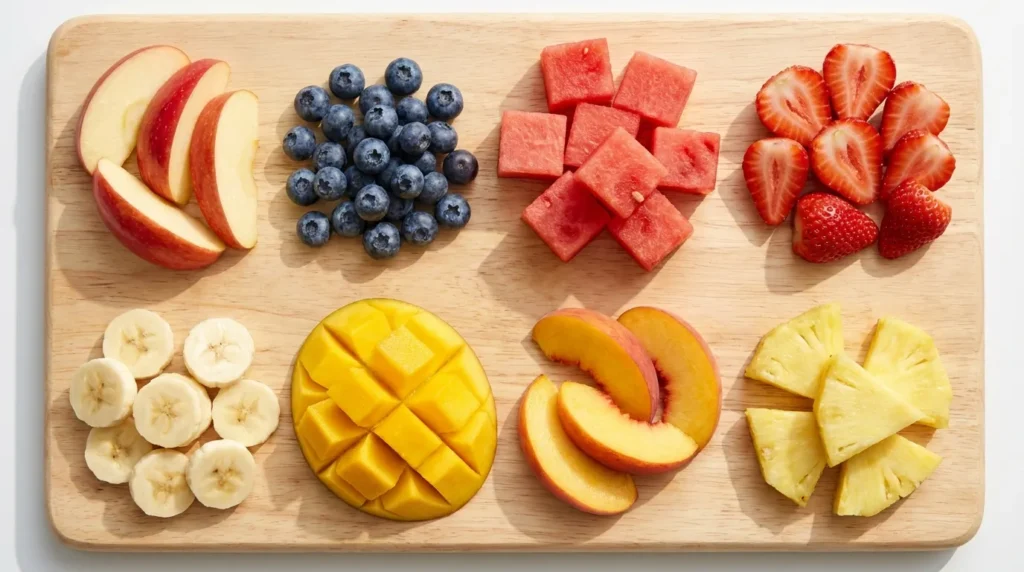
Apples
Apples are low in fat and calories and high in vitamins A and C and fiber. They work well as a snack for senior dogs, who often need lower-calorie options. Always remove the core and seeds first — apple seeds contain amygdalin, a compound that breaks down into trace amounts of cyanide during digestion. Wash the skin well or remove it to reduce pesticide exposure. Slice into small pieces before serving.
Bananas
Bananas provide potassium, magnesium, vitamin B6, and fiber. They’re also higher in sugar than most fruits on this list, so they belong in the occasional treat category rather than the daily rotation. Peel fully, then cut into small rounds. Never give a dog the peel — it’s tough to digest and can cause an intestinal blockage.
Blueberries
Blueberries are one of the best fruit choices for dogs. They’re low in calories, rich in antioxidants and phytochemicals, and their small size makes them practical as training rewards. Rinse and serve fresh or frozen. No additional prep needed. If you’re looking for ways to keep your dog’s diet interesting and balanced, pairing blueberries with other healthy snacks like plain yogurt is a combination many dogs enjoy.
Watermelon
Watermelon is 92% water, making it one of the most hydrating treats available on a hot day. It’s low in calories and high in vitamins A, B6, and C. The critical prep step: remove both the seeds and the rind. Both can cause intestinal blockages. Serve only the flesh, cut into bite-sized cubes. Frozen watermelon cubes make excellent enrichment snacks. See the full safety breakdown in our watermelon for dogs guide.
Cantaloupe
Cantaloupe is loaded with vitamins A, B6, and C, plus folate and potassium. It’s also roughly 90% water, so it helps with hydration. Sugar content is higher than some fruits — keep portions small for overweight dogs or dogs with diabetes. Remove the rind and seeds entirely, then cut into small cubes. For size-specific serving amounts, our cantaloupe for dogs article has the full breakdown.
Strawberries
Strawberries are a good source of vitamin C, fiber, and antioxidants. They also contain a natural enzyme that may help whiten a dog’s teeth with regular use. Sugar content is moderate — fine a few times a week in small amounts. Remove the stems, wash thoroughly, and slice before serving.
Mango
Mango is nutrient-dense — vitamins A, B6, C, and E, plus potassium and beta-carotene. The hard pit must be removed before serving. It’s a choking hazard and contains trace cyanide. Remove the skin too. Cut the flesh into small pieces. Mango is high in sugar, so keep servings small and infrequent — it’s a treat, not a daily snack.
Peaches
Fresh peaches are high in fiber and vitamin A and low in calories. A solid choice — but only when the pit is completely removed. Peach pits contain cyanide. After removing the pit, discard it in a sealed trash can your dog can’t access. Cut the flesh into small pieces. Avoid canned peaches entirely — the syrup adds far more sugar than any dog needs.
Pineapple
Pineapple contains bromelain, an enzyme that helps dogs absorb protein more efficiently. It’s also a good source of vitamins and minerals. Remove the outer skin, core, and crown before serving. Only the soft inner flesh is safe. Canned versions have too much added sugar. Our pineapple for dogs guide covers preparation and how much to serve based on dog size. Pineapple is also a good source of fiber, which can support dogs dealing with occasional constipation.
Pears
Pears offer copper, vitamins C and K, and fiber. Remove the seeds and core before serving — pear seeds contain trace cyanide, same as apple seeds. Cut into bite-sized chunks. Skip canned pears — they come packed in syrup.
Raspberries
Raspberries have anti-inflammatory properties that are especially useful for older dogs with joint stiffness. They’re low in calories and high in fiber and vitamin C. One important note: raspberries contain small, naturally occurring amounts of xylitol — a sweetener that’s toxic to dogs in larger quantities. Keep servings to no more than 1 cup (8 oz) at a time and don’t offer them daily.
Blackberries
Blackberries are safe for dogs in small amounts. Like raspberries, they contain trace amounts of naturally occurring xylitol, so portion control matters. A small handful once or twice a week is reasonable for a medium-sized dog. Our full guide on blackberries for dogs has size-specific amounts.
Cranberries
Cranberries are high in fiber, antioxidants, and vitamins C, E, and K. They’re tart, so many dogs won’t want them fresh. If yours does, small amounts of fresh or frozen cranberries are fine. Avoid dried cranberries with added sugar — the concentrated sugar content is too high.
Honeydew
Honeydew is safe, hydrating, and low in calories. It provides vitamin C, potassium, and fiber. Remove the rind and seeds, then cut into small pieces before serving. Like cantaloupe, the sugar content is moderate — limit portions for dogs prone to weight gain. The honeydew for dogs guide covers portion sizing by weight.
Fruits That Are Toxic to Dogs
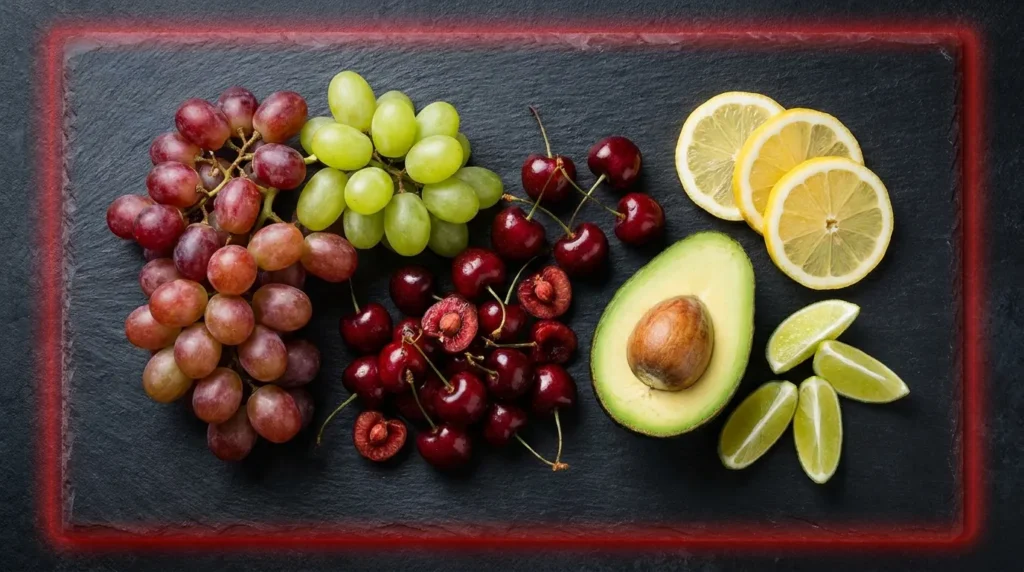
These are not fruits to simply “use caution” with. These cause organ failure, cyanide poisoning, and death.
Grapes and Raisins
Grapes and raisins are the most dangerous fruit for dogs. Even a single grape can trigger acute kidney failure in some dogs. The specific compound responsible still hasn’t been identified, which makes this even more unpredictable — there is no safe dose, no breed exception, and no size threshold.
This includes fresh grapes, dried raisins, grape juice, wine, and any baked goods or trail mix containing raisins.
If your dog eats even one grape, contact your vet immediately. Do not wait for symptoms.
Cherries
The flesh of a ripe cherry is technically safe, but getting to it without exposing your dog to the pit, stem, or leaves is almost impossible in practice. All three contain cyanide. Cherry pits are small enough to be swallowed whole, and cyanide poisoning moves fast.
Signs of cyanide poisoning: dilated pupils, difficulty breathing, bright red gums.
The risk isn’t worth it. Skip cherries entirely. Our guide on cherries for dogs explains the specific risks in more detail.
Avocado
Avocado contains persin — a fungicidal toxin concentrated in the skin, pit, and leaves. The flesh has lower levels, but it’s also high in fat, which can cause pancreatitis in dogs. The veterinary consensus leans toward avoiding avocado entirely, especially because skin and pit residue can end up in the flesh accidentally. The full risk breakdown is in our avocado for dogs guide.
Lemons and Limes
Lemons and limes contain high levels of citric acid plus natural insecticidal compounds — limonene and linalool — that irritate a dog’s digestive and central nervous system. Even small amounts can cause vomiting, trembling, drooling, and light sensitivity. The peel is especially concentrated. There’s no nutritional reason to give these to a dog.
Wild Berries (Unidentified Varieties)
Blueberries, blackberries, raspberries, and strawberries found growing wild can be safe — but only when you’re 100% certain what you’ve found. Toxic look-alikes like pokeweed berries, baneberries, and nightshade are frequently confused with edible varieties. Unless you can make a definitive identification, keep your dog away from them.
How to Prepare Fruit for Dogs
Every fruit needs preparation before it reaches your dog’s bowl. None of this is optional.
- Wash everything under cool running water — including organic fruit.
- Remove seeds, pits, stems, leaves, rinds, and peels before serving — these are either toxic, indigestible, or choking hazards.
- Cut into bite-sized pieces — this matters especially for small breeds.
- Fresh or frozen only — no canned fruit in syrup, no dried fruit.
- Nothing added — no sugar, salt, sweeteners, or spices.
- One new food at a time — introduce a new fruit and wait 24 hours before trying another. Watch for vomiting, diarrhea, itching, or skin reactions.
Not sure whether a specific food is safe before serving? The pet food safety checker lets you look up any ingredient quickly.
How Much Fruit Can Dogs Eat?
Treats — including fruit — should not exceed 10% of your dog’s total daily caloric intake.
| Dog Size | Weight | Max Fruit Per Day |
|---|---|---|
| Small | Under 20 lbs | 1–2 small pieces |
| Medium | 20–50 lbs | 2–3 pieces |
| Large | 50+ lbs | 3–5 pieces |
High-sugar fruits — mango, banana, cantaloupe, pineapple — should appear no more than once or twice a week even within these limits.
Dogs with diabetes, kidney disease, or obesity need individualized guidance from a vet before fruit enters their routine. Their sugar and caloric tolerances differ significantly from healthy dogs.
What to Do If Your Dog Eats a Toxic Fruit
Act immediately. Do not wait to see if symptoms appear. With grapes especially, the window for effective treatment is narrow.
Step 1: Note what your dog ate, how much, and exactly when.
Step 2: Call one of the following:
- Your regular veterinarian
- ASPCA Animal Poison Control: 888-426-4435 (consultation fee applies)
- Pet Poison Helpline: 855-764-7661 (consultation fee applies)
Step 3: Do not induce vomiting unless a vet explicitly tells you to. Our guide on how to make a dog throw up safely explains when this is and isn’t appropriate — it’s not always the right call and can make some situations worse.

Watch for these symptoms after any fruit ingestion:
- Vomiting or diarrhea
- Lethargy or sudden weakness
- Tremors or seizures
- Dilated pupils
- Difficulty breathing
- Reduced or absent urination
- Loss of appetite or drooling
If you see any of these, especially after grape or cherry ingestion, don’t wait — get to a vet.
Fruit for Dogs — FAQs
Can dogs eat dried fruit? No. Dried fruit has concentrated sugar and calories — and some dried fruits, like raisins, are outright toxic to dogs. Avoid all dried fruit.
Can dogs eat frozen fruit? Yes, as long as there’s no added sugar. Frozen blueberries, watermelon cubes, and mango pieces are popular enrichment treats. Let very hard frozen pieces thaw slightly first to protect your dog’s teeth.
Can dogs eat fruit every day? Low-sugar options like blueberries and apple slices are fine in small daily amounts. High-sugar fruits — mango, banana, cantaloupe — should be once or twice a week at most.
What is the best fruit for dogs? Blueberries. Low in sugar, high in antioxidants, easy to serve, and small enough to use as training rewards without disrupting your dog’s daily intake.
Can puppies eat fruit? Yes, in small amounts once they’re eating solid food. Start with low-sugar choices like blueberries or a few slices of apple. Introduce slowly and watch for reactions.
Can dogs eat fruit snacks or packaged fruit products? No. These are high in sugar, artificial flavors, and sometimes xylitol. None of that is appropriate for dogs.
If you want to expand beyond fruit, our what vegetables can dogs eat guide covers the full range of safe plant-based foods for dogs — including carrots, green beans, broccoli, and more.
Final Word
Most dogs can enjoy fruit safely when it’s prepped correctly and served in reasonable amounts. Blueberries, watermelon flesh, strawberries, and apple slices are all solid starting points. Grapes, cherries, and avocado should never be offered under any circumstances.
Before introducing any new food to your dog’s diet, our can dogs eat tool gives you a fast answer without sifting through lengthy articles.
If your dog eats something toxic — call your vet immediately. Not later. Now.