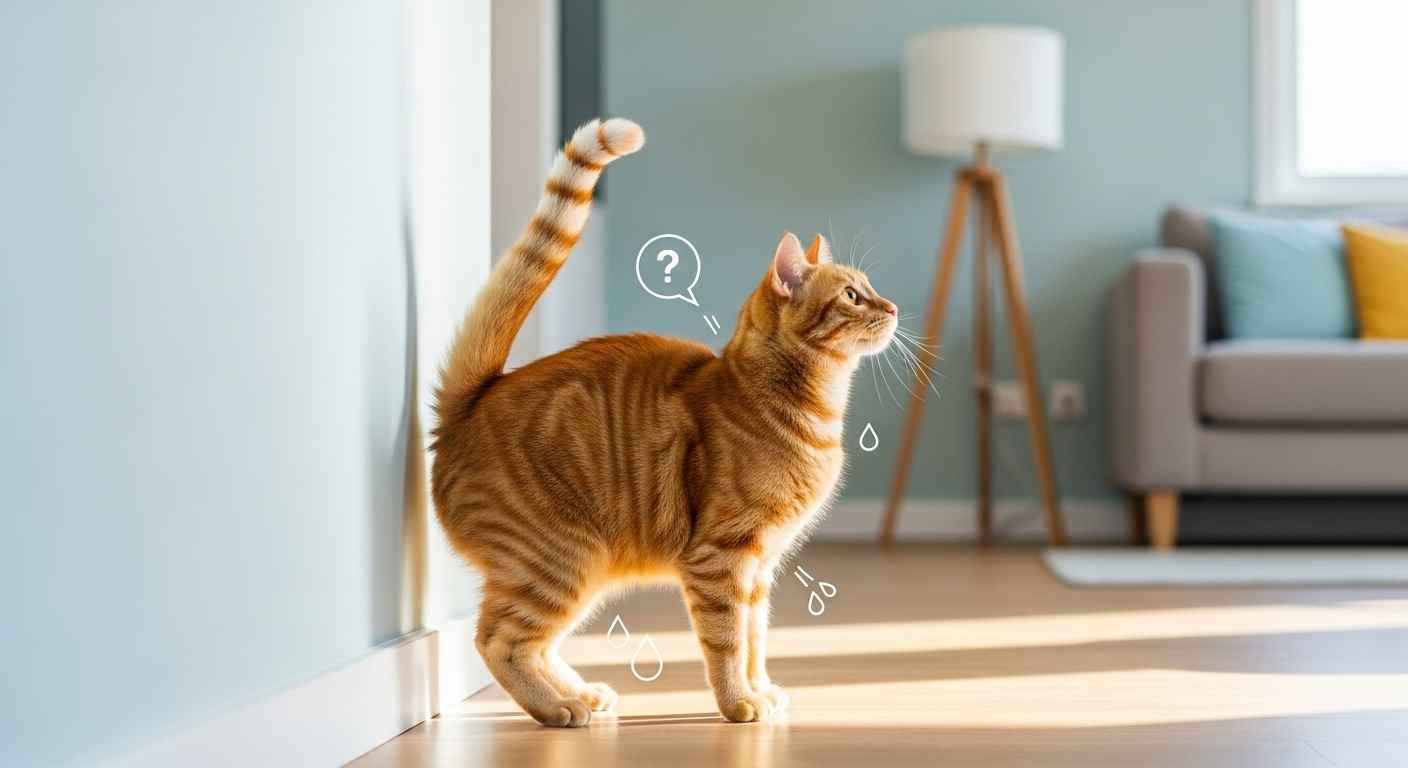
Cat spraying can turn your peaceful home into a smelly nightmare. If you’ve caught your cat backing up to a wall and releasing urine, you’re dealing with marking behavior that affects millions of pet owners worldwide.
Understanding why cats spray helps you address the root cause and restore harmony in your home. This natural feline behavior serves important communication purposes, but it doesn’t have to become a permanent problem.
What is Cat Spraying vs Regular Urination?
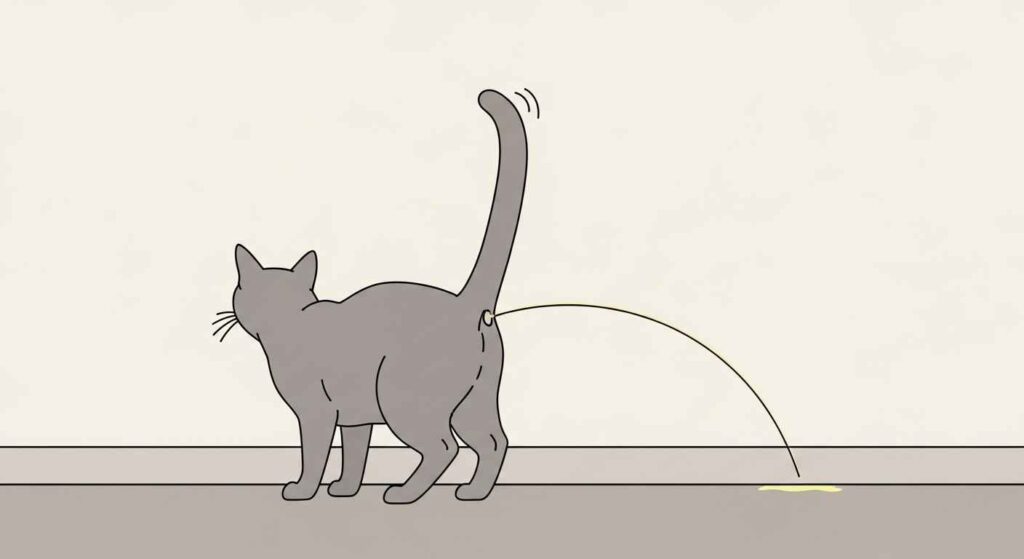
Cat spraying differs significantly from normal urination. When cats spray, they use small amounts of urine to deposit their scent, typically on vertical surfaces like walls, fences, or trees. The purpose is to communicate with other cats and mark their territory.
Regular urination involves cats emptying their bladder in larger quantities, usually in their litter box or on horizontal surfaces. Spraying cats typically:
- Back up to vertical surfaces
- Hold their tail upright and quiver
- Release small amounts of strong-smelling urine
- Target the same spots repeatedly
6 Main Reasons Why Cats Spray
1. Territory Marking and Communication
Cats communicate with each other through urine spraying. In general, cats are solitary creatures, and even with multiple cats in a household, they will seek out ways to establish boundaries.
Spraying allows cats to:
- Mark their territory boundaries
- Leave messages for other cats
- Establish ownership of resources
- Create familiar scent landmarks
2. Sexual and Reproductive Behavior
Unneutered males may urine mark to let females know they are available. Intact cats who are looking to mate will urine mark – it’s the cat version of a dating app. Both male and female cats spray, although unneutered males are most likely to leave their mark.
Hormonal triggers include:
- Advertising reproductive availability
- Attracting potential mates
- Competing with other intact cats
- Female cats in heat signaling readiness
3. Stress and Anxiety
Cats spray during socially stressful situations, possibly to increase their self-assurance and as a coping strategy for reducing stressful emotions, such as anxiety and frustration. Spraying is usually caused because your cat feels threatened or stressed.
Common stress triggers:
- Moving to a new home
- New family members or pets
- Changes in routine or environment
- Loud noises or construction
- Visitor presence
4. Multi-Cat Household Dynamics
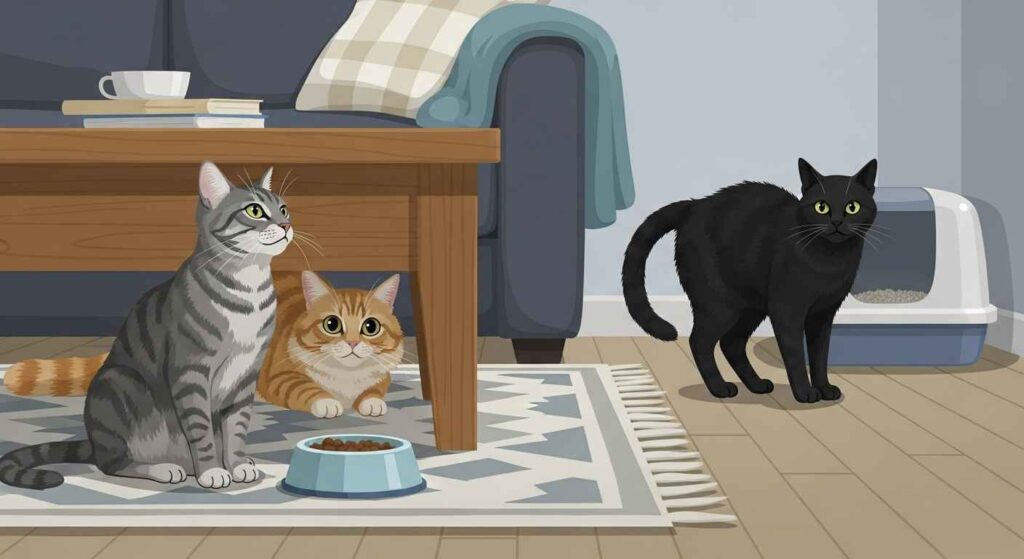
The more cats who live in a home, the more likely it is that at least one of them will urine mark. In a multiple-cat household, competition over resources might be a source of conflict and could trigger the urine-marking behavior.
Resource competition issues:
- Limited litter boxes
- Food and water bowl access
- Sleeping and hiding spots
- Human attention and affection
- Toy and play area disputes
5. Medical Conditions
Medical conditions such as infections, gastrointestinal disease, and arthritis can cause a cat to urinate or defecate outside their litter box. Certain medical conditions like urinary tract infections (UTIs) or bladder stones can cause cats to urinate outside the litter box. UTIs are the most serious reason that could cause your cat to spray.
Medical causes include:
- Urinary tract infections
- Bladder stones or crystals
- Kidney disease
- Arthritis affecting mobility
- Gastrointestinal problems
- Pain conditions
6. Litter Box Problems
In some cases of inappropriate peeing, there’s an issue with the litter box that forces your cat to do their business elsewhere.
Litter box issues:
- Dirty or infrequently cleaned boxes
- Wrong litter type or scent
- Box location problems
- Size or depth issues
- Covered vs. uncovered preferences
How to Identify Cat Spray Smell
Cat spray has a distinct, pungent odor that differs from regular urine. The strong, musky scent is meant to attract potential mates. The smell is:
- More concentrated than normal urine
- Musky and ammonia-like
- Persistent and difficult to remove
- Stronger in intact cats
- Often described as “skunky”
Use your nose and a blacklight to locate spray spots. Cat urine glows under UV light, making detection easier.

Medical vs. Behavioral Spraying: When to See a Vet
Before addressing behavioral causes, rule out medical problems. You must first rule out any medical problem that could be causing stress and anxiety, which, in turn, could lead to urine marking.
See your veterinarian immediately if your cat shows:
- Frequent urination attempts
- Blood in urine
- Crying while urinating
- Loss of appetite
- Lethargy or hiding
- Difficulty walking to litter box
Use our Pet Symptom Checker to help identify concerning signs before your vet visit.
Effective Solutions to Stop Cat Spraying
Immediate Cleanup Protocol
Clean any sprayed sites with a product that neutralizes odor, such as Urine Away™. Cats mark to leave a message, so it is not surprising that, when the odor is cleaned up and the message is erased, a cat might immediately refresh the area with more urine.
Proper cleanup steps:
- Blot fresh urine immediately
- Use enzymatic cleaners specifically for pet urine
- Avoid ammonia-based cleaners
- Clean thoroughly to remove all traces
- Allow complete drying before allowing access
For detailed carpet cleaning instructions, check our guide on how to get cat pee out of carpet.
Environmental Management
Reduce Stress Triggers:
- Maintain consistent daily routines
- Provide multiple resources in multi-cat homes
- Create vertical spaces with cat trees
- Use calming pheromone diffusers
- Establish quiet retreat areas
Litter Box Optimization:
- Provide one box per cat plus one extra
- Clean boxes daily
- Use unscented, clumping litter
- Place boxes in quiet, accessible locations
- Keep boxes uncovered when possible
Spaying and Neutering Benefits
Spaying or neutering significantly reduces spraying behavior, especially when done before sexual maturity. Benefits include:
- 90% reduction in male cat spraying
- Eliminates heat-related spraying in females
- Reduces territorial aggression
- Prevents unwanted pregnancies
Learn about spaying costs and benefits to make informed decisions for your pets.
Multi-Cat Household Solutions
Managing multiple cats requires careful resource planning:
Resource Distribution:
- Multiple feeding stations
- Several water sources
- Adequate litter boxes (n+1 rule)
- Individual sleeping areas
- Separate play zones
Introduction Protocols: If adding new cats, follow proper introduction techniques. Our guide on how to introduce a cat to a dog provides valuable insights for multi-pet households.

Professional Help and Training
Some spraying problems require professional intervention:
Consult a Veterinary Behaviorist When:
- Multiple cats are spraying
- Behavior continues despite medical treatment
- Aggression accompanies spraying
- Property damage is extensive
- Family stress levels are high
Medication Options:
- Anti-anxiety medications
- Pheromone treatments
- Behavioral modification drugs
- Natural calming supplements
Preventing Future Spraying Episodes
Prevention works better than treatment:
Early Intervention:
- Spay/neuter before 6 months
- Socialize kittens properly
- Establish good litter box habits early
- Monitor for stress signs
Long-term Management:
- Regular veterinary checkups
- Consistent environmental enrichment
- Stress reduction techniques
- Proper nutrition and hydration
Use our Pet Age Calculator to determine optimal spaying/neutering timing for your cat.
Understanding Cat Communication Through Spraying
Cats use scent marking as a complex communication system. Understanding this helps address the behavior appropriately:
Scent Messages Include:
- Individual identity markers
- Reproductive status
- Territory boundaries
- Stress or anxiety levels
- Social hierarchy information
Normal vs. Problem Spraying:
- Occasional outdoor spraying is normal
- Indoor spraying indicates problems
- Persistent spraying needs intervention
- Multiple location spraying requires immediate attention
For more insights into feline behavior, read about why cats follow their owners everywhere and cat communication through purring.
When Spraying Becomes a Serious Problem
Seek immediate help if:
- Spraying occurs multiple times daily
- Multiple cats start spraying
- Property damage is extensive
- Human health is affected
- Relationships are strained
Health Risks of Untreated Spraying:
- Respiratory irritation from ammonia
- Bacterial growth in affected areas
- Increased stress for all household members
- Potential abandonment of pets
Frequently Asked Questions
Do female cats spray? Yes, both male and female cats can spray, though intact males do it most frequently.
Can neutered cats still spray? Yes, neutered cats may spray due to stress, medical issues, or territorial disputes.
How long does cat spray smell last? Without proper cleaning, cat spray odor can persist for months or years.
Is cat spraying the same as urinating? No, spraying uses small amounts of urine for scent marking, while urination empties the bladder.
Can indoor cats spray? Yes, indoor cats spray for the same reasons as outdoor cats, especially in multi-cat households.
Conclusion
Cat spraying is a natural behavior with multiple underlying causes. Success in stopping spraying requires identifying the specific trigger affecting your cat. Whether it’s medical issues, stress, territorial disputes, or hormonal influences, targeted solutions work best.
Remember to rule out medical problems first, then address environmental and behavioral factors. With patience, proper cleanup, and appropriate interventions, most spraying problems resolve successfully.
For ongoing support with cat behavior and health concerns, use our Pet Compatibility Checker before adding new pets, and consult our Pet Symptom Checker for health monitoring.
Most cats can learn to express their communication needs without inappropriate spraying when their underlying needs are met. Stay consistent with your approach, and don’t hesitate to seek professional help when needed.