
Dogs share many traits with humans. One question often comes up: do they have belly buttons? The answer is yes. This guide covers what you need to know. It explains the basics, location, looks, and health tips.
What Is a Dog’s Belly Button?
A belly button forms from the umbilical cord. In the womb, this cord links the puppy to its mother. It supplies food and air. After birth, the cord gets cut. The spot left behind heals into a scar. That scar is the belly button.
All mammals like dogs have this scar. It comes from how they grow inside their mother. Birds and reptiles do not have one. They hatch from eggs.
Dogs are born with the cord attached. The mother dog chews it off. A small stump remains. It dries and falls away in days. What stays is a tiny mark on the skin.
- Key fact: The belly button has no role after birth. It is just a leftover from growth in the womb.
For more on dog body parts, check our post on how many teeth do dogs have.
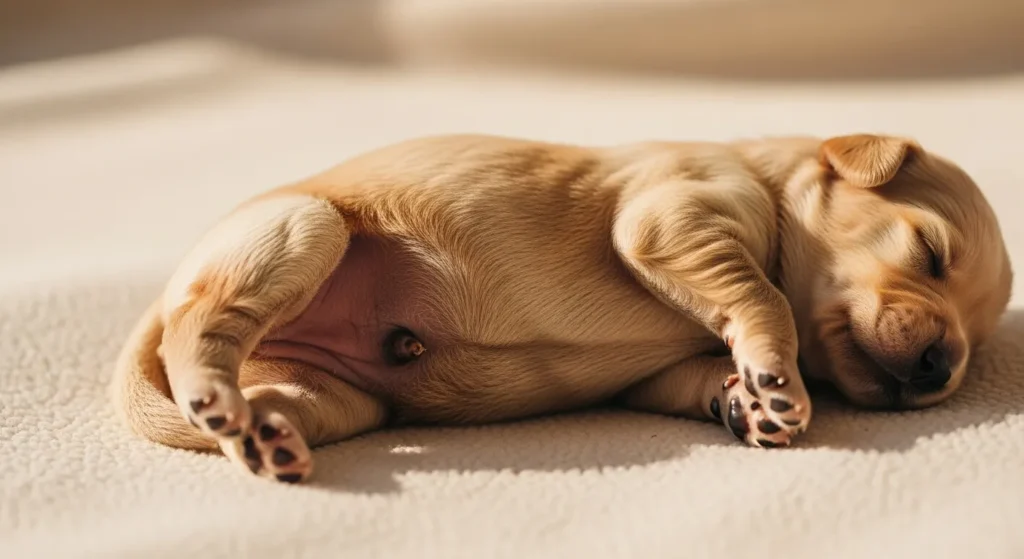
Where to Find Your Dog’s Belly Button
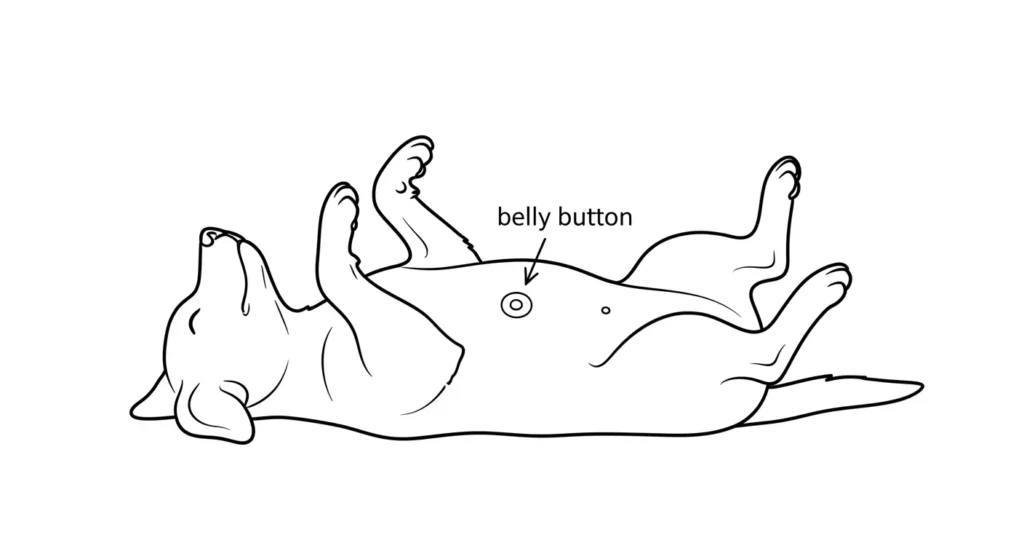
Look on the dog’s belly. It sits in the middle, below the ribs. Search between the nipples. The spot is halfway from the chest to the back legs.
Fur often hides it. Part the hair to see better. Feel for a small flat area. Use light touch. If your dog seems sore, stop and see a vet.
In puppies, it is easier to spot. As dogs grow, hair covers it more. Short-haired breeds show it clearer than long-haired ones.
Use our Pet Symptom Checker if you notice anything odd in this area.
What Does a Dog’s Belly Button Look Like?
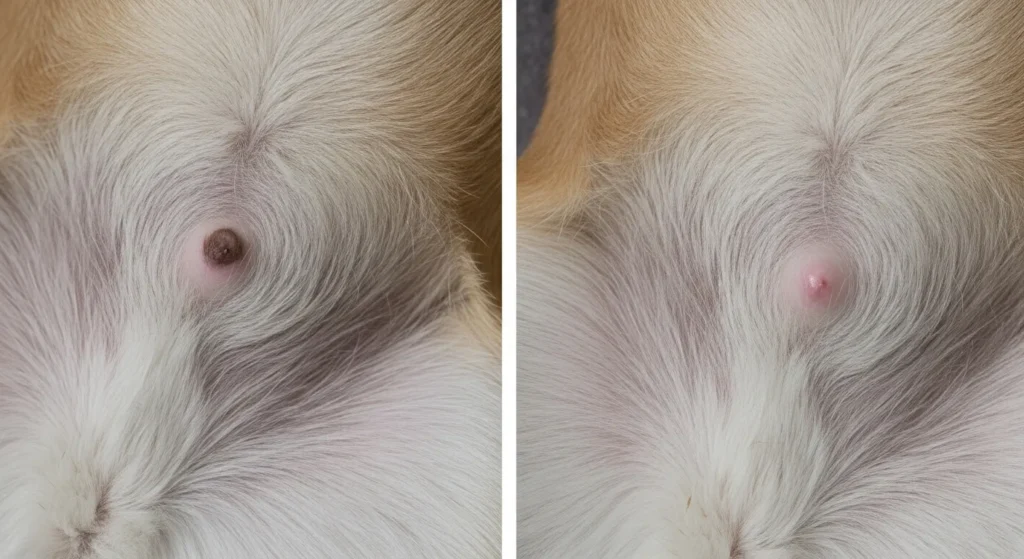
It appears as a small scar. Most are flat and thin. They can be a line or oval shape. The color matches the skin around it.
Unlike human ones, dog belly buttons do not poke in or out much. They lack depth. No lint builds up. Size varies by breed. Small dogs have tiny ones. Large dogs have bigger but still flat marks.
Some show a swirl of fur nearby. Others are hairless spots. In dark-skinned dogs, it may look paler.
For related facts, read about male cats and nipples. It covers similar body questions.
Health Concerns Linked to Dog Belly Buttons
Most are harmless. Check for changes during belly rubs. Look for red skin or swelling. These signs may point to issues.
One common problem is a hernia. This happens if the belly wall does not close right. Fat or organs push through. It looks like a bump. Small ones may heal alone. Large ones need surgery. Vets fix them during spay or neuter ops.
Puppies can get infections. Watch for pus or heat. Clean the area if needed. See a vet fast.
Rare cases include dark spots from skin issues. Always track changes. Early care prevents big problems.
Try our Pet Age Calculator to know your dog’s life stage. It helps with health checks.
Common Questions About Dog Belly Buttons
Here are answers to frequent queries.
Do All Dogs Have Them?
Yes. Every dog has one from birth.
Can I Clean My Dog’s Belly Button?
No need unless dirty. Use mild soap if you must. Dry well.
What If It Sticks Out?
A bump may mean a hernia. Get a vet check.
Do Cats Have Belly Buttons Too?
Yes. They work the same way. Read more on cat care in why do cats knead.
Is It Normal for Puppies to Have a Stump?
Yes. It falls off soon. Watch for signs of trouble.
Can Dogs Get Infections There?
Puppies might. Adults rarely do. Clean birth areas help.
For breed-specific tips, take our Pet Breed Finder Quiz.
This info comes from vet sources. For your dog, talk to a pro. Regular checks keep pets well. Share your finds in comments below.