
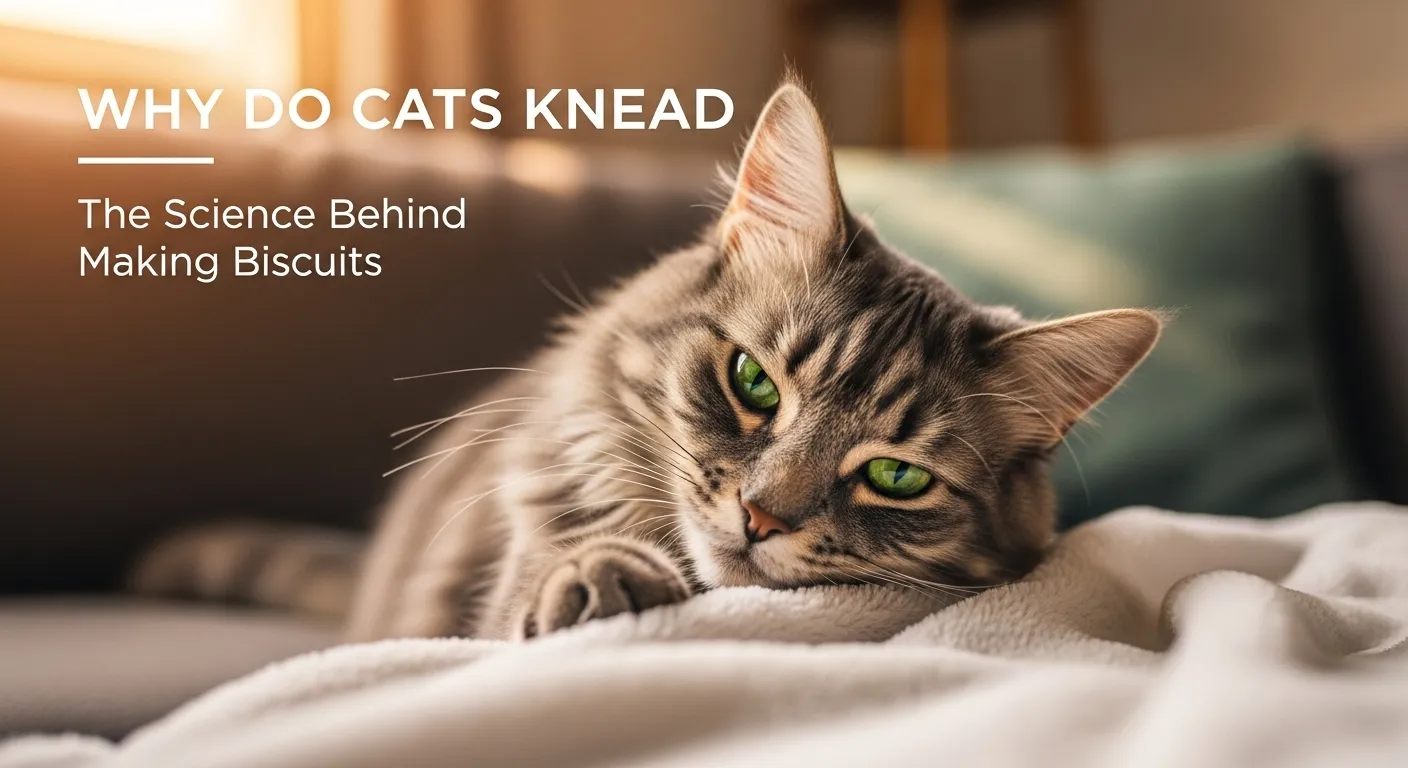
Cats knead because the behavior is wired in from day one — part nursing memory, part scent communication, part self-medication. It starts within hours of birth and, for most cats, never fully stops. Here’s exactly what’s driving it and what your cat is actually trying to tell you.
What Is Cat Kneading?
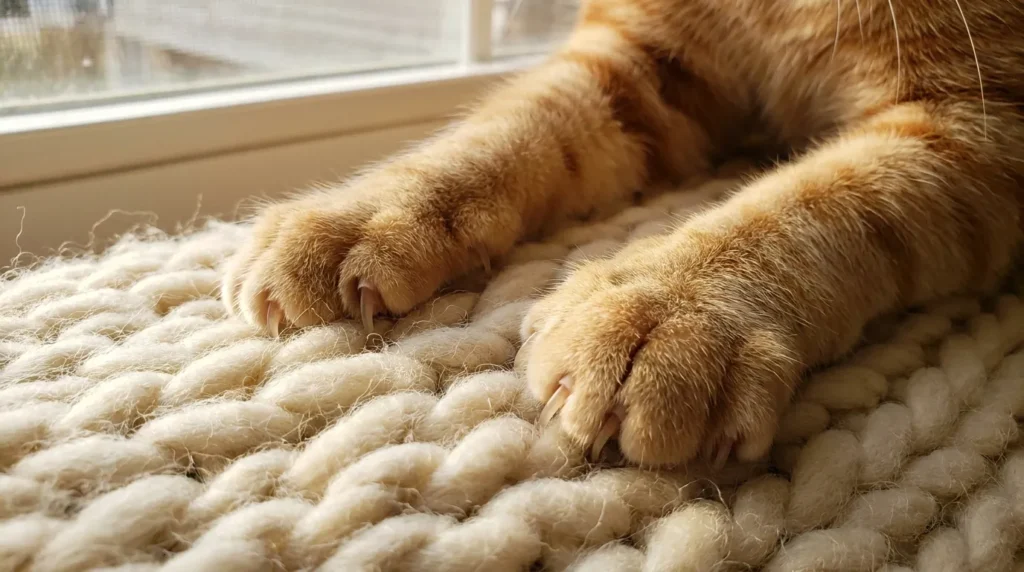
Kneading is a repetitive motion where a cat alternately presses each front paw into a soft surface in a slow, rhythmic pattern. Each paw pushes down at intervals of roughly one to two seconds. On the push, the claws extend. On the lift, they retract.
Cats only knead soft or pliable surfaces — blankets, cushions, laps, other animals. Place them on a hard floor and many will substitute a subtle stomping or marching motion instead.
The nickname “making biscuits” comes from how closely the motion resembles a baker working dough. It stuck because it’s genuinely accurate.
7 Reasons Why Cats Knead
1. Nursing Instinct From Kittenhood
This is where kneading begins. Newborn kittens press their paws against their mother’s mammary glands while nursing. The repeated pressure stimulates milk letdown — it’s a functional survival reflex, not a learned behavior.
The motion becomes inseparable from warmth, safety, and feeding. When a cat relaxes deeply as an adult, the body replays that same pattern. The context changed but the neural wiring didn’t.
Cats weaned before 8 weeks often carry a stronger version of this instinct. They may knead more intensely and suckle on blankets — or occasionally on your earlobe — alongside it. The nursing reflex simply never fully resolved.
2. Emotional Comfort and Dopamine Release
Kneading triggers a dopamine release in the brain. Dopamine is the primary reward and pleasure chemical in mammals, and repetitive rhythmic behaviors reliably activate it. The behavior is self-rewarding — which is precisely why it persists into adulthood.
When a stressed cat kneads, it’s using the behavior as a coping mechanism. The rhythm calms the nervous system. It’s the feline version of what rocking, pacing, or fidgeting does for humans under pressure.
This also explains why cats sometimes knead more when their routine changes — new pet, new home, new schedule. The behavior increases because the demand for self-soothing increases.
3. Territory Marking Through Scent Glands
Cat paws contain scent glands between the paw pads. These glands release pheromones — including a sulfur-containing compound called felinine — onto whatever surface the cat presses against.
When your cat kneads your lap, they are marking you. You carry their scent. To other cats, that’s a territorial signal. This is the same communication system behind why cats spray and why they rub their face on furniture — scent marking is one of the primary ways cats organize and communicate ownership of their space.
The marking isn’t aggressive. It’s closer to a label. It signals familiarity and belonging.
4. Preparing a Resting Spot
Wild felids kneaded grass, leaves, and foliage before lying down. The motion compressed material into a flat, even sleeping surface. It also disturbed insects or small animals hiding underneath.
Domestic cats no longer need to build nests in a field. The instinct didn’t disappear — the context just changed. When a cat kneads a blanket before curling up, they’re running an inherited pre-sleep routine. The blanket replaced the grass. The motion stayed the same.
5. Stretching Muscles and Improving Circulation
Kneading engages the shoulder muscles, foreleg muscles, and back muscles in a low-effort repetitive movement. For a cat that’s been stationary for hours — which is most cats — it functions as a natural warm-up.
The flexion and extension through the toes also maintains paw flexibility. You’ll often notice kneading immediately after your cat wakes up or right before they break into sudden activity.
If kneading starts being paired with stiffness, reluctance to jump, or sensitivity around the joints, that warrants a vet check.
6. Showing Affection and Social Bonding
Kneading carries real emotional weight. Animal behaviorist John Bradshaw’s research on feline sociality found that cats maintain bonds partly through physical touch and close proximity behaviors — and kneading is one of them.
When a cat kneads you specifically, it’s choosing you. The behavior combines comfort, scent marking, and contact in a single action.
If your cat also licks you before or after kneading, that’s layered social bonding — grooming plus the physical comfort ritual. Both behaviors together mean you’re firmly inside their inner circle. It’s some of the clearest affection a cat can show.
7. Signaling Heat in Female Cats
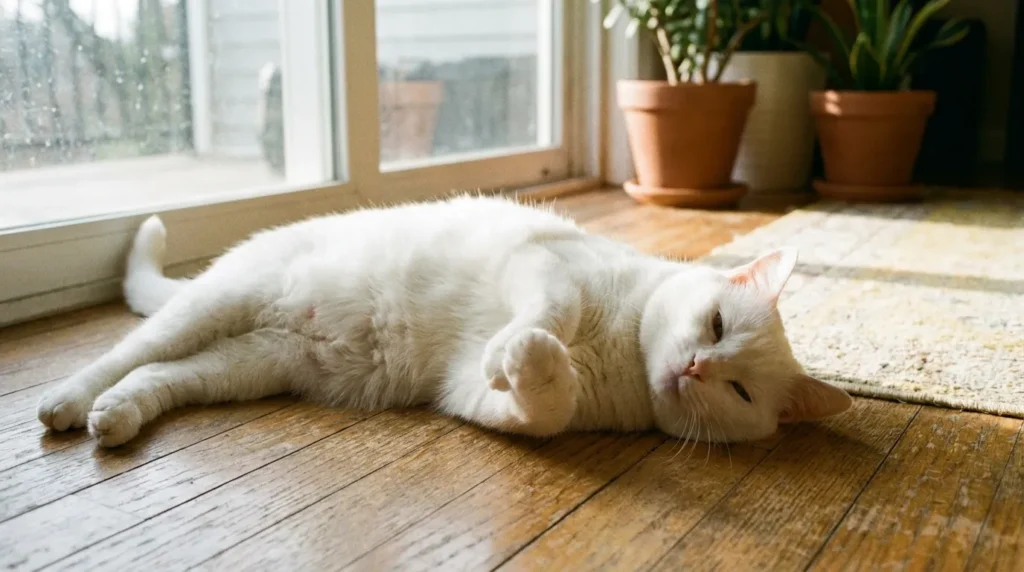
Unspayed female cats sometimes knead differently when approaching or in heat. The kneading tends to be more persistent and is usually paired with loud vocalizations, rolling on the floor, and an elevated hindquarters posture.
This form of kneading is communicative — the pheromones released from the scent glands signal reproductive availability to nearby males.
If you’re seeing these behaviors, it helps to understand how often cats go into heat and what the full cycle looks like. Spaying eliminates heat cycles entirely and carries significant long-term health benefits for female cats.
Why Does My Cat Knead Me Specifically?
Because you’ve been chosen.
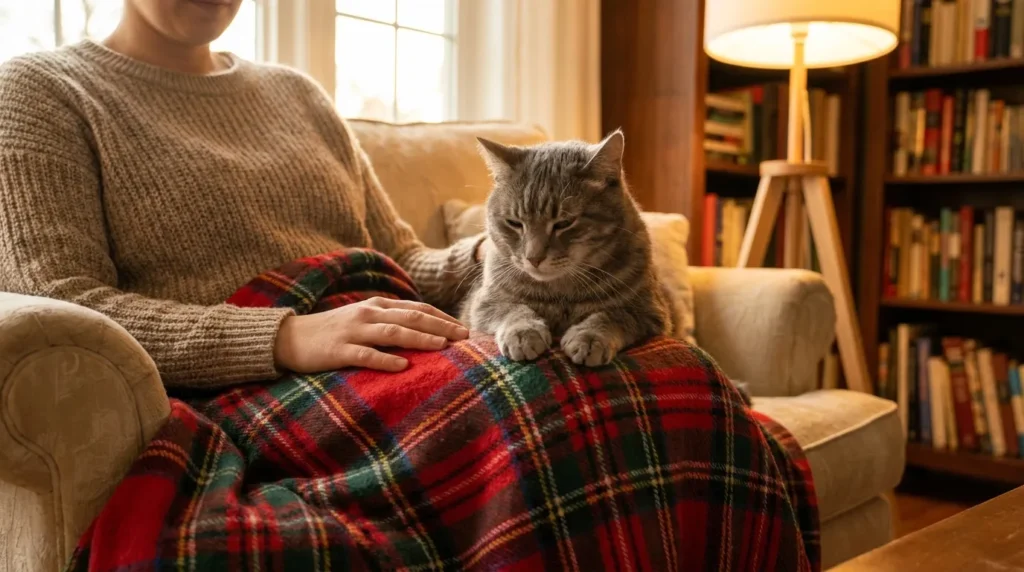
When a cat kneads a person rather than a surface, all three signals typically fire at once — comfort, scent marking, and affection. You’re warm, you’re soft, and you’re familiar.
Cats that sleep on you regularly and knead you are displaying some of the strongest trust behaviors in the feline repertoire. There’s no clearer signal that your cat considers you a safe, permanent part of their world.
Why Do Cats Knead Blankets?
Blankets hit every requirement: soft, pliable, consistent texture, familiar scent. Many cats develop a dedicated kneading blanket and use the same one repeatedly. Each session adds more of their pheromones to it, which deepens the sense of security the blanket provides.
Fleece, wool, and thick knit textures are common favorites. The give of those materials closely mirrors the feel of a mother cat’s abdomen.
Some cats suckle the blanket while kneading. This is more common in early-weaned cats and is generally harmless unless the cat is actively ingesting fibers, in which case it’s worth a vet mention.
Do All Cats Knead?
No. Kneading frequency and intensity vary significantly from cat to cat. Some knead every day with full claw extension and audible purring. Others knead rarely or in motions so subtle that owners never notice.
Weaning history matters. Cats separated from their mothers before 8 weeks tend to knead more intensely as adults. Cats raised with their mothers through 10–12 weeks often show less urgent kneading behavior.
Breed tendencies play a role too. Ragdolls, Maine Coons, and Siamese are frequently described as enthusiastic kneaders — likely tied to their strongly social and people-oriented temperaments. If you’re curious about what personality traits your own cat’s breed tends toward, our cat breed quiz can give you useful context.
When Should Kneading Concern You?
Kneading is normal. These specific changes are worth paying attention to:
Sudden increase in frequency — particularly if paired with hiding, restlessness, or appetite changes. This often signals stress from a new pet, household change, or disrupted routine.
Kneading with biting or agitation — not the same as playful nipping. Intense kneading followed by a bite is overstimulation. Understanding why cats bite can help you spot the warning signs before the escalation happens.
Kneading with paw sensitivity or limping — if your cat kneads but then flinches or guards a paw, check for cracked pads, foreign objects, or claw damage.
Compulsive, non-stop kneading that can’t be interrupted — rare, but possible in cats with anxiety disorders. A vet or veterinary behaviorist can properly assess this.
Not sure whether what you’re seeing warrants a call to the vet? Our pet symptom checker can help you work out whether it’s a watch-and-wait situation or something that needs attention sooner.
How to Manage Kneading (Without Punishing Your Cat)
Never scold a cat for kneading. It’s instinctive. Punishment adds stress, and stress increases kneading.
What actually works:
Trim the claws regularly. This is the single most effective fix for painful kneading. Short claws still knead but don’t dig in. If you haven’t done it before, this step-by-step guide on how to trim your cat’s nails safely walks you through the whole process without causing your cat distress.
Use a soft barrier. A folded blanket on your lap gives the cat the same sensation with zero puncture wounds for you.
Give them a dedicated kneading blanket. Place it in their regular rest spot. Once it carries their scent, they’ll prefer it consistently.
Redirect gently. If kneading happens at an inconvenient time, place your cat on their blanket and stroke them until they settle. Moving them calmly — not abruptly — preserves the association with safety.
Let it happen when it’s harmless. If the claws aren’t an issue, there’s no reason to stop it. The behavior is genuinely good for the cat emotionally.
The Bottom Line
Cats knead because the behavior layers instinct, chemistry, communication, and comfort into a single rhythmic motion. It begins as a survival reflex in the first hours of life and becomes one of the most consistent behavioral threads a cat carries through adulthood.
When your cat kneads you, they’re expressing something real — safety, ownership, affection, or all three at once.
Understanding that makes it a lot easier to appreciate the behavior, even when the claws are fully out.