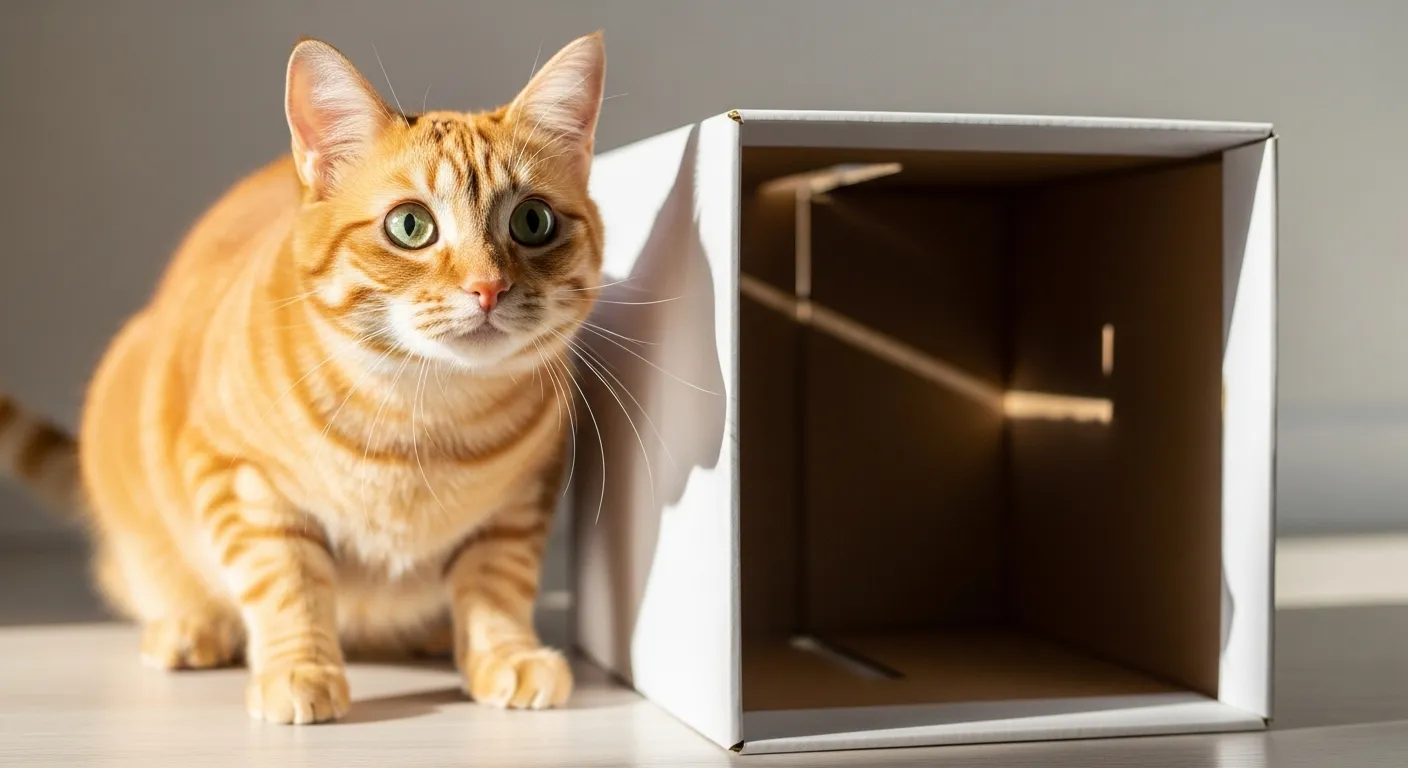
Cats often ignore fancy toys. They head straight for a plain cardboard box. This habit puzzles many owners. It comes from deep instincts. In this post, we look at why cats seek out boxes. We cover science-backed facts. You will learn how to use boxes to help your cat feel better.
Boxes offer more than fun. They support a cat’s need for safety and play. Recent studies show boxes reduce stress in shelters. Cats sleep up to 18 hours a day. A box makes a perfect spot for rest. If your cat hides often, check our pet symptom checker for signs of issues.
Safety and Security in a Box
Cats come from wild roots. Their ancestors hid in small spots to avoid danger. A box acts like a den. It lets a cat see out but stay hidden. This setup calms nerves.
In homes with dogs or kids, boxes give a quick escape. Cats mark boxes with scent from face glands. This claims the space as their own. A 2019 study from the University of Utrecht found shelter cats with boxes adjusted faster. They showed less stress.
- Boxes lower anxiety during moves or vet visits.
- They help multi-cat homes avoid fights.
- Open one side to make entry easy.
If your cat seems stressed, try our pet compatibility checker to see how they get along with others.
Warmth from Cardboard Insulation
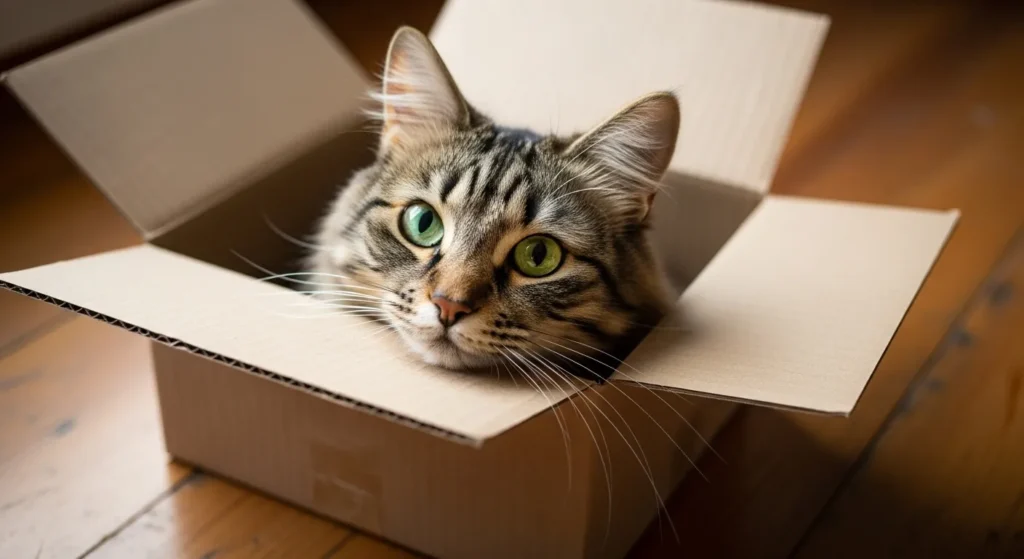
Cats run warmer than people. Their ideal range sits between 86 and 97 degrees Fahrenheit. Homes often stay cooler at 72 degrees. Cardboard traps heat well. It keeps a cat cozy inside.
A 2006 report from the National Research Council notes this preference. Boxes beat cold floors or drafts. In winter, your cat might pick a box over a bed.
- Cut holes for air flow if needed.
- Add a soft towel for extra comfort.
- Watch for over-heating in summer.
For more on cat rest habits, see our post on how long do cats sleep.
Hunting Instincts at Play
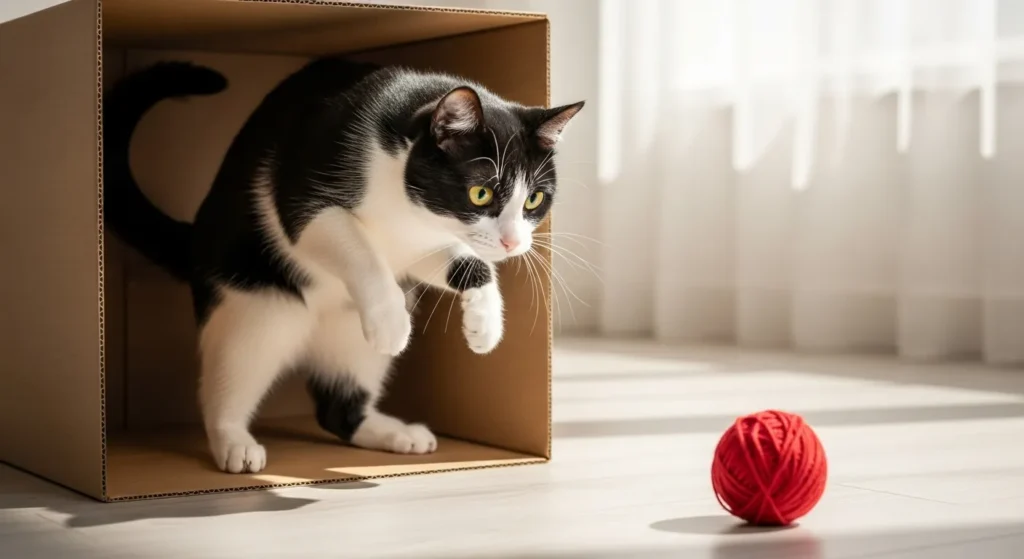
Cats hunt by ambush. They hide and pounce. A box fits this perfectly. It turns playtime into a mock hunt. Your cat might wait for a toy or foot to pass by.
This behavior keeps them sharp. Indoor cats need outlets like this. Boxes scratch that itch without real prey.
- Place toys near the box to spark action.
- Rotate boxes to keep interest high.
- Combine with catnip for more fun—learn about it in what does catnip do to cats.
Big cats in zoos do the same. Lions and tigers squeeze into boxes too. It shows the trait runs deep in felines.
Scratching and Chewing Fun
Cardboard feels good on claws. Cats scratch to sharpen and stretch. Boxes let them do this without ruining your couch. The crinkle sound adds to the appeal.
Chewing edges satisfies curiosity. It also removes dead claw sheaths. Always watch to stop eating pieces. That can cause blockages.
- Check boxes for staples or tape first.
- Use as a scratcher alternative.
- If nails need trimming, read how to cut cat nails.
Stress Relief and Adaptation
New places scare cats. Boxes ease that. The Utrecht study proved it. Cats with boxes ate sooner and groomed more. These signs mean less worry.
At home, a box helps after changes like a new pet. It gives a safe zone. For intro tips, see how to introduce a cat to a dog.
People often ask: Do all cats like boxes? Most do, but some shy ones love them more. Related questions include why cats hide or sleep in odd spots. Boxes tie into both.
- Offer boxes during travel.
- Clean them often to keep smells fresh.
- Link to our pet age calculator to track senior cats who might need extra calm.
Curiosity Drives Exploration
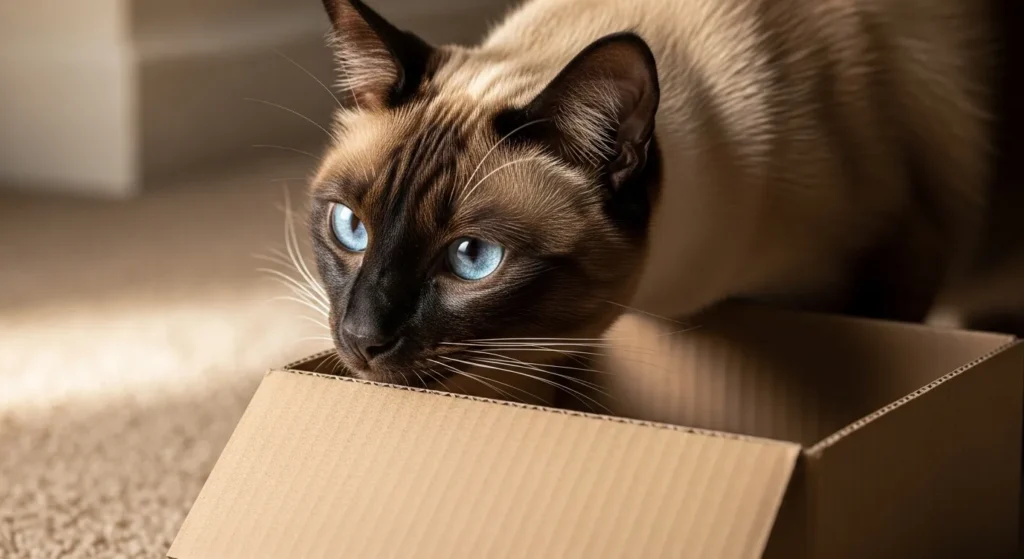
Cats sniff everything new. Boxes carry smells from stores or packing. This draws them in. Once inside, they test the space with paws and whiskers.
Whiskers help judge if they fit. This trait aids survival in the wild. At home, it just means more box time.
For breed traits, take our pet breed finder quiz.
Sleep and Rest Spots
Cats nap a lot. Boxes make ideal beds. The sides block light and noise. Curling up fits their shape.
If your cat sleeps on you, boxes might share the load. Check why your cat sleeps on you for more.
Safety Tips for Box Play
Boxes bring joy but need care. Remove sharp bits. Never close the lid. Supervise chewing.
Make DIY setups like mazes. Cut windows for views. Add blankets inside. These boost play without cost.
If food questions arise during play, use our pet food safety checker.
For name ideas on custom boxes, try the pet name generator.
Boxes suit all cats. They meet needs for safety, warmth, and fun. Next time you unpack, save the box. Your cat will thank you. Share your stories in comments.