
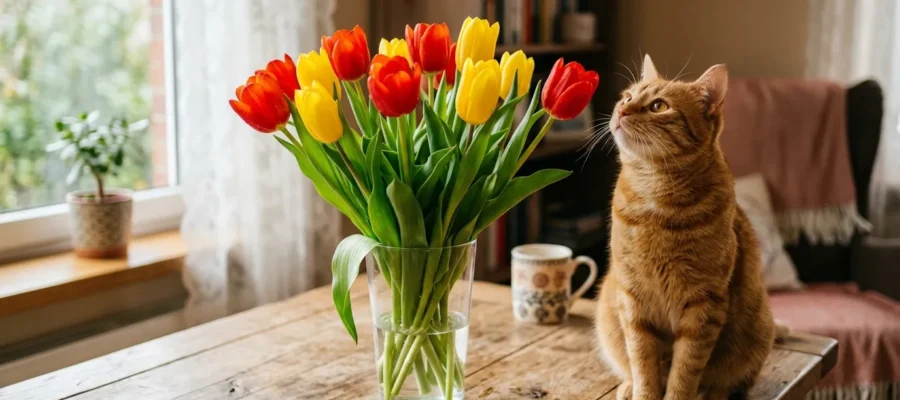
Yes, tulips are toxic to cats. Every part of the plant contains harmful compounds that can make a cat sick. The bulb carries the highest concentration of toxins, but the stems, leaves, and flowers can all cause reactions too. If your cat chewed or ate any part of a tulip, treat it as a potential poisoning and contact your vet.
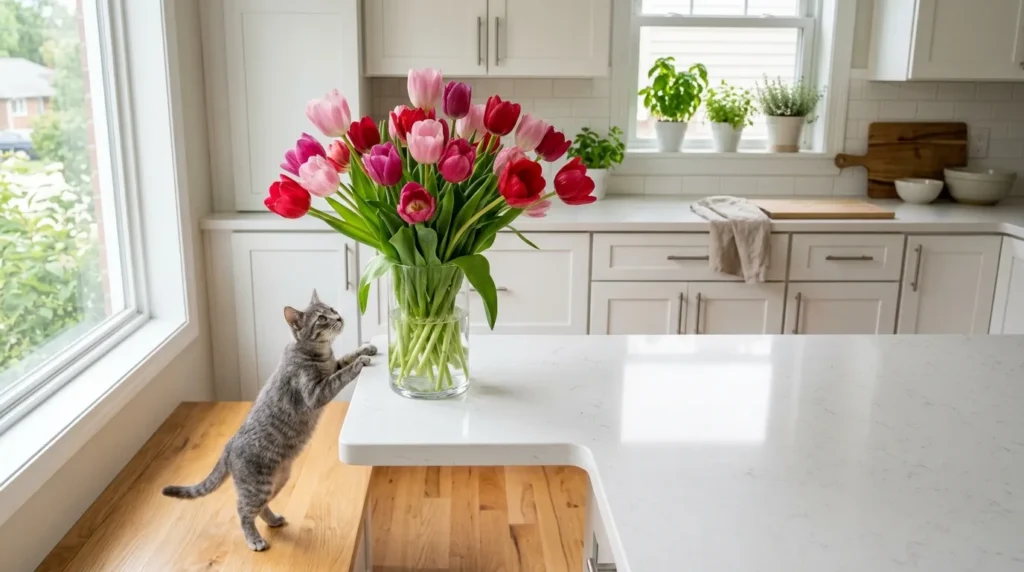
What Makes Tulips Toxic to Cats?
Tulips belong to the Tulipa genus within the Liliaceae family. They produce toxic compounds called tulipalin A and tulipalin B — allergenic lactones that act as irritants to a cat’s digestive system, skin, and mucous membranes.
These compounds exist throughout the entire plant. They’re not something a cat can avoid by only nibbling a petal. Even minor contact with the sap from a broken stem can trigger a reaction in sensitive cats.
If you’re ever unsure whether a plant or food in your home is safe, the Pet Food Safety Checker at Petfel is a useful first stop before calling the vet.
Tulipalin A and B — The Compounds Behind the Toxicity
Tulipalin A and B are phenanthridine-type compounds. When a cat chews or swallows any part of the tulip, these lactones are released and absorbed through the gastrointestinal tract. The result is irritation that starts in the mouth and works its way through the digestive system.
At low doses, the reaction is typically gastrointestinal — vomiting, drooling, nausea. At higher doses, particularly from bulb ingestion, the compounds can affect the central nervous system and, in rare cases, the heart.
Which Part of the Tulip Is Most Dangerous?
The Bulb
The bulb is the most toxic part of a tulip. It contains the densest concentration of tulipalin A and B. This matters most in spring, when gardeners are planting or storing bulbs — a curious cat that digs one up or finds one on a potting bench is at serious risk.
Cats that eat bulb material are far more likely to develop severe symptoms than those that chew a leaf or flower.
Stems, Leaves, and Flowers
These parts are less toxic than the bulb but still dangerous. Chewing a stem or leaf is enough to cause vomiting and drooling in most cats. The flowers carry toxins in their sap as well. Don’t assume a cat is safe just because it avoided the bulb.
What About Pollen?
Tulip pollen is not considered highly toxic to cats the way lily pollen is. That said, it can still cause mild irritation if a cat grooms pollen off its fur. If your cat walked through tulips and has yellow pollen on its coat, rinse it off with water and monitor for any symptoms.
Can Vase Water Harm Cats?
Yes, it can. Water in a vase holding tulips absorbs compounds from the stems over time. A cat that drinks from a flower vase — which many do — is ingesting those compounds. It’s unlikely to cause severe poisoning from vase water alone, but it can trigger nausea and vomiting. Keep vase water out of reach and change it frequently if you have cats in the house.
Symptoms of Tulip Poisoning in Cats
Mild to Moderate Symptoms
These are the most common reactions, typically seen after a cat chews a leaf, stem, or flower:
- Drooling (sometimes excessive)
- Vomiting
- Diarrhea
- Loss of appetite
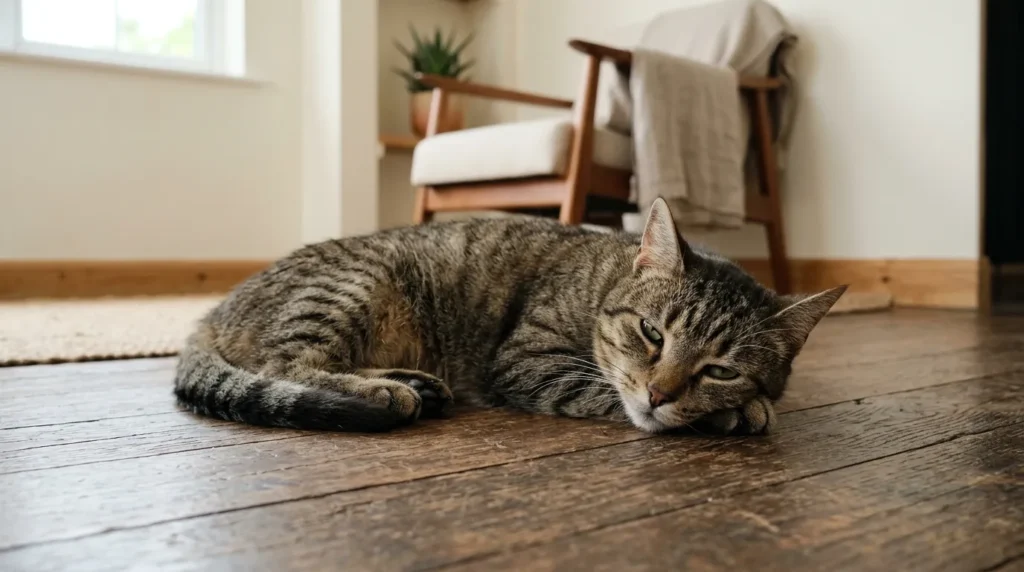
- Lethargy
- Pawing at the mouth (sign of oral irritation)
Most cats that nibble a tulip petal will show one or two of these symptoms and recover within a few hours with no treatment beyond fresh water and monitoring.
If your cat vomits frequently or you notice ongoing digestive issues, it’s worth reading about why cats keep throwing up — it covers when occasional vomiting becomes a vet-level concern.
Severe Symptoms (High-Dose Exposure)
If a cat ate a significant amount of the plant — especially the bulb — symptoms can escalate:
- Tremors or muscle weakness
- Difficulty breathing
- Rapid or irregular heartbeat
- Low blood pressure
- Collapse
These severe symptoms are rare but require emergency veterinary care immediately. Don’t wait to see if things improve.
How Quickly Do Symptoms Appear?
Symptoms typically appear within 1 to 3 hours of ingestion. Gastrointestinal signs like drooling and vomiting usually come first. Neurological or cardiac symptoms, if they occur, tend to follow several hours later in cases of heavy exposure.
Unexpected drooling is one of the first signals something is wrong. If you notice it alongside other signs, don’t delay — check out why cats drool and when it becomes serious to understand what the vet will likely assess first.
What to Do If Your Cat Ate a Tulip
Immediate Steps
- Stay calm. Panicking makes it harder to act clearly.
- Remove your cat from the plant. Stop any further exposure.
- Check your cat’s mouth. Look for plant material, swelling, or irritation.
- Don’t induce vomiting at home. This can cause additional harm in cats and should only be done by a vet.
- Note what your cat ate. Which part of the plant? Roughly how much? How long ago?
- Call your vet or a poison control line immediately.
Poison control contacts in the US:
- ASPCA Animal Poison Control Center: (888) 426-4435 (fee may apply)
- Pet Poison Helpline: (855) 764-7661 (fee may apply)
When to Call the Vet — and What to Say
Call your vet even if your cat only chewed a small amount. When you call, have this information ready:
- Your cat’s weight and approximate age
- What part of the tulip was eaten (bulb, leaf, flower, stem)
- Estimated amount consumed
- Time of ingestion
- Current symptoms, if any
The more specific you are, the faster the vet can assess the risk level and advise you. If you’re not sure what your cat weighs, the Pet Age Calculator at Petfel can also help you estimate approximate health baselines by age — useful context for any vet call.
How Vets Treat Tulip Poisoning
Treatment depends on how much was eaten and how quickly you act. Common approaches include:
- Induced emesis (vomiting) — only safe when done clinically, within a short window of ingestion
- Activated charcoal — to reduce absorption of toxins in the gut
- IV fluids — to support kidney function and maintain hydration
- Supportive care — monitoring heart rate, blood pressure, and neurological signs
Most cats with mild tulip exposure recover fully within 24 hours with proper care.
Are Some Tulip Varieties More Toxic Than Others?
All tulips within the Tulipa genus contain tulipalin compounds. Wild tulip species tend to have higher concentrations of these compounds than commercially cultivated hybrid varieties. However, no tulip variety is safe for cats.
Whether you’re growing classic Darwin hybrid tulips or small botanical varieties, treat all of them as equally dangerous around cats. Don’t try to identify a “safer” cultivar — that’s not a reliable safety strategy.
How to Keep Cats Safe Around Tulips

Inside the Home
- Keep cut tulips in rooms your cat cannot access.
- Don’t leave vase water accessible — cats drink from flower vases more often than most owners realize.
- If you receive tulips as a gift, place them in a closed room or rehome the bouquet.
- Store tulip bulbs in sealed containers inside cabinets, not on open shelves or potting benches.
Keeping cats away from restricted areas takes some strategy. If countertops are the main issue, these proven methods to keep cats off counters are worth reading — the same techniques apply to keeping cats away from flower arrangements.
In the Garden
- Plant tulip bulbs in areas your cat doesn’t roam, if possible.
- Use physical barriers like wire mesh over freshly planted bulbs — cats are attracted to freshly dug soil.
- Supervise outdoor cats during spring planting season.
- If your cat is an outdoor free-roamer, tulip-free garden beds are the safest choice.
Other Common Plants Toxic to Cats
Tulips aren’t the only spring garden plant that puts cats at risk. These are also toxic and worth knowing:
- Lilies (Lilium and Hemerocallis species) — among the most dangerous plants for cats; even small amounts can cause acute kidney failure
- Daffodils — contain lycorine and other alkaloids; bulbs are especially toxic
- Hyacinths — similar toxicity profile to tulips; cause GI upset and, in large doses, more serious symptoms
- Alliums (onion, garlic, chives) — cause oxidative damage to red blood cells
- Autumn Crocus (Colchicum autumnale) — highly toxic; can cause multi-organ failure
- Hydrangeas — contain cyanogenic glycosides; learn more about whether hydrangeas are poisonous to cats and what symptoms to expect
- Pothos — a common houseplant that’s more dangerous than it looks; the full picture on whether pothos is toxic to cats is worth knowing
- Snake plants — popular in modern homes but risky; here’s whether snake plants are toxic to cats
- Poinsettias — especially relevant during the holidays; read about whether poinsettias are poisonous to cats
If you’re unsure about a plant in your home or garden, the ASPCA’s Toxic and Non-Toxic Plant Database is a reliable reference.
Cat-Safe Flower Alternatives
You don’t have to give up flowers entirely. These are confirmed safe for cats:
- Roses — non-toxic, though thorns are a physical hazard. For the full picture, here’s a deeper look at whether roses are toxic to cats
- Snapdragons — safe and colorful spring blooms
- Orchids — non-toxic to cats and dogs; confirmed in this guide on whether orchids are toxic to cats
- Sunflowers — safe and widely available
- Zinnias — non-toxic, easy to grow in gardens
- Freesias — safe and fragrant alternative to tulips in bouquets
- Spider plants — commonly kept indoors and generally safe, though it’s worth reading the full breakdown on whether spider plants are toxic to cats
For a broader reference, this complete cat-safe flowers guide covers dozens of varieties with clear safe/unsafe labels — a useful bookmark for any cat owner who enjoys decorating with plants.
Always verify with the ASPCA database before bringing a new plant into a home with cats.
Frequently Asked Questions
Can a cat die from eating a tulip? It’s unlikely from a small amount, but not impossible in cases of large bulb ingestion with no treatment. Severe toxicity can affect the heart and nervous system. Prompt vet care dramatically reduces that risk.
My cat just sniffed a tulip — is that dangerous? No. Sniffing a tulip without chewing or eating it poses no real toxicity risk. Watch for any licking of the plant or paws afterward.
Can cats be in the same room as tulips? Yes, as long as the plant is completely inaccessible. Cats can’t be harmed by proximity alone — ingestion is what causes toxicity. That said, cats are agile and curious, and “out of reach” doesn’t always stay that way.
What if my cat only chewed the flower, not the bulb? Chewing a flower can still cause mild GI symptoms. It’s less severe than bulb ingestion, but you should still monitor your cat closely and call your vet if symptoms develop.
Is tulip toxicity the same as lily toxicity? No. They’re both toxic, but the mechanism is different. Lily toxicity primarily targets the kidneys and is far more dangerous — small amounts can cause acute kidney failure. Tulip toxicity is mainly a GI irritant, though high doses can cause neurological and cardiac effects. Both require immediate vet attention.
How do I know if my cat ate a tulip while I wasn’t watching? Look for chew marks on stems or petals. Check for vomiting, drooling, or lethargy. If you find a damaged plant and a symptomatic cat, assume ingestion occurred. The Pet Symptom Checker at Petfel can help you assess whether the symptoms you’re seeing warrant an emergency call or routine monitoring.
My cat is sneezing after being near tulips — should I worry? Sneezing alone from proximity is likely just nasal irritation from pollen. But if sneezing is persistent or combined with other symptoms, it’s worth reading about why cats sneeze and when it signals something more serious.
Final Word
Tulips are toxic to cats, and that’s not something to test. The bulb is the biggest threat, but no part of the plant is safe to eat. Mild chewing of a leaf or flower typically causes short-term stomach upset. Eating a bulb can cause serious harm.
The smart move is prevention — keep tulips out of spaces your cat can reach. If exposure happens anyway, skip the home remedies, call your vet, and bring as much information as you can. Fast action gives your cat the best chance at a full recovery.
Looking for more ways to protect your cat day-to-day? The Pet Compatibility Checker helps you build a safer home environment for mixed-pet households, and if you’re thinking about which cat breed fits best with a plant-filled home, the Pet Breed Finder Quiz is a good starting point.