
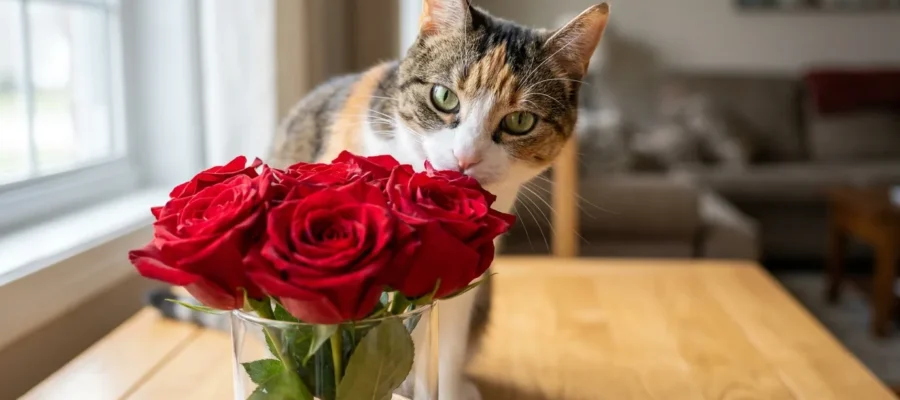
Roses are not toxic to cats. That’s the official verdict — the ASPCA lists the entire Rosa genus as non-toxic to cats, dogs, and horses, with no toxic principles identified.
But “non-toxic” and “harmless” are not the same thing. Plenty of cat owners have had sick cats after rose exposure, and they weren’t wrong to be concerned. The problem just wasn’t the petals. It was the thorns, the pesticide residue on florist roses, the floral preservative dissolved in the vase water, or a plant called a “rose” that biologically isn’t one.
This article covers exactly what’s dangerous, what isn’t, and what to do if your cat just helped themselves to your bouquet.
Quick Answer
True roses (Rosa spp.) are non-toxic to cats. Petals, leaves, and stems contain no compound that will poison your cat. The ASPCA’s Poison Control database classifies all Rosa species as non-toxic.
That said, three things connected to roses can cause real harm:
- Thorns — physical injury to the mouth, throat, and digestive tract
- Pesticides and floral chemicals — toxic if ingested, even in small amounts
- Lookalike plants — several plants called “roses” are genuinely dangerous
If your cat nibbled a petal from an untreated garden rose with no thorns, you can relax. If the roses came from a florist or a chemically-maintained garden, keep reading.
What Happens If a Cat Eats a Rose?
Cats are obligate carnivores. Their digestive systems aren’t built to handle plant fiber. So even when a plant contains nothing toxic, eating it can still cause stomach upset — their gut simply doesn’t know what to do with it.
After eating rose petals or leaves, a cat might vomit once or twice, have loose stools, or skip a meal. The vomit often contains visible bits of the flower. These symptoms typically clear up within 12 to 24 hours without any treatment.
If your cat is throwing up repeatedly or refusing food beyond 24 hours, that’s no longer a wait-and-see situation — call your vet.
Risk #1 — Rose Thorns Are the Bigger Threat
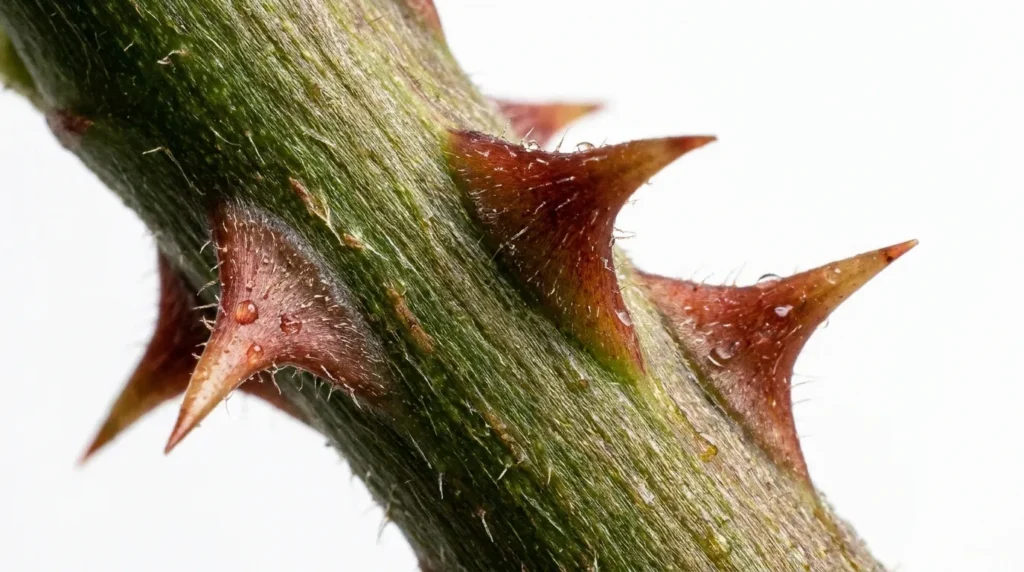
Most people focus on petal toxicity and miss the more immediate danger. Thorns cause physical trauma, and that’s something that can turn serious fast.
How Thorns Injure Cats
A cat chewing on a thorny stem can sustain cuts to the lips, tongue, soft palate, and the inner cheeks. A swallowed thorn — even a small one — can scratch or lacerate the esophagus, stomach lining, or intestines. In some cases, this creates sites for bacterial infection or causes internal bleeding. Thorns can also scratch the eyes or paws if a cat rubs up against a rose stem or bush.
Signs of a Thorn Injury
Watch for these after any contact with thorny roses:
- Pawing at the mouth repeatedly
- Excessive drooling — if your cat is drooling more than normal, a mouth wound is a common cause
- Reluctance to eat or difficulty swallowing
- Visible blood around the mouth or on the paws
- Limping or persistent licking of a specific paw
Any of these signs after thorn contact means a vet visit, not monitoring at home. For minor surface scratches with no signs of deeper injury, clean the area with a pet-safe antimicrobial wipe and keep an eye on it for 24 hours.
Risk #2 — Pesticides, Fertilizers, and Floral Chemicals
This is where most rose-related vet calls actually originate. The flower itself is fine. What’s on the flower often isn’t.
What’s on Store-Bought Roses
Commercially grown roses are among the most heavily treated flowers in the floral industry. They’re routinely sprayed with pesticides — including neonicotinoids and organophosphates — and treated with systemic fungicides during cultivation. By the time they reach a florist’s display case, they may have been treated multiple times during growing, transport, and storage.
None of these chemicals are safe for cats. If your cat licks, chews, or nibbles treated roses, they’re ingesting a real chemical load.
Symptoms of pesticide poisoning in cats:
- Excessive drooling
- Vomiting and diarrhea
- Weakness or lethargy
- Muscle tremors
- Seizures (in severe cases)
Tremors and seizures require emergency veterinary care. Do not wait.
Vase Water: The Hidden Danger
This one surprises most people. The small preservative packets that come with florist bouquets contain biocides, acidifiers, and sugars — dissolved into the vase water, they create a dilute but chemically active solution. Cats drink from vases. Regularly, and usually without their owners noticing.
If your cat has had regular access to vase water from a store-bought bouquet with preservative added, they’ve likely been ingesting small amounts of those chemicals for days.
Keep vase water inaccessible, change it every two days, and skip the preservative packet entirely if you have a cat.
Dyed and Colored Roses
Blue, black, and rainbow roses don’t occur naturally. They’re produced by soaking white or light-colored roses in artificial dye — the chemical composition of which isn’t regulated for pet safety. If your cat chews on a dyed rose, the chemical exposure is genuinely unknown.
Treat any dyed or artificially colored roses as higher risk than standard roses.
Plants With “Rose” in the Name That Are Actually Toxic

This is the section that catches cat owners off guard. Several plants carry “rose” in their common name but belong to completely different botanical families — some of them toxic.
| Common Name | Scientific Name | Risk to Cats |
|---|---|---|
| Christmas Rose / Lenten Rose | Helleborus niger | Toxic — drooling, vomiting, abdominal pain, cardiac effects |
| Desert Rose | Adenium obesum | Highly toxic — cardiac glycosides, can cause heart arrhythmia |
| Rosebay / Oleander | Nerium oleander | Extremely toxic — grayanotoxins, potentially fatal |
| Moss Rose / Purslane | Portulaca oleracea | Toxic — vomiting and tremors |
| Primrose | Primula spp. | Mildly toxic — mouth irritation, vomiting, skin reactions |
Always verify a plant by its scientific name before bringing it home. Common names are unreliable. The same caution applies to flowers commonly mixed into rose bouquets — tulips are genuinely toxic to cats and are frequently included in spring arrangements alongside roses.
Symptoms to Watch After Rose Ingestion
Mild — monitor at home for 12–24 hours:
- One or two vomiting episodes with visible plant material
- Slightly loose stools
- Reduced appetite for under 12 hours
Call your vet:
- Vomiting or diarrhea lasting more than 24 hours
- Not eating for more than 24 hours — cats shouldn’t go without food for extended periods
- Drooling, pawing at mouth, or visible injury
- Suspected thorn ingestion
- Roses were florist-bought or chemically treated
Emergency — go immediately:
- Muscle tremors or twitching
- Seizures
- Collapse or extreme weakness
- Loss of coordination
Not sure how urgent your cat’s symptoms are? The pet symptom checker gives you a quick urgency assessment to help you decide whether to monitor at home or head to the vet.
What to Do Right Now — Step-by-Step
- Remove access. Move the roses out of reach immediately — even if they’ve already eaten some, stopping further exposure matters.
- Identify what they ate. Petals only? Stem with thorns? Florist roses or home garden? Treated or organic? Dyed?
- Check for thorn injuries. Look at the mouth, paws, and face for cuts, swelling, or dried blood.
- Confirm the plant is a true rose. If you bought it as a “Christmas Rose” or “Desert Rose,” check the scientific name. These are not Rosa species.
- Monitor symptoms. If it was an untreated true rose and symptoms are mild, watch for 12–24 hours.
- Call for help if needed. Use the contacts below.
Emergency Contacts
Pet Poison Helpline: 855-764-7661 (consultation fee applies) ASPCA Animal Poison Control: 888-426-4435 (consultation fee applies) Your emergency vet — always the fastest route for physical injuries or severe symptoms
Safe Flower Alternatives for Cat Households
If you want fresh flowers without the concern, several options are genuinely safe for cats:
- Orchids — non-toxic, elegant, and long-lasting. See the full guide on orchids and cats for details.
- Sunflowers — bright, safe, and cats rarely show interest in them
- Gerbera daisies — colorful and confirmed non-toxic
- Snapdragons — safe and widely available at florists
- African violets — soft-leaved, non-toxic, well-suited for indoor display
- Zinnias — vibrant, easy to grow, no toxicity concerns
For a complete reference, the cat-safe flowers guide covers over 20 varieties with full toxicity notes. If you’re also thinking about common bouquet fillers and houseplants, it’s worth knowing that carnations, hydrangeas, and pothos each have their own risk profiles.
How to Keep Roses and Cats in the Same Home
You don’t have to choose between your favorite flowers and your cat’s safety. A few practical steps cover most of the risk:
- Strip the thorns before displaying roses indoors. Use a thorn stripper tool or thick gardening gloves.
- Buy organic or untreated roses when possible — this eliminates the pesticide problem.
- Skip the floral preservative in the vase water.
- Keep vases in rooms your cat can’t access, or use heavy-bottomed vessels that can’t be tipped.
- Limit countertop access — if your cat freely roams every surface, keeping cats off counters has practical techniques that actually reduce the habit over time.
- Avoid dyed roses entirely if your cat is a repeat plant chewer.
Cats that regularly eat plants are often doing it out of boredom or an instinct toward greens. Offering cat grass or catnip alongside proper environmental enrichment usually reduces interest in bouquets without any training required.
True roses are safe. The danger is everything around them — what’s sprayed on them, what’s dissolved in the vase water, and what looks like a rose but isn’t. Know the difference, and you can have both a beautiful home and a healthy cat.