
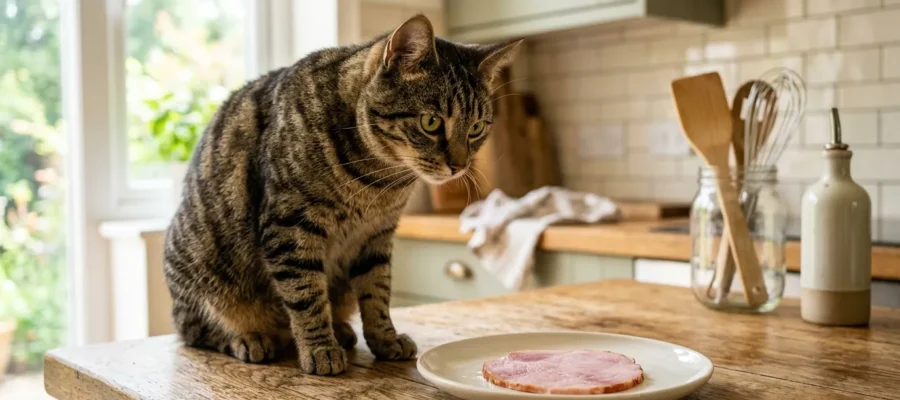
Cats are meat eaters by design. So when your cat stares you down over a holiday ham or a deli sandwich, it feels natural to share. But ham isn’t just meat — it’s processed, salted, often spiced, and sometimes prepared in ways that can hurt your cat. Here’s everything you need to know before handing over a piece.
Is Ham Safe for Cats? The Direct Answer
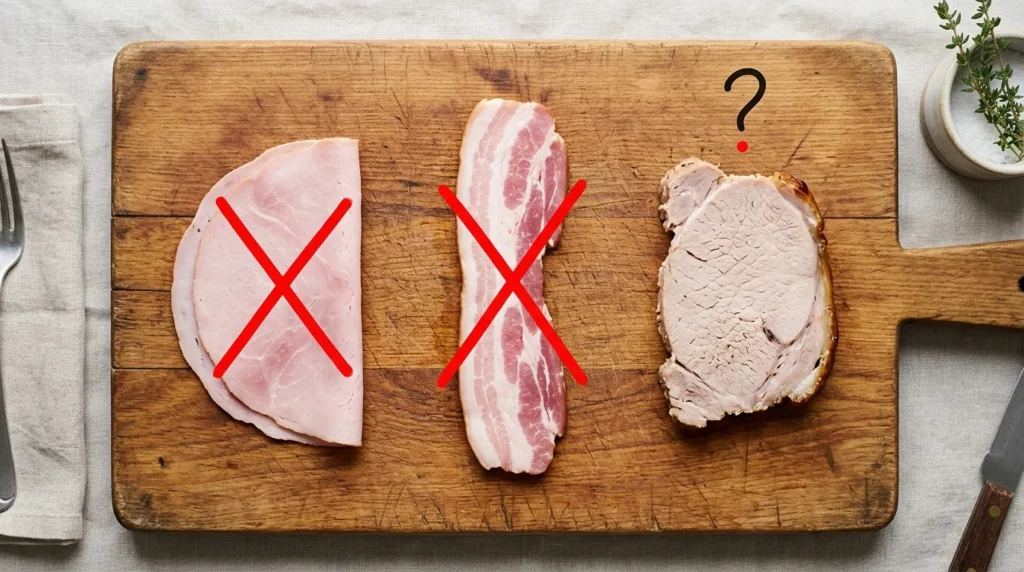
Cats can technically eat plain, fully cooked ham in very small amounts. Most ham products, however, are not safe. The issue isn’t pork itself — it’s the sodium, fat, additives, and spices that come with nearly every type of ham available in stores.
A tiny piece of plain, home-cooked ham won’t poison a healthy adult cat. But deli ham, smoked ham, honey-glazed ham, and bacon are a different story. Those products are loaded with salt, preservatives, and sometimes garlic or onion — all of which cause real harm to cats.
If your cat snagged a small bite off your plate, don’t panic. If they regularly eat ham or got into a large amount, that’s worth a call to your vet. Not sure if what your cat ate is dangerous? Use our Pet Food Safety Checker to get a quick answer before calling the clinic.
Why Ham Is Risky for Most Cats
The Sodium Problem
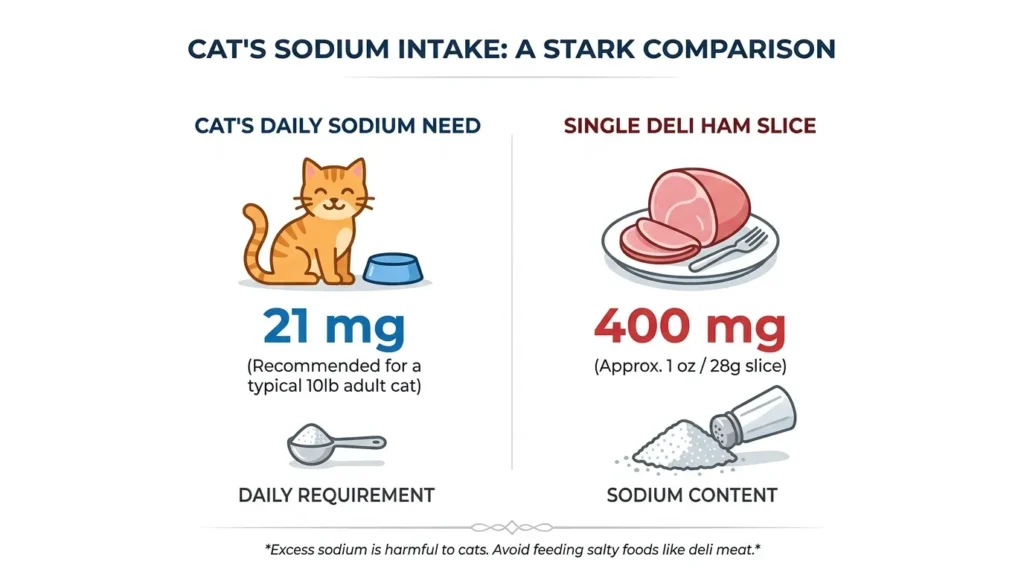
This is the biggest issue. A single slice of deli ham contains roughly 350–450mg of sodium. A cat’s total daily sodium requirement is around 21mg. That’s not a typo — one slice of ham delivers more than 15 times a cat’s daily sodium limit.
Too much sodium causes sodium ion poisoning in cats. It pulls water out of cells and disrupts the nervous system. Cats with kidney or heart disease are at even greater risk because their bodies can’t process excess sodium at all.
Even “low-sodium” ham isn’t actually low for a cat. It’s low relative to human dietary guidelines — not feline ones.
Fat Content and Pancreatitis
Ham is high in fat, especially processed and cured varieties. Cats that eat fatty foods are at risk for pancreatitis — inflammation of the pancreas triggered by fat overload.
Pancreatitis is painful. It can become life-threatening if untreated. Symptoms include vomiting, lethargy, swollen abdomen, loss of appetite, and fever. A single high-fat meal can trigger it in cats with a history of digestive sensitivity. If your cat keeps vomiting after eating something new, this guide on why your cat keeps throwing up explains exactly what to watch for.
Garlic, Onion, and Toxic Spices
Many hams are prepared with garlic, onion, or both. These are genuinely toxic to cats — not just irritating, actually toxic.
The culprit is a compound called N-propyl disulfide. It breaks down red blood cells and causes a condition called hemolytic anemia. The cat’s blood can no longer carry enough oxygen. Symptoms show up over 24–72 hours and include pale or yellow-tinged gums, extreme weakness, rapid breathing, and collapse in severe cases.
Even a small amount of garlic-seasoned ham is enough to cause a problem, especially in small cats.
Preservatives, Nitrates, and Additives
Cured and processed hams are preserved with sodium nitrate and other chemical additives. These compounds extend shelf life for humans. For cats, the long-term effects are less well-studied, but regular exposure to nitrate-heavy foods is not recommended. The digestive systems of cats aren’t designed to process these compounds safely over time.
Can Cats Eat Cooked Ham?
Plain, home-cooked ham is the only type that is even marginally safe to share with a cat. When you cook ham yourself from a raw cut, you control what goes into it. No salt added during cooking, no garlic, no spices, no glaze.
Set aside a small portion before seasoning for yourself. Cook it fully — no pink in the center. Then let it cool completely before offering it to your cat.
Store-bought pre-cooked ham, even when served warm at home, is not the same thing. It was already cured and salted during processing. The sodium is baked in before it ever reaches your kitchen.
Honey-glazed ham adds sugar on top of sodium on top of preservatives. Smoked ham adds chemical smoke flavoring. Both are a hard pass for cats.
Can Cats Eat Raw Ham?
No. Raw ham is not safe for cats. Despite the push for raw diets in some pet communities, raw pork carries specific bacterial risks that cooked pork doesn’t.
Raw ham can contain Salmonella, E. coli, and Listeria. All three can cause serious gastrointestinal illness in cats. Symptoms include profuse vomiting, bloody diarrhea, extreme lethargy, and fever. Some cases require hospitalization.
Raw pork also carries a small risk of Trichinella spiralis, a parasitic worm. It’s rare in modern commercial pork, but the risk is not zero.
Cook all meat fully before offering it to your cat. There are no exceptions.
Can Cats Eat Ham Bones?
No. Ham bones are dangerous — cooked or raw. This applies to all bones, not just ham.
Cooked bones become brittle. They splinter when chewed and produce sharp shards that can puncture the esophagus, stomach, or intestines. An intestinal perforation is a surgical emergency.
Even if the bone doesn’t splinter, a chunk can become lodged in the digestive tract and cause a blockage. Blockages are life-threatening and require immediate veterinary care.
Cats can also crack or break teeth trying to bite through bone. Dental fractures are painful and expensive to treat.
If your cat grabbed a ham bone off the table, watch closely for signs of distress — gagging, pawing at the mouth, inability to swallow, vomiting, or abdominal pain. Call your vet immediately if you see any of these. You can also run a quick check using our Pet Symptom Checker while you wait to reach your vet.
Can Cats Eat Deli Ham or Bacon?
Deli ham and bacon are among the worst options for cats.
Deli ham is packed with sodium, often seasoned, and may contain garlic or onion powder — sometimes listed vaguely as “spices” on the label. A few slices of deli ham could easily push a cat past its safe sodium threshold for the entire week.
Bacon is worse. It’s the highest-fat, highest-sodium product in the pork family. It’s also cured with nitrates and often contains sugar. Bacon fat alone can trigger pancreatitis. The salt load can cause sodium ion poisoning. If you’re curious whether dogs face the same bacon risks, our guide on can dogs eat bacon covers that in full.
Some cats are also allergic to pork. Signs of a pork allergy include skin itching, hair loss, chronic vomiting, or recurring gastrointestinal problems after eating pork products. If you notice these patterns, avoid all pork and talk to your vet.
There are commercially made cat treats that use pork as an ingredient. These are formulated specifically for cats, with controlled sodium levels and no toxic additives. Those are a far better option than deli meat off your cutting board.
Can Kittens Eat Ham?
Kittens should not eat ham. Their digestive systems are more sensitive than adult cats, and their nutritional needs are more exacting.
Muscle meat like ham is high in phosphorus but low in calcium. In an adult cat, this imbalance is manageable in small amounts. In a growing kitten, it can interfere with bone development and calcium metabolism. A kitten’s skeleton is still forming — the last thing it needs is a disrupted calcium-phosphorus ratio from regular ham snacks.
Kittens are also more prone to vomiting and diarrhea from new foods. A small amount accidentally eaten won’t cause lasting harm, but ham should not be a deliberate part of a kitten’s diet.
Feed kittens high-quality kitten food. That’s where their nutritional needs are actually met.
How Much Ham Can a Cat Eat?
For a healthy adult cat with no underlying conditions, the maximum is a 1-inch cube of plain, fully cooked, unseasoned ham — no more than 2 to 3 times per week.
That’s it. It’s a rare treat, not a food source.
These cats should not eat any ham at all:
- Cats with kidney disease (sodium restriction is critical)
- Cats with heart disease (hypertension risk)
- Cats on a vet-prescribed diet
- Kittens under 12 months
- Cats with known pork allergies
- Cats with a history of pancreatitis
Always check with your vet before introducing any new food to a cat with a health history. What’s harmless for a healthy cat can be dangerous for a medically compromised one. If you’re unsure how much wet or dry food your cat should be getting alongside treats, our guide on how much wet food to feed your cat breaks that down by weight and age.
Signs of Ham-Related Illness in Cats
If your cat ate a significant amount of ham — or any ham with spices — watch for these symptoms:
Sodium Poisoning:
- Extreme thirst or urination
- Vomiting
- Diarrhea
- Muscle tremors or seizures
- Confusion or disorientation
- Loss of coordination
- Lethargy or collapse
Pancreatitis:
- Vomiting (often repeated)
- Loss of appetite
- Hunched posture or swollen abdomen
- Lethargy
- Fever
- Rapid heart rate
Garlic/Onion Toxicity (Hemolytic Anemia):
- Pale, white, or yellowish gums
- Rapid or labored breathing
- Extreme weakness
- Reduced appetite
- Dark or reddish-brown urine
- Collapse in severe cases
Symptoms of garlic or onion toxicity can take 24–72 hours to appear. Don’t wait for symptoms to get severe before calling your vet. You can run a fast check using our Pet Symptom Checker to identify concerning signs while you arrange veterinary care.
What to Do If Your Cat Ate Ham
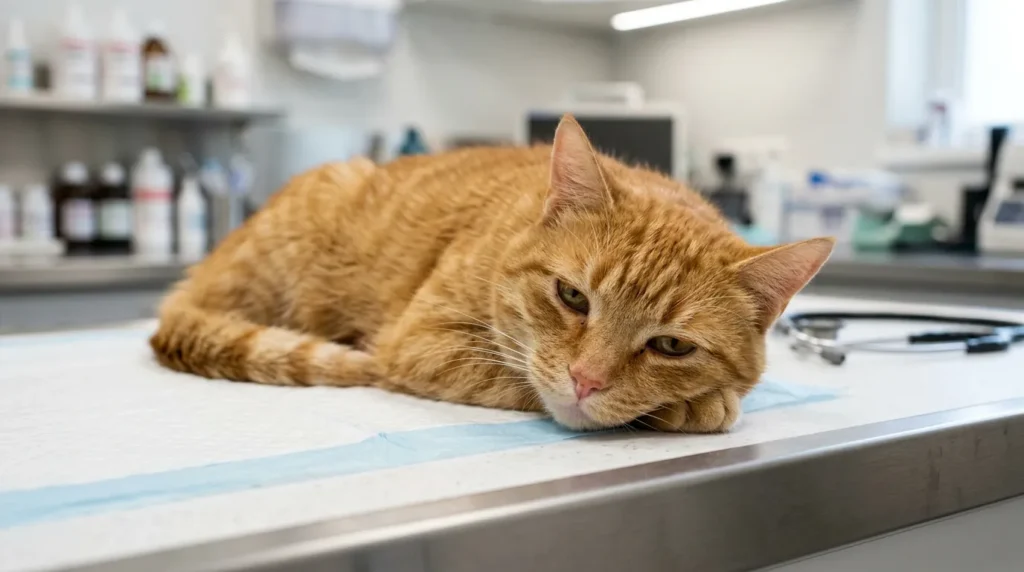
Small amount, plain ham, no spices, healthy adult cat: Monitor for 24 hours. Offer fresh water. Watch for vomiting or diarrhea. Most cats will be fine.
Large amount, or ham with garlic/onion/spices: Call your veterinarian immediately. Don’t wait for symptoms to develop. Provide the ingredient list if you have it — this helps the vet assess the risk quickly.
Unknown amount or unsure of ingredients: Call your vet or the ASPCA Animal Poison Control Center (888-426-4435). Better to be cautious than to wait and watch something preventable get worse.
If you see any of the symptoms listed above, don’t wait — call your vet right away. Sodium poisoning and hemolytic anemia both move fast once symptoms start.
Safer Protein Alternatives to Ham
Your cat wants protein, not specifically ham. These are safer options.
Plain cooked meats (no seasoning, fully cooked, boneless):
- Chicken breast — one of the safest proteins for cats. Read our full guide on can cats eat chicken for preparation tips.
- Turkey breast — lean, low-sodium, and generally well-tolerated. See can cats eat turkey for details.
- Lean beef
- Cooked fish — in small amounts. Shrimp is another good option; here’s what to know about can cats eat shrimp.
- Lamb
All of these should be cooked without oil, butter, garlic, onion, or any seasoning. Serve them in small pieces, at room temperature, as occasional treats.
If you enjoy making food for your cat, our collection of high-protein cat recipes for active cats gives you five vet-friendly options that go well beyond plain ham.
Commercial pork-based cat treats are also a solid option. Brands formulate these with cats’ sodium tolerances in mind. Your cat gets the taste of pork without the salt bomb of deli meat.

Final Verdict
Ham is not a good snack for cats. The meat itself isn’t the problem — pork protein is fine for cats in principle. The problem is everything that comes with ham: the salt, the fat, the preservatives, and the spices.
Plain, home-cooked, unseasoned ham in a 1-inch portion a couple of times a week is unlikely to hurt a healthy adult cat. But deli ham, bacon, smoked ham, honey-glazed ham, ham bones, and any ham containing garlic or onion should not go anywhere near your cat’s bowl.
When in doubt, offer a small piece of plain cooked chicken instead. Your cat will be just as happy, and you won’t have to worry about a vet visit.
Want to explore more about what your cat can and can’t safely eat? Check out our guides on can cats eat peanut butter, can cats eat cheese, and can cats eat yogurt — three other foods cat owners ask about constantly.