


No. Dogs should not eat bacon. It isn’t toxic the way chocolate or xylitol is, but bacon is packed with fat, sodium, and curing chemicals that can cause serious health problems — some of them life-threatening. One strip probably won’t send a healthy adult dog to the emergency vet. But that doesn’t make it safe, and it definitely doesn’t make it smart.
Here’s exactly why bacon is harmful, how much actually causes damage, what to watch for after your dog eats some, and what to give them instead.
Why Bacon Is Harmful to Dogs
The Fat Problem — Pancreatitis
Bacon is one of the fattiest processed meats available. A single cooked strip contains roughly 3–4 grams of fat. For dogs, that’s a significant hit — especially for small breeds or dogs with any history of digestive sensitivity.
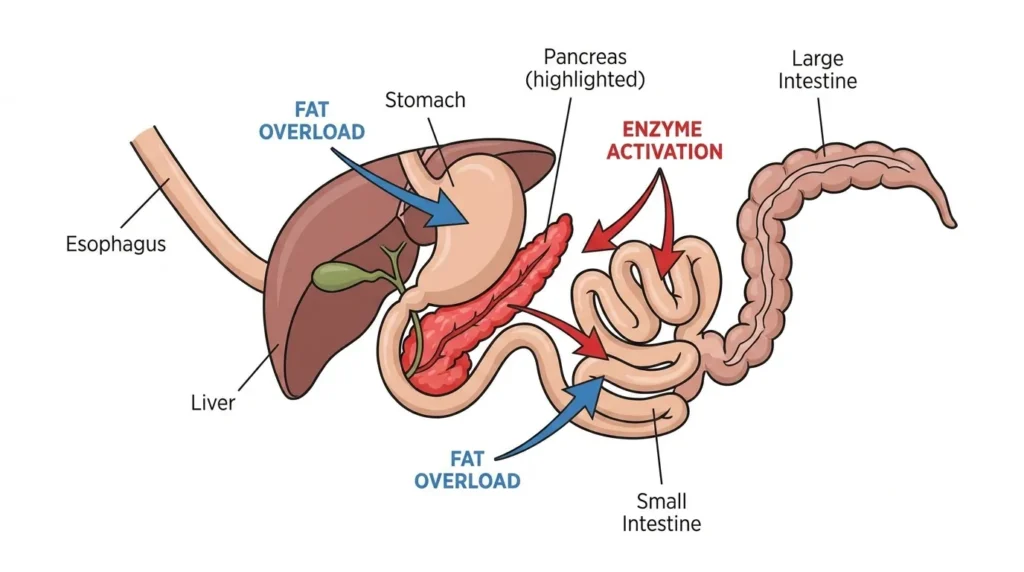
The pancreas produces digestive enzymes that normally stay inactive until they reach the small intestine. When a dog eats too much fat, those enzymes can activate prematurely — inside the pancreas itself. The organ then begins breaking down its own tissue. That’s pancreatitis. It ranges from painful and disruptive to acute and fatal.
Signs of pancreatitis in dogs:
- Repeated vomiting
- Diarrhea
- Hunched posture or guarded abdomen
- Loss of appetite
- Lethargy
- Fever
- Dehydration
Symptoms typically appear within 24–72 hours of the high-fat meal. Without prompt veterinary treatment, acute pancreatitis can become life-threatening.
Breeds with the highest genetic predisposition include miniature schnauzers, miniature poodles, cocker spaniels, and Yorkshire terriers. Overweight dogs and senior dogs are also at elevated risk regardless of breed.
The Sodium Problem — Salt Poisoning and Bloat
One strip of cooked bacon contains 137–193 mg of sodium. A 30-pound dog’s recommended daily sodium intake sits around 100 mg. A single strip already exceeds that limit.
Most healthy, well-hydrated dogs won’t collapse after one strip. But the real danger plays out in two ways. First, excess sodium pulls water out of cells, causing dehydration and electrolyte imbalance — sodium ion poisoning in severe cases. Second, the resulting extreme thirst causes the dog to drink large volumes of water quickly. That rapid water intake can fill the stomach with fluid and gas, which in some cases causes the stomach to twist — a condition called gastric dilatation-volvulus (GDV), also known as bloat. GDV is a surgical emergency with a high fatality rate if not treated within hours.
Signs of salt poisoning:
- Extreme thirst and heavy urination
- Vomiting and diarrhea
- Muscle tremors or stiffness
- Confusion or disorientation
- Seizures
- Swollen, hard abdomen (possible bloat signal)
Nitrites and Preservatives — The Angle Most Articles Skip
Cured bacon — which covers virtually all packaged bacon on supermarket shelves — is processed with sodium nitrite. This preservative gives bacon its pink color and extended shelf life by inhibiting bacterial growth. In animals, high nitrite exposure is linked to oxidative stress and, in larger doses, methemoglobinemia — a condition where red blood cells lose the ability to carry oxygen properly.
A dog would need to consume a significant quantity for acute toxicity from nitrites alone. But this adds another layer to why regular bacon feeding is a genuinely bad idea, not just a “moderation” question.
Raw Bacon vs. Cooked Bacon
Neither is safe. Raw bacon adds further risk on top of the fat and sodium problem.
Raw pork can carry Trichinella spiralis, a parasitic roundworm that causes trichinosis. Symptoms in dogs include muscle pain, stiffness, vomiting, and diarrhea. Raw pork also carries a higher risk of Salmonella and other foodborne bacteria.
Cooking eliminates the parasite risk but does nothing to reduce fat, sodium, or nitrite content. A cooked strip is still too fatty, too salty, and still loaded with whatever the bacon was cured with.
Both raw and cooked bacon are off the menu.
Types of Bacon — Are Any Safe?
Turkey Bacon
Turkey bacon is commonly suggested as a safer swap. It isn’t. One slice of turkey bacon contains 180–220 mg of sodium — actually higher than many pork bacon varieties. It’s still a processed, cured meat product. Avoid it.
Low-Sodium Bacon
Better in theory. Still not appropriate. Even low-sodium commercial bacon delivers far more salt than a dog needs in a day, and the fat content remains a problem.
Uncured Bacon
Uncured bacon skips sodium nitrite, which removes the specific preservative concern. But it’s still high in fat and salt. Marginally less processed — not meaningfully safer for dogs.
Bacon Grease
More concentrated than the meat. Bacon grease is essentially pure rendered fat with dissolved salt and seasoning residue. Even a tablespoon poured over kibble — a practice some owners try as a flavor enhancer — is enough to trigger pancreatitis in sensitive dogs. Don’t use it as a food topper.
Bacon Bits
Real bacon bits carry the same risks as the strips, in smaller form. Artificial bacon bits are made from soy, artificial flavoring, and salt — no significant fat risk, but high sodium and additives still make them unsuitable.
Bacon-Flavored Dog Treats
This is the one positive exception. Reputable pet brands formulate bacon-flavored dog treats specifically for canine digestion — controlled sodium levels, appropriate fat content, none of the harmful additives. If your dog loves bacon flavor, this is the right answer. Check the ingredient label and serving size before buying.
How Much Bacon Is Actually Too Much?
This depends on the dog’s size, overall health, and history.
A 10-pound dog is already over their daily sodium limit after half a strip of bacon. The fat load on their pancreas is proportionally much higher than for a large dog.
A 70-pound dog eating one strip one time will likely be fine. It’s not ideal, but it’s a different risk level than a small dog eating the same.
The more important factor is frequency. One strip snatched off the floor one time is a watchful-wait situation for most healthy adult dogs. One strip three times a week for months is how chronic pancreatitis and obesity develop. The cumulative load is where the real damage builds.
There’s no universal safe serving size for bacon that applies to all dogs. The safest amount is zero.
If you want to set a healthy daily calorie target and understand your dog’s actual nutritional needs, the dog calorie calculator can give you a solid baseline to work from.
Symptoms to Watch After Your Dog Eats Bacon
Monitor at home — mild, self-resolving:
- One episode of soft stool or vomiting
- Mild gas or temporary bloating
- Reduced appetite for one meal
Call your vet — act within hours:
- Vomiting three or more times
- Blood in vomit or stool
- Hunched posture, reluctance to move, tense abdomen
- Lethargy lasting more than a few hours
- Excessive thirst followed by a swollen or hard abdomen
- Tremors, disorientation, or seizures
Onset for gastrointestinal symptoms is usually 1–4 hours. Pancreatitis can develop over 12–72 hours after the meal. Salt poisoning can appear within a few hours in larger ingestion cases.
If symptoms appear but you’re unsure how serious they are, the pet symptom checker can help you evaluate before making the call.

What to Do If Your Dog Ate Bacon
One small piece, healthy adult dog: Monitor for 48 hours. Keep water available. Avoid all fatty or rich food for the rest of the day. Most dogs will be fine.
A larger amount — several strips or a full package:
- Note how much they ate and how long ago
- Call your vet or an emergency clinic
- Do not attempt to induce vomiting without vet guidance — it isn’t always appropriate and can cause additional harm. Our guide on how to make a dog throw up safely explains the situations where vets recommend it and the method they actually use
- ASPCA Animal Poison Control: 888-426-4435
- Pet Poison Helpline: 855-764-7661
If your dog develops vomiting or diarrhea afterward, both cause fluid loss quickly. Keep fresh water available and watch for any sign of worsening.
Dogs That Should Never Eat Bacon
For some dogs, even a small piece carries meaningful risk. Bacon should be completely off the table for:
- Dogs with a history of pancreatitis — dietary fat is the primary trigger for flare-ups
- Dogs on low-fat prescription diets — any deviation can disrupt treatment
- Miniature schnauzers, cocker spaniels, and miniature poodles — genetically predisposed to pancreatic inflammation
- Overweight or obese dogs — already at elevated risk for lipemia and metabolic stress
- Senior dogs — reduced digestive efficiency and lower organ resilience
- Dogs with heart disease or hypertension — excess sodium directly worsens cardiovascular strain
Safer Alternatives Dogs Actually Love
Dogs love bacon because of the fat, the salt, and the powerful smell. You can satisfy the drive for a high-value treat without the risk.
Genuinely safe high-value options:
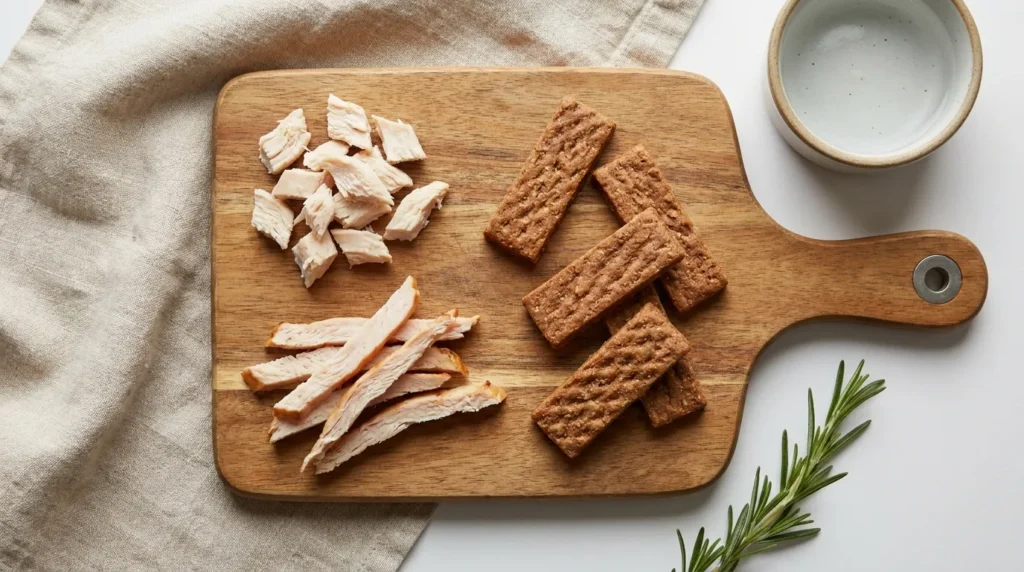
- Plain cooked chicken breast — lean, low sodium, high protein; one of the best all-round treat options
- Plain cooked turkey — similar profile, dogs respond strongly to it
- Small pieces of plain lean cooked beef — occasional, no seasoning
- Bacon-flavored dog treats from reputable brands — the right way to give bacon flavor without health consequences
For a broader look at what human foods are actually safe to share, our guides on what vegetables dogs can eat and what fruits are safe for dogs cover the full picture.
Bacon also isn’t the only processed pork product people share with dogs. If you’re wondering whether ham has the same risks, can dogs eat ham covers that in full — the short answer is similarly no.
FAQ
Is bacon toxic to dogs? No. Bacon is not toxic to dogs in the way chocolate, grapes, or xylitol are. But “not toxic” doesn’t mean safe. The fat and sodium cause pancreatitis and salt poisoning — both serious conditions that don’t require a toxic compound to do damage.
Can puppies eat bacon? No. Puppies have developing digestive systems and less organ resilience. The risk of pancreatitis and sodium overload is higher for young dogs than for healthy adults.
Can dogs eat bacon every day? No. Daily bacon consumption leads to chronic pancreatitis, obesity, and cardiovascular disease over time. There is no daily amount that is considered safe.
Can dogs eat bacon and eggs? Plain cooked eggs are a nutritious, dog-safe food. The problem is the bacon. Adding bacon introduces all of the fat and sodium risks regardless of how beneficial the eggs are.
Can dogs eat Canadian bacon? Canadian bacon (back bacon) is leaner than streaky bacon but is still a processed, cured pork product with substantial sodium. It carries similar risks and is not recommended.
What if my dog ate bacon grease? If they consumed more than a teaspoon, or if any symptoms develop, call your vet. Bacon grease is more concentrated in fat than the meat itself and can trigger pancreatitis faster.
Are bacon-flavored dog treats safe? Yes — when made by established pet brands specifically for dogs. These products are formulated with controlled sodium and fat levels. They’re the best available substitute for dogs that respond strongly to bacon flavor.