
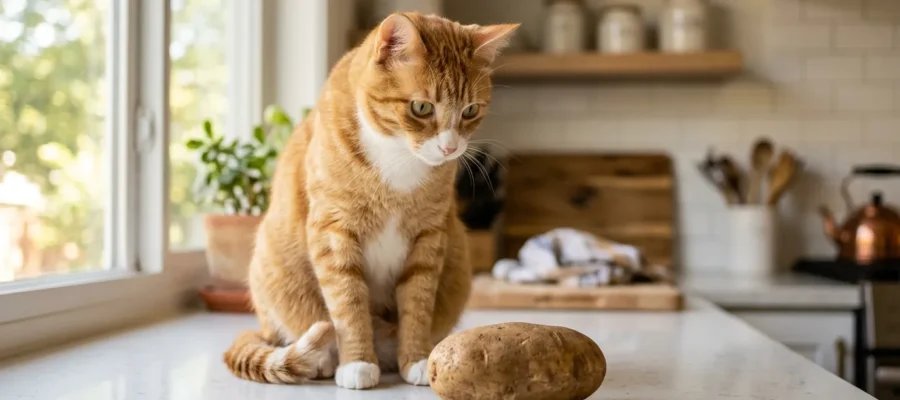
Cats can eat plain, cooked potatoes in very small amounts — but raw potatoes, green potatoes, and potato skin contain solanine, a natural toxin that can seriously harm or kill a cat. Whether a potato is safe depends almost entirely on how it’s prepared. Here’s exactly what you need to know before sharing any with your cat.
If you’re ever unsure about a specific food, our pet food safety checker can give you a quick answer before your cat takes a bite.
The Key Difference: Cooked vs. Raw
Plain cooked potato is not toxic to cats. Raw potato is.
That distinction sounds simple, but the details matter. Raw potatoes — including partially cooked ones — contain solanine and chaconine, two glycoalkaloid compounds that belong to the nightshade family (Solanaceae). Cooking breaks down most of these compounds. But it doesn’t eliminate all risk, and it doesn’t mean potatoes are actually good for cats.
Think of it this way: cooked potato moves from the “toxic” column to the “not toxic but also not beneficial” column. That’s a meaningful difference, but it’s not an invitation to treat your cat to a weekly baked potato.
Dogs face the same risk with this vegetable — if you have both pets at home, see our breakdown of can dogs eat potatoes for a side-by-side comparison.
What Is Solanine — and Why It Matters for Cats
Solanine is a natural pesticide. Plants in the nightshade family produce it to protect themselves from insects and animals. For cats, even small amounts can cause serious problems.
Where Solanine Hides
It’s concentrated in:
- The skin of raw potatoes
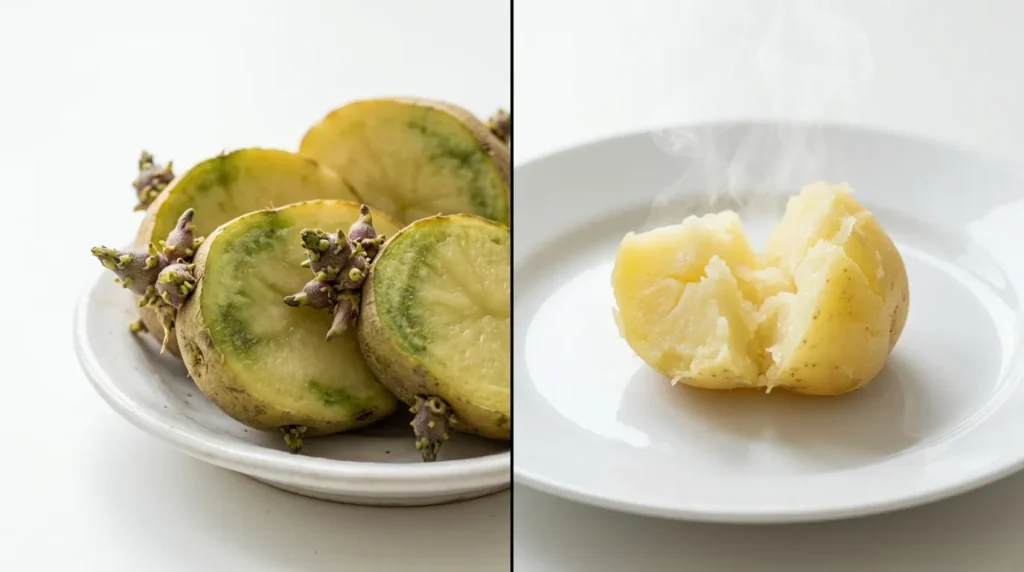
- Green-tinged flesh or patches
- Sprouts and “eyes” growing from the potato
- The leaves and stems of the potato plant
- Any raw potato, even a healthy-looking one
A potato that looks fine on the outside can still carry a significant solanine load. Green patches are a visible warning sign, but they’re not the only one.
Chaconine — the Co-Toxin Most Articles Skip
Solanine gets most of the attention, but chaconine is equally dangerous. These two compounds almost always appear together in raw potatoes, and they act synergistically — meaning together they’re more harmful than either would be alone. Both inhibit an enzyme called acetylcholinesterase, which disrupts nerve signal transmission. That’s what causes the neurological symptoms.
How Little Is Dangerous — With a Real Weight Example
There’s no exact feline-specific LD50 published for solanine, but based on available mammalian toxicology data, as little as 0.1–0.2% of body weight in raw potato is enough to cause symptoms in sensitive animals. For a typical 10-pound (4.5 kg) cat, that’s roughly 9–18 grams of raw potato — less than a single tablespoon. Cats are small. Their margins are narrow.
Symptom Timeline and Progression
Symptoms typically begin within 30 minutes to 2 hours of ingestion. Early signs hit the digestive system first.
Early (30 min – 2 hours):
- Drooling or hypersalivation
- Vomiting
- Diarrhea
- Loss of appetite
Progressing (2–6 hours if untreated):
- Lethargy and weakness
- Abdominal pain and bloating
- Disorientation or confusion
Severe (6–12 hours in significant exposures):
- Muscle tremors
- Difficulty walking or loss of coordination
- Dilated pupils
- Seizures
- Collapse or loss of consciousness
If your cat is showing any unusual symptoms after eating something, don’t guess — use our pet symptom checker to help assess what you’re seeing before you call the vet.
Do not wait for the severe symptoms to appear before calling a vet. By that stage, the toxin has already had hours to work.
Can Cats Eat Cooked Potatoes?
Yes — with strict conditions. Plain, peeled, thoroughly cooked potato in a very small quantity is not toxic to a healthy adult cat. But “safe” doesn’t mean “recommended.”
How to Prepare Potatoes Safely for Cats
If you want to give your cat a tiny piece of cooked potato, follow this exactly:
- Peel the potato completely. Remove all skin, even the thin layers.
- Check for green spots. Any green discoloration means the solanine level is elevated. Discard it.
- Cook it plain. Boil or bake with no oil, butter, salt, garlic, onion, or any seasoning.
- Cool it down fully. Hot food can burn a cat’s mouth and they won’t tell you until it’s too late.
- Cut it small. A piece roughly the size of a pea — not a tablespoon, a pea.
- Serve it as an occasional treat only. Not a daily addition.
No shortcuts. The moment you add butter, salt, garlic powder, or sour cream, you’ve introduced new hazards — and some of those (garlic, onion) are actually more dangerous to cats than the potato itself.
How Much Is Safe?
About one teaspoon of plain cooked potato — roughly 5 grams — is a reasonable ceiling for a single serving for an average adult cat. This is not a regular meal supplement. It’s an occasional treat.
How Often?
Once a week at most. Realistically, most veterinary nutritionists would say there’s no reason to feed potato to a cat at all. But if your cat is persistently interested and you want to give them a taste, once a week is where the risk stays low.
Can Cats Eat Potato Skin?
No. Cats should not eat potato skin, raw or cooked.
Raw potato skin has the highest solanine concentration of any part of the potato. Even cooked skin holds more of the compound than the flesh, and it’s also tougher for cats to digest. The texture can cause a choking hazard in smaller cats. There is no upside here. Skip it entirely.
Can Cats Eat Sweet Potatoes?
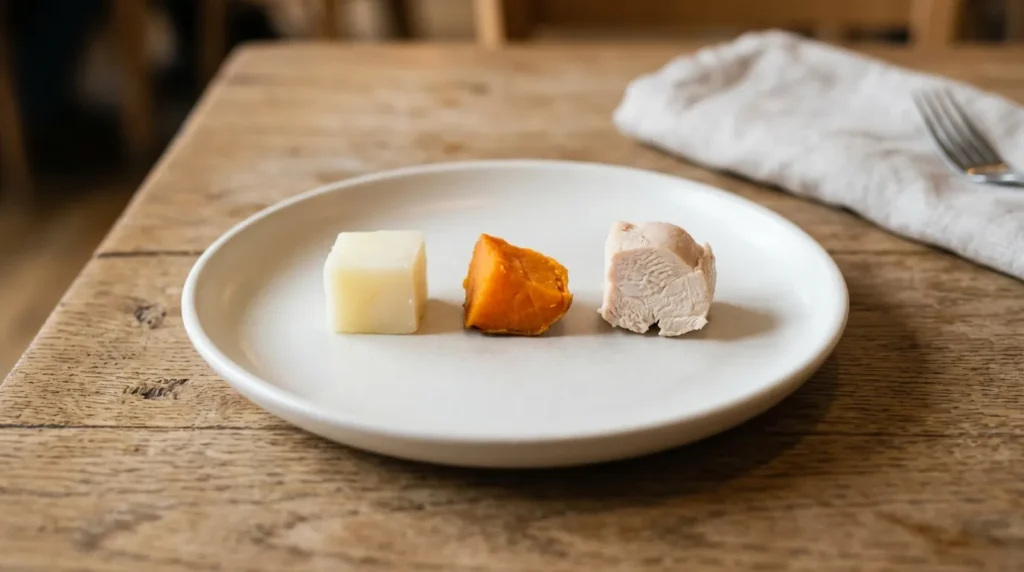
Sweet potatoes (Ipomoea batatas) are a different plant entirely and do not belong to the nightshade family. They don’t produce solanine or chaconine. That makes them inherently less risky than white potatoes in their raw form.
Still, raw sweet potato is tough to digest and can cause stomach upset. Cooked, plain sweet potato in a tiny amount is generally considered safe for cats.
The nutritional comparison: white potatoes have more vitamin C, sweet potatoes are richer in beta-carotene. Neither is something a cat specifically needs. Cats convert beta-carotene to vitamin A very poorly compared to humans — so the main selling point of sweet potatoes for human health doesn’t transfer to cats.
Bottom line: cooked, plain sweet potato is slightly safer than white potato in terms of toxin risk, but it’s still not a meaningful addition to a cat’s diet. Wondering what plant-based foods actually are safe? Our what fruits can cats eat guide covers the full picture.
Potato Forms Cats Should Never Eat
French Fries
Fried in oil, loaded with salt — sometimes with garlic or onion powder in the seasoning. Three separate problems in one food. Even a few fries can deliver sodium levels that stress a cat’s kidneys, and the fat content raises pancreatitis risk.
Potato Chips
Extremely high in sodium. Some flavored varieties contain garlic, onion, or chive powder, all of which are toxic to cats. A single chip isn’t likely to be fatal, but it’s also genuinely bad for them. There’s no reason to share.
Mashed Potatoes
Almost always made with butter, cream, or milk — all problematic for cats, many of whom are lactose intolerant. Can cats drink milk? The short answer is most can’t handle dairy without digestive trouble. Add in the frequent inclusion of garlic or onion in home recipes and you have a dish that’s dangerous at multiple levels. Even “plain” mashed potatoes from a box often contain sodium, preservatives, and powdered additives.
Boiled Potatoes
This one surprises people. Plain boiled potato with the skin off is technically the safest form — but boiled potatoes are often salted during cooking. If the water had salt in it, the potato absorbed some. It’s easy to assume boiled is fine when it isn’t, depending on how it was cooked.
Potato Salad
Contains onion or chives in almost every recipe. Some include garlic. Both are highly toxic to cats — thiosulfates in allium plants destroy red blood cells and can cause hemolytic anemia. Potato salad is firmly off the table.
Green or Sprouting Potatoes
Any potato with green patches, green skin, or visible sprouts has elevated solanine. The green color is chlorophyll, which forms alongside solanine when a potato is exposed to light. Cutting the green part off doesn’t make the rest safe — solanine migrates through the flesh. Throw it out.
Why Potatoes Aren’t a Good Food for Cats Even When Safe
Cats Are Obligate Carnivores
A cat’s digestive system is built for animal protein, not plant starch. Obligate carnivores lack several metabolic pathways that omnivores rely on to process plant material. They don’t produce amylase in their saliva — the enzyme that starts carbohydrate digestion in humans and dogs. Their intestines are shorter than omnivores’, which limits their ability to ferment and extract nutrients from plant foods.
Taurine Dependency
Cats cannot synthesize taurine from other amino acids, which most mammals can do. They need it directly from their diet — specifically from animal tissue. Plants provide none. A diet high in plant-based fillers like potato risks diluting the animal protein a cat needs to meet its taurine requirement. Taurine deficiency in cats causes dilated cardiomyopathy (heart disease) and retinal degeneration — both serious and largely irreversible.
Poor Carbohydrate Digestion
Cats have a very low activity level of pancreatic amylase compared to dogs and humans. That means starchy foods like potatoes are harder for them to break down and more likely to contribute to blood sugar fluctuations, fat storage, and gastrointestinal distress. Some cats will eat a bite of potato and show no visible effects. Others will vomit within the hour. If your cat keeps throwing up after eating something unusual, our guide on why does my cat keep throwing up can help you figure out the cause.
Empty Calorie Risk
A single teaspoon of cooked potato contains about 8–10 calories. That sounds trivial, but indoor cats typically need only 150–250 calories per day depending on size and activity level. Every calorie from a low-value food like potato displaces a calorie that should come from protein. Add this up over time and you get weight gain, muscle loss, and nutrient gaps — without the cat ever appearing dramatically sick.
Getting portion control right matters more than most owners realize. Our guide on how much wet food to feed your cat breaks down daily intake by weight and life stage so you’re not guessing.
The 10% treat rule: treats of any kind — including safe human foods — should not exceed 10% of a cat’s daily caloric intake. For a cat eating 200 calories a day, that’s 20 calories maximum from treats. That’s roughly two teaspoons of plain cooked potato. Not two whole potatoes — two teaspoons.
What to Do If Your Cat Eats Raw Potato
Act immediately. Don’t wait to see if symptoms develop.
Step 1: Remove access. Get the raw potato away from your cat.
Step 2: Note what and how much. Estimate the quantity eaten. Was the skin included? Were there green spots? This matters for the vet’s assessment.
Step 3: Call ASPCA Animal Poison Control Center: (888) 426-4435. Available 24/7. A consultation fee may apply, but they can tell you immediately whether the amount your cat ate warrants emergency treatment. You can also call your regular vet or an emergency veterinary clinic.
Step 4: Do not induce vomiting unless specifically told to. Inducing vomiting at home in cats is more complicated and dangerous than in dogs. It requires a vet’s guidance on whether it’s appropriate and how to do it.
Step 5: Watch for symptoms. If your cat begins vomiting, showing weakness, trembling, or seems disoriented, go to an emergency vet immediately. Don’t wait out the night.
There is no antidote for solanine poisoning. Treatment is supportive — IV fluids, anti-nausea medication, and monitoring. Early intervention makes a significant difference in outcome.
Are Potatoes in Commercial Cat Food Safe?
Yes. This is an important distinction. Potatoes that appear on a commercial cat food ingredient list have been cooked and processed during manufacturing. The solanine compounds are destroyed in that process. Grain-free cat foods in particular often use potato as a carbohydrate binder — this is nutritionally different from feeding raw or table-scrap potato.
There is an ongoing area of research (the FDA DCM investigation) examining whether grain-free diets with legumes and potatoes may be associated with dilated cardiomyopathy in dogs and cats. The science is still developing. If your cat eats a grain-free food with potato as a primary ingredient, it’s worth discussing with your vet at your next visit — not because potato is inherently dangerous in cat food, but because it’s a worthwhile conversation about overall diet composition.
Can Kittens Eat Potatoes?
No. Kittens should not eat potatoes in any form.
Kittens have immature digestive systems and a much lower body mass than adult cats. Both factors mean their tolerance for any toxin — even trace amounts — is significantly lower. A piece of raw potato that might cause mild vomiting in a 10-pound adult cat could be far more serious for a 2-pound kitten. Beyond toxin risk, kittens need highly concentrated animal protein to support their rapid growth. There is no scenario in which potato improves a kitten’s nutritional picture. Stick to high-quality kitten food formulated to AAFCO growth standards.
Wondering about other foods during your kitten’s early months? Our can cats eat yogurt guide is a useful starting point for navigating dairy-related questions — one of the most common questions new cat owners ask.
Better Treat Alternatives for Cats
If you want to give your cat something outside their regular food, these options are safer and more nutritionally appropriate:
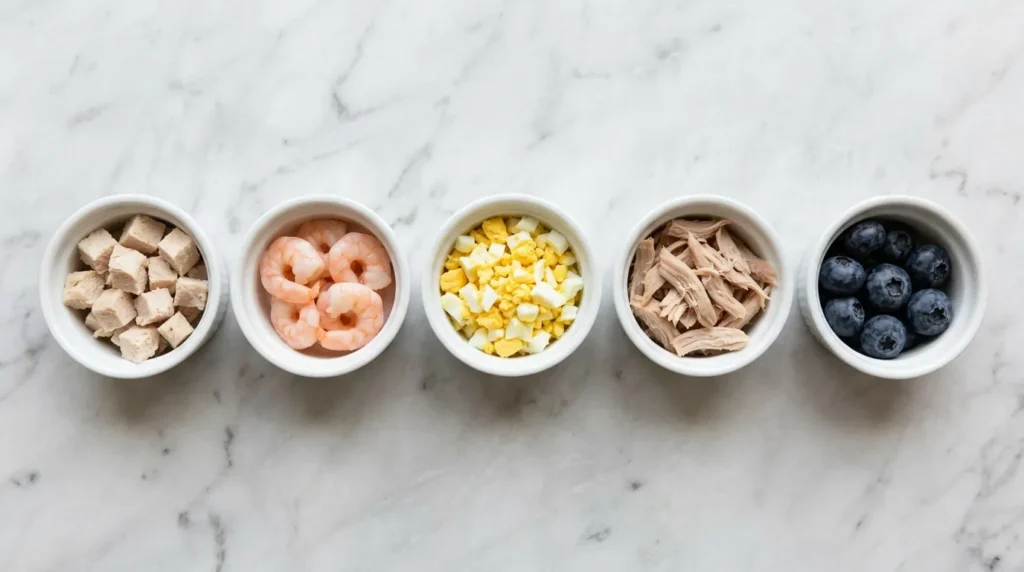
- Plain cooked chicken — no seasoning, no skin, no bones. Our can cats eat chicken guide covers safe portions and prep.
- Plain cooked turkey — a good high-protein option. Read more in our can cats eat turkey guide.
- Plain cooked shrimp — unseasoned, no tail. See can cats eat shrimp for the full breakdown.
- Plain cooked egg — scrambled or boiled, no butter or salt
- Small pieces of cooked salmon — in small amounts, no seasoning
- Commercial cat treats — designed with feline nutritional needs in mind
These all provide animal protein, which is what a cat’s body is actually built to use. For a wider list of what your cat can safely snack on, our 5 high-protein cat recipes for active cats article has practical ideas built around feline nutrition.
Frequently Asked Questions
Can cats eat mashed potatoes? No. Mashed potatoes almost always contain butter, cream, or milk — all problematic for cats — and often garlic or onion, which are toxic. Even “plain” versions tend to have salt or additives. Skip mashed potatoes entirely.
Can cats eat potato chips? No. Potato chips are high in sodium and often contain garlic or onion powder in their seasoning. Even a small amount of garlic powder is toxic to cats. One or two plain chips won’t likely cause acute harm, but they offer nothing beneficial and should not become a habit.
Can cats eat instant mashed potatoes? No. Instant potato products contain dehydrated potato flakes, salt, preservatives, and often dairy-derived additives. The sodium content alone makes them inappropriate for cats.
Can kittens eat potatoes? No. Kittens have lower body weight, immature digestive systems, and no nutritional need for potato in any form. Even the smallest amount of raw potato is a greater risk for kittens than adults.
Are sweet potatoes safer than white potatoes? In terms of solanine toxicity, yes — sweet potatoes don’t produce solanine. But they’re still starchy, low in protein, and not suited to a cat’s obligate carnivore diet. Cooked plain sweet potato is less risky than raw white potato, but it still isn’t something cats need.
What if my cat just sniffed a raw potato? Should I worry? No. Sniffing doesn’t cause solanine exposure. The concern is ingestion. If your cat licked a raw potato, watch for symptoms for 2–3 hours. If they actually chewed and swallowed a piece — even a small one — call your vet or ASPCA Poison Control.
Can cats eat pumpkin? Yes — plain cooked pumpkin is actually one of the better plant-based foods for cats. It’s high in fiber and gentle on digestion. See our full guide: can cats eat pumpkin.
Can cats eat bread or other starches? Bread isn’t toxic, but it’s empty calories — similar to potato in that respect. Our can cats eat bread article explains why it’s best avoided.
The Bottom Line
Cooked, plain, peeled potato in a pea-sized amount is not going to poison your cat. But it’s also not doing anything useful for them. Cats are obligate carnivores. Their bodies are built for protein and fat from animal sources — not starchy vegetables.
Raw potatoes are genuinely dangerous. Solanine and chaconine can cause neurological symptoms, and small cats don’t need much to be affected. Green potatoes, potato skin, and sprouting potatoes carry the highest risk.
If your cat grabbed a piece of raw potato off your cutting board, don’t wait to see what happens — call ASPCA Poison Control at (888) 426-4435 or contact your vet immediately.
For anything cooked and plain? A small taste won’t hurt. But your cat will get far more out of a piece of plain cooked chicken than they ever will from a potato. For a complete picture of what cats can and can’t eat, bookmark our what fruits can cats eat guide — it’s a useful companion resource for any cat owner navigating human-food questions.