
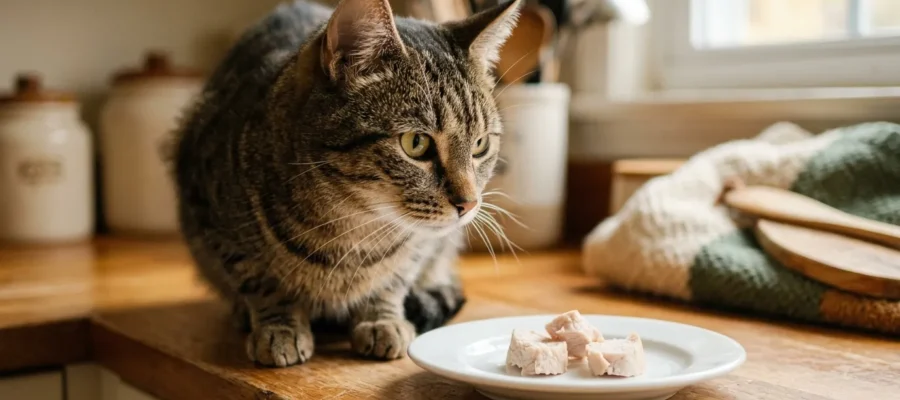
You’ve got leftover turkey on the counter. Your cat is staring at you. Before you give in, here’s what you actually need to know — because the type and preparation of turkey matters more than most pet owners realize.
The Short Answer
Quick Answer
Yes, cats can eat turkey. Plain, cooked, boneless, skinless turkey is safe for cats and provides a high-quality source of animal protein. The problems start when turkey is raw, seasoned, processed, or includes bones, skin, or organ meat in excess.
Cats are obligate carnivores. Their bodies run on animal protein, and turkey delivers it well. But “turkey” covers a lot of ground — Thanksgiving roasts, deli slices, raw ground meat, turkey bacon, giblets. Each carries a different risk profile. What’s fine in one form can be genuinely dangerous in another.
This article breaks it down by type so you know exactly what to do — and what to avoid. If you’re wondering about other proteins too, our guide on can cats eat chicken covers a similarly common question in the same depth.
Is Turkey Good for Cats? Nutritional Breakdown
Turkey isn’t just safe for cats — it’s actually a strong nutritional choice when prepared correctly. Here’s what makes it worthwhile.
Protein Content
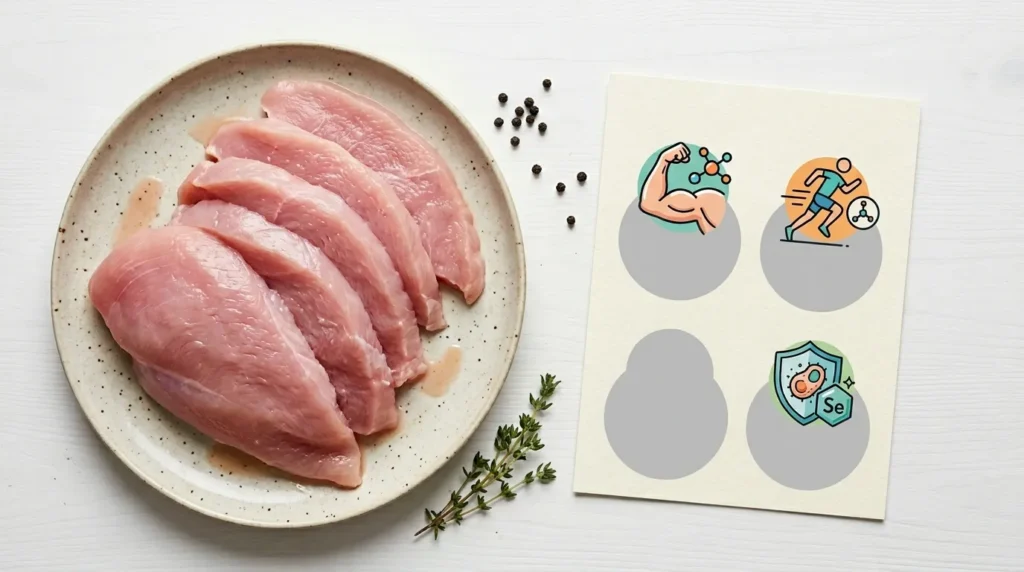
A 3.5-ounce (100g) serving of cooked turkey breast contains roughly 30 grams of protein. That’s substantial. Cats need protein at every meal because, unlike humans or dogs, they can’t efficiently use carbohydrates or fat as a primary energy source. Their liver enzymes are wired for constant amino acid metabolism. Turkey feeds that requirement well.
Taurine
Turkey contains taurine, an amino acid that cats cannot synthesize in adequate amounts on their own. Taurine deficiency causes dilated cardiomyopathy (heart disease) and retinal degeneration in cats — both serious, both preventable with proper diet. The AAFCO minimum requirement for taurine in adult cat food is 0.1% on a dry matter basis. Turkey contributes measurable amounts toward that baseline. It’s not a replacement for complete commercial food, but it adds to the pool.
Fat and Caloric Density
Turkey breast is lean — about 1 gram of fat per ounce. Turkey thigh meat contains more, closer to 3–4 grams per ounce. For most healthy cats, either is fine in small amounts. The fat becomes a problem primarily in the skin, which concentrates it dramatically (more on that below).
Vitamins and Minerals
Turkey provides B vitamins (especially B3 and B6), selenium, phosphorus, and zinc. These support immune function, energy metabolism, and muscle maintenance. Nothing exotic — but collectively they make turkey a more nutritionally complete treat than most commercial cat snacks.
Curious how turkey stacks up against other foods you might be tempted to share? Our round-up of what fruits cats can eat is a helpful companion if you like giving your cat variety beyond just meat.
Can Cats Eat Cooked Turkey?
Yes — plain, cooked turkey is the safest form you can give your cat. It’s the one type with almost no downsides when prepared properly.
Plain Cooked Turkey: The Safest Option
The key word is plain. Turkey that’s been roasted, baked, or boiled without any seasoning, butter, oil, or marinade is safe. White meat (breast) is leaner and easier to digest. Dark meat (thigh, drumstick) is richer and higher in fat — fine occasionally, but not ideal as a regular treat for cats prone to weight gain.
How to Prepare Cooked Turkey for Cats
- Remove all bones before cooking if possible — cooked poultry bones are brittle and splinter easily.
- Cook thoroughly to an internal temperature of at least 165°F (74°C) to kill Salmonella and Listeria.
- Use no seasoning whatsoever — no salt, garlic powder, onion powder, herbs, or rubs.
- Remove all skin before offering it to your cat.
- Cut into small pieces — roughly ½-inch cubes or smaller for an average adult cat.
- Let it cool to room temperature before serving. Hot food can burn a cat’s mouth.
- Serve fresh — don’t leave cooked turkey sitting out for more than two hours.
That’s it. No marinating, no oil, no pan drippings. The simpler, the better. If you enjoy cooking for your cat beyond occasional treats, our collection of high-protein cat recipes for active cats has vet-informed ideas worth bookmarking.
Can Cats Eat Raw Turkey?
This one is more complicated. The answer depends heavily on who you ask.
Bacterial Risks: Salmonella and Listeria
Raw turkey can carry Salmonella enterica and Listeria monocytogenes — both capable of causing serious gastrointestinal illness in cats. Infected cats may show vomiting, diarrhea, fever, and lethargy. More critically, they can shed Salmonella in their feces and saliva, creating a transmission risk to humans in the household — especially children, elderly people, and anyone immunocompromised.
What Raw Feeding Advocates Say
Proponents of raw diets argue that cats evolved eating raw prey and have shorter digestive tracts and more acidic stomach environments than humans, which reduces (but doesn’t eliminate) bacterial risk. Some cats eat raw diets for years without incident. Commercially prepared raw diets are subject to high-pressure processing (HPP) to reduce pathogen loads, which is a meaningful safety upgrade over raw grocery-store turkey.
Vet Consensus on Raw Turkey
The AVMA and most veterinary nutritionists advise against raw poultry for cats. The risk is real, particularly in multi-pet or multi-person households. If you’re interested in raw feeding, work with a veterinary nutritionist and use commercially prepared, HPP-treated raw food rather than raw supermarket meat.
Important
Don’t feed raw turkey to immunocompromised cats, kittens under 12 weeks, or senior cats. The bacterial risk is higher and the consequences more serious in these groups.
Can Cats Eat Turkey Bones?
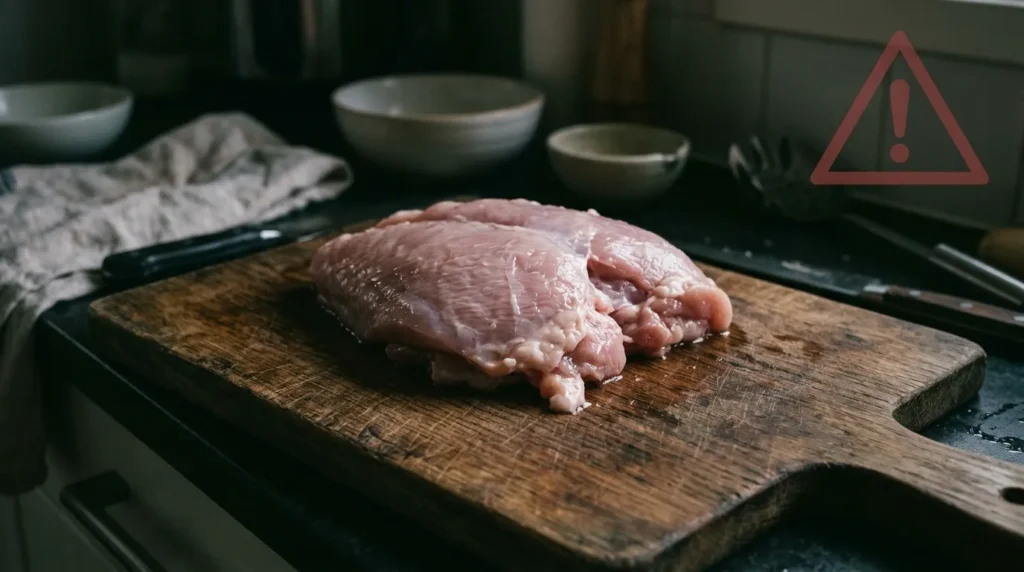
No. Turkey bones are not safe for cats — cooked or raw.
Cooked turkey bones are the worse of the two. Cooking makes bones brittle. They don’t bend — they shatter into sharp fragments that can puncture your cat’s mouth, esophagus, stomach, or intestines. This is a genuine veterinary emergency.
Raw turkey bones are softer and less likely to splinter, which is why some raw feeders include them. But they still carry bacterial contamination risk, and small bones (like neck vertebrae) can be choking hazards for cats. The risk-to-benefit ratio doesn’t favor feeding them to most cats.
If your cat does swallow a bone fragment, watch for: drooling, pawing at the mouth, gagging, difficulty swallowing, vomiting, or signs of abdominal pain. Get to a vet immediately if you see any of these. Our pet symptom checker can help you quickly assess whether what you’re seeing warrants an urgent visit.
Can Cats Eat Turkey Skin?
No. Keep turkey skin away from your cat.
Turkey skin is high in fat — substantially higher than the meat itself. A 1-ounce piece of skin contains roughly 8–10 grams of fat, compared to 1–2 grams in the same portion of breast meat. That concentration of fat in a single serving can trigger acute pancreatitis in cats, a painful and potentially life-threatening inflammation of the pancreas.
It’s not just the fat. Thanksgiving and holiday turkey skin is almost always coated in butter, salt, garlic, herbs, or seasoning rubs. Any of those additives — especially garlic — push skin from “high-fat but maybe okay occasionally” to “actively harmful.”
The answer for turkey skin is always no.
Can Cats Eat Deli Turkey or Turkey Bacon?
No — not regularly, and ideally not at all.
Deli turkey (sliced lunch meat) is processed. A single slice can contain 200–400mg of sodium. The recommended daily sodium intake for an average adult cat is under 42mg. One deli slice delivers 5 to 10 times that amount in a single bite.
Sodium toxicity in cats causes increased thirst, urination, lethargy, tremors, and in severe cases, neurological damage or death. Cats with kidney disease are at even higher risk because their kidneys can’t excrete excess sodium efficiently.
Turkey bacon is worse. It typically contains added nitrates, preservatives, high sodium, and seasonings. It offers none of the nutritional benefits of plain turkey and carries real health risks. A tiny piece won’t kill a healthy cat — but there’s no reason to make it a habit. For a broader look at processed meats and cats, see our guide on can cats eat ham — the sodium and preservative issues are nearly identical.
| Turkey Type | Safe? | Primary Risk |
|---|---|---|
| Plain cooked breast | ✅ Yes | None (when prepared correctly) |
| Plain cooked dark meat | ✅ Yes (small amounts) | Higher fat content |
| Raw turkey | ⚠️ Caution | Salmonella, Listeria |
| Turkey bones (cooked) | ❌ No | Splintering, internal puncture |
| Turkey bones (raw) | ❌ No (generally) | Bacteria, choking |
| Turkey skin | ❌ No | High fat, pancreatitis |
| Deli/lunch meat turkey | ❌ No | Sodium toxicity |
| Turkey bacon | ❌ No | Sodium, nitrates, preservatives |
| Seasoned turkey | ❌ No | Garlic/onion toxicity, salt |
| Turkey giblets (plain) | ✅ Yes (small amounts) | Copper excess if fed daily |
Can Cats Eat Turkey Giblets and Organs?
Yes — in small amounts, plain giblets are a nutritious addition to your cat’s diet.
Turkey giblets include the heart, gizzard, neck, and liver. These are more nutrient-dense than muscle meat. The heart is an excellent source of taurine. The gizzard is high in protein and iron. Both are safe to feed occasionally.
Turkey liver is the one to watch. It’s extremely rich in vitamin A and copper. A small piece — maybe 1 teaspoon for an average cat, once or twice a week — is fine and actually beneficial. Feed it daily, or in large portions, and you risk vitamin A toxicity (hypervitaminosis A) and copper accumulation, both of which cause serious organ damage over time.
Stick to plain, cooked giblets with no seasoning. Skip the gravy that often comes packaged with them — it almost always contains onion, garlic, salt, or all three.
The Real Danger: Seasonings, Garlic, and Onion
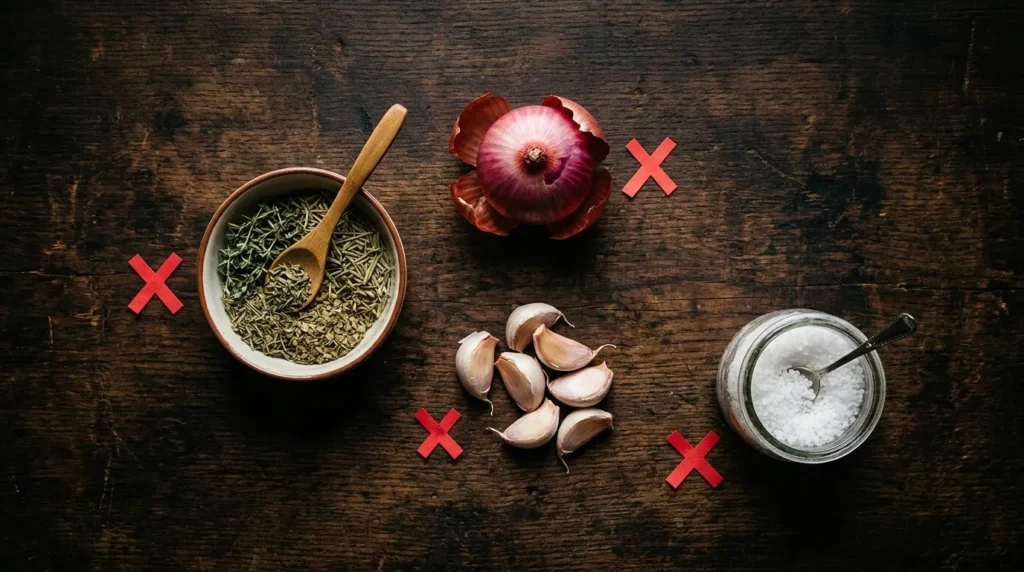
This is the section most cat owners underestimate. A piece of turkey itself may be harmless. The seasonings on it can be toxic.
Garlic and onion are the biggest risks. Both belong to the Allium family and contain sulfur compounds — specifically N-propyl disulfide in onions and allyl propyl disulfide in garlic — that damage red blood cells in cats. The result is hemolytic anemia, where red blood cells are destroyed faster than the body can replace them.
Garlic is significantly more potent than onion by weight. As little as 1 gram of garlic per kilogram of body weight can cause toxicity in cats. That’s a small amount — less than a quarter clove for a 10-pound cat. Garlic powder is even more concentrated than fresh garlic, making seasoned turkey particularly dangerous.
Onion powder has the same problem. A turkey roasted with onion-based seasoning or stuffed with onions is not safe for your cat, even if the meat itself looks clean.
Other seasonings to avoid:
- Salt — contributes to sodium toxicity
- Nutmeg — contains myristicin, which is toxic to cats
- Sage and other herbs — can cause digestive upset and, in high doses, neurological issues
- Butter and oil — high fat, and often used with garlic
- Xylitol — occasionally used in processed turkey products, highly toxic
The safest rule: if the turkey has any seasoning on it at all, don’t give it to your cat. Offer a piece of the unseasoned interior if possible, or don’t offer it at all. If you’re ever unsure whether a specific ingredient is harmful, our pet food safety checker lets you look it up instantly.
How Much Turkey Can a Cat Eat?
The 10% rule applies here. Treats and supplemental foods — including turkey — should make up no more than 10% of your cat’s daily caloric intake. The remaining 90% should come from a nutritionally complete cat food that meets AAFCO standards.
For most adult cats, daily caloric needs fall between 200–300 calories per day depending on weight, activity level, and whether they’re spayed or neutered.
Portion Size by Cat Weight
| Cat Weight | Daily Calories (approx.) | Max Turkey Per Day (10%) | Approx. Amount |
|---|---|---|---|
| 6 lbs (2.7 kg) | ~160 cal | ~16 cal | ½ oz / ~14g |
| 8 lbs (3.6 kg) | ~200 cal | ~20 cal | ~18g / about 2 tsp |
| 10 lbs (4.5 kg) | ~240 cal | ~24 cal | ~22g / about 1 tbsp |
| 12 lbs (5.4 kg) | ~280 cal | ~28 cal | ~25g / about 1.5 tbsp |
Cooked turkey breast contains approximately 1.1 calories per gram. Use this to calculate portions accurately.
For reference: one tablespoon of shredded cooked turkey breast weighs about 15–18 grams. That’s an appropriate single serving for most adult cats as an occasional treat — not a daily supplement.
If you’re also unsure about how much wet food your cat should be getting alongside treats like turkey, our guide on how much wet food to feed your cat lays out portion guidance by weight and age.
Turkey as a Treat vs. Turkey as a Meal
Turkey alone is not a complete diet for cats. It doesn’t have the right calcium-to-phosphorus ratio, lacks adequate vitamin D, and — as fresh meat — falls short of the full taurine and arachidonic acid requirements unless paired with organ meats and a balancing supplement. If you want turkey to be a regular dietary component rather than an occasional treat, consult a veterinary nutritionist to formulate a balanced recipe. Our cheap homemade cat food ideas post shows how to build balanced meals without spending a lot.
🛠 Petfel Tool
Not sure what’s appropriate for your specific cat’s age and size? Use the Petfel Pet Age Calculator to understand your cat’s life stage — feeding needs shift significantly between kittens, adults, and seniors.
Signs Your Cat Reacted Badly to Turkey
Most cats tolerate plain turkey well. But reactions do happen — especially if the turkey had seasonings, was undercooked, or was fed in too large a portion.
Vomiting
Within 1–4 hours of eating
Diarrhea
Within 2–8 hours
Lethargy or weakness
Within 6–24 hours
Drooling or lip-licking
Shortly after eating
Loss of appetite
Next 12–24 hours
Pale or yellowish gums
May indicate anemia — vet immediately
Abdominal pain or hunching
May indicate pancreatitis
Tremors or disorientation
Possible garlic/sodium toxicity — vet immediately
A single episode of loose stool after a new food isn’t always cause for alarm. But pale gums, tremors, persistent vomiting, or signs of abdominal pain require a vet visit — don’t wait it out. If your cat keeps throwing up in general (not just after turkey), our guide on why cats keep throwing up covers the most common causes and when it signals something serious.
🛠 Petfel Tool
Noticed something off with your cat after feeding? The Petfel Pet Symptom Checker helps you quickly identify whether your cat’s symptoms are mild or need urgent attention.
Can Kittens Eat Turkey?
Kittens under 12 weeks should stick exclusively to kitten-formulated food. Their digestive and immune systems are still developing. Introducing new proteins too early can cause digestive upset and, in the case of raw turkey, expose them to bacterial risks their immature systems aren’t equipped to handle.
For kittens between 3–6 months, a tiny piece of plain cooked turkey — a few grams at most — is unlikely to cause harm. But treats should still be minimal at this stage. Kittens need concentrated, complete nutrition from a quality kitten food to support rapid growth. Turkey as a treat is fine; turkey as a regular dietary addition isn’t appropriate until they’re eating adult food.
Can Cats Be Allergic to Turkey?
Yes — though it’s less common than chicken or fish allergies. Food allergies in cats typically appear as chronic skin issues (itching, overgrooming, hair loss) or recurring gastrointestinal problems that don’t resolve with standard treatments.
Interestingly, turkey is sometimes used as a novel protein in elimination diets for cats with suspected food allergies — precisely because many cats haven’t been previously exposed to it. If your cat has been eating chicken-based food all its life and develops an allergy, your vet may recommend switching to a turkey-based diet to identify whether chicken is the trigger.
If you introduce turkey and notice persistent itching, ear inflammation, loose stools, or vomiting over several days, it’s worth discussing with your vet. An IgE blood test or a 12-week elimination diet can help pinpoint the offending protein. Cats with known dietary sensitivities may also do better on limited-ingredient foods — our guide to whether Fancy Feast is good for cats touches on ingredient quality and how to evaluate commercial food labels.
Frequently Asked Questions
Can cats eat Thanksgiving turkey?
Only if it’s completely plain. Thanksgiving turkey is usually seasoned, buttered, roasted with onions or garlic, or basted with pan drippings. All of those additions are problematic for cats. If you want to share Thanksgiving turkey with your cat, set aside a small piece of plain, unseasoned breast meat before cooking or seasoning the rest.
Can cats eat ground turkey?
Yes, plain cooked ground turkey is fine. Cook it thoroughly (165°F internal temperature) with no seasoning. Drain any excess fat before serving. Avoid pre-seasoned ground turkey products, which almost always contain garlic, onion, salt, or spices.
My cat ate turkey skin. What should I do?
A very small amount of plain turkey skin is unlikely to cause serious harm in a healthy adult cat — you may see loose stool or minor stomach upset. If the skin was seasoned (especially with garlic or onion), monitor your cat closely for the next 24 hours and contact your vet if you see vomiting, lethargy, or pale gums. A large amount of fatty skin can trigger pancreatitis, which does require veterinary attention.
Is turkey better for cats than chicken?
Nutritionally, they’re similar. Both are lean animal proteins with comparable taurine content. Turkey breast is slightly leaner than chicken thigh, but the difference is minor for most cats. The bigger factor is individual tolerance — some cats do better on one than the other, and cats with chicken allergies may benefit from switching to turkey. See our full breakdown in can cats eat chicken for a direct comparison.
Can cats eat turkey every day?
Not as their primary food, no. Plain turkey doesn’t provide complete nutrition on its own — it lacks the calcium, vitamin D, and micronutrient balance that commercial cat foods are formulated to include. As a daily treat within the 10% caloric limit, small amounts of plain cooked turkey are fine for most healthy adult cats.
Can cats eat turkey cat food?
Yes. Commercial cat foods with turkey as a primary ingredient are formulated to meet AAFCO nutritional standards for cats. These are not the same as feeding fresh turkey — they’re nutritionally complete. Turkey-based cat foods are an excellent option, especially for cats with chicken sensitivities.
Can cats eat shrimp or other proteins besides turkey?
Yes — cats can eat plain cooked shrimp in small amounts. Like turkey, it’s a lean animal protein that cats digest well. Check out our dedicated guide on can cats eat shrimp for preparation details and portion guidance.
Final Takeaway
Turkey is genuinely good for cats — when it’s plain, cooked, boneless, and skinless. It delivers high-quality protein, taurine, and essential minerals. Keep portions small (roughly 1 tablespoon for an average 10-pound cat as an occasional treat), stick to breast meat where possible, and prepare it simply.
The dangers are specific and avoidable: no bones, no skin, no seasonings, no deli meat, no raw grocery-store turkey fed carelessly. Garlic and onion — even in powdered form — are toxic and appear in more cooked turkey preparations than most people expect.
If your cat ate something concerning, use our symptom checker or call your vet. And if you want turkey to be a regular part of your cat’s diet rather than just an occasional treat, get guidance from a veterinary nutritionist to make sure the full picture is balanced. For more ideas on safe foods to share with your cat, start with our guide on can cats eat pumpkin — another surprisingly nutritious option many owners overlook.