
Cockatiels are not complicated — they’re just misread. Most behavior problems owners deal with come down to one thing: not knowing what the bird is actually communicating. Once you understand the signals, training becomes significantly easier. This guide covers everything from body language and flock instincts to step-by-step training methods that work.
If you’re still deciding whether a cockatiel is the right bird for you, check out our guide to the best pet birds for beginners before diving in.
Why Cockatiels Behave the Way They Do
Cockatiels (Nymphicus hollandicus) are native to the arid grasslands and open woodlands of Australia. They are not domesticated animals. Every instinct they have evolved for survival in the wild — staying with a flock, watching for predators, communicating constantly with flock members. Those instincts don’t disappear in captivity.
This is the single most important thing to understand before you try to train or correct any behavior. Your cockatiel isn’t being stubborn or spiteful. It’s following millions of years of hard-wired programming.
When your bird screams as you leave the room, that’s a flock call — a survival mechanism. When it bites during certain months, that’s often hormonal, not personal. When it fluffs its feathers and sits at the bottom of the cage, that’s a potential health signal. Every behavior has a reason. Your job is to learn the language.
Flock Psychology: What Your Cockatiel Thinks You Are
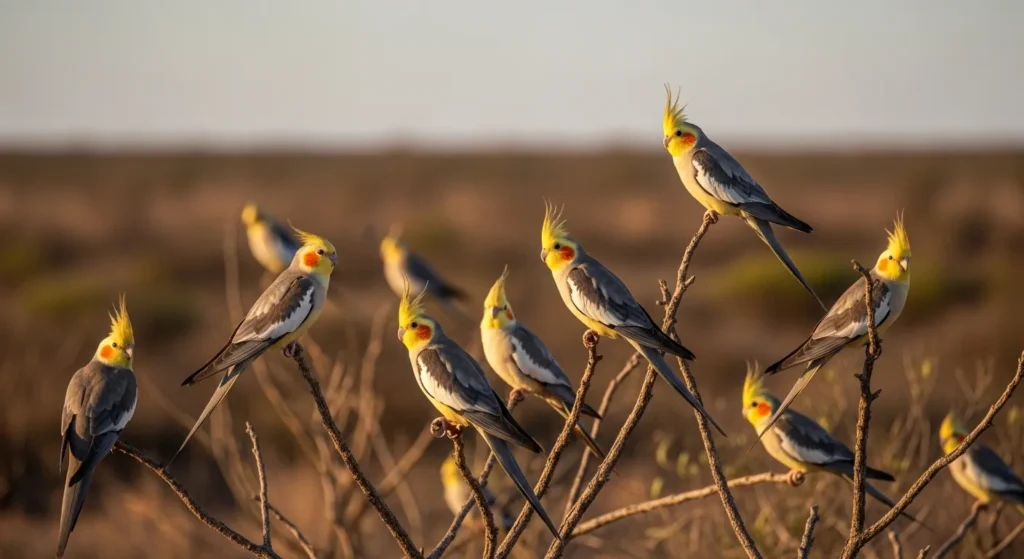
In the wild, cockatiels never spend time alone. A lone cockatiel is a vulnerable cockatiel. They travel, forage, sleep, and breed in flocks ranging from small family groups to hundreds of birds. Separation from the flock — even briefly — triggers a stress response.
When you bring a cockatiel into your home, you become its flock. It doesn’t distinguish between human and bird companions in this context. You are its safety. This is why cockatiels bond so intensely with their owners, follow them from room to room, and panic when left alone.
Unlike wolves or horses, cockatiel flocks don’t have a fixed alpha structure. Dominance shifts depending on context — who’s near the food, who’s on the highest perch at that moment. This matters for training. Trying to establish yourself as a strict “dominant” figure backfires with cockatiels. What works instead is becoming a trusted, predictable flock member who provides resources and safety.
Cockatiels kept alone tend to develop stronger bonds with their human flock but also stronger separation anxiety. Two cockatiels together often reduce dependence on the owner but bond more with each other than with people. Neither setup is wrong — just different management needs. This flock-bonding psychology is something cockatiels share closely with other small parrots — if you’re curious how it compares, our lovebird species comparison guide covers the social dynamics of another highly bonded bird.
Reading Cockatiel Body Language
Crest Positions: A 5-Position Guide
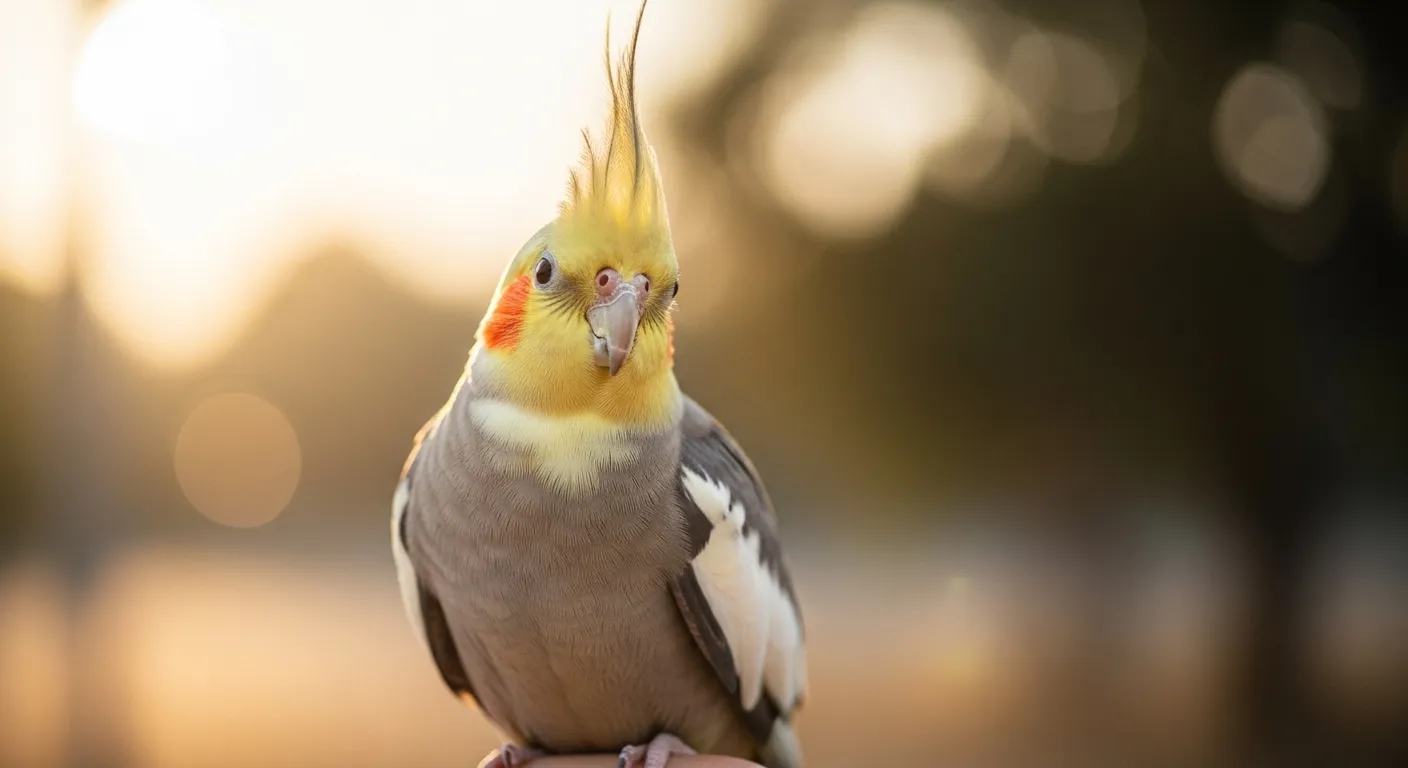
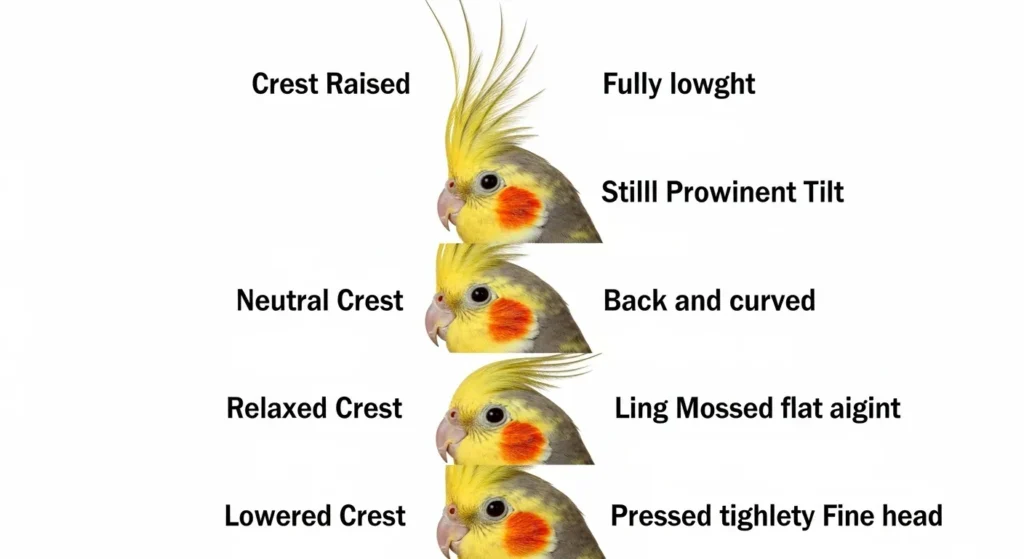
The crest is the most readable signal a cockatiel gives you. Learn these five positions and you’ll immediately understand your bird better.
1. Fully raised, fanned out — High alert or excitement. The bird is startled, alarmed, or intensely focused on something. Could be a perceived threat or something fascinating outside the window.
2. Slightly raised, relaxed — Curious and comfortable. This is a good state for training. The bird is engaged but not stressed.
3. Flat against the head, slicked back — Fear or aggression. A bird with a slicked crest is telling you to back off. This is often paired with hissing or a defensive posture.
4. Held loosely at half-mast — Contentment and calm. A relaxed bird at rest. Not engaged, not alarmed.
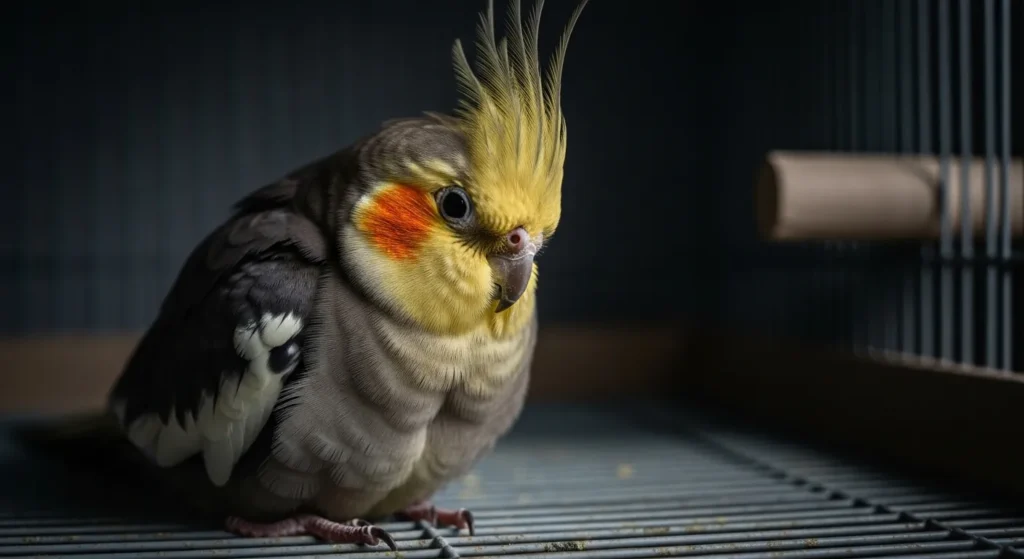
5. Fully flattened, body hunched, feathers puffed — Possible illness or significant distress. This combination warrants attention, especially if it persists for more than a few hours.
Wing and Tail Signals
Wings held slightly away from the body on a young bird usually mean the bird is hot or asking to be picked up. On an adult male during spring, it often signals courtship display — wings drooped, tail fanned, strutting. Don’t confuse this for aggression.
Tail bobbing at rest (rhythmic up-and-down movement while breathing) is a red flag. It can indicate a respiratory problem. A tail that fans wide during interaction usually signals excitement or territorial behavior.
Feather and Posture Clues
A bird that grinds its beak quietly while settling in for sleep is content. Beak grinding is one of the clearest signs of a relaxed, happy cockatiel and means nothing negative.
Feather fluffing for a few minutes after waking or during a nap is normal. Sustained fluffing throughout the day, especially paired with lethargy or reduced appetite, is not.
Eye pinning — rapid dilation and contraction of the pupils — indicates strong arousal. It can mean excitement, aggression, or intense interest. Read it in context with the crest and body posture.
Vocalization Patterns
Cockatiels have a distinct vocabulary once you tune in.
The contact call is a loud, repeated whistle or chirp. It means “where are you?” If you respond with a whistle or a verbal call-back, you reinforce the flock bond without reinforcing screaming problems (more on that below).
Quiet chattering and soft singing signals contentment. Many cockatiels sing quietly to themselves or to objects they’re fond of — mirrors, toys, their reflection in a phone screen.
Alarm calls are sharp, abrupt, and high-pitched. The bird heard or saw something that triggered its predator response. It will usually freeze, then vocalize urgently.
Hissing is unambiguous. The bird wants you to stop what you’re doing and move away.
Common Cockatiel Behaviors Decoded
Screaming
Cockatiels scream for several reasons: separation anxiety, seeking attention, responding to outside noises, or reacting to other birds. The most common trigger is the owner leaving the room.
The critical rule: never reward screaming with immediate attention. If you rush back every time your bird screams, you teach it that screaming works. Instead, wait for 3–5 seconds of quiet, then return. Over days and weeks, the bird learns that quiet — not screaming — brings you back. This takes patience. Extinction bursts (the behavior getting worse before it gets better) are normal and expected.
Hissing and Biting
Hissing is a warning. Biting is a warning that was ignored. Most bites are preceded by clear signals — slicked crest, hissing, leaning away, dilated pupils. When people say their bird “bit without warning,” they usually missed the warning.
Never punish a bite with physical correction. It destroys trust and creates a fear-aggressive bird. Instead, learn to read the pre-bite signals and remove yourself or the stressor before the bite happens. The psychology behind bite warnings in pets follows similar patterns across species — our article on why dogs bite their owners explores how warning signals work and why ignoring them leads to escalation.
Head Bobbing
In young birds, head bobbing is a feeding request — a leftover behavior from being hand-fed or parent-fed as a chick. In adult males, rhythmic head bobbing paired with strutting and wing-dropping is courtship display. Adult birds of both sexes also bob when excited about food or interaction.
Regurgitation
An adult cockatiel that regurgitates onto your hand or a favorite toy is showing deep affection. It’s a bonding behavior — the bird is treating you as a flock mate it wants to feed. While it can look alarming, it’s not a health problem if the bird is otherwise acting normally.
Regurgitation linked to illness looks different: it’s uncontrolled, repeated, and the bird looks distressed or lethargic. That version needs a vet.
Night Frights
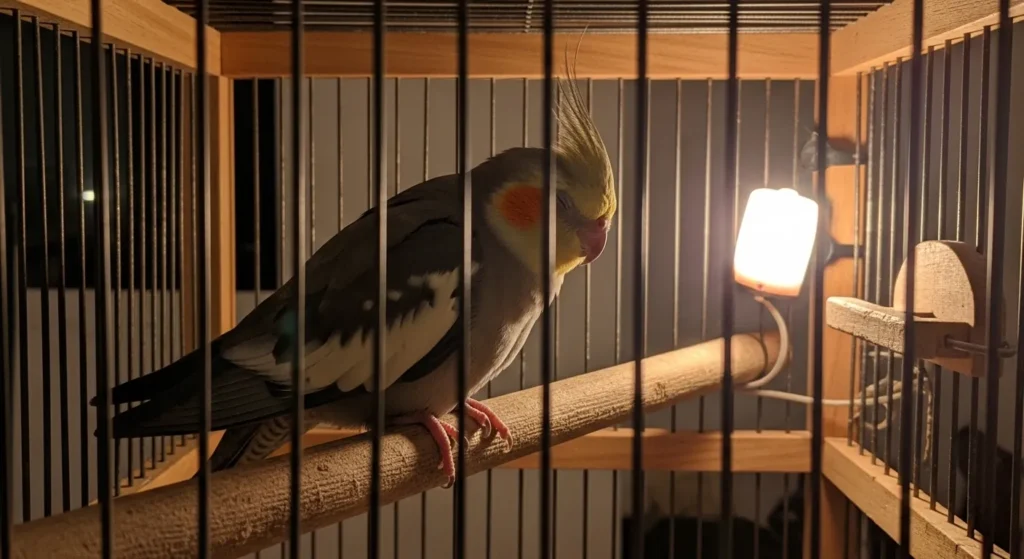
Night frights are sudden, violent episodes — usually around 2–4 AM — where the bird thrashes in the cage, seemingly in a panic. Triggers include sudden sounds, shadows, or changes in light. A night light in the bird’s room prevents most night frights by eliminating the sudden-darkness shock response. Cockatiels are particularly prone to these compared to other small parrots.
Hormonal Behavior: What Changes and When
Hormonal shifts affect cockatiel behavior significantly, typically in spring and sometimes in fall. Longer daylight hours trigger reproductive hormones in both males and females.
Male signs: increased singing and whistling, strutting, wing-dropping display, regurgitating to objects or people, territorial aggression toward cage or owner.
Female signs: seeking dark enclosed spaces (nesting instinct), chronic egg-laying even without a mate, back-flattening posture (soliciting mating), increased aggression around perceived nesting spots.
Managing hormonal behavior involves limiting light exposure to 10–12 hours per day (use a cage cover), removing any dark enclosed spaces the bird is fixating on, and avoiding petting beyond the head and neck — petting the back and wings stimulates reproductive hormones. This is not the time to push heavy training. Maintain routine, keep sessions short, and wait for the hormonal phase to pass — usually 4–8 weeks.
When Behavior Signals Illness, Not Personality
Behavioral changes are often the first sign that something is medically wrong. Cockatiels are prey animals and instinctively mask illness. By the time the signs are obvious, the problem may be advanced.
Get to an avian vet if you see:
- Feathers puffed and held for most of the day, combined with lethargy
- Tail bobbing at rest (respiratory distress indicator)
- Discharge from nostrils or eyes
- Droppings that are consistently watery, discolored, or have an unusual odor
- Sudden personality change — a friendly bird becoming aggressive or a vocal bird going silent
- Loss of balance, head tilting, or falling off the perch
- Significant weight loss (you can feel the keel bone becoming sharp)
These are not behavioral quirks. They are medical signals. If you’re unsure whether what you’re seeing is a behavior issue or a health issue, our pet symptom checker can help you assess the situation before calling your vet. An Association of Avian Veterinarians (AAV) certified avian vet — not a general small animal vet — should evaluate these birds.
Cockatiel Training Fundamentals
How Cockatiels Actually Learn
Cockatiels learn through operant conditioning — behavior followed by a consequence changes the likelihood of that behavior repeating. The most effective and ethical framework for bird training is positive reinforcement (R+): the bird does something, gets something it wants (a treat, praise, head scratch), and is more likely to do it again.
Punishment-based methods — spraying with water, saying “no” loudly, pushing the bird off your shoulder — don’t teach. They damage trust and create avoidance behaviors or fear-based aggression. The LIMA principle (Least Intrusive, Minimally Aversive) used by professional avian behaviorists confirms this: start with the gentlest effective intervention first. This same positive reinforcement logic applies across pet training — our guide on how to train a cat and our guide to training your dog both follow the same reward-first principles.
Choosing the Right Reward
Spray millet is the gold standard training treat for cockatiels. It’s highly motivating for most birds, easy to deliver in small amounts, and not nutritionally harmful in the quantities used during training sessions. Before offering any new food to your bird, use our pet food safety checker to quickly confirm it’s safe.
Other options that work: small pieces of nutriberry, millet spray, a favorite seed, or for some birds — a head scratch. Find what your specific bird works hardest for. That’s your primary reinforcer.
Session Length and Frequency
Keep sessions to 5–10 minutes maximum. Cockatiels lose focus and become frustrated with longer sessions. Two to three sessions per day produces faster results than one long daily session. Always end on a success — even if that means going back to an easier behavior the bird knows well.
Train when the bird is alert and slightly hungry — not right after a full meal, not when it’s tired or stressed.
Step-by-Step Training Techniques
Step-Up Training
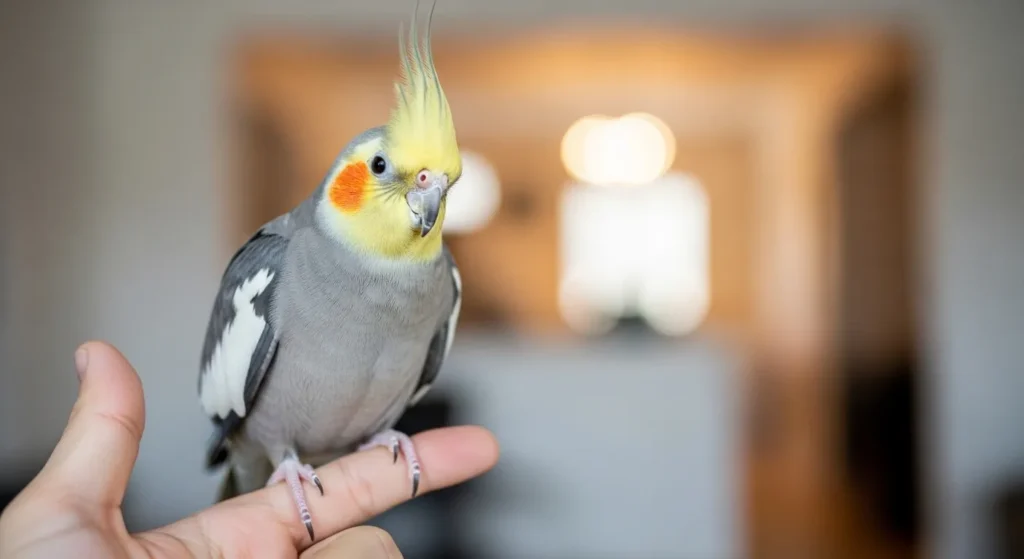
Step-up is the foundation skill. Every other training goal builds on this.
- Present your finger horizontally in front of the bird’s lower chest, making contact just above its feet.
- Apply gentle upward pressure — enough that stepping up is the path of least resistance.
- The moment the bird lifts one foot onto your finger, say “step up” clearly and reward immediately.
- Repeat 5–8 times per session, maximum.
- Once the bird steps up reliably, practice transferring from finger to finger to generalize the behavior.
Most cockatiels learn step-up within 3–7 days of consistent practice if the bird is already somewhat comfortable with hands.
Target Training
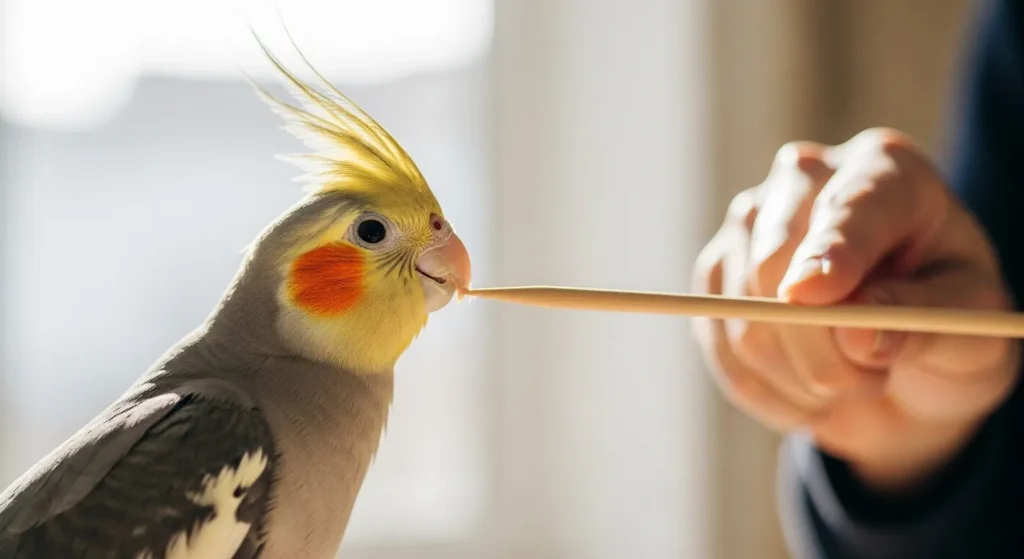
Target training is the most versatile tool in cockatiel training. It teaches the bird to touch a specific object (usually the tip of a chopstick, pen, or commercial target stick) with its beak.
- Hold the target stick 2–3 cm from the bird’s beak.
- The bird’s natural curiosity will drive it to investigate. The moment it touches the tip, reward immediately.
- Gradually increase the distance the bird must move to touch the target.
- Once learned, use the target to guide the bird onto perches, into carriers, or through trick behaviors.
Target training typically takes 3–5 sessions to establish the initial touch response.
Recall Training
Recall — flying to you on cue — is a safety skill and a bonding exercise.
- Start at close range (30–60 cm). Hold out your finger and say a consistent cue word (“come” or the bird’s name).
- Reward immediately when the bird steps or flies to you.
- Increase distance by 30 cm increments only when the bird is succeeding at the current distance.
- Practice in a small, safe, closed room before attempting in larger spaces.
Never recall a bird and then immediately put it back in the cage. The bird will start avoiding recall because it predicts cage time. End recall practice with play or treat time.
Teaching Tricks
Once step-up and target training are solid, tricks build on them through a process called shaping — rewarding successive approximations of the final behavior. For example:
Wave: Cue step-up, then pull finger away just before the bird steps on. The bird lifts its foot — reward that. Gradually build to a full wave motion.
Spin: Use the target stick to guide the bird in a circle. Reward each quarter-turn initially, then half-turns, then the full rotation.
Solving Common Behavior Problems
Stopping Excessive Screaming
Identify the trigger first. Is it separation? Boredom? Response to outside sounds?
For separation screaming: practice leaving the room for 5 seconds, returning before the screaming escalates, and rewarding quiet. Extend the duration gradually. Add foraging toys and food puzzles to the cage so the bird has something to do when you’re gone.
For attention screaming: only return when the bird has been quiet for a minimum of 3 seconds. Ignore the screaming completely. It will get worse before it gets better — this is the extinction burst. The same principle of not reinforcing unwanted vocalizations applies to other pets too; our piece on how to stop dog barking covers the identical reward-based logic.
Reducing Biting
Map the bite. When did it happen? What were the circumstances? Most biting patterns are predictable once you track them.
Avoid punishing bites physically. Instead, learn the pre-bite signals and remove the trigger before contact happens. If the bird is biting when you try to handle it, go back to trust-building at a slower pace. Never force interaction — forced handling teaches the bird that biting is the only thing that makes unwanted interaction stop.
Building Confidence in a Fearful Bird
A fearful bird needs systematic desensitization — gradual, positive exposure to the feared stimulus at a distance that doesn’t trigger the fear response.
Start with your hand resting near the cage without interacting. Reward the bird for calm behavior in your presence. Move incrementally closer over days or weeks. Don’t rush. A bird that has been neglected, abused, or under-socialized can take 2–6 months of consistent work before it accepts regular handling.
Male vs. Female Behavioral Differences in Training
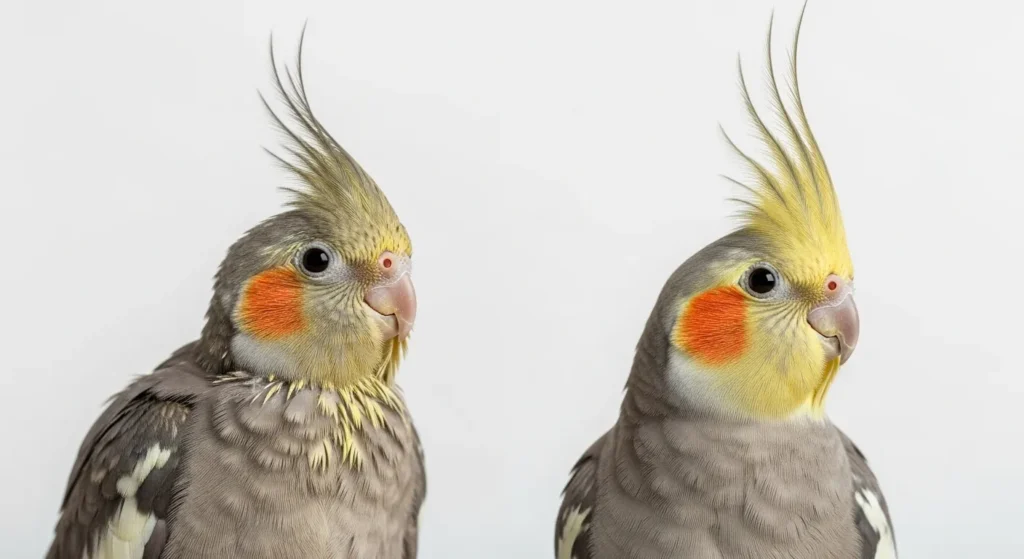
Male cockatiels are generally more vocal, more likely to mimic speech and whistles, and more outwardly social. They tend to respond quickly to positive interaction and are often easier to engage in training sessions because they actively seek attention.
Female cockatiels are typically quieter, more independent, and in some cases more likely to bite when handling crosses their comfort boundary. They aren’t harder to train — but they often require more patience at the trust-building stage. Females are also at risk of chronic egg-laying, which creates significant health problems and should be managed with appropriate lighting and environmental adjustments.
Not sure if your cockatiel is the right fit for your household or lifestyle? Our pet breed finder quiz can help you evaluate which pet species and breeds align with your living situation and experience level.
Age-Specific Behavior: Juveniles vs. Adults
Juvenile cockatiels (0–12 months): More exploratory, more tolerant of handling, and easier to socialize. This is the ideal training window. A hand-raised bird handled daily from 6–8 weeks will develop lasting tolerance for human contact. Head bobbing and food begging behaviors are normal in young birds and decrease with age.
Adult cockatiels: More set in their behavioral patterns but absolutely trainable. An adult rescue bird that has never been handled needs the same desensitization process as a juvenile — it just takes longer. Adults are fully capable of learning new behaviors at any age. The oldest reported tamed rescue cockatiels were 8–10 years old at the start of training.
Hormonal behavior begins around 12–18 months and becomes a consistent seasonal factor in adult birds. To understand where your cockatiel is developmentally in its life, our pet age calculator can give you a useful reference point.
Cockatiels vs. Other Beginner-Friendly Birds
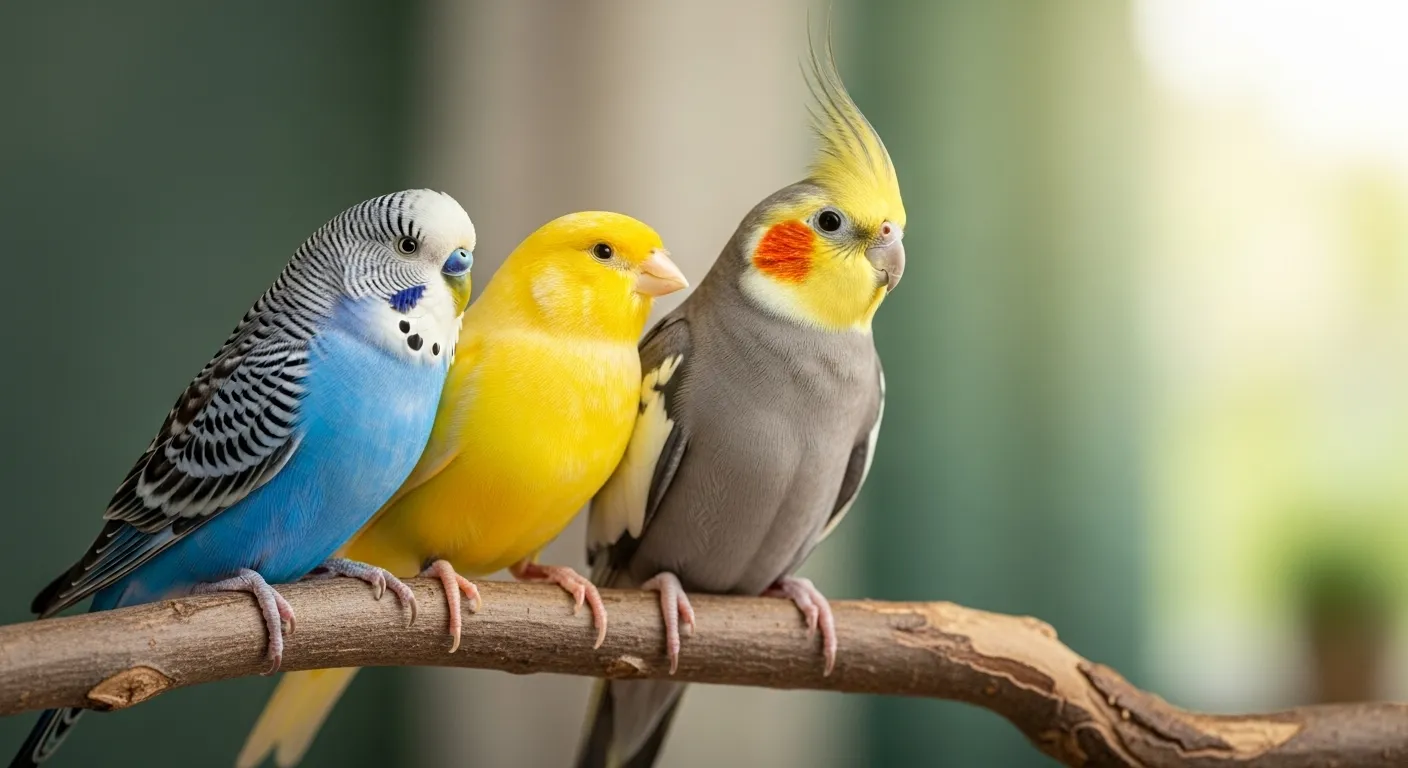
Cockatiels are one of the most trainable and affectionate small birds, but they’re not the only option. If you’re comparing birds before committing, our beginner’s guide to caring for parakeets covers another excellent first-bird choice. For a broader overview of bird and exotic pet options, our guide to easy-care exotic pets for beginners is worth reading before you decide.
Frequently Asked Questions
How long does it take to tame a cockatiel? A hand-raised cockatiel from a breeder may accept handling within days. A wild-caught or neglected bird can take 3–6 months of consistent daily work. The variable is the bird’s previous experience, not its innate trainability.
Why does my cockatiel scream when I leave the room? This is the flock call — a contact call triggered by separation from its flock (you). It’s instinctive behavior rooted in survival. Respond with a verbal call-back to reassure the bird without reinforcing screaming by returning immediately.
What does it mean when a cockatiel grinds its beak? Beak grinding is a contentment signal. It almost always happens as a cockatiel is settling down to sleep or resting comfortably. It indicates a relaxed, happy bird.
Why is my cockatiel suddenly biting me? Sudden biting in a previously calm bird is most often hormonal (especially in spring), related to illness, or a response to a change in routine or environment. Check for other behavioral changes. If biting is accompanied by lethargy or physical changes, consult an avian vet.
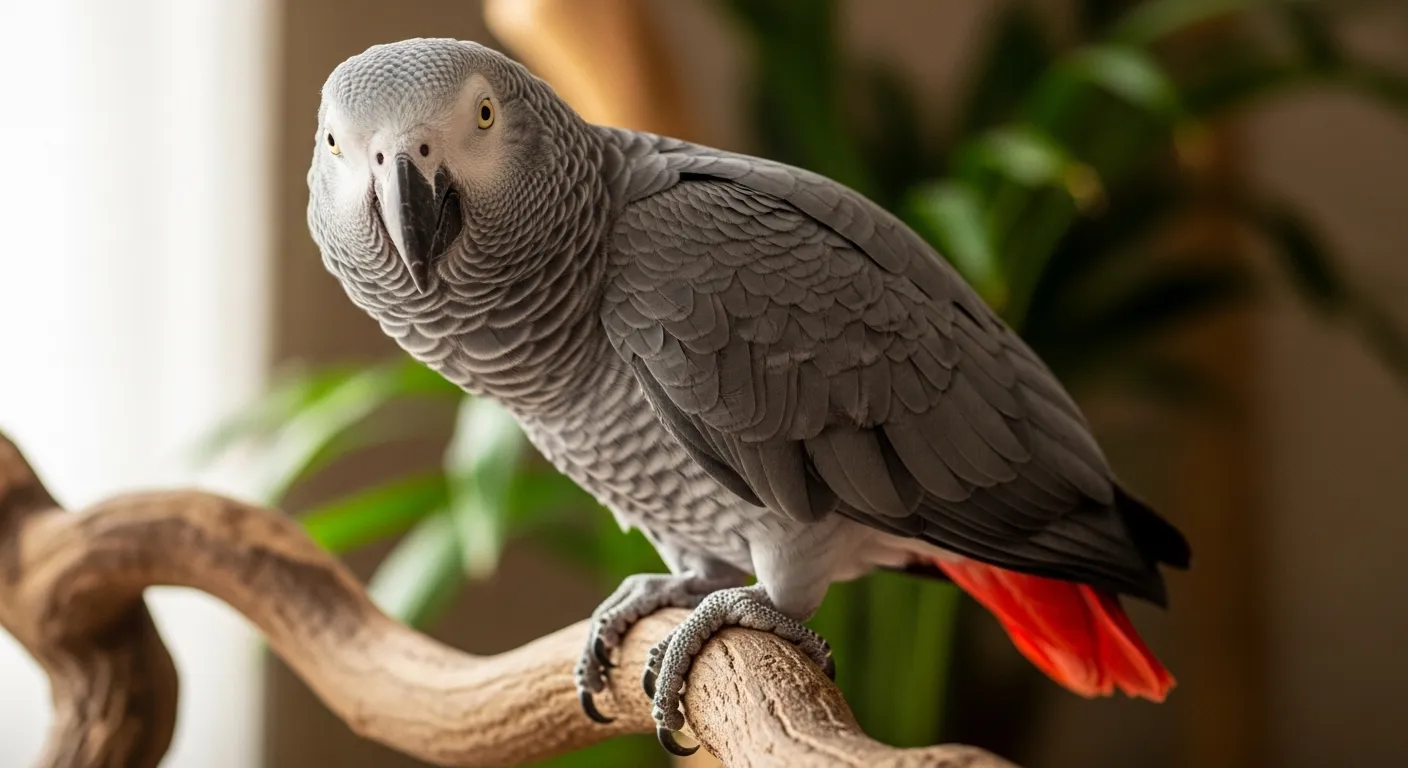
Can cockatiels learn to talk? Some cockatiels, particularly males, can learn to mimic short phrases. They are not as proficient as African grey parrots or Amazon parrots, but many develop clear vocabulary of 10–25 words. Whistled tunes are more natural to them and easier to teach than speech.
How often should I handle my cockatiel? Daily handling of at least 20–30 minutes maintains tameness and socialization. Birds handled less frequently become less tolerant of interaction over time, especially during hormonal periods.
Conclusion
Cockatiels communicate clearly and consistently — the challenge is learning their language. Every behavior in this guide has a root cause: instinct, emotion, health, or learned association. When you understand the cause, the response becomes obvious.
Training works when it’s built on trust, short sessions, and positive reinforcement. It fails when it relies on force, punishment, or inconsistency. The birds that are labeled “difficult” are almost always birds that were misread, not birds that are actually problematic.
Start with body language. Build trust before you build behaviors. Keep sessions short. Reward generously and specifically. Most cockatiels, given consistent and patient handling, become genuinely affectionate companions within weeks to months — not years. If you’re just getting started with your bird, our guide on the best pet birds for beginners is a great companion read to help you set up for long-term success.