


Spaying a cat at a private vet typically costs between $300 and $500. At a low-cost clinic, you can pay as little as $30 to $50. The gap is real, the reasons matter, and knowing both helps you make a smarter decision for your cat — and your wallet.
This guide breaks down every cost factor, explains what that price actually includes, and shows you how to find free or subsidized options if you need them.
What Is a Cat Spay — and What Are You Actually Paying For?
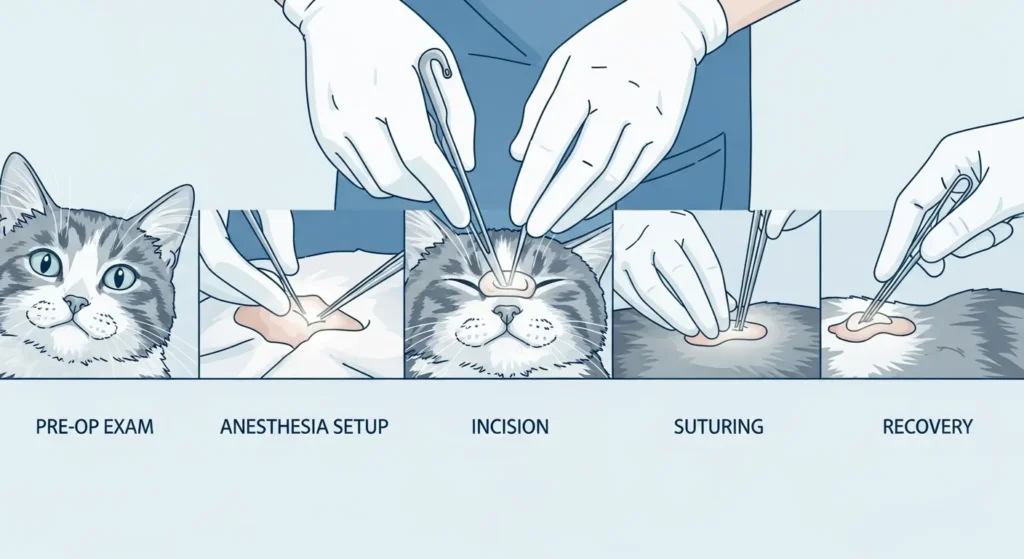
A cat spay, medically called an ovariohysterectomy, removes both the ovaries and the uterus. It’s a full abdominal surgery performed under general anesthesia. It’s not a quick procedure, and the cost reflects that.
Here’s what a full-service spay typically includes:
- Pre-surgical exam — the vet checks your cat’s overall health before putting her under
- Pre-op bloodwork — screens for hidden conditions that could cause complications with anesthesia
- IV catheter and IV fluids — keeps your cat stable throughout surgery
- Anesthesia and gas maintenance — general anesthesia is used, not just sedation
- Continuous monitoring by a vet tech — heart rate, oxygen, blood pressure throughout
- The surgery itself — incision, removal of uterus and ovaries, multi-layer closure with sterile sutures
- Post-op pain medication — usually an NSAID like meloxicam or buprenorphine
- Recovery supervision — the cat stays until she can swallow and is stable
When you see a quote of $350 from a private vet, that’s what you’re buying. It’s not just the 20 minutes of surgery. It’s the full perioperative protocol.
Low-cost clinics often skip or minimize some of these steps — particularly bloodwork and extended monitoring. That’s where the price gap comes from.
Cat Spay Cost by Facility Type
This is the clearest way to understand price differences. The facility matters more than almost any other factor.
| Facility Type | Typical Cost Range |
|---|---|
| Private veterinary practice | $300 – $500 |
| Veterinary teaching hospital | $100 – $300 |
| Animal shelter or rescue | $50 – $150 |
| Mobile spay/neuter clinic | $60 – $80 |
| Low-cost spay/neuter clinic | $30 – $50 |
Private practices charge the most because they offer the most. Full surgical suite, dedicated staff, pre-op bloodwork, individual recovery time, and a vet you can call afterward.
Shelters and rescues often run high-volume, efficient programs at lower margins. Quality varies. Some are excellent. Others rush throughput.
Low-cost clinics exist specifically for affordability. Organizations like SpayUSA and local Humane Society chapters run these. The surgery itself is the same procedure — but protocols around it may be streamlined.
Mobile clinics are pop-up operations that travel to underserved areas. Usually reliable for healthy young cats with no complications.
Teaching hospitals at veterinary schools offer a middle ground — supervised student surgeons with attending vet oversight. Often good value.
If you’re also wondering about the cost to spay a dog, the price structure is similar but slightly higher on average due to the dog’s body size.
Cat Spay Cost by Location
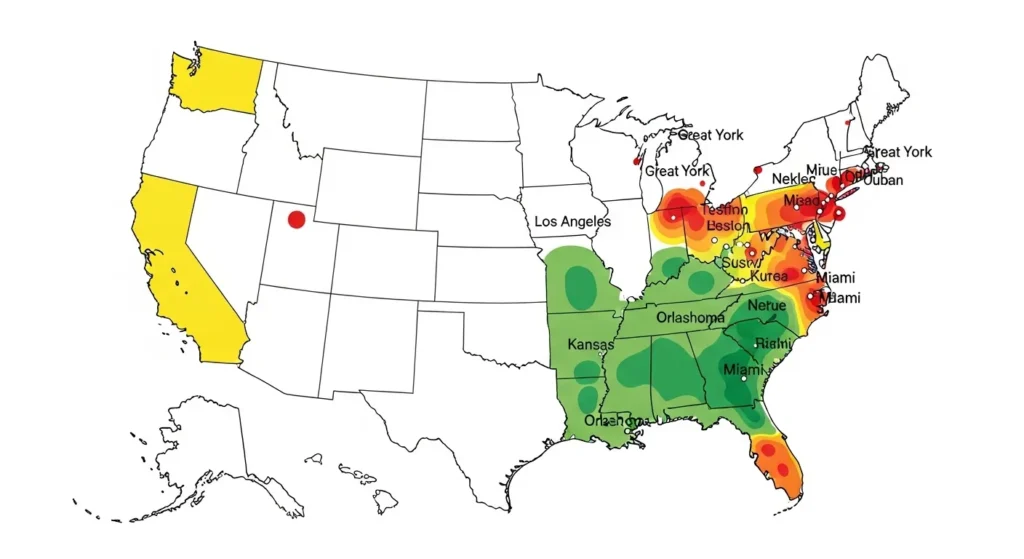
Geography drives price more than most people expect. Urban vets have higher overhead — rent, staff wages, equipment costs — and those get passed to clients.
Here are realistic city-level ranges for a standard spay at a private practice:
- New York City: $340 – $490
- Los Angeles: $320 – $470
- Chicago: $290 – $420
- Atlanta: $270 – $380
- Salt Lake City: $260 – $360
- Rural Midwest or South: $200 – $320
These ranges are for healthy cats under six months at a full-service private vet. Low-cost options exist in every city — prices at nonprofits don’t scale the same way.
Factors That Affect the Price
Your Cat’s Age
Kittens under five months are the easiest cases. The surgery is faster, anesthesia risk is lower, and recovery is quicker. Most vets charge less for young cats.
Adult cats cost a bit more. Cats over a year old have more developed tissue, larger blood vessels, and take longer to operate on safely. Curious about where your cat falls developmentally? Check when do cats stop growing for a full age and size breakdown.
The AVMA and most veterinary associations recommend spaying before five months of age — before the first heat cycle. Earlier is easier, safer, and cheaper.
Whether Your Cat Is in Heat
If your cat is currently in heat when you schedule the surgery, expect a surcharge. Blood vessels to the reproductive organs are significantly more engorged during estrus, which increases bleeding risk and surgical complexity. Many vets charge $30 to $100 extra. Some prefer to wait until the cycle ends.
Understanding how often cats go into heat can help you time the procedure strategically and avoid the surcharge. If you’ve also wondered whether cats have periods, that article explains the heat cycle in plain terms.
Pregnancy
A pregnant cat spay — called a spay-abort — is more complex. Expect to pay $50 to $200 more depending on how far along she is. Some vets won’t perform it past a certain gestational stage. If you’re unsure how far along your cat might be, how long cats are pregnant gives a clear timeline.
Your Cat’s Weight
Heavier cats require more anesthesia, longer monitoring, and sometimes modified surgical technique. Most vets add a weight-based fee for cats over 8 to 10 pounds.
Pre-Surgical Bloodwork
Bloodwork isn’t always included in the quoted price. When it’s optional, it typically adds $80 to $150. It screens for kidney and liver issues that affect how your cat processes anesthesia. For young, healthy cats, some vets consider it optional. For cats over five years old — or breeds prone to health issues like Persians — it’s strongly recommended.
Complications
Complications are uncommon but they happen. Internal bleeding, anesthetic reactions, post-op infection, or suture failure can each add hundreds of dollars to the bill. This is the main reason pet insurance with a wellness rider is worth considering before the procedure — not after.
Hidden Costs Most People Miss
The quoted price usually doesn’t include everything. Watch for these add-ons:
- E-collar (cone): $10 – $25, sometimes included
- Take-home pain medication: $20 – $50 if not bundled
- Post-op recheck visit: $40 – $75 depending on the practice
- Microchipping at the same time: $25 – $50 (good time to do it — cat is already anesthetized)
- Flea treatment if needed: $15 – $30
- Overnight stay if complications arise: $100 – $300+
Ask your vet specifically: “What’s included in this quote, and what might be billed separately?” Get it in writing if you can.
During the recovery period at home, you’ll also be handling basic cat care more closely than usual. Knowing how to bathe a cat safely and how to trim cat nails safely will help you manage the post-op period without causing your cat extra stress.
Is Low-Cost Spaying Safe?
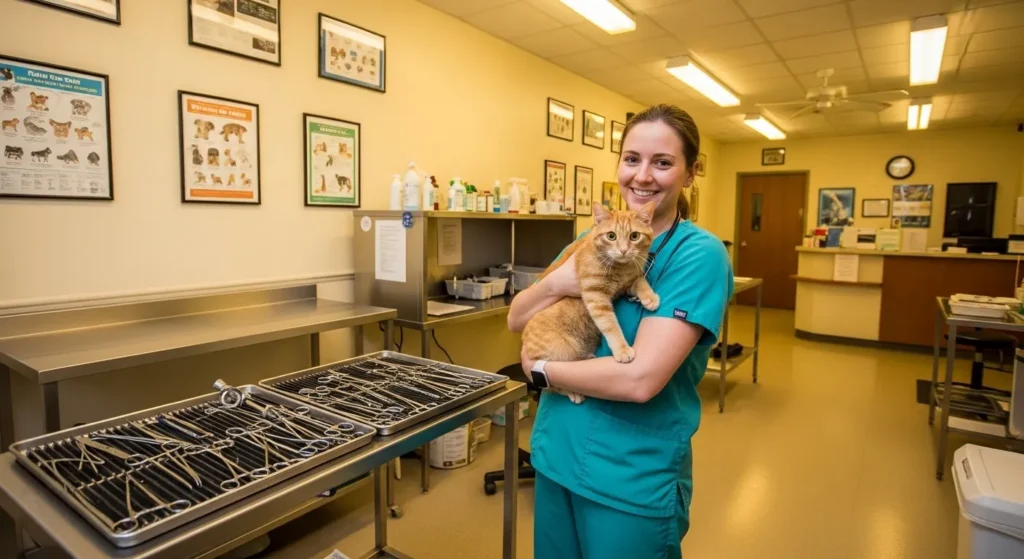
This is the question most articles dodge. The direct answer: it depends on the clinic, not just the price.
A well-run low-cost clinic staffed by licensed veterinarians using sterile equipment and proper anesthesia protocols is safe. Many cats are spayed this way every day without problems.
The risks come from poorly managed high-volume operations where:
- Surgical instruments aren’t fully sterilized between patients
- Bloodwork is skipped without appropriate triage
- Post-op monitoring time is minimal
- Follow-up care is unavailable if something goes wrong
Before using a low-cost clinic, ask these five questions:
- Is the surgeon a licensed DVM?
- Do you use gas anesthesia and IV fluids?
- Is a technician monitoring throughout the procedure?
- What happens if there’s a complication?
- Is a pain management protocol included?
If they can’t answer those questions clearly, find another clinic. If they answer all five confidently, a lower price doesn’t mean lower quality.
ASPCA-affiliated clinics and Humane Society programs generally maintain strong protocols. They’re a safe starting point. If anything unusual develops after surgery, use the pet symptom checker to evaluate whether a vet visit is needed.
Free and Subsidized Spay Programs
You may qualify for free or heavily discounted spaying. These programs exist across every state.
ASPCA: Runs its own low-cost and free programs. Their website maintains a ZIP-code searchable database of low-cost spay/neuter providers across the US.
SpayUSA: A national referral network that connects pet owners with affordable spay services. Operated through the North Shore Animal League.
PetSmart Charities: Funds spay/neuter programs in many cities. Check their grant-funded clinic locator.
Local Humane Society chapters: Many run periodic free or $20-flat-rate spay days, especially for low-income households or stray/feral cat management.
Trap-Neuter-Return (TNR) programs: If you’re managing a community cat colony, many municipalities fund TNR operations at no cost to the caretaker.
Income-based assistance is often available but not well-advertised. Call your local animal control office or shelter and ask directly. They usually know which programs are currently active in your area.
Traditional vs. Laparoscopic Spay
Most cats are spayed using the traditional open technique — a small incision in the abdomen, manual removal of the reproductive organs, suture closure.
Laparoscopic spay is a minimally invasive alternative. Small camera ports replace the open incision. Recovery is faster, post-op pain is lower, and complication rates may be reduced.
The tradeoff is cost. Laparoscopic spay typically runs $400 to $900 depending on the clinic, compared to $200 to $500 for traditional. Not every vet offers it, and it’s generally reserved for larger or higher-weight cats where reduced tissue trauma matters most.
For a healthy young kitten, the traditional approach is safe and effective. The laparoscopic option is worth asking about for adult or overweight cats, or if your cat had a difficult previous anesthetic experience.
When Should You Spay a Cat?
The target window is before 5 months of age. This is before the first heat cycle typically begins. Spaying before the first heat reduces mammary tumor risk by roughly 91% compared to intact cats — a significant number.
Cats can be spayed at any age after that. A 3-year-old cat, a 7-year-old cat — both can be safely spayed. The surgery is more complex on older cats, and bloodwork becomes more important, but there’s no age cutoff.
The one timing issue to watch: don’t spay during an active heat cycle if you can avoid it. Wait for it to pass. The surgical risk is meaningfully higher when blood vessels are engorged.
Health Benefits of Spaying a Cat

Cost is part of the equation. So is what you’re getting for it.
Cancer prevention: Spaying eliminates the risk of uterine cancer and dramatically reduces mammary tumor risk. Mammary tumors in cats are malignant roughly 90% of the time. Early spaying is one of the most effective cancer prevention steps available.
Pyometra prevention: Pyometra is a life-threatening uterine infection that develops in unspayed cats. Treatment requires emergency surgery and costs $1,500 to $3,000 or more. Spaying eliminates this risk entirely.
Behavioral benefits: Unspayed cats go into heat every 2 to 3 weeks during breeding season. That means persistent yowling, restlessness, and attempts to escape. One of the most disruptive heat behaviors is spraying — unspayed cats mark territory with urine, indoors and out. Spaying ends the cycle permanently.
Population control: One unspayed female cat can be responsible for hundreds of offspring over her lifetime through her kittens’ litters. It’s a real public health concern, not just a talking point.
Does Pet Insurance Cover Spaying?
Standard pet insurance plans — the kind that cover accidents and illnesses — do not cover spaying. It’s classified as an elective procedure.
Wellness plans are different. These are add-on riders or standalone preventive care plans that specifically cover routine procedures including spaying, vaccines, and dental cleanings. Cost typically runs $20 to $50 per month.
If you’re getting a kitten and plan to spay within the first year, a wellness plan can offset most or all of the spay cost. Run the math: if a plan costs $25/month ($300/year) and covers a $400 spay plus a few vaccine visits, it often breaks even or better.
Important: enroll before the procedure. No plan will cover a surgery that’s already scheduled or completed.
If you’re budgeting for your cat’s full first-year costs, the Maine Coon cat cost guide is a useful reference for understanding total ownership expenses — even if you have a different breed, the cost categories apply broadly.
Frequently Asked Questions
How much does it cost to spay a cat at PetSmart? PetSmart itself doesn’t perform veterinary surgery. Banfield Pet Hospital locations inside PetSmart stores do offer spay procedures. Pricing varies by location but typically falls in the $200–$400 range. Banfield Optimum Wellness Plans may offset this cost.
Can I get my cat spayed for free? Yes, in many cases. ASPCA programs, local Humane Societies, and income-based assistance programs offer free or heavily subsidized spays. Search by ZIP code on the ASPCA website or call your local shelter.
How much does it cost to spay a cat without insurance? Most people pay out of pocket. At a private vet, expect $300–$500. At a low-cost clinic, $30–$150. You don’t need insurance for this procedure — but a wellness plan can help if you’re getting a kitten.
Is it too late to spay a cat at 1 or 2 years old? No. Cats can be safely spayed at any age. The surgery is slightly more involved on adult cats, and pre-op bloodwork becomes more important, but there’s no age cutoff. The health benefits still apply.
What if my cat goes into heat before I can schedule the surgery? Wait if possible. Most vets prefer to operate between cycles rather than during active estrus. The surgery is more complex and higher-risk during heat. Your vet may still proceed if necessary — but expect a surcharge and an honest conversation about timing.
What’s the difference between spay and neuter? Spay refers to female cats — removal of ovaries and uterus. Neuter (or castration) refers to male cats — removal of the testicles. Both are sterilization procedures but are entirely different surgeries.
Bottom Line
Spaying a cat costs anywhere from $30 at a low-cost clinic to $500 at a full-service private practice. The price difference comes down to what’s included — not whether the surgery itself is done right.
For most healthy kittens under six months, a reputable low-cost clinic or shelter program is a safe, responsible choice. For older cats, cats with health issues, or cases where you want a full-service care relationship, a private practice is worth the extra cost.
Whatever route you take, get it done before the first heat cycle. The health math is clear — earlier spaying means less cancer risk, no pyometra, no unexpected litters, and a calmer, healthier cat for the long run.
Readability Score: Estimated Grade 7–8. Short sentences, active voice, minimal jargon. Technical terms are followed by plain-language definitions inline. No paragraph exceeds 5 sentences. Suitable for first-time cat owners and general adult readers.