

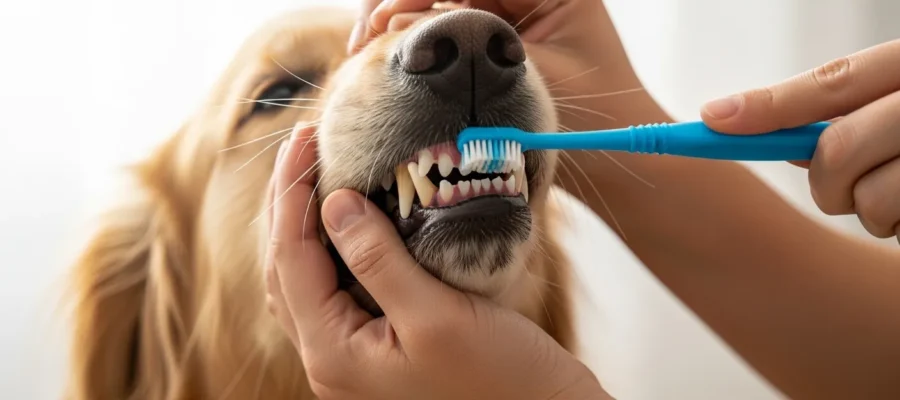
Most dog owners know they should brush their dog’s teeth. Very few actually do it. Not because they don’t care — because nobody showed them how, or their dog made it a nightmare the first time they tried.
This guide fixes that.
You’ll learn exactly what to buy, how to get your dog comfortable before you even pick up a toothbrush, and the precise steps that make brushing fast and stress-free. Whether your dog is a puppy or a ten-year-old who’s never had their teeth touched, there’s a starting point here for you.
Why Brushing Your Dog’s Teeth Actually Matters
Dental disease is the most common health condition in adult dogs. By age three, around 80% of dogs show some signs of periodontal disease. That’s not a minor cosmetic issue — it’s an infection in the mouth that can spread bacteria to the heart, kidneys, and liver.
If you’ve ever wondered how many teeth dogs have, the answer is 42 in adult dogs — and every single one of them is vulnerable to plaque buildup.
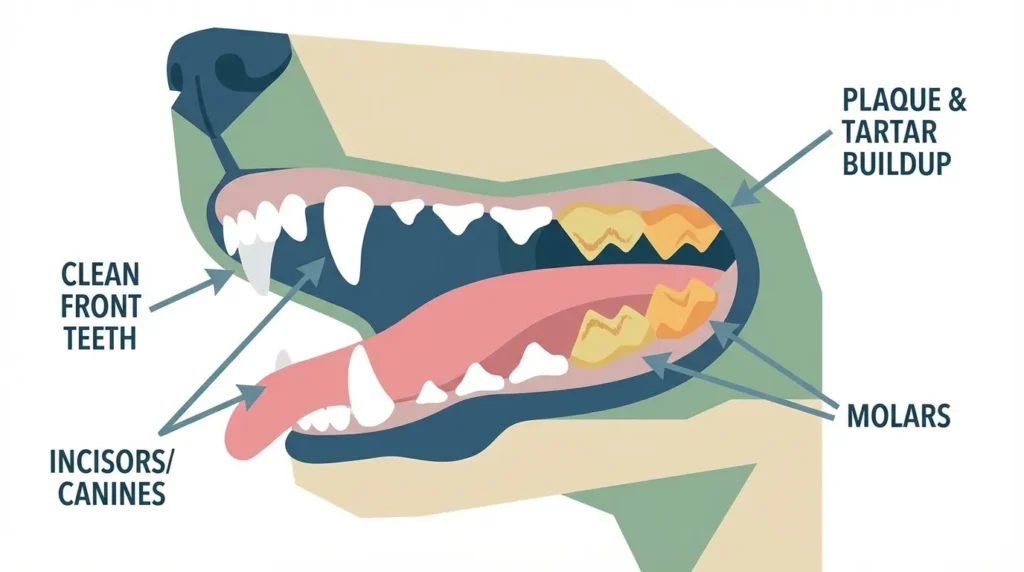
It starts simple. Food particles and bacteria stick to the teeth and form plaque within hours of eating. Left alone, that plaque mineralizes into tartar in as little as 3 days. Tartar can’t be brushed off at home. It requires a professional veterinary cleaning under general anesthesia.
The only way to stop tartar from forming is to remove plaque before it hardens. Brushing does that. Nothing else does it as well.
What Happens If You Skip It
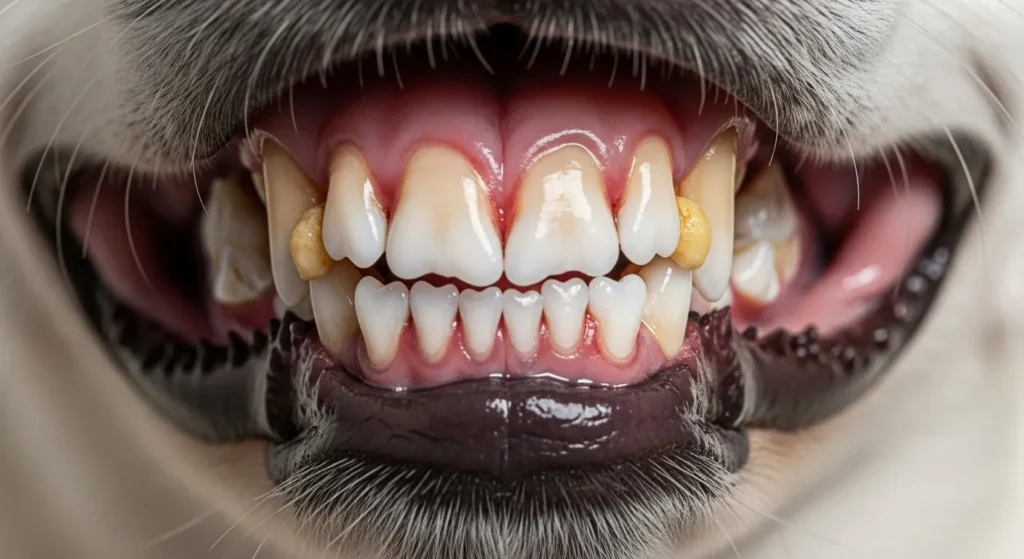
Gingivitis comes first — red, inflamed gums. Then the gum line starts to recede. Bacteria gets below the gumline and attacks the structures holding teeth in place. Teeth loosen. Teeth fall out. In serious cases, the jawbone itself is affected.
Dogs hide pain well. By the time most owners notice a problem, significant damage has already happened. Catching it early through regular brushing is far cheaper and kinder than treating advanced periodontal disease. If you’re ever unsure whether symptoms in your dog are dental-related, the pet symptom checker can help you figure out your next step.
Small Breeds and Flat-Faced Dogs Have Higher Risk
Toy breeds like Chihuahuas, Yorkshire Terriers, and Dachshunds are especially prone to dental disease because their teeth are crowded into smaller jaws. Brachycephalic breeds — Pugs, Bulldogs, Shih Tzus — also face elevated risk due to how their teeth are positioned. If you have one of these breeds, consistent brushing matters even more.
How Often Should You Brush Your Dog’s Teeth?
Daily brushing is the gold standard. Veterinary dental specialists recommend once a day because plaque begins forming again within 24 hours of brushing.
If daily isn’t realistic, every other day is the practical minimum to meaningfully control plaque. Brushing once a week provides some benefit but won’t prevent tartar buildup in most dogs.
Start with what you can commit to. A consistent every-other-day routine beats an inconsistent daily goal.
What You Need Before You Start
Get the right tools before the first session. Using the wrong products can be dangerous.
Dog-Safe Toothpaste — Never Human Toothpaste
Human toothpaste contains ingredients that are toxic to dogs. Xylitol — a sweetener in many toothpastes — causes rapid blood sugar drops and liver failure in dogs. Fluoride at the concentrations in human products is also harmful when swallowed. Dogs can’t rinse and spit.
This matters beyond the toothpaste tube too. Xylitol hides in many common products owners give their dogs as rewards. If you use peanut butter as a training treat during brushing sessions, always check the label — some brands contain xylitol. You can also run any treat or food ingredient through the pet food safety checker before giving it to your dog.
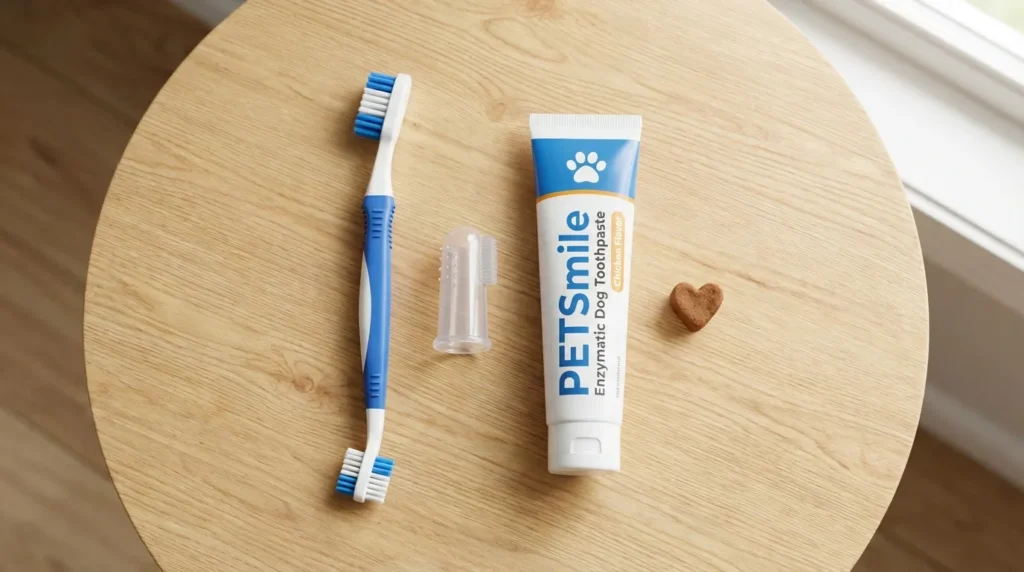
Use enzymatic dog toothpaste only. Enzymatic formulas contain chemicals that break down plaque even between brushing sessions. Most come in flavors dogs actually like — poultry, beef, vanilla mint. That palatability matters for compliance.
Look for the VOHC Seal of Acceptance (Veterinary Oral Health Council). Products with this seal have been tested and proven to reduce plaque or tartar. Virbac C.E.T. Enzymatic Toothpaste is one widely used option that carries this recognition.
Types of Dog Toothbrushes
Dual-headed angled toothbrushes are the most effective for reaching back molars. A soft-bristled children’s toothbrush works too if you can’t find a dog-specific one.
Finger brushes — rubber caps that fit over your index finger — are a good starting point during the training phase. They give you more tactile control and feel less threatening to nervous dogs. Most owners transition to a handled brush once their dog is comfortable.
Dental wipes can clean surface plaque but can’t get into the grooves around teeth. They’re useful for maintenance between sessions or for dogs who won’t tolerate any brush, but they’re not a substitute for brushing.
How to Get Your Dog Comfortable First
Skipping this step is why most people fail. A dog that’s been startled or restrained during their first brushing attempt will fight you every single time afterward.
Take 2–3 weeks before you ever use a toothbrush. The goal is to make your dog associate mouth-touching with something good. The same patient, reward-based approach that works in general dog training applies directly here — small steps, consistent repetition, and positive reinforcement every time.
Week 1: Touching the Mouth
Sit with your dog calmly. Gently lift the lip and touch the gums with your finger for 2–3 seconds. Give a treat immediately. Repeat once or twice a day. Keep sessions under a minute. End before your dog shows any sign of stress.
By the end of the week, your dog should be relaxed when you lift their lip. If they’re still pulling away, stay at this stage longer.
Week 2: Introducing the Toothpaste
Let your dog lick a small amount of toothpaste off your finger. Most dogs like the taste — this is usually easy. Then apply a little to your finger and rub it gently along the outer surface of a few teeth. Treat and praise.
No brush yet. You’re just building the association: mouth touching = flavor they like = reward.
Week 3: Introducing the Brush
Put a small amount of toothpaste on the finger brush or toothbrush. Let your dog sniff and lick it. Then gently brush 2–3 teeth and stop. Treat generously. Over the following days, gradually increase how many teeth you brush until you can complete a full mouth in one session.
Don’t rush this phase. Going too fast too early creates resistance that takes weeks to undo.

Step-by-Step: How to Brush Your Dog’s Teeth
Once your dog is comfortable, here’s the full routine. Sessions should take about 2 minutes.
Step 1 — Set up calmly. Choose a quiet moment, not after exercise or play when your dog is overstimulated. Sit beside or slightly behind your dog rather than facing them head-on. Facing them directly can feel confrontational.
Step 2 — Apply toothpaste. Put a pea-sized amount on the brush. No water needed.
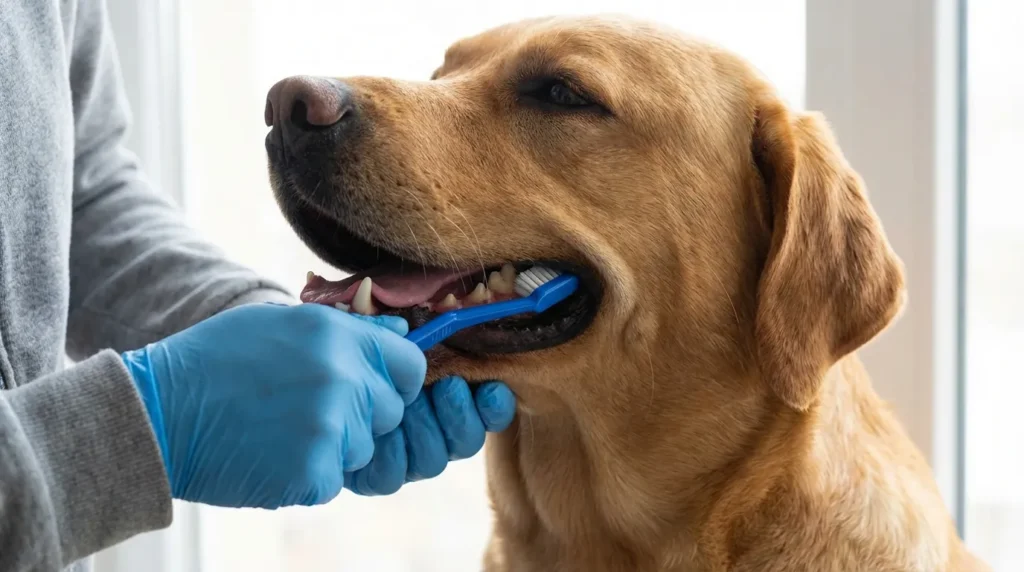
Step 3 — Lift the lip and start at the back. Gently pull back the lip on one side. Begin at the upper back molars — these teeth accumulate the most tartar and are most often skipped.
Step 4 — Brush in small circular motions. Angle the brush at about 45 degrees toward the gumline. Use gentle circular strokes. You’re cleaning the gumline, not just the tooth surface. Light pressure only — scrubbing hard doesn’t clean better and can irritate the gums.
Step 5 — Focus on the outer surfaces. The outer (cheek-facing) surfaces of the teeth are where tartar builds fastest. Your dog’s tongue naturally cleans the inner surfaces to some extent. If your dog will only tolerate a short session, prioritize the outer surfaces of the upper teeth.
Step 6 — Work around to the other side. Upper teeth first, then lower. Both sides.
Step 7 — End with praise and a reward. Every time. Without exception. This keeps the next session easier.
Common Mistakes to Avoid
One of the most consistent patterns among new dog owners is rushing the process or using the wrong products from the start. Avoiding these mistakes from day one saves you weeks of retraining. They also show up repeatedly in broader common dog owner mistakes that affect health and behavior across the board.
Using human toothpaste. Even a small amount can be harmful. There is no safe human toothpaste for dogs.
Moving too fast in the introduction phase. If your dog is tense, pulling away, or trying to mouth the brush aggressively, you’ve progressed too quickly. Back up a step.
Skipping the back teeth. The upper fourth premolar — sometimes called the carnassial tooth — is the largest tooth in a dog’s mouth and the most prone to disease. It’s also the tooth most owners miss. Make a deliberate effort to reach it.
Pressing too hard. Firm pressure causes gum irritation. If your dog’s gums look red after brushing, ease up.
Brushing too infrequently and expecting results. Occasional brushing doesn’t stop tartar. Consistency is what protects the teeth.
What If My Dog Won’t Let Me Brush?
Some dogs, especially older ones who’ve never had their mouths handled, take longer to come around. That’s normal.
Go back to Week 1 of the desensitization process. Spend more time there. Use higher-value treats — real chicken, cheese — not standard kibble rewards.
If after several weeks your dog remains highly resistant, talk to your vet. Some dogs have underlying mouth pain that makes them react defensively to any mouth contact. A dental exam rules that out.
For dogs who genuinely can’t be brushed, professional veterinary dental cleanings become more important, not less.
Dental Alternatives — Useful, But Not a Replacement
When brushing isn’t happening consistently, some alternatives help reduce plaque. None of them replicate what brushing does, but they’re better than nothing.
Dental chews are the most popular option. Look for the VOHC Seal. Greenies and Virbac C.E.T. chews have earned it. The chewing action mechanically scrapes plaque from teeth. One daily chew provides some benefit, but it won’t clean the gumline the way a brush does. If you’re considering rawhide as a dental option, it’s worth reading up on whether rawhide is actually safe for dogs before making it a regular habit — the answer might surprise you.
Water additives are liquids you add to your dog’s drinking bowl. Some VOHC-approved options help reduce bacterial load in the mouth. Easy to use, low effort, modest results.
Dental diets — prescription foods like Hill’s t/d — use larger kibble designed to clean teeth as the dog chews through it. Useful for dogs who can’t be brushed and won’t tolerate chews.
Professional cleanings under anesthesia are the only way to remove existing tartar and treat below the gumline. Even dogs who are brushed daily may need a professional cleaning every 1–3 years depending on breed and individual factors. Brushing slows tartar formation — it doesn’t eliminate the need for veterinary dental care.
Signs Your Dog Needs a Vet Dental Check
Don’t wait for a scheduled appointment if you see any of these. If you’re unsure whether what you’re seeing is a dental issue or something else entirely, the pet symptom checker can help you assess what’s going on before you call the clinic.
- Persistent bad breath that isn’t normal dog-food smell
- Red, puffy, or bleeding gums
- Yellow or brown buildup on teeth, especially at the gumline
- Loose or visibly broken teeth
- Pawing at the mouth or face
- Dropping food or difficulty chewing
- Swelling on the face or jaw
- Sudden reluctance to eat hard food
These signs indicate disease already in progress. A veterinary dental exam — and likely a professional cleaning — is needed.
Frequently Asked Questions
Can I use human toothpaste on my dog? No. Human toothpaste contains xylitol and fluoride, both of which are toxic to dogs. Always use a toothpaste formulated specifically for dogs.
At what age should I start brushing my dog’s teeth? Start as early as 8 weeks. Puppies are naturally more accepting of mouth handling, and early habituation makes lifelong brushing much easier. Adult dogs can absolutely be trained, but it takes more patience.
How long should each brushing session take? Aim for 2 minutes per session — roughly 30 seconds per quadrant of the mouth. Short, consistent sessions are better than long infrequent ones.
What if my dog already has tartar buildup? Brushing won’t remove existing tartar. You’ll need a professional veterinary cleaning first to start with a clean baseline. Then maintain with daily brushing going forward.
Is it too late to start if my dog is already older? It’s never too late to start. The benefits of brushing begin from day one. An older dog may take longer to accept it, but even reducing plaque formation by 50% is meaningful for their health.
Final Thoughts
Brushing your dog’s teeth doesn’t have to be a struggle. The dogs who fight it hardest are almost always the ones who were never introduced to it gradually. Take the three weeks to build comfort, get the right tools, and keep sessions short. Most dogs reach a point where they tolerate it easily — some actually look forward to the flavored toothpaste.
Dental care is just one piece of keeping your dog healthy at home. Once you’ve got a brushing routine down, it’s worth looking at other home grooming habits too — like how to properly groom your dog at home, clean their ears, and trim their nails safely. Taken together, these routines make a real difference in your dog’s comfort and long-term health.
Periodontal disease is largely preventable. Two minutes a day, done consistently, protects your dog from pain, tooth loss, and the systemic effects of chronic oral infection. Your vet will notice the difference at every checkup.
Start tonight. Even just letting your dog lick some toothpaste off your finger is day one.