

Dogs vomit. It happens to almost every dog at some point — often more than once. Most of the time it’s minor. But sometimes it isn’t, and knowing the difference could save your dog’s life.
This guide covers every major cause of dog vomiting, what each vomit color means, when to handle it at home, and when to call the vet immediately. If your dog is showing symptoms right now, you can also use our Pet Symptom Checker to get a faster read on what might be going on.
Vomiting vs. Regurgitation — They’re Not the Same Thing
This distinction matters more than most people realize. Vomiting and regurgitation look similar, but they have different causes and different levels of urgency.
Vomiting is an active process. Your dog’s abdomen heaves. There’s visible effort. The vomit is usually partially digested, yellowish, and may contain bile or foam. Your dog may drool, lick their lips, or pace before it happens.
Regurgitation is passive. No heaving. The dog simply lowers their head and food comes back up — usually undigested, tubular in shape, and within minutes of eating. Dogs almost always try to eat it again.
If what comes up looks like a cylinder of undigested kibble and your dog seems completely fine, that’s likely regurgitation — not vomiting. Regurgitation often signals esophageal issues or eating too fast. Vomiting points to the stomach or intestines.
The Most Common Reasons Dogs Throw Up
Eating Too Fast or Too Much
This is probably the most frequent cause in otherwise healthy dogs. When a dog gulps food in under 30 seconds, air and food get swallowed together. The stomach gets irritated and sends it back. The vomit is usually undigested or barely digested food, brought up within 20–30 minutes of eating.
Large breeds and dogs who compete with other animals for food are most likely to do this. It’s one of the more overlooked common dog owner mistakes — free-feeding or rush feeding without watching how fast a dog eats.
Dietary Indiscretion
“Dietary indiscretion” is the vet term for “ate something they shouldn’t have.” Grass, garbage, dirt, dead animals, socks — dogs eat things that irritate the stomach lining and get expelled. One episode, dog seems fine, no other symptoms — this is usually self-limiting within 24 hours.
Grass eating is worth a specific note. Dogs eat grass for various reasons — behavioral curiosity, instinctual habit, or mild stomach discomfort. If you’ve wondered why dogs eat grass in the first place, there’s more to it than a simple upset stomach. About 25% of dogs who eat grass vomit afterward, but most don’t. Occasional grass eating with rare vomiting isn’t a red flag.
Sudden Diet Change
Switching dog food too fast is a very common cause of vomiting and diarrhea. The gut microbiome needs time to adjust. A transition that should take 7–10 days gets done in 2, and the stomach rebels.
The correct transition: mix 25% new food with 75% old food for 2–3 days. Then 50/50 for 2–3 days. Then 75% new for 2–3 days. Then fully switch. Rush this, and vomiting follows.
Food Intolerance or Allergy
Certain proteins trigger chronic vomiting in sensitive dogs — most commonly beef, dairy, wheat, chicken, lamb, and egg. Unlike an acute reaction, this shows up as repeated vomiting over weeks or months, usually alongside loose stools, gas, and itchy skin. Your vet may recommend a hydrolyzed protein diet or elimination trial to identify the culprit.
Intestinal Parasites
Roundworms, hookworms, whipworms, and Giardia all cause vomiting, particularly in puppies. A fecal exam takes about 15 minutes at most vet clinics and costs under $50. If your dog is vomiting and hasn’t had a recent parasite screening, this is an easy and important thing to rule out.
Bacterial or Viral Infections
Bacterial gastroenteritis from contaminated food or water causes sudden-onset vomiting, often with diarrhea. Dogs typically recover in 2–5 days with supportive care. Viral infections like canine coronavirus behave similarly. Both are more serious in puppies with undeveloped immune systems.
Serious Causes You Should Not Ignore
Gastric Dilatation-Volvulus (GDV / Bloat)
This is a life-threatening emergency. The stomach fills with gas and twists on itself, cutting off blood supply. Death can occur in under 2 hours without surgery.
Watch for these specific signs: unproductive retching (trying to vomit with nothing coming up), a visibly distended abdomen, restlessness, drooling, and a dog who looks anxious and can’t get comfortable. GDV is most common in large, deep-chested breeds — Great Danes, German Shepherds, Standard Poodles, Weimaraners, and Dobermans face the highest risk.
If you suspect GDV, don’t wait. Go to an emergency vet immediately.
Pancreatitis
The pancreas becomes inflamed, usually after a dog eats a high-fat meal or gets into fatty table scraps. The pain is significant. Symptoms include vomiting, hunched posture, reluctance to move, loss of appetite, and abdominal pain when touched. Miniature Schnauzers have a notably higher genetic predisposition.
Pancreatitis ranges from mild (treated with IV fluids and fasting) to severe and life-threatening. It requires vet diagnosis — a blood test for lipase and amylase levels confirms it.
Kidney or Liver Disease
Both organs filter toxins from the blood. When they’re failing, those toxins build up and cause vomiting. The vomiting here tends to be chronic — recurring over days or weeks — and comes with other signs: increased water consumption, weight loss, yellow-tinged skin or eyes (liver), or decreased urination (kidney).
Blood chemistry panels and urinalysis are the diagnostic tools here.
Toxin Ingestion
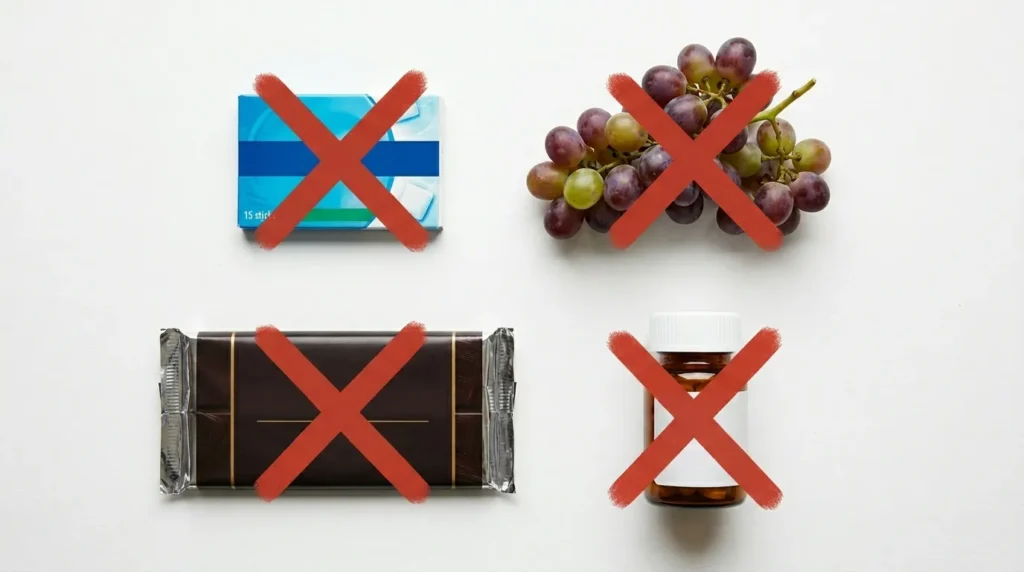
Dogs get into things. Common toxins that cause acute vomiting include xylitol (in sugar-free gum, peanut butter, and many human foods), chocolate, grapes and raisins, ibuprofen and naproxen, antifreeze (ethylene glycol), macadamia nuts, and certain mushrooms. Before you assume a food is safe, it’s worth checking — for instance, many owners don’t realize some mushroom varieties are highly toxic to dogs. Our Pet Food Safety Checker is a quick way to verify whether something your dog got into is dangerous.
If you know or suspect your dog ate something toxic, call the ASPCA Animal Poison Control Center (888-426-4435) or your vet immediately. Don’t wait for symptoms to worsen.
Intestinal Obstruction
Dogs swallow things that get stuck — corn cobs, toy pieces, bones, clothing, rubber. A partial or complete blockage causes persistent vomiting that gets worse over time, even when the stomach is empty. The dog is in pain, won’t eat, and may have a distended abdomen. This requires emergency surgery in most cases.
Parvovirus
Parvo is a highly contagious viral disease that attacks the gastrointestinal lining. It causes severe, often bloody vomiting and diarrhea, along with lethargy and fever. Puppies under 4 months and unvaccinated dogs face the highest mortality risk. Survival rates with aggressive treatment (IV fluids, antibiotics, antiemetics) are around 68–92%. Without treatment, parvo is often fatal.
What the Color of Your Dog’s Vomit Tells You
(Color guide table appears above — refer to the visual reference)
Yellow or green vomit is almost always bile. Bile is produced in the liver and stored in the gallbladder — it enters the small intestine to digest fats. When the stomach is empty for too long, bile can flow backward into the stomach, irritating it enough to cause vomiting. Yellow vomit first thing in the morning is the most common pattern.
White foam forms when air mixes with stomach fluids. It usually indicates an empty, irritated stomach — similar mechanism to yellow vomit. It can also accompany kennel cough when associated with a hacking cough followed by foam.
Clear liquid is stomach fluid, saliva, or recently swallowed water. Often harmless. Watch for other symptoms before panicking.
Brown vomit is usually digested food and not alarming on its own. But dark brown vomit with a foul smell — particularly if it looks like sewage — can indicate an intestinal blockage where intestinal contents are backing up. That requires immediate vet attention.
Red or bloody vomit is the color that demands a vet call. Bright red blood suggests active bleeding somewhere in the upper GI tract. Dark red or coffee-ground-looking material is digested blood — which means the bleed may be deeper and slower. Causes include ulcers, foreign bodies, severe gastritis, or hemorrhagic gastroenteritis (HGE). In puppies, parvo is the primary concern.
Bilious Vomiting Syndrome — When Dogs Throw Up Every Morning
Bilious Vomiting Syndrome (BVS) is a specific condition where a dog vomits yellow bile or white foam reliably in the morning, before eating. The dog otherwise seems completely fine.
The mechanism: overnight fasting leaves the stomach empty for 8–12 hours. Bile accumulates and irritates the stomach lining. The dog vomits, and then often wants to eat immediately and seems totally normal.
BVS is not life-threatening, but it should still be confirmed by a vet to rule out other causes. The most effective fix is a late-night snack — giving a small meal 30–60 minutes before bedtime reduces overnight fasting time and prevents bile buildup. Feeding smaller, more frequent meals throughout the day also helps.
Age and Breed Risks
Puppies
Puppies are more vulnerable across the board. Their immune systems aren’t fully developed, they’re not fully vaccinated yet, and they eat everything in sight. Parvovirus, intestinal parasites, and swallowed foreign objects are the most common serious causes in puppies under 6 months.
Any vomiting in a puppy under 12 weeks that continues for more than a few episodes warrants a same-day vet call. Not sure how old your puppy is or what developmental stage they’re in? The Pet Age Calculator can help you translate their age into what health risks are most relevant right now.
Senior Dogs
Older dogs are more likely to have underlying conditions — kidney disease, liver disease, Cushing’s disease, Addison’s disease, or cancer — that manifest as vomiting. Repeated vomiting in a senior dog should be taken more seriously than in a young, otherwise healthy adult.
Large and Giant Breeds
Large, deep-chested breeds face a specific and elevated risk for GDV. This includes Great Danes, German Shepherds, Irish Setters, Standard Poodles, Rottweilers, and Weimaraners. If you own one of these dogs, know the signs of bloat cold. It can kill in two hours.
When to Call the Vet Immediately
Some situations don’t need a “wait and see” approach. Call your vet or head to an emergency clinic right away if you see:
- Vomiting more than 3 times in a 24-hour period
- Blood in the vomit — bright red or coffee-ground colored
- Unproductive retching with a distended abdomen (GDV)
- Known or suspected ingestion of a toxin
- Vomiting combined with lethargy, pale gums, or collapse
- No urination for more than 12 hours (possible kidney issue or obstruction)
- A puppy vomiting repeatedly (especially if unvaccinated)
- Vomiting in a senior dog that doesn’t resolve within 24 hours
- Severe abdominal pain — dog is hunched, crying, or won’t let you touch the belly
- Vomiting combined with diarrhea for more than 24 hours (risk of dehydration)
Pale or white gums are always a red flag, regardless of other symptoms. That indicates poor circulation and requires emergency care.
Vomiting that comes with excessive shaking or heavy, unexplained panting is especially concerning — both are signs your dog may be in pain or shock. Don’t wait on those combinations.
What to Do at Home If Vomiting Is Mild
If your dog vomited once or twice, seems otherwise fine, and none of the emergency signs above are present, you can manage it at home.
Withhold Food for 6–12 Hours
Let the stomach rest. This is the most important first step. Don’t offer a meal immediately. Most adult dogs handle a 6–12 hour fast easily. For puppies, limit the fast to 4 hours maximum — they’re more vulnerable to low blood sugar.
Offer Water Carefully
Don’t let a vomiting dog gulp a bowl of water. That often triggers more vomiting. Instead, offer small amounts every 30–60 minutes. Ice cubes or ice chips can work well. If your dog can’t keep any water down after several attempts, that’s a vet call.
Introduce a Bland Diet
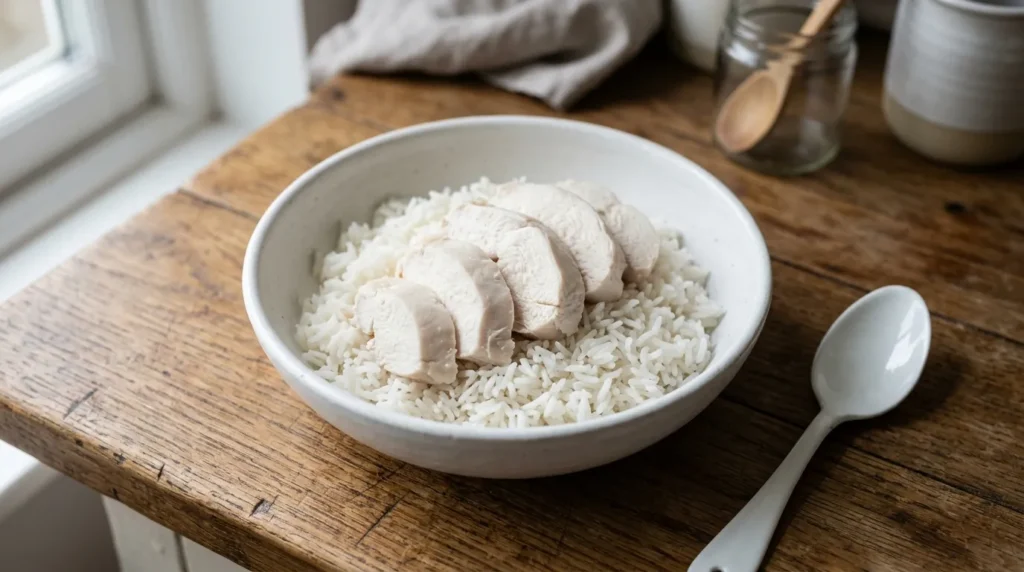
After the fasting period, start with a bland diet: plain boiled chicken (no skin, no seasoning) and white rice in a 1:3 ratio (one part chicken to three parts rice). Feed small amounts every 4–6 hours. If that stays down for 24 hours, gradually reintroduce regular food over 3–4 days.
OTC Options — Only With Vet Approval
Famotidine (Pepcid AC) is sometimes used in dogs to reduce stomach acid. The typical vet-directed dose is 0.25–0.5 mg per kilogram of body weight. However, don’t give any human medication without first talking to your vet. If you’re also wondering what you can give your dog for pain alongside nausea, that guide covers vet-safe options in detail. Some formulations contain additives like xylitol that are toxic to dogs. Cerenia (maropitant) is the prescription antiemetic most commonly used by vets for dog nausea and vomiting.
How Vets Diagnose the Cause
If vomiting persists or looks serious, your vet will likely run a combination of the following:
Physical exam — checking hydration, abdominal pain, gum color, lymph nodes, and overall condition.
Blood panel (CBC + chemistry) — a Complete Blood Count identifies infection, anemia, or inflammation. A chemistry panel checks kidney and liver function, blood glucose, and electrolyte balance.
Abdominal X-rays — useful for spotting foreign objects, gas patterns consistent with obstruction, and enlarged organs.
Abdominal ultrasound — more detailed than X-ray for soft tissue assessment, including the intestines, pancreas, liver, and kidneys.
Fecal exam — a simple microscopic check for parasite eggs or Giardia cysts.
In complex or chronic cases, your vet may refer to a board-certified veterinary internist or gastroenterologist for endoscopy, biopsies, or more specialized diagnostics.
Vomiting that keeps coming back can also be tied to other GI issues. If your dog is also dealing with loose stools, our guide on why dogs get diarrhea breaks down how the two conditions often overlap and what the combination usually points to.
How to Prevent Dog Vomiting
Many cases of dog vomiting are completely preventable. And some of the fixes are surprisingly simple.
Use a slow feeder bowl. If your dog eats too fast, a puzzle-style slow feeder can increase meal time from 20 seconds to 3–5 minutes. This dramatically reduces the risk of regurgitation and vomiting from eating too fast.
Feed smaller, more frequent meals. Two meals a day is standard, but dogs prone to bilious vomiting or bloat may do better on three smaller meals. For large breeds at risk for GDV, some vets also recommend avoiding vigorous exercise for 30–60 minutes before and after eating.
Follow the 7–10 day food transition rule. Never switch foods abruptly. A proper transition takes at least a week. When starting a new brand, mix it in gradually.
Store toxins securely. Keep medications, cleaning products, xylitol-containing foods, and human snacks out of reach. Not sure if something in your home is dangerous? Run it through the Pet Food Safety Checker before your dog gets curious. You may also want to check whether everyday things like peppermint oil — often found in diffusers and cleaners — are safe around your dog.
Stay current on vaccinations and parasite prevention. Parvo is almost entirely preventable with vaccination. Monthly heartworm and parasite preventives cover several common intestinal parasites as well.
Frequently Asked Questions
Can I give my dog Pepcid for vomiting? Famotidine (Pepcid AC) can be used in dogs, but only under vet guidance. The plain, original formula without added ingredients is safer. Never give Pepcid if your dog is also on NSAIDs or has kidney disease. Always confirm the dose with your vet first — it varies by weight.
Why does my dog throw up in the morning? Morning vomiting of yellow or white foam is usually Bilious Vomiting Syndrome — a reaction to an empty stomach after overnight fasting. Try giving a small snack 30–60 minutes before bedtime. If it continues more than 3–4 mornings in a week, see your vet.
How many times vomiting is too many in one day? More than 3 times in 24 hours crosses from “watch it” territory into “call the vet.” Even two episodes warrant a call if they’re accompanied by blood, lethargy, pain, or other symptoms.
Should I withhold water if my dog is vomiting? Not completely — but you should control intake. Unrestricted water access when a dog is nauseous often triggers more vomiting. Offer small amounts (a few ounces) every 30–60 minutes. If your dog vomits up water immediately and consistently, that’s a vet call.
What if my dog is also vomiting and has diarrhea at the same time? Both together means faster fluid loss and a higher risk of dangerous dehydration. Don’t wait 48 hours on this combination — call your vet within 24 hours, sooner if your dog is a puppy or senior. Read more in our full guide on dog diarrhea causes and what to do.
Is it normal for puppies to vomit? Occasional vomiting in puppies — once, without other symptoms — can be normal. But puppies are fragile, and any vomiting that repeats, includes blood, or is paired with lethargy or diarrhea needs prompt vet attention. Parvo moves fast in unvaccinated puppies.
My dog threw up — should I try to make them vomit again to clear their stomach? Not without calling a vet first. Inducing vomiting is sometimes necessary after toxin ingestion, but it can also cause serious harm depending on what was swallowed. Our guide on how to make a dog throw up safely covers exactly when it’s appropriate and when it’s dangerous.
Wrapping Up
Most of the time, a dog throwing up once or twice is not an emergency. Ate too fast, got into something, needed to clear their stomach — that’s part of being a dog. Watch them, rest their stomach, offer water carefully, and they’ll likely be fine by morning.
But knowing the difference between “fine by morning” and “emergency room tonight” is what this guide is for. Blood in the vomit, unproductive retching in a large breed, suspected toxin ingestion, or a puppy who won’t stop vomiting — those are the situations that move fast. When in doubt, call your vet. A quick phone call is always the right move.
Still unsure about your dog’s symptoms? Use the Pet Symptom Checker for a guided assessment, or explore our deeper dive into dog vomiting causes and solutions for more detail on specific conditions.