
If your dog just snapped up a mushroom from the yard, or you’re wondering whether to share some with dinner — the answer depends entirely on which mushroom you’re talking about.
Store-bought mushrooms sold in grocery stores are generally safe for dogs in small amounts. Wild mushrooms found outdoors are a completely different matter. Some species can destroy a dog’s liver within 72 hours, and there’s no reliable way to identify safe ones by appearance alone.
Here’s exactly what you need to know — by species, toxin, symptom timeline, and emergency response.
Mushrooms That Are Safe for Dogs
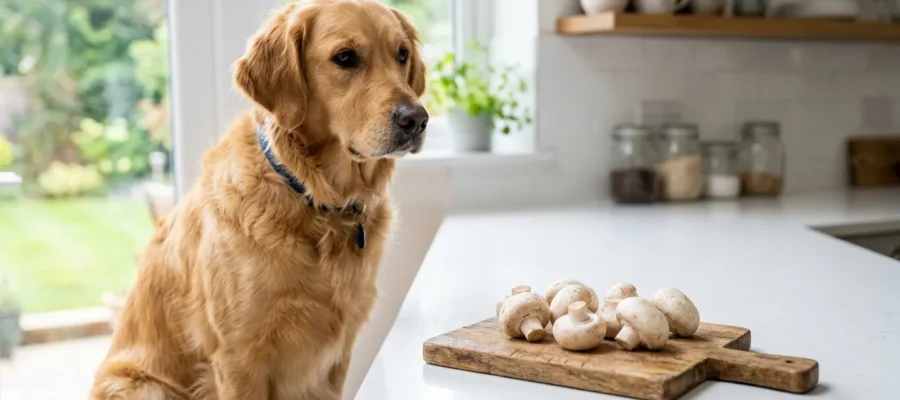
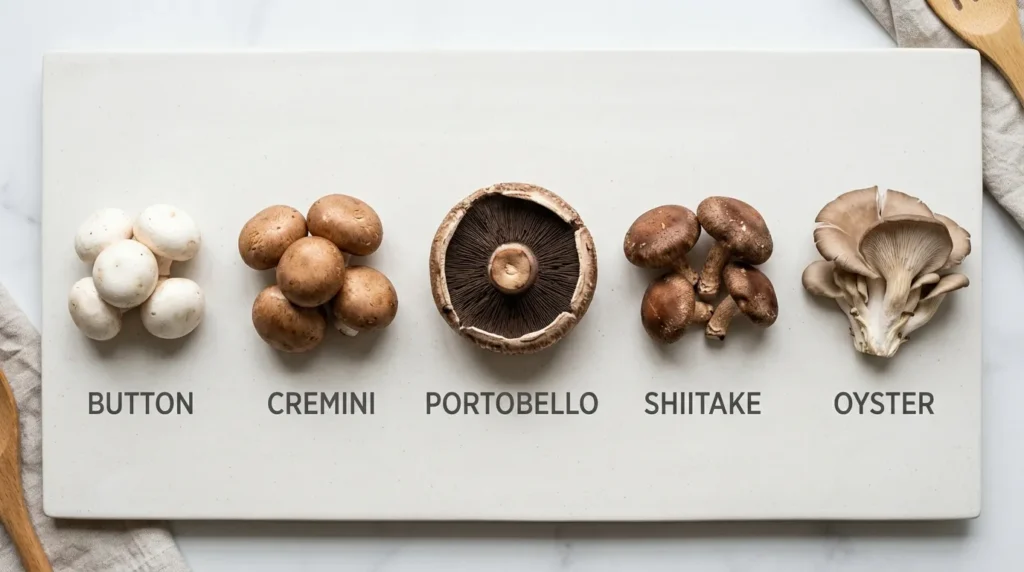
Common culinary mushrooms available at any grocery store are not toxic to dogs. These include:
- Button mushrooms (Agaricus bisporus)
- Cremini mushrooms
- Portobello mushrooms
- Shiitake mushrooms (Lentinula edodes)
- Oyster mushrooms (Pleurotus ostreatus)
These are the same species humans eat daily. They contain no compounds harmful to dogs and offer small amounts of B vitamins, potassium, and antioxidants.
How to serve them safely: Plain and cooked is the only acceptable way. Raw mushrooms can be harder for dogs to digest. More importantly, any seasoning you’d normally add — garlic, onion, butter, salt — is off the table. Garlic and onion are toxic to dogs even in small quantities. A plain sautéed mushroom as an occasional treat is fine. A mushroom cooked in garlic butter is not.
How much is too much: Keep portions small. A slice or two for a medium-sized dog is reasonable. Mushrooms aren’t a dietary staple for dogs, so there’s no reason to feed them regularly. If you’re exploring safe foods to add to your dog’s diet, what vegetables can dogs eat is worth reading alongside this.
Mushrooms That Are Toxic to Dogs
Wild mushrooms are where the real danger is. Of the roughly 10,000 mushroom species in North America, about 100 are toxic. A small number are capable of killing a dog — or a human — with a single dose.
Death Cap — Amanita phalloides
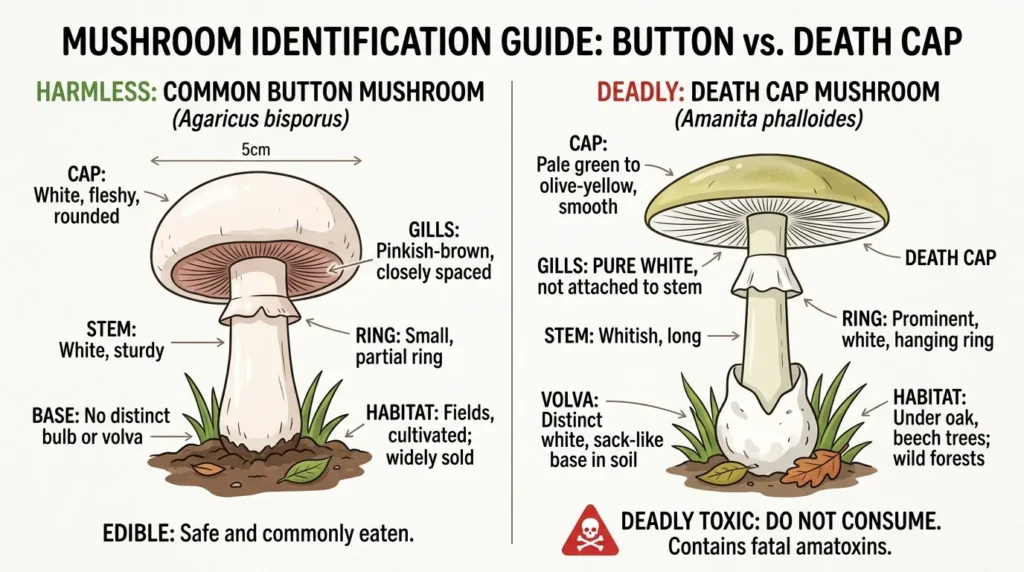
This is the most deadly mushroom in the world. It’s responsible for the majority of fatal mushroom poisonings in both humans and dogs. It’s found across North America, Europe, and Australia, and it looks deceptively ordinary — pale greenish-yellow cap, white gills, no alarming colors.
A lethal dose for a dog can be as little as a few grams. The toxin involved is amatoxin, specifically α-amanitin, which halts RNA synthesis inside liver and kidney cells. Organ failure follows.
Destroying Angel — Amanita ocreata and Amanita bisporigera
Same toxin class as the death cap. Pure white cap and gills, found in wooded areas across the western and eastern US. The name is not an exaggeration. A single cap can kill a medium-sized dog.
Autumn Skullcap — Galerina marginata
Small, brown, nondescript. Often grows in clusters on decaying wood. Contains the same amatoxins as Amanita species, making it equally dangerous despite its unassuming appearance. Backyard compost piles and rotting stumps are common growth sites.
False Morel — Gyromitra esculenta
Contains gyromitrin, which metabolizes into monomethylhydrazine inside the body — the same compound found in rocket fuel. Symptoms include vomiting, diarrhea, and in serious cases, hemolytic anemia and liver failure. Found in the spring, often mistaken for edible morels.
Inocybe and Clitocybe Species
These cause muscarine poisoning — a different toxin profile from the Amanita family. Muscarine overstimulates the parasympathetic nervous system, causing excessive salivation, tear production, urination, and in severe cases, respiratory failure. Symptoms appear faster than amatoxin poisoning, usually within 30 minutes to 2 hours.
Why You Can’t Identify Wild Mushrooms by Sight
No visual rule distinguishes safe from toxic mushrooms. White gills do not mean safe. Brown caps do not mean safe. The death cap looks like edible paddy straw mushrooms — which is exactly how it causes accidental poisonings. Never assume a wild mushroom is safe based on appearance, color, smell, or neighborhood location.
What Toxins Are Inside Toxic Mushrooms?
Understanding the toxins explains why some mushroom poisonings are immediately obvious and others are dangerously delayed.
Amatoxins (α-amanitin): Found in Amanita and Galerina species. These inhibit RNA polymerase II, effectively shutting down protein synthesis in liver and kidney cells. The damage is progressive and often irreversible once it begins.
Muscarine: Found in Inocybe and Clitocybe species. Acts fast. Overstimulates the SLUDD response — salivation, lacrimation, urination, defecation, digestive distress. Rarely fatal but requires prompt treatment.
Gyromitrin: Found in Gyromitra species. Converts to MMH inside the body, which damages red blood cells and liver tissue. Can cause hemolytic anemia in addition to organ stress.
Ibotenic acid and muscimol: Found in Amanita muscaria (the red-capped “fairy tale” mushroom). Causes neurological symptoms — disorientation, vocalization, wobbling, seizures. Psychoactive in humans; in dogs, it causes serious CNS distress.
Symptoms of Mushroom Poisoning in Dogs
Timing matters here. The symptom timeline varies by toxin, and one of the most dangerous features of amatoxin poisoning is a false recovery window that fools owners into thinking their dog is fine.
0–6 Hours: Gastrointestinal Signs
Most toxic mushroom ingestions first produce GI symptoms:
- Vomiting
- Diarrhea
- Drooling
- Abdominal pain
- Weakness
Muscarine-type poisonings produce these symptoms quickly, within 30 minutes to 2 hours. Amatoxin poisoning produces them in the first 6–12 hours.
6–24 Hours: The False Recovery Window (Amanita poisoning only)
This is the most dangerous phase — and the one most owners don’t know about. After the initial GI symptoms, dogs poisoned by Amanita species often appear to improve. Vomiting stops. Energy returns. They may eat, drink, and act almost normal.
This is not recovery. Amatoxins are still destroying liver and kidney cells internally. The absence of symptoms during this window has led many owners to skip the vet visit — a decision that costs dogs their lives.
24–72 Hours: Organ Failure
As liver and kidney damage reaches critical levels, a second wave of symptoms appears:
- Jaundice (yellowing of gums, eyes, skin)
- Bloody diarrhea
- Extreme lethargy
- Loss of coordination
- Reduced or absent urination
- Seizures
- Coma
At this stage, prognosis is poor even with aggressive veterinary care.
Neurological Symptoms (Ibotenic Acid/Muscimol)
Amanita muscaria causes a distinct neurological picture: vocalization, apparent hallucinations, ataxia (stumbling), pinpoint pupils, and seizures. Onset is typically 30 minutes to 3 hours.
If your dog shows any of these symptoms after being outside near wooded areas or in a yard where mushrooms grow, use the pet symptom checker as a quick reference, then call a vet immediately — don’t wait for symptoms to progress. If you’ve noticed recent vomiting unrelated to mushrooms, vomiting in dogs: causes and solutions can help you rule out other causes.
What to Do If Your Dog Eats a Wild Mushroom
Act immediately. Do not wait for symptoms.
Step 1: Remove your dog from the area. Don’t let them eat more.
Step 2: Collect a sample of the mushroom. Use a damp paper towel or a bag. Bring the whole mushroom — cap, stem, gills, and any surrounding soil if possible. Vets and mycologists can use this for identification. Take a photo on your phone as backup.
Step 3: Call the ASPCA Animal Poison Control Center. 📞 (888) 426-4435 — available 24/7. There is a consultation fee, but it’s worth it. Have your dog’s weight and breed ready.
Step 4: Call the Pet Poison Helpline. 📞 (855) 764-7661 — another 24/7 option with toxicology specialists.
Step 5: Go to the vet — do not wait. Even if your dog seems fine. Even if they stop vomiting. Given the false recovery window with Amanita poisoning, appearing normal is not a green light. Describe exactly what you found, when they ate it, and how much.
Do not induce vomiting at home without vet guidance. In some poisoning scenarios it’s appropriate — but in others it can cause additional harm. Read the full breakdown of how to make a dog throw up safely and why it’s something that should only be done under instruction.
How Vets Treat Mushroom Poisoning
Treatment depends on the toxin and how quickly the dog arrived.
Induced vomiting: If the dog arrives within 1–2 hours of ingestion and the mushroom type suggests GI toxins rather than amatoxins, vets will induce vomiting to remove what’s left in the stomach.
Activated charcoal: Administered orally to bind remaining toxins in the GI tract and prevent absorption. Most effective within the first few hours.
IV fluid therapy: Protects kidneys, maintains hydration, and supports the body while the liver processes toxins. For amatoxin cases, IV fluids are a cornerstone of treatment.
N-acetylcysteine (NAC): Used in severe amatoxin cases to protect liver cells. The same compound used in Tylenol overdose treatment in humans.
Silymarin (milk thistle extract): Some vets use this as a hepatoprotectant in amatoxin poisoning cases. Evidence is still emerging, but it’s increasingly part of treatment protocols.
Monitoring bloodwork: Liver enzymes (ALT, AST), kidney function (BUN, creatinine), and blood clotting factors are checked over 48–72 hours even in dogs that appear to have recovered.
Medicinal Mushrooms for Dogs — What the Research Shows
Not all mushroom conversation is about toxicity. A growing category of functional mushrooms is being used in dog supplements, and the research is more substantial than most people expect.
Turkey tail (Trametes versicolor) contains polysaccharopeptide (PSP), which has shown immune-modulating effects in dogs with cancer. A 2012 study published in Evidence-Based Complementary and Alternative Medicine found PSP from turkey tail delayed metastasis and extended survival in dogs with splenic hemangiosarcoma.
Reishi (Ganoderma lucidum) contains beta-glucans linked to anti-inflammatory and immune-supporting activity in multiple animal studies.
Lion’s mane (Hericium erinaceus) is being studied for nerve growth factor stimulation and cognitive support, though dog-specific data is still limited.
These are not the same as wild foraged mushrooms — commercial supplements use standardized extracts with controlled beta-glucan concentrations. If you’re interested in adding one to your dog’s routine, run it by your vet first. Dosing matters, and interactions with existing medications are possible.
How to Prevent Mushroom Exposure
Prevention is straightforward but needs to be consistent.
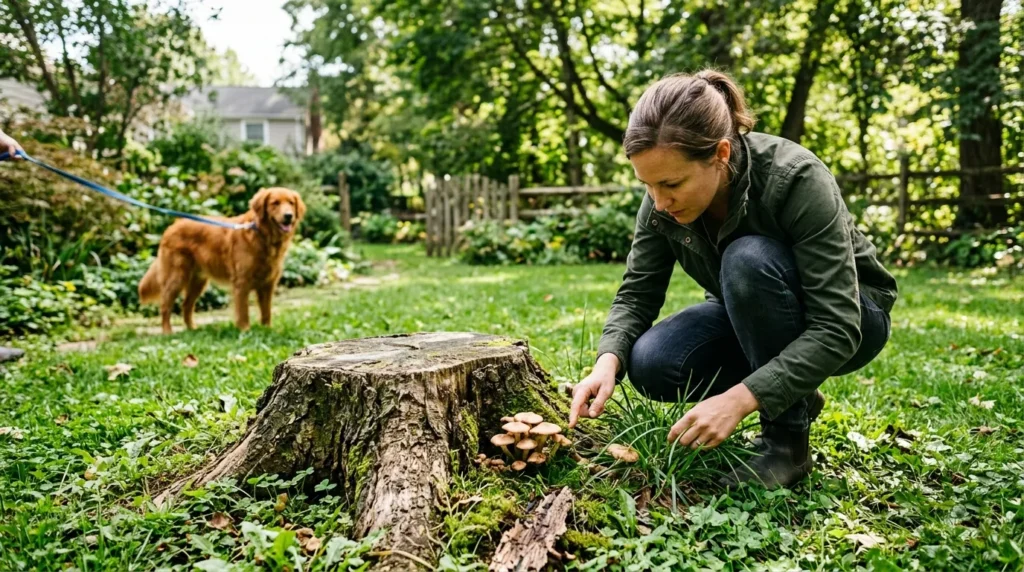
Inspect your yard weekly. Mushrooms appear fast after rain, especially in shaded areas near wood chips, compost piles, or tree stumps. Pull them out by the root and dispose of them in a sealed bag, not the compost bin.
Walk on a leash in wooded areas. Off-leash trails give dogs free access to forage, and mushrooms in wooded environments are far more likely to include toxic species. Keep your dog on leash in areas with heavy ground cover, leaf litter, or visible fungal growth.
Train a reliable “leave it.” This is the most practical long-term prevention tool. A dog that responds immediately to “leave it” can be stopped before a sniff turns into a swallow. Training your dog basic commands pays off well beyond mushroom safety.
Check before you let them out. A 60-second scan of the backyard before morning and evening bathroom breaks takes little time and catches overnight growth.
Frequently Asked Questions
Can dogs eat cooked mushrooms? Yes, if they’re store-bought varieties (button, cremini, portobello, shiitake, oyster) and cooked plain — no butter, garlic, onion, or salt. Avoid anything pre-seasoned or cooked with other ingredients.
Can dogs eat shiitake mushrooms? Yes. Shiitake mushrooms are non-toxic to dogs and offer some nutritional value. Serve them plain and cooked, not raw or seasoned.
How long after eating a mushroom will a dog get sick? It depends on the toxin. Muscarine-type poisonings show symptoms within 30 minutes to 2 hours. Amatoxin poisoning (death cap, destroying angel, autumn skullcap) produces initial GI symptoms in 6–12 hours, followed by a false recovery, then organ failure at 24–72 hours.
What does mushroom poisoning look like in dogs? Early signs include vomiting, diarrhea, drooling, and lethargy. Neurological signs (seizures, disorientation) appear with certain species. Late-stage amatoxin poisoning causes jaundice, bloody stools, and organ failure. Any combination of these symptoms after outdoor exposure warrants an immediate vet visit.
Are mushrooms in commercial dog food safe? Yes. Any mushroom ingredients used in regulated commercial dog food are controlled culinary varieties at safe concentrations. These pose no toxicity risk.
Not sure whether another food is safe for your dog? Use the can dogs eat tool to check specific foods quickly — or run any ingredient through the pet food safety checker for a detailed breakdown.