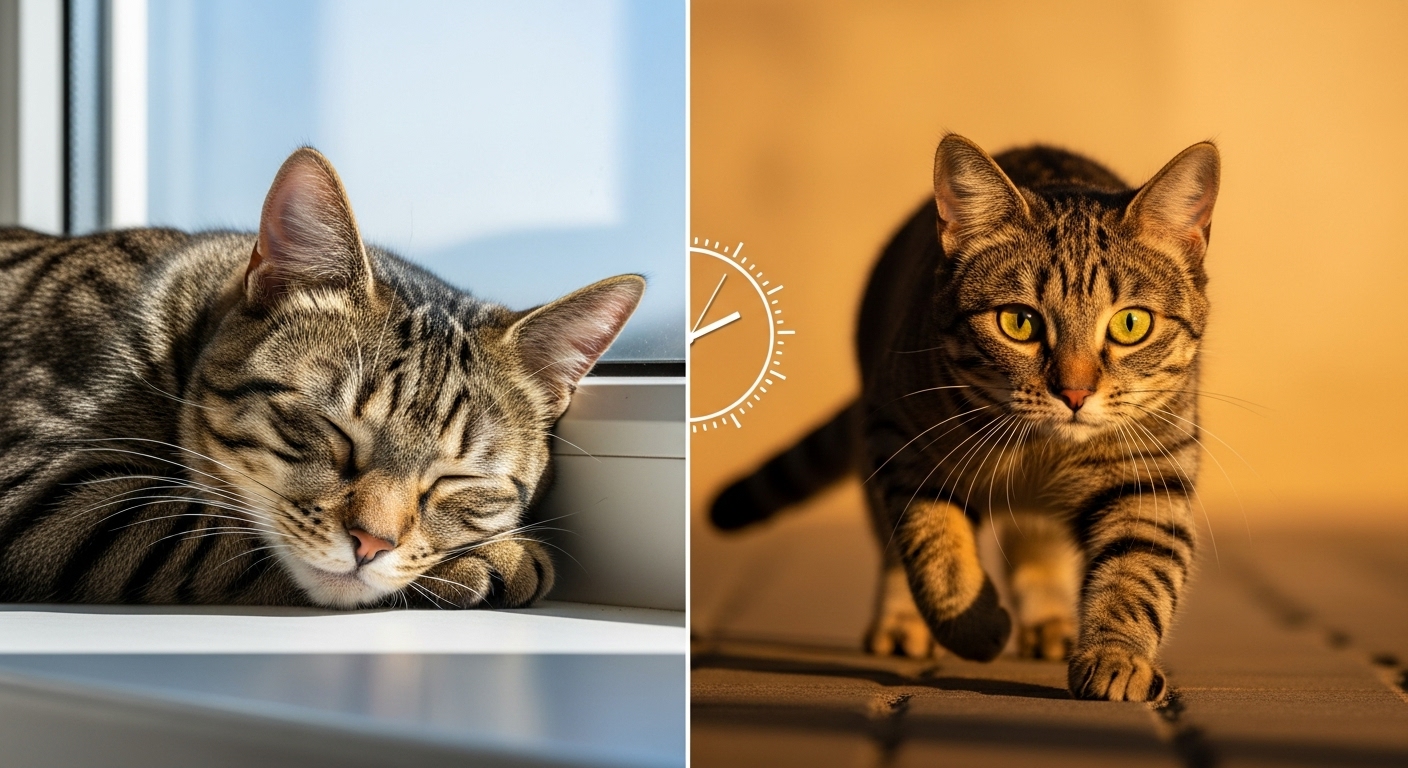
Ever wonder why your cat races around the house at 5 AM or starts playing right when you’re trying to watch TV in the evening? Many people think cats are nocturnal, but that’s actually a common myth.
Your cat isn’t really a night owl. They follow a different schedule entirely. Understanding your cat’s natural sleep patterns can help you manage their behavior and get better sleep yourself.
Let’s clear up this confusion about when cats are actually most active.
The Short Answer: Cats Are Not Nocturnal
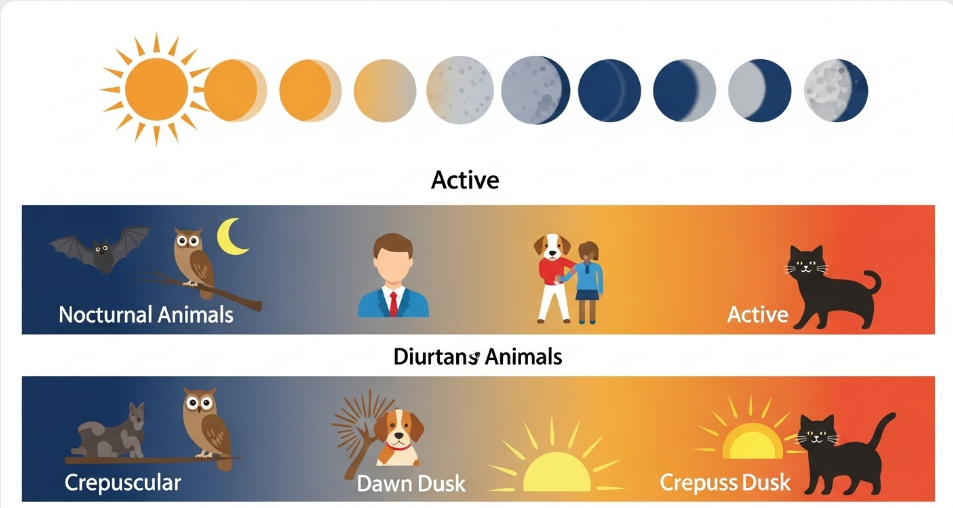
Cats are not nocturnal animals, contrary to popular belief. They’re crepuscular—most active at dusk and dawn. This puts them in a completely different category than truly nocturnal animals like bats or owls.
Here’s what this means for you and your cat:
- Your cat naturally wants to be active when the sun rises and sets
- They sleep most of the day and night
- Their behavior is programmed by thousands of years of evolution
- This pattern is completely normal and healthy
What Does Crepuscular Mean?
Crepuscular animals are active primarily during the twilight period. For cats, this means two main activity periods:
Dawn Activity (5-7 AM)
- Your cat wakes up ready to hunt and play
- This often coincides with when you’re trying to sleep
- They may vocalize, run around, or bring you “presents”
- Energy levels are highest during this time
Dusk Activity (6-8 PM)
- Second burst of energy as daylight fades
- Perfect time for interactive play sessions
- They may become more vocal or attention-seeking
- Natural hunting instincts kick in
Between these times, cats spend most hours sleeping or resting quietly.
Why Are Cats Crepuscular?
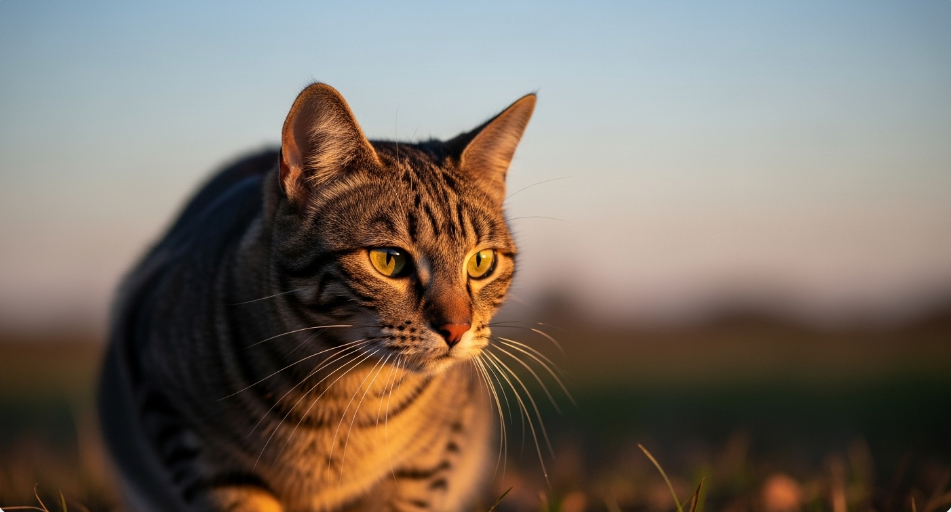
Cats evolved to hunt at dusk and dawn because birds and mice are very active at dawn, and cats evolved to take advantage of this by developing the ability to see in low-light conditions.
This behavior made perfect sense for wild cats:
- Prey animals are most active during twilight hours
- Lower temperatures make hunting more comfortable
- Less competition from other predators
- Better camouflage in dim lighting
Your house cat still carries these ancient instincts, even though they don’t need to hunt for survival.
How Much Do Cats Actually Sleep?
Most cats will sleep up to 16 hours a day, and older cats will sleep as much as 20 hours a day. This might seem like a lot, but it’s perfectly normal for cats.
Cat Sleep Breakdown:
- 12-16 hours: Average daily sleep for adult cats
- 18-20 hours: Sleep time for senior cats (7+ years)
- 20-22 hours: Sleep time for kittens and very elderly cats
Types of Cat Sleep:
- Light napping: Quick dozes throughout the day
- Deep sleep: Shorter periods of restorative sleep
- REM sleep: When cats dream (you might see paws twitching)
Cats are polyphasic sleepers, which means they take plenty of naps in between active times. This is different from humans who typically have one long sleep period.
Managing Your Cat’s Crepuscular Schedule
Living with a crepuscular cat doesn’t mean you have to sacrifice your sleep. Here are practical ways to work with their natural rhythms:
Evening Strategies:
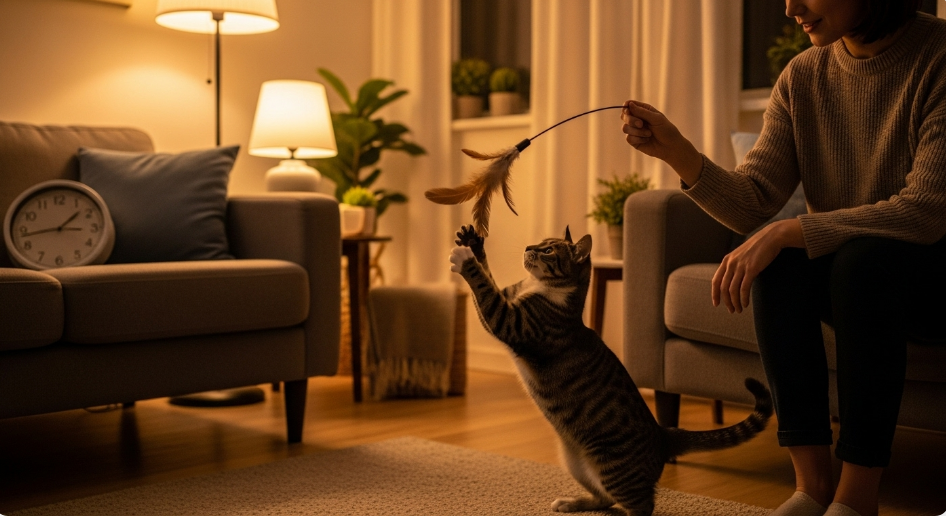
- Play with your feline right before you go to bed. If you feed on a schedule, give that last portion of food right after the playtime
- Tire them out with interactive toys
- Schedule feeding time after play session
- Create a bedtime routine they can follow
Morning Management:
- Keep bedroom door closed if they wake you too early
- Provide puzzle feeders to occupy morning energy
- Set up automatic feeders for consistent meal times
- Ignore attention-seeking behavior at dawn
All-Day Tips:
- Provide window perches for daytime entertainment
- Leave puzzle toys and treats for solo play
- Consider getting a second cat for companionship
- Maintain consistent daily routines
When Crepuscular Becomes Problematic
While crepuscular behavior is normal, sometimes it can become disruptive. Watch for these signs that might need attention:
Red Flags:
- Excessive nighttime activity (not just dawn/dusk)
- Aggressive behavior during active periods
- Sudden changes in sleep patterns
- Vocalization that seems distressed rather than playful
- Activity that prevents you from getting adequate sleep
Potential Causes of Disrupted Patterns:
- Medical issues causing discomfort
- Stress or anxiety
- Boredom from lack of stimulation
- Changes in household routine
- Age-related cognitive changes
When to See Your Vet:
Contact your veterinarian if your cat’s activity patterns suddenly change or if nighttime behavior becomes extremely disruptive. Some medical conditions can affect sleep cycles.
Indoor vs Outdoor Cats and Sleep Patterns
Your cat’s environment affects how strictly they follow crepuscular patterns:
Indoor Cats:
- May have less defined crepuscular periods
- Often adapt somewhat to human schedules
- Need more stimulation during natural active times
- May spread activity throughout day and night
Outdoor Cats:
- Follow more traditional crepuscular patterns
- Have natural stimulation during active periods
- Face real hunting opportunities
- Weather affects their activity levels
Indoor-Outdoor Cats:
- Usually maintain strongest crepuscular patterns
- Balance safety with natural behaviors
- May have seasonal variations in activity
Understanding Your Individual Cat
Every cat is unique, and their activity patterns can vary based on several factors:
Age Differences:
- Kittens: More random activity bursts, lots of sleep
- Adult cats: Clear crepuscular patterns
- Senior cats: Less intense activity periods, more sleep overall
Personality Factors:
- High-energy cats may have longer active periods
- Laid-back cats may have gentler crepuscular phases
- Social cats may adjust more to human schedules
- Independent cats often stick to natural patterns
Environmental Influences:
- Seasonal changes affect light exposure
- Household activity levels impact cat behavior
- Other pets can influence activity timing
- Feeding schedules create routine anchors
Creating Harmony with Your Crepuscular Cat
The key to living happily with a crepuscular cat is working with their nature, not against it. Here’s how to create a harmonious routine:
Respect Their Natural Rhythms:
- Plan interactive play for evening hours
- Expect morning activity and prepare accordingly
- Provide appropriate outlets for natural behaviors
- Don’t force them to be active during their natural rest times
Adjust Your Expectations:
- Accept that some dawn activity is normal
- Focus on managing rather than eliminating the behavior
- Appreciate that your cat is following healthy, natural instincts
- Remember that this behavior shows your cat is physically and mentally healthy
For more insights into your cat’s natural behaviors, check out our guide on why cats knead, another instinctual behavior that stems from kittenhood.
The Bottom Line
Cats are not nocturnal – they’re crepuscular. This means they’re naturally programmed to be most active during dawn and dusk, just like their wild ancestors. Understanding this natural rhythm helps you better care for your cat and manage any disruptive behaviors.
Your cat’s 5 AM zoomies aren’t them being difficult. They’re simply following millions of years of evolutionary programming that helped their ancestors survive as efficient twilight hunters.
Work with your cat’s natural schedule rather than against it. Provide appropriate outlets for their crepuscular energy, and you’ll both be happier and better rested.
Remember, a cat that follows crepuscular patterns is showing signs of being healthy and well-adjusted. It’s when these patterns change dramatically that you might need to investigate potential issues.