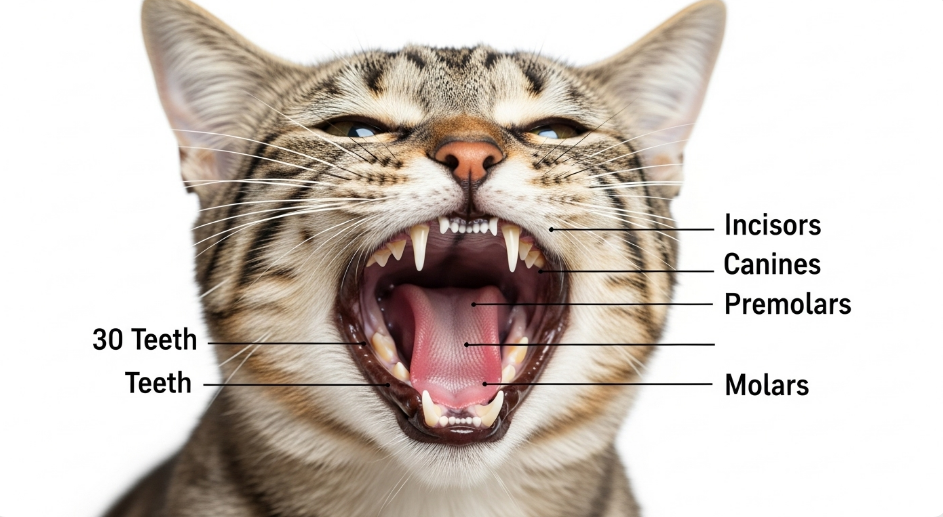
Cats have 30 permanent adult teeth, fewer than humans (32) and dogs (42). This number includes 12 incisors, 4 canines, 10 premolars, and 4 molars. Understanding your cat’s dental structure helps you provide better oral care throughout their life.
Cat Teeth vs. Kitten Teeth: The Key Differences
Kitten Teeth (Baby Teeth)
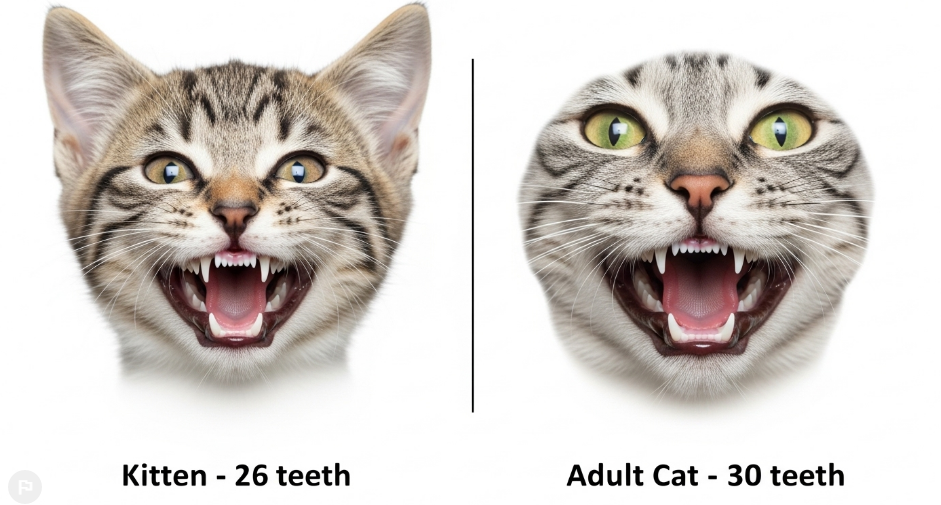
Kittens start with 26 deciduous (baby) teeth. These temporary teeth begin appearing at 2-4 weeks of age. Baby teeth are smaller, sharper, and whiter than adult teeth.
The kitten tooth timeline:
- 2-4 weeks: Deciduous incisors emerge
- 3-4 weeks: Deciduous canines appear
- 5-6 weeks: Deciduous premolars come in
- No molars: Kittens don’t have baby molars
Adult Cat Teeth
Adult cats develop 30 permanent teeth by 6-7 months of age. These teeth are larger, more durable, and slightly yellower than baby teeth.
The adult tooth breakdown:
- 12 incisors (6 upper, 6 lower): Small front teeth for grooming and nibbling
- 4 canines (2 upper, 2 lower): Sharp “fangs” for gripping prey
- 10 premolars (6 upper, 4 lower): Teeth behind canines for cutting
- 4 molars (2 upper, 2 lower): Back teeth for grinding
When Do Cats Get Their Adult Teeth?
The teething process begins around 3-4 months of age. Most cats complete their adult tooth development by 6-7 months old. During this transition, you might find small baby teeth around your home as they fall out naturally.
Signs your kitten is teething:
- Increased chewing behavior
- Drooling more than usual
- Red or swollen gums
- Reluctance to eat hard food
- Finding small teeth around the house
What to do during teething:
- Provide soft kitten chew toys
- Offer wet food if eating becomes difficult
- Give frozen washcloths for gum relief
- Schedule a vet checkup if baby teeth don’t fall out properly
For safe chew alternatives, learn more about what catnip does to cats and how it can help during teething.
Types of Cat Teeth and Their Functions
Incisors
The 12 small front teeth help cats groom themselves and pick up small objects. These tiny teeth work like tweezers for precise movements.
Canines
The 4 prominent “fangs” are a cat’s most recognizable teeth. These sharp teeth hold prey and tear meat. In house cats, canines help with eating and can indicate health issues if damaged.
Premolars
The 10 premolars work like scissors to cut and shred food. These teeth have sharp edges that slice through meat efficiently.
Molars
The 4 back molars grind and crush food. Adult cats have molars while kittens do not, which is why kittens need softer food.
Cat Dental Care: Keeping Those 30 Teeth Healthy
Proper dental care prevents serious health problems. Cats can develop periodontal disease, tooth loss, and painful infections without regular maintenance.
Daily Dental Care
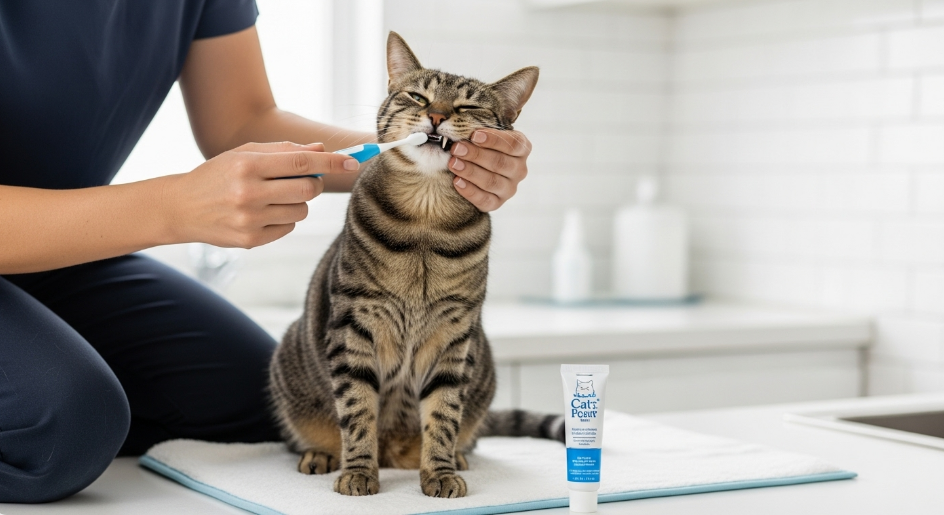
- Brush teeth 3-7 times per week using cat-safe toothpaste
- Provide dental treats designed for cats
- Use dental toys that help scrape plaque
- Feed dental-specific food when recommended by your vet
Signs of Dental Problems
Watch for these warning signs:
- Bad breath that worsens over time
- Yellow or brown tartar buildup
- Red, swollen, or bleeding gums
- Difficulty eating or chewing
- Pawing at the mouth or face
- Loose or missing teeth
Cats experiencing dental pain may show increased kneading behavior as a comfort mechanism.
Professional Dental Care
Schedule annual dental checkups with your veterinarian. Professional cleanings may be necessary to prevent serious dental disease.
Common Cat Dental Problems
Tooth Loss
Cats may lose teeth due to injury, disease, or age. While concerning, many cats adapt well to missing teeth and can still eat normally.
Retained Baby Teeth
Sometimes baby teeth don’t fall out when adult teeth come in. This creates crowding and requires veterinary extraction to prevent problems.
Dental Disease
Periodontal disease affects most cats over three years old. Without treatment, it causes pain, tooth loss, and can lead to heart and kidney problems.
Broken Teeth
Trauma can fracture teeth, exposing the sensitive pulp inside. Broken teeth require immediate veterinary attention to prevent infection and pain.
Feeding Cats with Different Dental Needs
Kittens (26 teeth)
- Soft wet food during teething
- Small kibble size appropriate for baby teeth
- Avoid hard treats that could damage developing teeth
Adult Cats (30 teeth)
- Regular dry food helps scrape plaque
- Mix wet and dry food for variety
- Dental treats and chews for maintenance
Senior or Toothless Cats
- Soft wet food or moistened dry food
- Smaller food pieces for easier eating
- Regular vet checkups to monitor oral health
When considering treats for cats with dental issues, check our guides on whether cats can eat peanut butter and can cats eat bananas for safe alternatives.
Frequently Asked Questions About Cat Teeth
How many teeth do cats lose naturally?
Healthy adult cats should keep all 30 permanent teeth throughout their lives. Any tooth loss indicates a problem requiring veterinary care.
Can cats eat without teeth?
Yes, cats can eat soft foods without teeth. Many toothless cats live comfortably with wet food and moistened dry food.
When should I worry about my cat’s teeth?
Contact your vet if you notice bad breath, difficulty eating, face swelling, or visible damage to any teeth.
Do indoor cats need different dental care?
All cats need regular dental care regardless of lifestyle. Indoor cats may have less wear on their teeth, making regular brushing more important.
Conclusion
Understanding that cats have 30 adult teeth helps you provide better care for your feline friend. Regular dental maintenance, proper nutrition, and veterinary checkups keep those teeth healthy throughout your cat’s life. Start dental care early with kittens and maintain consistent habits for the best long-term results.
Remember, dental health affects overall health. Investing time in your cat’s oral care prevents serious problems and ensures your pet stays comfortable and happy.
For more information about kitten development milestones, including when teeth appear, read about how long cats are pregnant and early kitten care.