
The Short Answer
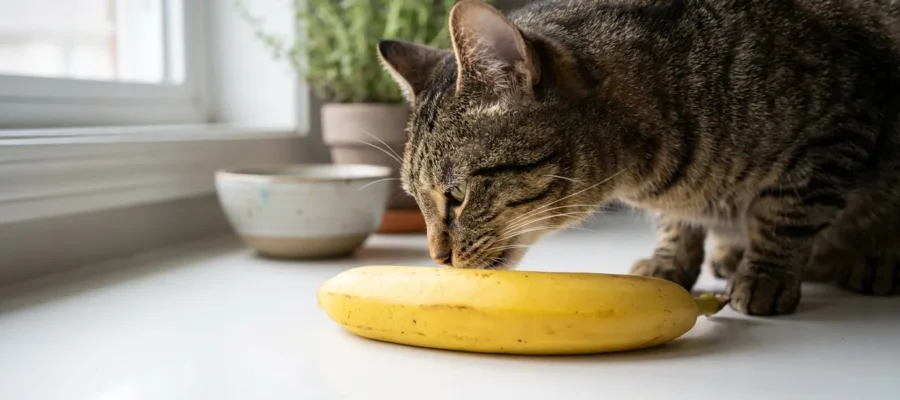
Yes, cats can eat bananas — but only in very small amounts, and there’s no real reason to offer them one. Bananas are not toxic to cats. A thumbnail-sized piece won’t harm a healthy adult cat. Beyond that, the high sugar load, poor carbohydrate tolerance, and near-zero nutritional benefit for felines mean banana doesn’t belong in a regular treat rotation. If your cat is diabetic, overweight, or has kidney disease, skip it entirely.
Why Cats Don’t Need Bananas
What “Obligate Carnivore” Actually Means
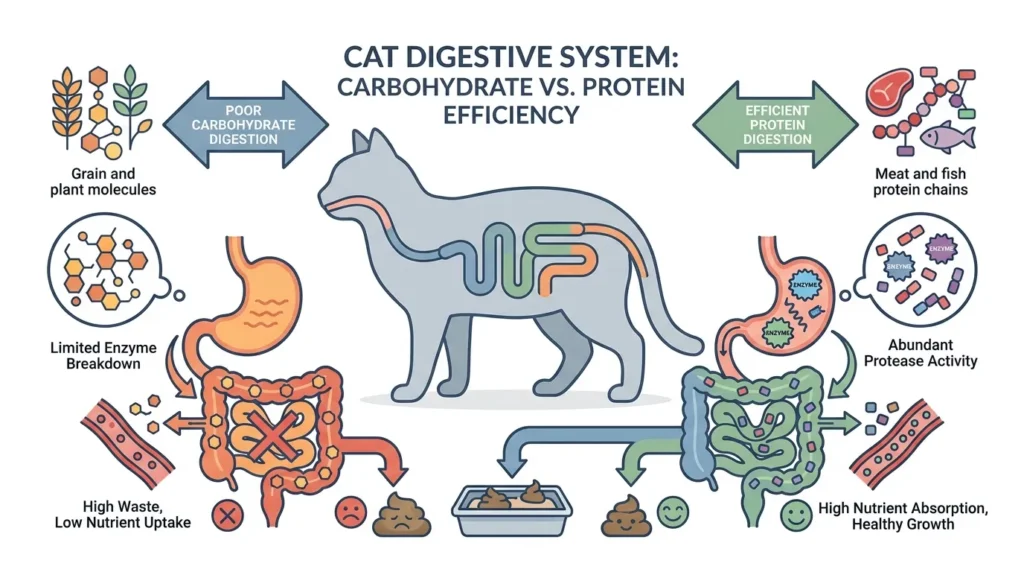
Cats are obligate carnivores. Their entire metabolic system evolved to extract nutrients from animal tissue — not fruit. They require taurine, arachidonic acid, and preformed vitamin A. All three come from meat. None are found in bananas.
Cats also lack several liver enzymes that omnivores use to process plant-based compounds. Their digestive systems are simply not built for carbohydrates, and fruit is almost entirely carbohydrate by caloric composition.
Why Cats Can’t Taste Sweetness
Most people assume cats are drawn to sweet food. They’re not — and the biology explains why. Cats carry a mutation in the TAS1R2 gene, which is one of the two genes that together form the sweet taste receptor. That receptor doesn’t function in cats. They are one of the few mammals physically incapable of tasting sweetness.
If your cat seems interested in your banana, it’s the aroma drawing them in — not sugar. Cats have roughly 200 million odor receptors. The starchy, slightly fatty smell of a ripe banana is the attraction. Curiosity about the smell is not a green light to feed it regularly.
Are Bananas Safe for Cats? The Actual Risks
High Sugar Content and Blood Sugar Impact
A medium banana contains about 14 grams of sugar and 27 grams of total carbohydrates. For a cat with virtually zero dietary carbohydrate requirements, that’s a significant load on their metabolic system. Repeated exposure to high-sugar treats over time can contribute to insulin resistance, weight gain, and feline diabetes mellitus — a condition that now affects approximately 1 in 200 cats, with indoor and overweight cats at highest risk.
If your cat is already diabetic, obese, or pre-diabetic, there is no safe portion size for banana. The answer is just no.
Digestive Upset
Cats digest carbohydrates poorly, and sudden dietary changes are a common cause of gastrointestinal problems. Even a small piece of banana can trigger vomiting, diarrhea, constipation, or stomach discomfort — especially if it’s the cat’s first exposure to fruit. If your cat already has a sensitive stomach, this is a known risk. Why your cat keeps throwing up is often tied to exactly this kind of dietary indiscretion.
Banana Peel — More Dangerous Than the Fruit
The fruit itself is non-toxic. The peel is a different matter. It’s tough, fibrous, and nearly indigestible for cats. A large piece of peel can cause an intestinal blockage — a veterinary emergency. Even a small piece causes significant stomach irritation. Banana peels should be kept well out of your cat’s reach.
Special Risk: Cats With Diabetes, Obesity, or Kidney Disease
The blanket “small amounts are fine for healthy cats” advice doesn’t cover all situations:
- Diabetic cats: The starchy sugar in banana disrupts blood glucose regulation. Avoid completely.
- Obese cats: High-calorie, high-sugar treats worsen the problem. Not worth it.
- Cats with chronic kidney disease (CKD): Bananas are naturally high in potassium. In a healthy cat, that’s harmless. In a cat with kidneys that can’t excrete potassium efficiently, it can lead to hyperkalemia — elevated potassium that affects heart rhythm. If your cat has CKD, banana is off the table entirely.
Do Bananas Actually Benefit Cats?
Bananas contain potassium, vitamin B6, some fiber, and small amounts of magnesium. These are genuinely useful nutrients — for humans.
In cats, the picture is different. Potassium and B6 are already present in sufficient amounts in any quality commercial cat food. The fiber in banana adds bulk, but cats don’t have significant fiber requirements, and excess fiber can cause loose stools in carnivores.
There is no nutritional gap in a cat’s diet that banana fills. The carbohydrate and sugar load outweighs any marginal upside for virtually every cat.
How Much Banana Can a Cat Safely Eat?
The 10% Treat Rule
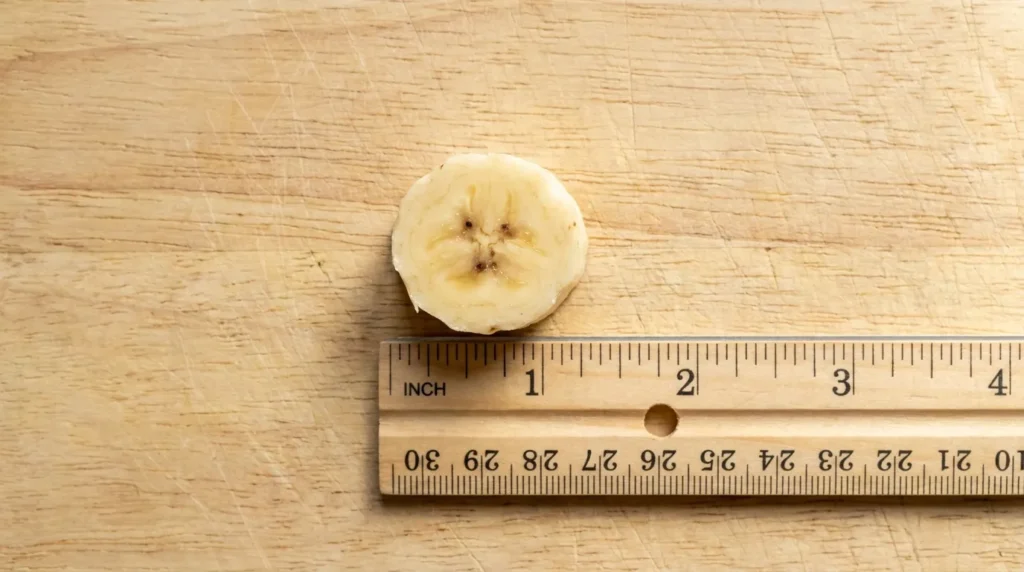
All treats combined should make up no more than 10% of a cat’s daily caloric intake. A typical indoor adult cat needs around 200–250 calories per day. That puts the entire daily treat budget at 20–25 calories. One medium banana contains approximately 110 calories. A 1-inch piece contains roughly 10–12 calories — nearly half of some cats’ entire treat allowance for the day.
To find your cat’s exact daily caloric needs before making treat decisions, use the cat calorie calculator.
Serving Size by Cat Body Weight
| Cat Weight | Maximum Piece Size | Maximum Frequency |
|---|---|---|
| Under 4 kg (9 lb) | ½ inch piece | Once every 2–3 weeks |
| 4–6 kg (9–13 lb) | 1 inch piece | Once every 2 weeks |
| Over 6 kg (13 lb) | 1–1.5 inch piece | Once every 2 weeks (if not overweight) |
These are upper limits, not targets. There is no health reason to feed banana regularly. These numbers just define the outer edge of what’s unlikely to cause harm in a healthy cat.
Forms of Banana That Are Dangerous for Cats
Plain, fresh banana in a tiny portion is the only form that falls anywhere near acceptable. Every other version introduces additional risks:
Banana bread and baked goods: These frequently contain butter, refined sugar, vanilla extract, and sometimes raisins or chocolate chips. Raisins are toxic to cats. Chocolate is toxic. Even raisin-free banana bread has too much fat and sugar to be safe.
Banana chips: Fried in oil, often coated with extra sugar. Not appropriate for cats.
Banana pudding and flavored dairy: Banana pudding typically contains whole milk, heavy cream, added sugar, and artificial flavoring. Most adult cats are lactose intolerant — dairy and cats is a consistently problematic combination — and banana pudding adds a sugar spike on top of the dairy risk.
Frozen banana: Hard frozen chunks are a choking hazard. If you choose to offer banana and want it cold, let it thaw fully and cut into small pieces first.
Banana baby food: Plain banana baby food without added salt, sugar, or preservatives isn’t toxic. But it offers nothing useful to a cat. If you’re using baby food to encourage a sick cat to eat, plain meat-based varieties — chicken or turkey — are far more appropriate than fruit-based options.
How to Feed Banana Safely (If You Choose To)
If your cat is healthy, not overweight, and genuinely curious, here’s how to offer banana without causing harm:
- Remove the peel completely. No peel, no exceptions.
- Cut a small piece — no larger than 1 inch for an average adult cat.
- Offer once and observe for the next few hours.
- Watch for symptoms: loose stools, vomiting, lethargy, reduced appetite.
- Reduce other treats on the same day to stay within daily caloric limits.
- Don’t repeat more than once every two weeks.
If you’re unsure about other foods your cat has access to, the pet food safety checker lets you verify quickly before offering anything new.
Signs Your Cat Ate Too Much Banana
If your cat got into a banana without supervision, watch for these symptoms over the next 12–24 hours:
- Vomiting
- Diarrhea or loose, soft stools
- Constipation
- Lethargy or noticeably reduced activity
- Loss of appetite
- Visible bloating or stomach discomfort
Mild symptoms in an otherwise healthy cat usually resolve within 24 hours. Provide fresh water and no further banana. If your cat is diabetic and ate a significant amount, call your vet immediately — don’t wait for symptoms. For any cat, if symptoms persist beyond 24 hours or seem severe, contact your veterinarian. The pet symptom checker can help you assess whether a vet visit is urgent.
Better Treat Alternatives to Banana
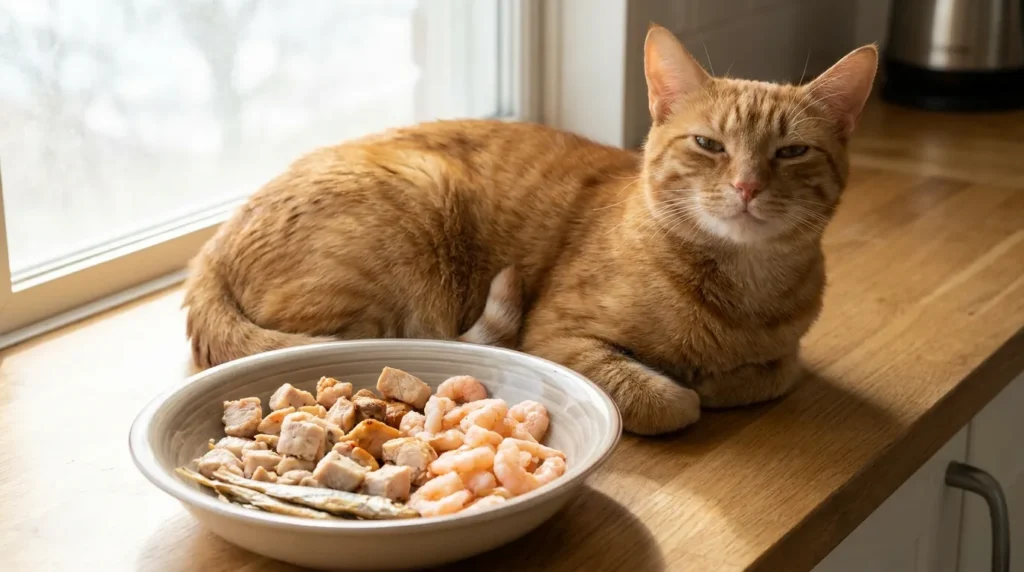
Banana provides nothing a cat actually needs. These options do:
- Freeze-dried chicken or turkey: Single-ingredient, high protein, zero sugar — the cleanest treat option available
- Plain cooked shrimp: Cats love it; can cats eat shrimp covers how to prepare it safely
- Plain cooked chicken: The gold standard feline treat; can cats eat chicken has preparation guidelines
- Blueberries: Lower in sugar than banana and carry some antioxidant value; can cats eat blueberries covers safe portions
- Pumpkin: Supports digestion, very low sugar; can cats eat pumpkin walks through amounts and prep
For a broader look at which fruits are and aren’t safe, what fruits can cats eat covers the full picture in one place.
Fruits That Are Toxic to Cats — Not the Same Category as Banana
Banana earns a “safe in tiny amounts” classification. These fruits do not:
Grapes and raisins: Can trigger acute kidney failure in cats. Even a small amount has caused serious harm. Before leaving grapes on the counter, read about cats and grapes — the risk is not trivial.
Citrus fruits: The essential oils and psoralen compounds found in orange and lemon peel are toxic to cats. The flesh is less concentrated but can still cause digestive irritation. Cats and oranges covers the specific risks.
Cherries: The pits, stems, and leaves contain cyanide compounds. The flesh alone isn’t clearly safe either. Avoid entirely.
Avocado: Contains persin, which causes vomiting and diarrhea in cats.
Knowing the difference between “not ideal” (banana) and “genuinely dangerous” (grapes, citrus peel) matters when your cat is exploring the fruit bowl.
Frequently Asked Questions
Can kittens eat bananas? No. Kittens under 12 months should eat only complete kitten food formulated for their developmental stage. Their digestive systems are even less equipped to handle fruit sugars than adult cats. Introducing human food before they’re fully grown adds risk with no benefit.
Why does my cat seem interested in bananas if they can’t taste sweetness? It’s the smell. Cats have around 200 million olfactory receptors — roughly 40 times more than humans. The starchy, slightly fatty aroma of a ripe banana is what catches their attention. It’s not a craving for sugar; it’s curiosity about a novel scent.
Can cats eat banana peels? No. Peels are not toxic, but they are very difficult to digest and can cause intestinal blockage if swallowed in a large piece. Keep peels in the bin and away from curious cats.
Can cats eat banana bread? No. Banana bread commonly contains raisins, chocolate chips, butter, and refined sugar — multiple ingredients that range from harmful to directly toxic for cats.
Can cats eat dried or frozen bananas? Dried banana has a significantly higher sugar concentration than fresh and usually contains preservatives. Avoid it. Frozen banana is only safe if fully thawed and cut into very small pieces first to prevent choking.
Can cats eat banana baby food? Plain banana baby food with no added salt, sugar, or preservatives is not toxic, but it’s not useful for cats either. If your cat is unwell and refusing food, meat-based baby food — plain chicken or turkey with no additives — is a much better choice.
Conclusion
Bananas aren’t going to send your cat to the emergency vet. But they’re not doing them any good either. Cats are built for meat — not fruit — and the high sugar content, carbohydrate load, and specific risks for cats with diabetes, obesity, or kidney disease mean banana has no real place in a cat’s regular treat rotation. If your healthy cat takes a curious nibble, there’s nothing to panic about. Just keep the piece tiny, keep it rare, and spend your treat budget on high-protein options that actually support the biology of an obligate carnivore.