
Quick Answer
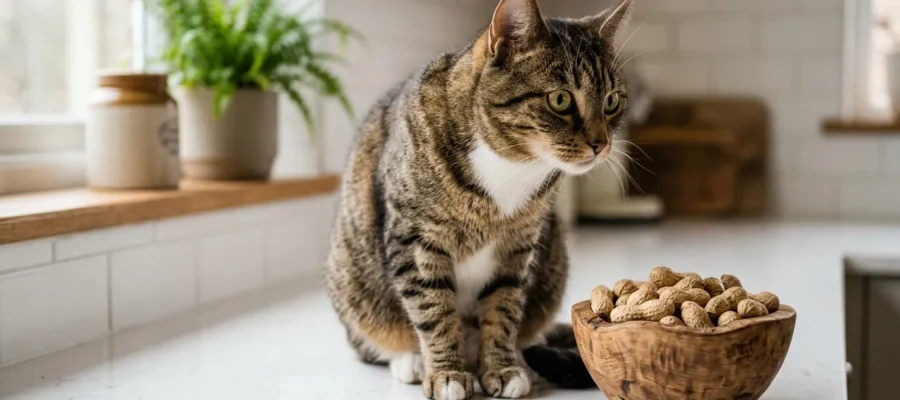
Cats can eat plain, unsalted, shelled peanuts in very small amounts — but they shouldn’t. Peanuts are not toxic to cats, but they carry real health risks. High fat content, choking hazards, allergy risk, and the near-constant presence of salt or additives make them a poor snack choice for any cat. If your cat grabbed one off the floor, don’t panic. If you’re thinking about making it a habit, don’t.
Not sure if something your cat ate is safe? Use our Pet Food Safety Checker for a fast, reliable answer before calling your vet.
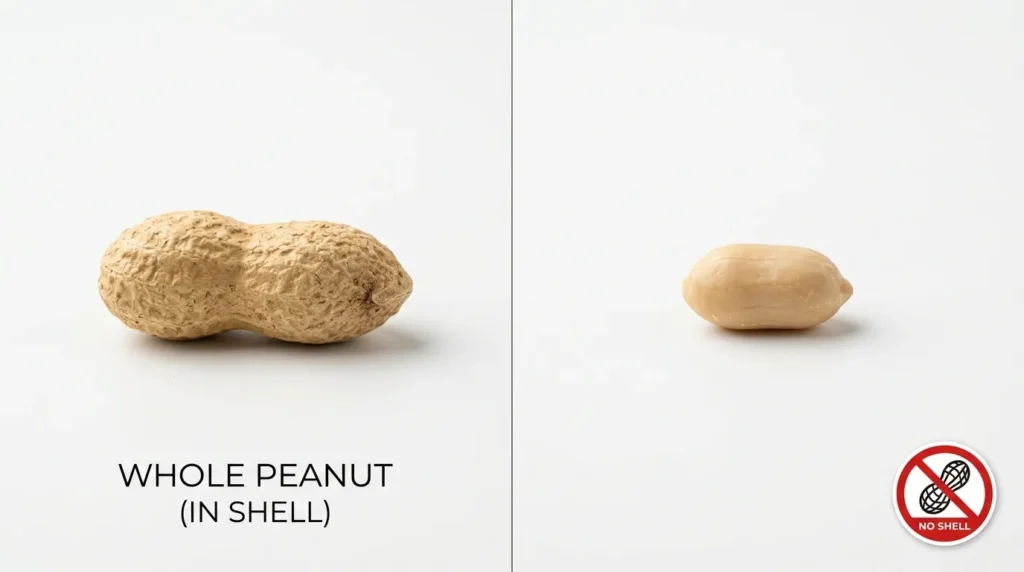
Are Peanuts Toxic to Cats?
No. Peanuts are not on the ASPCA’s toxic plant list for cats. Plain peanuts will not poison your cat the way onions, grapes, or xylitol can.
But “not toxic” and “safe to eat regularly” are two different things. The dangers of peanuts are slower and subtler — obesity, digestive problems, and accidental salt exposure. A single peanut on a Tuesday won’t send your cat to the emergency vet. A handful of salted peanuts every week very well might, over time.
The verdict: non-toxic but not recommended.
What’s Actually in a Peanut
Peanuts are legumes, not true nuts. They grow underground and belong to the same plant family as lentils and chickpeas. That matters because their nutritional profile is nothing like what cats need.
Here’s what 100g of raw peanuts contains:
| Nutrient | Per 100g |
|---|---|
| Calories | 567 kcal |
| Fat | 49g |
| Protein | 26g |
| Carbohydrates | 16g |
| Fiber | 9g |
| Sodium (salted varieties) | 320–640mg |
An average adult cat weighing 10 lbs needs around 200–250 calories per day. To understand how this fits into your cat’s full feeding routine, see our guide on how much wet food to feed your cat. One hundred grams of peanuts is already more than twice the daily calorie ceiling. Even a small handful — say 20g — is 113 calories, roughly half a cat’s entire daily intake.
The protein looks impressive at first glance. But cats are obligate carnivores. Their digestive systems are built around animal protein. Plant protein from peanuts contains different amino acid ratios, and cats cannot efficiently convert or absorb it the same way. The protein number on a peanut bag is largely meaningless for feline nutrition.
The fat? That’s the real problem. 49g per 100g is extremely high. Cats process dietary fat, but they process it slowly, and too much over time causes weight gain, fatty liver disease, and pancreatitis.
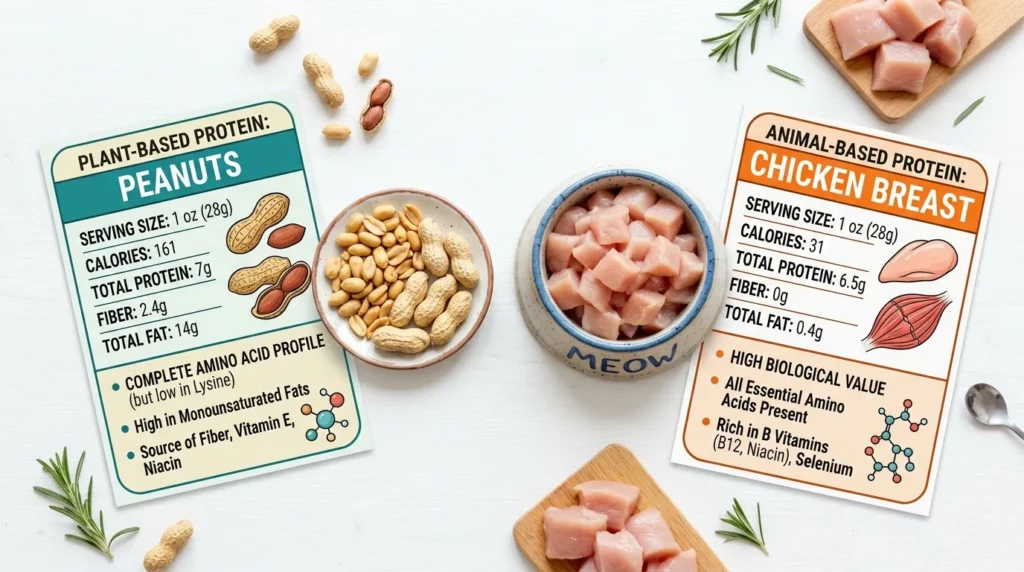
5 Real Risks of Feeding Peanuts to Cats
1. Obesity and Weight Gain
This is the primary long-term danger. A small, sedentary indoor cat doesn’t burn many calories. Even one or two peanuts added to a daily routine adds up quickly. Feline obesity leads directly to joint stress, diabetes, and shortened lifespan. According to the Association for Pet Obesity Prevention, over 60% of cats in the U.S. are already overweight. Peanuts aren’t helping.
2. Gastrointestinal Distress
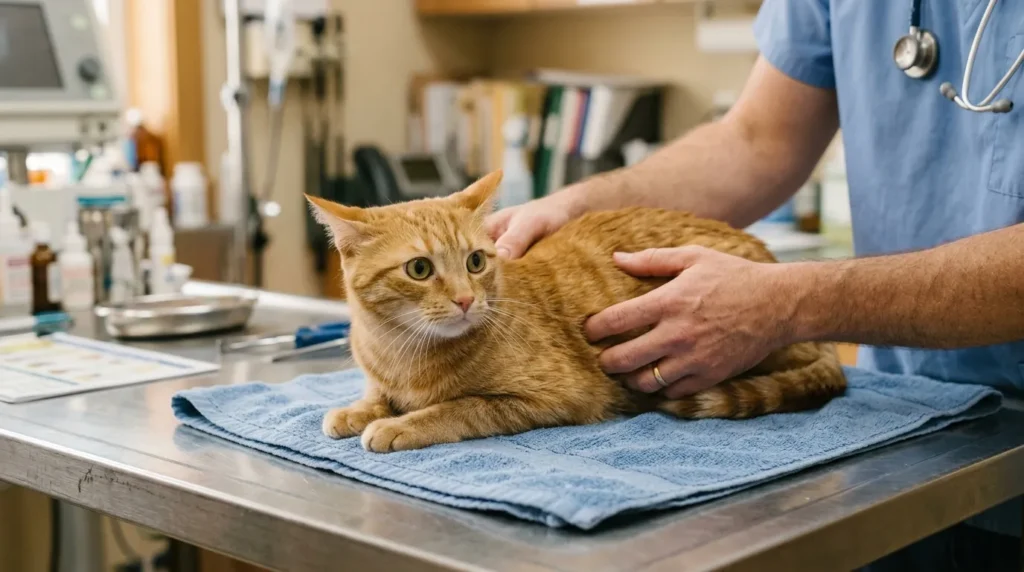
The high fat content in peanuts is hard on a cat’s digestive system. Many cats experience loose stool, diarrhea, or vomiting after eating peanuts — especially in larger amounts. If your cat regularly vomits after eating new foods, our guide on why your cat keeps throwing up explains what to look for and when to act. Diarrhea also leads to dehydration, which is a genuine risk for cats since they already tend to drink less water than they should.
Signs of GI upset: vomiting within 2–6 hours, loose stool, lethargy, loss of appetite.
3. Salt Poisoning (Hypernatremia)
This is where peanuts get actively dangerous. Most peanuts people snack on are salted. Cats are tiny — their tolerance for sodium is far lower than ours. Even a moderate dose of salt can cause hypernatremia, a condition where excess sodium disrupts the body’s electrolyte balance.
Symptoms of salt poisoning in cats include:
- Excessive thirst and urination
- Vomiting and diarrhea
- Muscle tremors
- Lethargy and confusion
- Seizures (in severe cases)
Severe hypernatremia can cause kidney damage, coma, or death. Never give salted peanuts to a cat. Not even “just a few.”
4. Choking and Intestinal Obstruction
Peanuts still in their shells are a choking hazard. The shell is rough, rigid, and not something a cat’s digestive system can break down. Even shelled peanuts can get lodged in the throat or cause intestinal blockage if swallowed without proper chewing.
Cats don’t chew the way dogs do. They tend to gulp food. A peanut that goes down whole poses a real risk.
If you ever do give a peanut, crush it or cut it into small pieces first.
5. Allergic Reactions
Cats can be allergic to peanuts. Food allergies in cats are underdiagnosed but documented. An allergic reaction can range from mild skin irritation to a severe anaphylactic episode.
Signs of an allergic reaction:
- Facial swelling or puffiness around the eyes
- Sneezing or wheezing
- Vomiting
- Intense scratching
- Difficulty breathing
If you notice any of these after your cat eats a peanut, call your vet. Difficulty breathing is an emergency — act immediately.
Can Cats Eat Peanut Butter?
No. And this one matters more than the peanut question.
We’ve covered this in full detail in our dedicated guide on can cats eat peanut butter — but here’s the core of it.
The biggest danger is xylitol, an artificial sweetener found in many reduced-sugar and “natural” peanut butter brands. Xylitol is well-documented as toxic to dogs, and while fewer studies have been published on cats specifically, veterinarians treat it as dangerous for both species. In dogs, even small amounts cause a rapid insulin release leading to hypoglycemia, liver failure, and death. The same mechanism applies to cats.
Even xylitol-free peanut butter is a problem. It’s high in fat, high in sugar, often salted, and usually contains added oils. The sticky texture also poses a choking risk and can stick to the roof of a cat’s mouth.
Always check the ingredients label. If peanut butter contains xylitol, it is off-limits entirely. If it doesn’t, it’s still not a good idea.
Curious whether dogs have the same problem with peanuts? See our full breakdown: can dogs eat peanuts.
What About Roasted, Salted, or Flavored Peanuts?
(See the safety comparison table above for a quick-reference visual.)
Raw, unsalted peanuts: Lowest risk. Still not recommended as a regular snack due to fat content. If your cat wants one, this is the least-bad option.
Dry roasted, unsalted: Acceptable on rare occasions. Slightly different fat profile but the core risks remain.
Salted peanuts: Avoid. Sodium toxicity risk applies even at small amounts for cats.
Flavored or spiced peanuts: Hard no. Chili, garlic, onion powder, BBQ seasonings — many of these ingredients are directly toxic to cats. Onion and garlic cause hemolytic anemia.
Peanut butter with xylitol: Potentially fatal. Never give this to a cat.
Can Kittens Eat Peanuts?
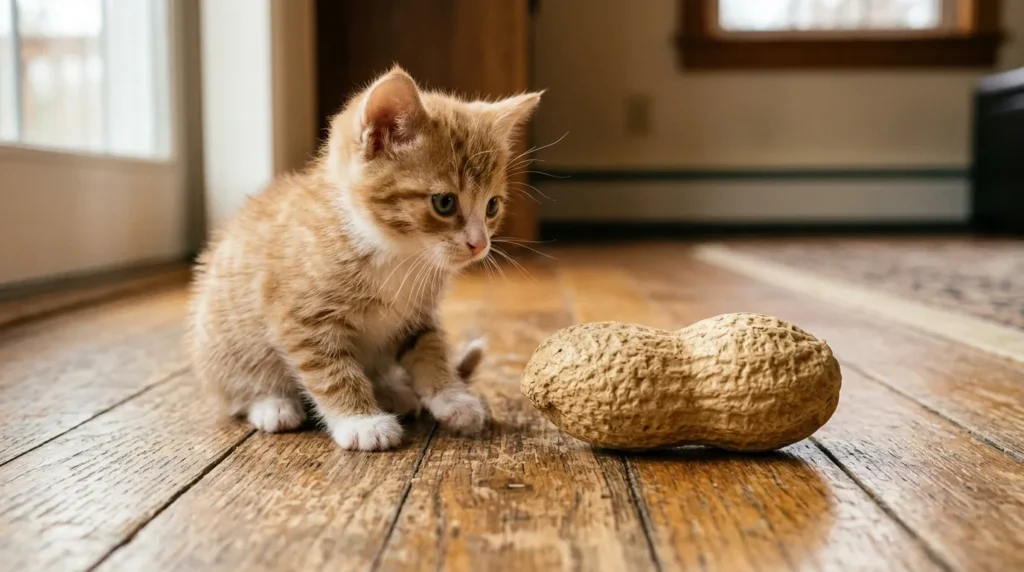
No. Kittens are more vulnerable than adult cats on every axis here.
Their digestive systems are still developing. Their kidneys are smaller and handle sodium even less efficiently. Their caloric needs per pound of body weight are higher, so displacing nutrition with empty-calorie fat is particularly wasteful during a growth phase.
A kitten’s diet should be almost entirely high-quality animal-based protein — ideally formulated kitten food. There’s no safe or sensible reason to introduce peanuts at this stage. Even the mild risks that apply to adult cats are amplified in young kittens.
If You Do Give Peanuts — Safe Serving Rules
If your cat is healthy, curious, and staring at your peanuts, here’s how to keep it safe:
- Use only raw or dry-roasted, unsalted peanuts. No salt. No seasoning. Check the label.
- Remove the shell completely. Never give a peanut in its shell.
- Crush or cut the peanut into small pieces to reduce choking risk.
- Limit to 1–2 small pieces, no more than once per week. Treats should not exceed 10% of daily caloric intake. For a 10-lb cat eating 250 calories per day, that’s 25 calories — about half a whole peanut.
- Watch for 24 hours. Check for vomiting, diarrhea, swelling, or unusual behavior.
- If your cat shows any adverse reaction, stop immediately and call your vet.
Still unsure what other human foods are safe for your cat? Browse our full guide on what fruits cats can eat for a wider picture of feline-safe and feline-dangerous foods.
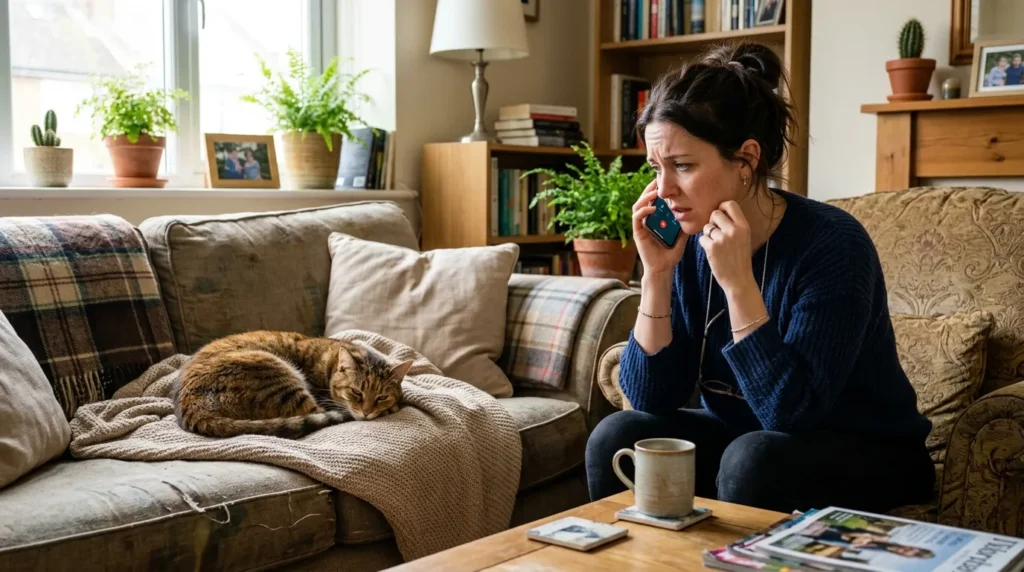
My Cat Ate a Lot of Peanuts — What Now?
Stay calm. Your immediate response depends on what type of peanut and how many.
If the peanuts were plain and unsalted: Monitor your cat for the next 12–24 hours. Watch for vomiting, diarrhea, or lethargy. Most cats will be fine but may have an upset stomach. Make sure fresh water is available.
If the peanuts were salted: This is more serious. Signs of sodium toxicity can appear within 30 minutes to a few hours. If your cat ate more than a few, call your vet now — don’t wait for symptoms.
If the peanut butter contained xylitol: This is an emergency. Call your vet or the ASPCA Animal Poison Control Center at (888) 426-4435 immediately. Do not wait. Xylitol toxicity moves fast.
Use our Pet Symptom Checker if you’re unsure whether what you’re seeing warrants an immediate vet call or careful monitoring at home.
Symptom checklist — call your vet if you see:
- [ ] Repeated vomiting (more than once)
- [ ] Diarrhea lasting more than a few hours
- [ ] Excessive thirst or urination
- [ ] Swollen face or hives
- [ ] Muscle tremors or seizures
- [ ] Difficulty breathing
- [ ] Sudden lethargy or unresponsiveness
Better Treat Alternatives for Cats
If you want to give your cat a real treat, these options are safer and actually nutritionally relevant:
- Plain cooked chicken — high in animal protein, low fat, no additives
- Plain cooked turkey — same benefits, easy to prepare at home
- Plain canned tuna in water — occasional treat; don’t overdo it due to mercury
- Blueberries — low-calorie, antioxidant-rich, safe in small amounts
- Cat-friendly yogurt — plain, unsweetened only; good for gut health in tiny amounts
- Commercial cat treats — look for single-protein options without artificial additives
For more inspiration, check out our 5 high-protein cat recipes for active cats — all vet-aligned and built around what cats actually need.
These aren’t just “safer than peanuts” — they’re foods that actually align with what a cat’s body is designed to use.
Final Verdict
Peanuts are not toxic to cats, but they’re not a good snack. The fat content is too high, the protein is nutritionally useless for obligate carnivores, the salt risk is real, and there are better alternatives for every occasion. If your cat steals a single plain peanut, it’s not an emergency. If you’re deliberately feeding peanuts regularly, it’s time to stop.
The safest approach: keep peanuts and peanut butter out of reach. If your cat is curious about your snacks, redirect them with a small piece of cooked chicken instead. Same protein satisfaction — none of the risk.
Want to explore what other common foods are safe or dangerous for your cat? Our Pet Food Safety Checker gives you instant answers for hundreds of ingredients.
Frequently Asked Questions
Can cats eat peanut shells? No. Peanut shells are a choking hazard and can cause intestinal blockage. Always remove the shell before even considering giving your cat a peanut.
Are peanuts a choking hazard for cats? Yes. Whole peanuts, especially if swallowed without chewing, can lodge in the throat or digestive tract. Always crush or cut them into small pieces.
Can cats be allergic to peanuts? Yes. Cats can develop food allergies to peanuts. Signs include facial swelling, vomiting, sneezing, or difficulty breathing. If you see these after your cat eats peanuts, contact your vet immediately.
What happens if a cat eats salted peanuts? Salted peanuts can cause hypernatremia (sodium poisoning) in cats. Symptoms include excessive thirst, vomiting, tremors, and in severe cases, seizures or kidney damage. If your cat ate a significant quantity of salted peanuts, call your vet.
Is peanut butter safe for cats? Generally no. Many peanut butter brands contain xylitol, which is potentially fatal for cats. Even xylitol-free versions are high in fat, sugar, and salt. Read our full guide on can cats eat peanut butter for a complete breakdown.
Can cats eat cheese or other dairy-based snacks instead? Cheese is another common snack cats beg for. We break it all down in our guide on can cats eat cheese — the short answer is that most cats are lactose intolerant and it’s better to avoid it.