


Yes, dogs can eat blackberries. They’re non-toxic, low in calories, and packed with nutrients that actually benefit your dog’s health. That said, there are a few things worth knowing before you toss one to your dog — including serving size, preparation, and one ingredient that comes up in almost every article on this topic.
Here’s everything you need to know.
Are Blackberries Good for Dogs?
Blackberries are genuinely nutritious. They’re not just a safe snack — they offer real health value when fed in the right amount.
One cup of raw blackberries contains about 62 calories, 7.6 grams of fiber, and 14 grams of carbohydrates, with very little fat. For a dog treat, that’s a solid nutritional profile.
If you’re already thinking about which fruits are worth adding to your dog’s diet, our full guide on what fruits can dogs eat covers the complete picture — safe picks, portions, and ones to avoid entirely.
Here’s what your dog gets from blackberries:
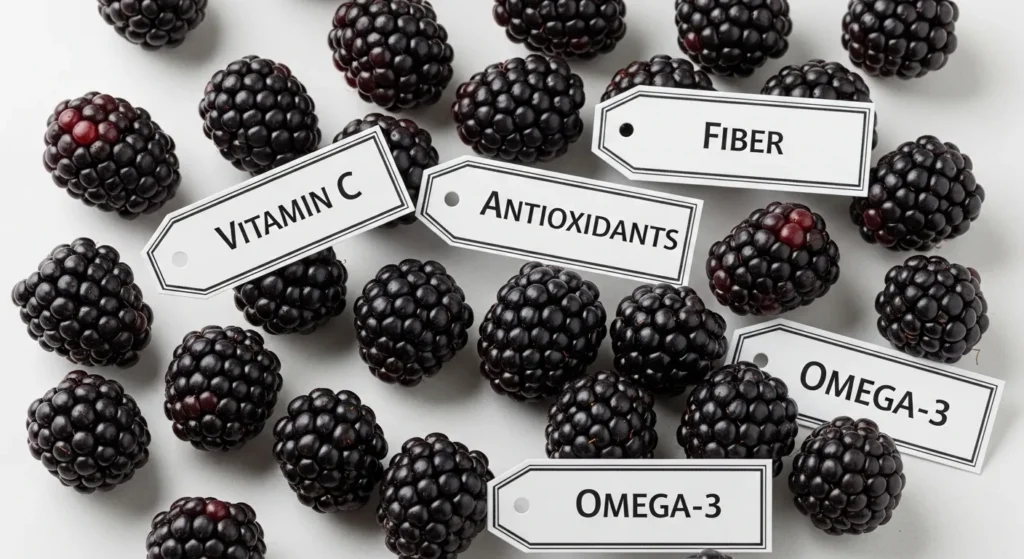
Vitamins A, B, C, E, and K. This covers a lot of ground — immune support, skin health, muscle development, bone strength, and cognitive function. Vitamin C in particular is a natural antioxidant that helps reduce cellular damage over time.
Anthocyanins. These are the pigments that make blackberries dark purple. They’re a class of polyphenols with strong antioxidant activity. Research in both humans and animals links anthocyanins to reduced inflammation, better brain function, and lower risk of certain cancers.
Omega-3 fatty acids. Not in huge amounts, but enough to support a healthy coat and help manage inflammation — especially useful for older dogs or dogs with joint issues.
Fiber. Blackberries are high in fiber relative to their size. This supports healthy digestion and can help dogs with occasional constipation. It also slows sugar absorption, which matters for dogs watching their weight.
Low calorie density. One blackberry has roughly 1–2 calories. That makes them one of the better treat options if your dog is on a weight management plan.
Are Blackberries Safe for Dogs? Risks to Know
Blackberries are safe for most dogs. But like any food, they come with a few caveats.
Too many cause stomach trouble. The high fiber content that makes blackberries healthy can also cause gas, loose stools, or vomiting if your dog eats a large quantity at once. Start with a small amount and watch how your dog responds over the next few hours. If vomiting becomes a concern, our guide on why your dog is vomiting — causes and solutions can help you figure out next steps.
Sugar content adds up. Blackberries are lower in sugar than most fruits, but they’re not sugar-free. Dogs with diabetes or obesity should only get blackberries occasionally and in small amounts. Always check with your vet if your dog has a metabolic condition.
Allergic reactions are rare but possible. Some dogs react to new foods. Signs include itching, hives, swelling around the face, or gastrointestinal distress. If you notice unusual symptoms after feeding a new food, our pet symptom checker can help you assess what’s going on before calling your vet.
Watch for these symptoms and call your vet if they appear:
- Repeated vomiting
- Diarrhea that doesn’t resolve within a few hours
- Weakness or loss of coordination
- Excessive drooling
- Swelling of the face or muzzle
- Seizures
If your dog is prone to digestive upset, it’s also worth knowing how to help a constipated dog poop fast — high-fiber foods like blackberries can sometimes tip the balance in sensitive dogs.
The Xylitol Question — Addressed Directly
Almost every article about blackberries and dogs mentions xylitol, and it creates confusion. Here’s the clear version.
Blackberries do contain naturally occurring xylitol — but in trace amounts that are not dangerous at normal serving sizes.
Xylitol is toxic to dogs because it triggers a rapid insulin release, which can cause severe hypoglycemia. In manufactured products like sugar-free gum or peanut butter, xylitol is added in concentrations high enough to be lethal even in small doses. This is exactly why checking labels matters — our guide on whether peanut butter is good for dogs goes into detail on this exact issue, including which brands to avoid.
In blackberries, xylitol occurs naturally at extremely low levels — similar to other fruits and vegetables. Your dog would need to eat an unrealistically large quantity of blackberries for the naturally occurring xylitol to reach a harmful dose.
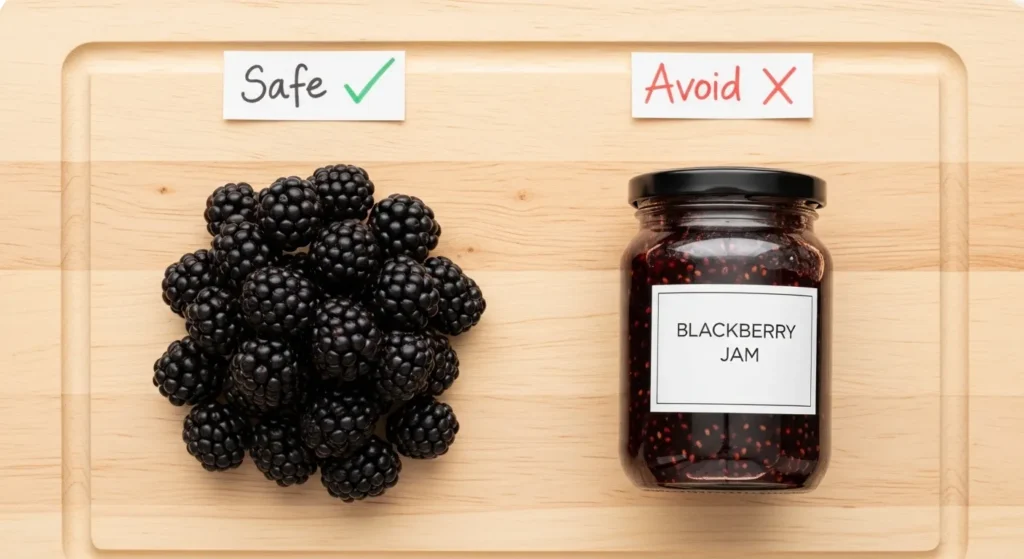
The real concern is added xylitol. Never feed your dog blackberry-flavored products, jams, jellies, yogurts, or baked goods unless you’ve confirmed they contain no added xylitol or artificial sweeteners. Always read the label.
How Many Blackberries Can a Dog Eat?
The general rule for all treats is the 10% rule — treats should make up no more than 10% of your dog’s total daily calorie intake. Blackberries are low enough in calories that this gives most dogs a reasonable serving.
Here’s a practical size-based guide:
| Dog Size | Weight Range | Suggested Serving |
|---|---|---|
| Extra Small | Under 10 lbs | 1–2 blackberries |
| Small | 10–25 lbs | 2–3 blackberries |
| Medium | 25–60 lbs | 3–5 blackberries |
| Large | 60–100 lbs | 5–8 blackberries |
| Extra Large | Over 100 lbs | Up to 10 blackberries |
These are starting points, not hard limits. If your dog has no reaction and no underlying health issues, you can adjust slightly. Not sure how old your dog is in relation to their dietary needs? Our pet age calculator converts your dog’s age to a human equivalent — useful context when thinking about nutritional needs across life stages.
How to Serve Blackberries to Dogs
Preparation is simple. A few things to keep in mind:
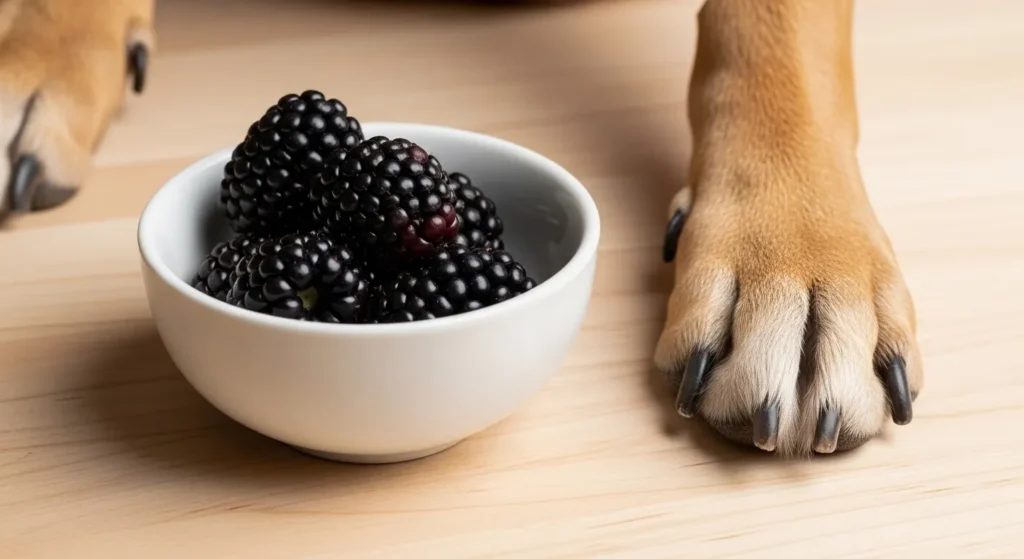
Wash them first. Whether store-bought or backyard-grown, blackberries should be rinsed under cold water. This removes dirt, pesticide residue, and any surface bacteria.
Serve fresh when possible. Fresh blackberries are the best option. They haven’t been processed, and there’s nothing added.
Avoid store-bought frozen blackberries unless the label confirms no added sugar or sweeteners. Many commercial frozen fruit products contain added sugar or syrups. Plain frozen blackberries with no additives are fine — and some dogs actually enjoy the cold texture.
Skip the processed forms. Blackberry jam, jelly, juice, syrup, and flavored treats often contain high amounts of added sugar, artificial flavors, or xylitol. None of these are appropriate for dogs. This same rule applies across the board — yogurt is another common one where labels get overlooked. Our guide on whether dogs can eat yogurt breaks down which types are safe and which to skip.
Size matters for small dogs. For toy breeds or puppies, cut blackberries in half or quarters to reduce choking risk and make them easier to eat.
You can also mash blackberries and mix them into your dog’s food as a topper, freeze them in ice cubes for a summer treat, or blend them with other dog-safe fruits like blueberries or banana. If you want to expand beyond fruit, check out what vegetables can dogs eat for more safe, whole-food snack options.
Can Puppies Eat Blackberries?
Yes, but with more caution than adult dogs.
Puppies have sensitive digestive systems that are still developing. A food that a healthy adult dog handles fine can cause stomach upset in a young puppy. If you want to give your puppy a blackberry, start with half of one and wait 24 hours to see how they respond.
Also consider your puppy’s size. An 8-week-old Chihuahua puppy weighs less than 2 pounds — a whole blackberry is a significant portion of food for that animal. Cut it into small pieces.
Puppies under 8 weeks old should be on mother’s milk or puppy formula only. Once they’re fully weaned and eating solid puppy food, introducing small amounts of safe fruits is fine as occasional treats. Curious about when your puppy will stop growing and what that means for their diet? Our guide on when dogs stop growing has that covered by breed size.
One more thing: puppies don’t need the extra nutrition from fruit the way senior dogs might. Their puppy food is formulated to meet all their needs. Blackberries are fine as a treat — just don’t let them become a habit at the expense of balanced nutrition.

Can Dogs Eat Other Berries?
Blackberries are safe, but not all berries are. If your dog is foraging in the yard or you’re considering other berry options, here’s a quick reference:
| Berry | Safe for Dogs? | Notes |
|---|---|---|
| Blackberries | ✅ Yes | Safe in moderation |
| Blueberries | ✅ Yes | Great antioxidant source |
| Strawberries | ✅ Yes | Higher in sugar, feed sparingly |
| Raspberries | ✅ Yes | Higher natural xylitol than blackberries — limit to a few |
| Cranberries | ⚠️ Limited | Plain only, tart, may cause stomach upset |
| Gooseberries | ⚠️ Caution | Can cause digestive upset |
| Holly berries | ❌ Toxic | Vomiting, diarrhea, lethargy |
| Mistletoe berries | ❌ Toxic | Cardiovascular and neurological effects |
| Baneberries | ❌ Toxic | Highly toxic — can be fatal |
| Juniper berries | ❌ Toxic | Kidney damage risk |
If your dog also enjoys cherries, that’s a separate conversation — pits, stems, and leaves make them tricky. Our dedicated guide on can dogs eat cherries walks through exactly what’s safe and what isn’t. Similarly, if you’re wondering about other fruits like can dogs eat oranges or can dogs eat watermelon, we’ve covered those in detail too.
Wild berries are a particular concern. If you’re walking in a wooded area and your dog picks something off a bush, identify it before assuming it’s safe. When in doubt, contact the ASPCA Animal Poison Control Center at (888) 426-4435. You can also run symptoms through our pet symptom checker as a first step.
Frequently Asked Questions
Can dogs eat wild blackberries? Yes, as long as you’re confident they are actually blackberries and haven’t been sprayed with pesticides or herbicides. There are no known plants that are dangerous lookalikes to blackberries, but some wild berries do grow in similar environments. If you’re unsure what your dog ate, call your vet.
Can dogs eat blackberry jam or jelly? No. These products are high in added sugar and often contain artificial sweeteners or xylitol. Even “natural” jams have significantly more sugar per serving than fresh fruit. Stick to fresh or plain frozen blackberries only.
Are blackberries poisonous to dogs? No. Blackberries are not on the ASPCA toxic plant list for dogs. They are safe in normal quantities. If you ever need to quickly check whether a food is safe, our pet food safety checker is a fast way to get an answer.
Can dogs eat frozen blackberries? Plain frozen blackberries with no added sugar, syrup, or sweeteners are fine. Check the ingredient label — the only ingredient should be blackberries.
My dog ate a whole bowl of blackberries. What should I do? Don’t panic. Blackberries aren’t toxic, so a large amount is unlikely to be dangerous. Your dog may experience temporary digestive upset — loose stools, gas, or mild vomiting. Monitor them for several hours. If symptoms are severe or don’t resolve within 12–24 hours, contact your vet. You can also check why your dog has diarrhea if that’s the symptom showing up.
Vet Takeaway — The Bottom Line
Blackberries are a safe, nutritious treat for most dogs. They’re low in calories, high in antioxidants, and a good source of fiber and vitamins. The naturally occurring xylitol in blackberries is not a concern at normal serving sizes.
Feed them fresh, washed, and in amounts appropriate for your dog’s size. Avoid processed blackberry products. Watch for any signs of digestive upset the first time you introduce them.
If your dog has diabetes, obesity, or a known digestive condition, check with your vet before adding any new food to their diet — blackberries included.
For healthy dogs, though? A few blackberries as an occasional treat is perfectly fine. If you want to keep building a safe, balanced snack rotation for your dog, start with our full breakdown of what fruits dogs can eat and what vegetables are safe for dogs — both are solid next reads.