
Dogs can eat plain, fully cooked bread in small amounts — but it offers zero nutritional benefit and several bread types are genuinely dangerous. Here’s everything you need to know before sharing that slice with your dog.
Can Dogs Eat Bread?
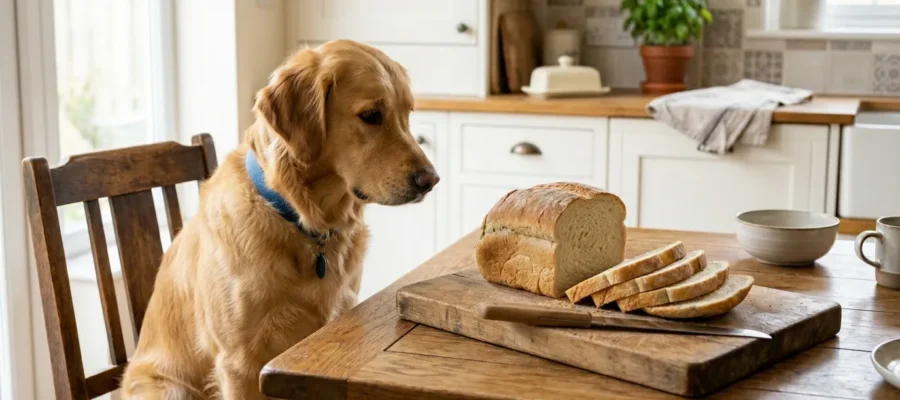
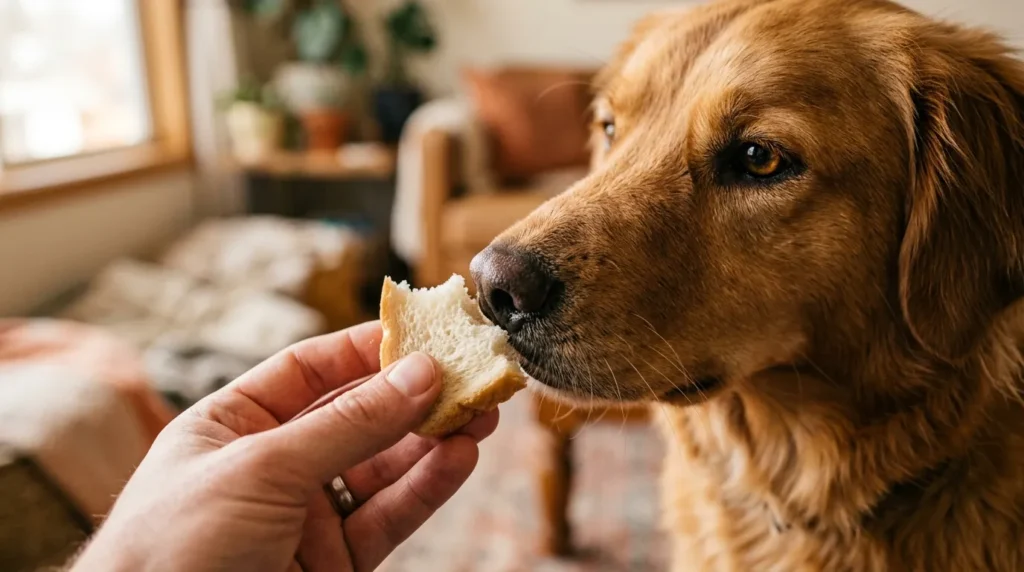
Yes — with conditions. Plain white or wheat bread that’s fully baked and free of additives is not toxic to dogs. A small piece won’t hurt a healthy adult dog. But “not toxic” and “good for your dog” are two very different things.
Bread is pure carbohydrates. It has no protein, no vitamins, and no minerals that dogs actually need. It adds calories without adding value. And some breads — depending on what’s in them — can send your dog to the emergency vet.
The short version: plain bread in tiny amounts is fine occasionally. Most bread is not worth feeding. Some bread is outright dangerous.
Not sure what your dog can and can’t eat in general? The Pet Food Safety Checker at Petfel lets you look up any ingredient fast before you share it with your pet.
Is Bread Actually Good for Dogs?
No. Bread brings nothing useful to a dog’s diet.
A single slice of standard white bread contains roughly 70–80 calories and around 13–15 grams of carbohydrates. For a 20-pound dog, that one slice represents close to 10% of their entire daily calorie allowance. For a smaller dog, it’s even more significant.
Veterinary nutrition guidelines recommend that treats — anything outside your dog’s regular balanced diet — make up no more than 10% of daily calories. One slice of bread already hits that ceiling. And most people don’t stop at one small piece.
Feed bread regularly and the consequences add up fast. Excess carbohydrates contribute directly to weight gain in dogs. Obesity in dogs raises the risk of joint problems, diabetes, pancreatitis, and a shortened lifespan. None of that is worth a bite of toast.
Your dog gets all the nutrition they need from quality dog food. Bread adds nothing on top of that — just calories they don’t need. If you’re rethinking your dog’s overall diet, it’s also worth checking what vegetables dogs can safely eat for low-calorie snack alternatives that actually offer some nutritional value.
Dangerous Ingredients in Bread
Plain bread is the baseline for “safe.” The moment you add ingredients, the risk profile changes fast. These are the ones that matter most.
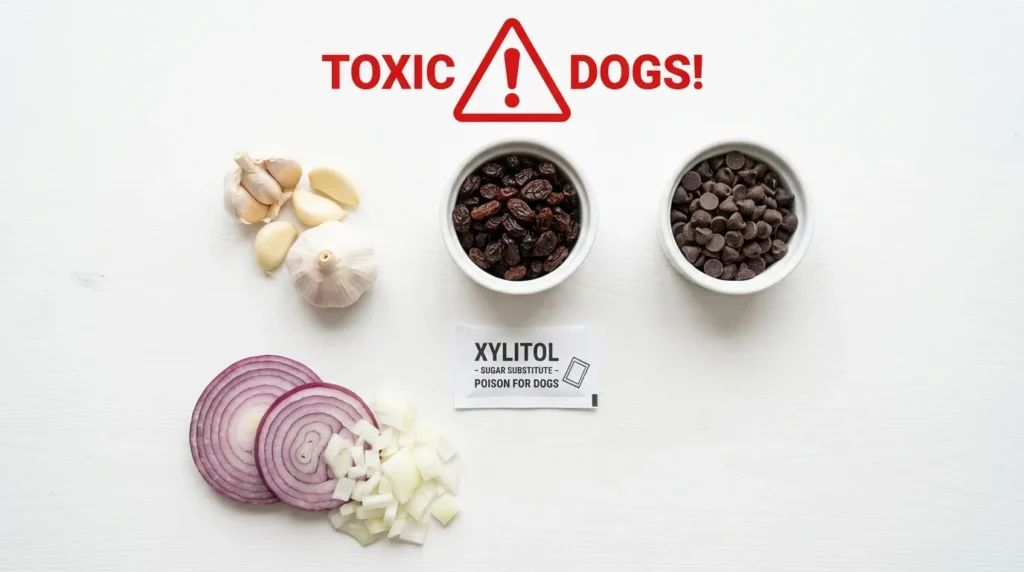
Xylitol is the most dangerous. It’s an artificial sweetener found in some low-sugar or “diet” breads, flavored breads, and baked goods. Even a small amount can cause a rapid drop in blood sugar and lead to liver failure in dogs. Check labels carefully. If xylitol is listed anywhere, keep that bread completely away from your dog.
Garlic and onion are toxic at any quantity fed regularly. Both belong to the allium family and damage red blood cells in dogs, leading to hemolytic anemia. Garlic is significantly more concentrated than onion by weight — a small amount of garlic bread can cause real harm, especially in smaller dogs.
Raisins are one of the more unpredictable toxins in veterinary medicine. Some dogs eat a raisin and show no symptoms. Others develop acute kidney failure from a tiny amount. The mechanism isn’t fully understood, which makes raisins more dangerous, not less. Any bread containing raisins is off-limits entirely.
Chocolate chips add theobromine — a compound dogs metabolize far more slowly than humans. Dark chocolate is the most dangerous, but any chocolate in bread is a problem.
Macadamia nuts cause weakness, vomiting, tremors, and fever. Nutmeg, common in pumpkin bread and gingerbread, contains myristicin, which can cause disorientation, elevated heart rate, and seizures in larger amounts.
Not toxic, but still worth avoiding in quantity: butter, salt, and sugar. None of these will poison your dog, but high-fat content from butter can trigger pancreatitis, excessive salt causes sodium toxicity in large amounts, and sugar accelerates weight gain and dental decay.
If your dog has eaten something and you’re not sure whether it’s dangerous, use the Pet Symptom Checker to help assess what you’re seeing before calling your vet.
Raw Bread Dough — A Genuine Emergency
This is the section where things get serious.
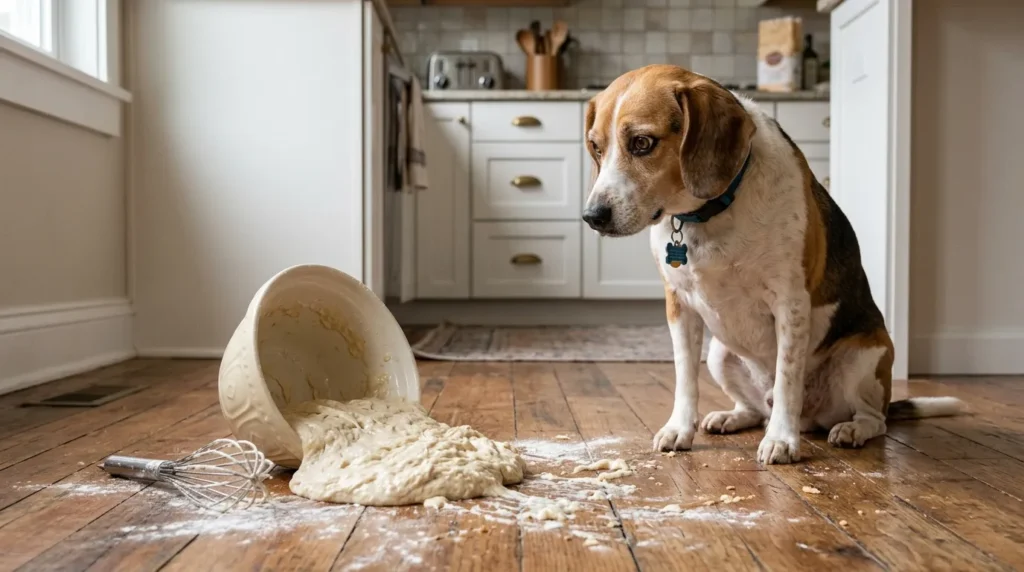
Raw yeast-based bread dough is one of the more dangerous things a dog can eat. If your dog eats raw dough, treat it as an emergency and call your veterinarian immediately — don’t wait to see what happens.
Here’s why. A dog’s stomach sits at roughly 98–102°F and provides a warm, moist environment. Those are near-ideal conditions for yeast to keep fermenting. The dough continues to rise inside the stomach, causing it to expand and distend. That expansion causes bloat — and in serious cases, it leads to gastric dilatation-volvulus (GDV), where the stomach twists on itself. GDV is life-threatening and requires emergency surgery.
That’s not the only problem. As the yeast ferments, it produces ethanol. That ethanol absorbs directly into the bloodstream, causing alcohol toxicosis — essentially, your dog becomes intoxicated from the inside out.
Symptoms of bread dough toxicosis include:
- Distended or hard abdomen
- Dry heaving or unproductive retching
- Vomiting
- Unsteady walk or drunken gait
- Disorientation or confusion
- Weakness and lethargy
- Rapid heart rate
- Low body temperature (hypothermia)
- Seizures
- In severe cases: coma
If your dog is showing any of these signs, check our guide on why your dog might be vomiting — but for dough ingestion specifically, skip the research and go straight to your vet.
What to do if your dog ate raw bread dough:
- Don’t induce vomiting unless your vet specifically instructs you to
- Call your veterinarian or an emergency animal hospital right now
- Note how much dough your dog ate and when — your vet will need this
- Watch for any symptoms listed above while you’re on the phone or driving
- Contact the ASPCA Animal Poison Control Center (888-426-4435) if you can’t reach your vet
Time matters with dough ingestion. The sooner your dog is treated, the better the outcome.
Types of Bread — Safe or Not?
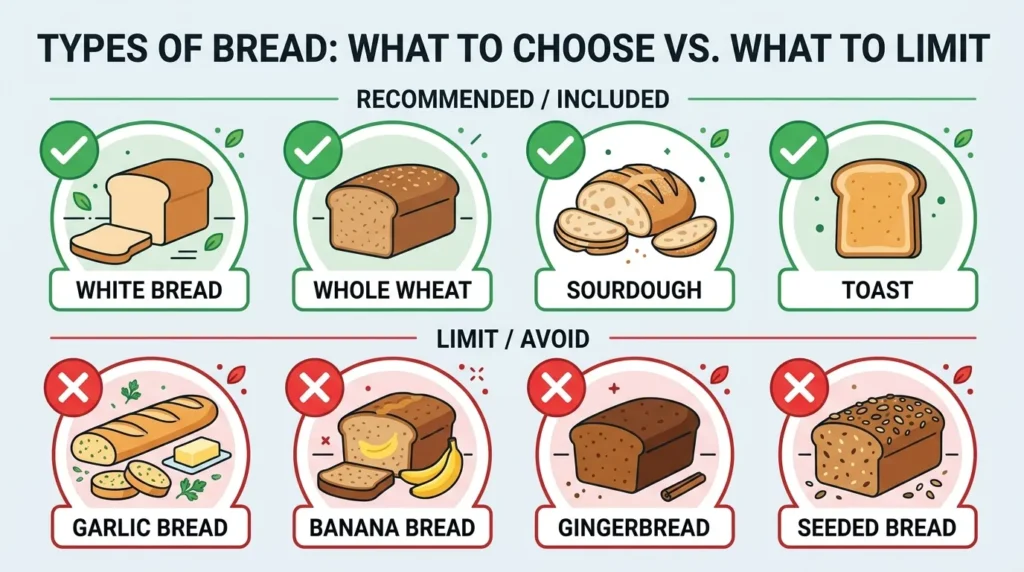
White bread ✅ — Plain, fully baked white bread is safe in small amounts for dogs without wheat allergies. No nutritional value, but not harmful.
Whole wheat / whole grain bread ✅ — Safe in small amounts as long as it’s plain and contains no seeds, nuts, or dried fruit. Not safe for dogs with diagnosed grain allergies.
Sourdough bread (cooked) ✅ — Fully baked sourdough is safe occasionally. The active yeast is neutralized during baking. Raw sourdough starter or dough is not safe — same risk as any raw yeast dough.
Rye bread ✅ — Plain rye bread is not toxic. Avoid if your dog has wheat or grain sensitivity, as rye contains gluten.
Pita bread ✅ — Plain pita is fine in small amounts. Most pita is simple: flour, water, yeast, salt. Avoid flavored varieties with garlic or herbs.
Garlic bread ❌ — Not safe. Garlic is toxic to dogs regardless of quantity over time. Most garlic bread also contains butter and salt. Keep it away entirely.
Banana bread ❌ — Bananas themselves are safe for dogs, but banana bread almost always contains added sugar, and many recipes include raisins, macadamia nuts, or nutmeg. Too risky. If your dog loves fruit flavors, plain blueberries or apple slices are far safer options.
Pumpkin bread ❌ — Plain pumpkin is safe for dogs, but pumpkin bread recipes routinely include nutmeg, which is toxic.
Gingerbread ❌ — Contains nutmeg and high levels of sugar. Not safe for dogs.
Seeded bread ❌ — Seeds including poppy seeds, caraway, and others can cause digestive issues or toxicity depending on the type and quantity. Avoid any bread with seeds as toppings or mix-ins.
Toast ✅ — Toasted plain bread carries the same safety profile as untoasted. No butter, no toppings, no spreads. A small piece of dry plain toast is fine.
Bread crust ✅ — No different from the rest of the bread. Plain crust from a plain loaf is safe in small amounts. Skip it if there’s any butter or oil on it.
Can Puppies Eat Bread?
The same rules apply, but be more cautious. Puppies have smaller bodies and more sensitive digestive systems. A piece of bread that barely registers for an adult Labrador is a much larger caloric and digestive load for a 10-week-old puppy.
There’s no nutritional reason to give a puppy bread at any point. Puppies have specific caloric and protein needs during growth — bread meets none of them and can displace calories they should be getting from puppy food. If your puppy grabs a small piece of plain bread off the floor, they’ll likely be fine. But don’t make it a habit and don’t offer it intentionally.
Wondering how big your puppy will get and when they’ll stop needing puppy food? The guide on when dogs stop growing breaks this down by breed size.
What If My Dog Has a Wheat Allergy?
This is where many guides fall short. There’s an important distinction between wheat sensitivity and a diagnosed wheat allergy, and most dog owners use the terms interchangeably when they shouldn’t.
Wheat sensitivity is relatively common in dogs. Signs include chronic itching, recurring ear infections, loose stools, and general digestive upset. Many dogs with food sensitivities improve on grain-free or limited-ingredient diets without ever receiving a formal diagnosis.
A true wheat allergy is an immune-mediated response. It’s less common but more severe. A dog with a confirmed wheat allergy can react to even trace amounts of wheat gluten — including from bread crumbs.
If your dog has either condition, avoid all grain-based breads entirely. That includes white bread, wheat bread, rye, whole grain, sourdough, and pita. Gluten-free bread may seem like a workaround, but many gluten-free recipes still contain other allergens or ingredients that aren’t ideal for dogs.
If you suspect your dog has a food sensitivity, talk to your vet. A proper elimination diet trial — typically 8 to 12 weeks on a novel protein source — is the most reliable way to identify the trigger ingredient. You might also find it helpful to read through common dog owner mistakes — feeding the wrong human foods is one of the most frequent ones vets see.
Does Bread Help a Dog’s Upset Stomach?
This is one of the most persistent myths in pet care, and it comes from reasonable human logic. When people have upset stomachs, dry toast sometimes helps settle things down. It makes sense to assume the same applies to dogs.
It doesn’t.
The bland diet that vets actually recommend for dogs with digestive upset is boiled plain chicken breast and plain white rice — no seasoning, no oil, nothing added. That combination is easy to digest, provides some protein, and gives the gut a chance to recover. Bread is not part of the veterinary bland diet protocol.
Plain white bread won’t necessarily make things worse, but it doesn’t help either. And if your dog’s stomach is already irritated, adding a large amount of simple carbohydrates can sometimes make diarrhea or gas worse.
If your dog has an upset stomach that lasts more than 24 hours, involves blood, or is accompanied by lethargy and vomiting, check the full breakdown of why dogs get diarrhea — and if you’re also seeing vomiting, this guide on dog vomiting causes and solutions covers what to look for. Either way, that’s a vet visit, not a home remedy situation.
Healthier Treat Alternatives to Bread
If your dog is angling for a snack and you want to give them something with actual value, here are better options than bread:
Cooked plain chicken — High protein, low fat, easy to digest. Most dogs love it. Cut into small pieces and use sparingly as treats.
Carrots — Low calorie, high crunch. Good for dental stimulation. Both raw and cooked are safe.
Blueberries — Antioxidant-rich and low in calories. A handful makes a better treat than a slice of bread. We cover what fruits dogs can eat in more detail if you want the full list.
Cucumber slices — Almost no calories. Good for dogs who need to lose weight or dogs that just want something crunchy. Here’s a full guide to whether dogs can eat cucumbers and how to serve them safely.
Pumpkin (plain, canned, unseasoned) — Good for digestion and low in calories. Not pumpkin bread — just plain pumpkin.
Apple slices — Safe and sweet. Remove the core and seeds completely — apple seeds contain small amounts of cyanogenic compounds. A few slices are fine.
Peanut butter (xylitol-free) — A popular dog-safe treat in small amounts. Always check whether peanut butter is actually safe for your specific brand, since some contain xylitol.
Commercial dog treats formulated for dogs — Designed with appropriate calorie counts and nutritional balance. Look for options with single-protein ingredients and no artificial sweeteners.

When to Call Your Vet
Call immediately:
- Your dog ate any raw yeast dough, even a small amount
- Your dog ate bread containing garlic, onion, raisins, xylitol, or chocolate
- Your dog is showing signs of bloat (distended stomach, unproductive retching, restlessness)
Call within a few hours:
- Your dog ate a significant quantity of plain bread (half a loaf or more for a medium-sized dog)
- Your dog ate banana bread, pumpkin bread, or gingerbread and you’re unsure of the ingredients
- Your dog is vomiting or has diarrhea after eating any bread
Monitor at home:
- Your dog grabbed a small piece of plain white, wheat, or rye bread
- No toxic ingredients were present
- Your dog seems completely normal
When in doubt, use the Pet Symptom Checker to help identify what’s going on — and remember, veterinary professionals would rather you check in on a non-emergency than wait too long on something serious.
Final Verdict
Plain, fully baked bread is not toxic to dogs — but it has no place in a regular feeding routine. It’s empty calories. A small piece of plain white or wheat bread won’t harm a healthy adult dog with no allergies, but that’s the ceiling of what bread offers.
Certain breads are dangerous. Garlic bread, raisin bread, breads with xylitol, banana bread, pumpkin bread, and gingerbread all carry real risk. Read ingredient labels before sharing anything with your dog.
Raw bread dough is a genuine emergency. If your dog eats any yeast-based dough, call your vet immediately. Don’t wait for symptoms to develop.
The best approach is simple: skip the bread entirely and use dog-appropriate treats instead. Your dog will be just as happy, and you won’t be guessing about ingredients. For a broader look at what human foods are and aren’t safe, the Pet Food Safety Checker is a quick way to verify anything before you share it.
Always check with your veterinarian before adding new foods to your dog’s diet, especially if your dog has a known health condition, allergy, or is on a prescription diet.