


Yes, dogs can eat cucumbers. They’re one of the safest vegetables you can share with your dog — low in calories, high in water, and free of any ingredients that are toxic to dogs. That said, there are a few things worth knowing before you toss a slice their way.
This guide covers everything: nutrition, safe portions by dog size, how to prep it, what to avoid, and what to do if your dog gets into a whole cucumber. If you want to explore beyond cucumbers, our full guide on what vegetables dogs can eat covers the complete safe list. You can also use our pet food safety checker anytime you’re unsure about a specific ingredient.
Are Cucumbers Safe for Dogs?
Cucumbers are safe for dogs of all sizes, including puppies. They contain no compounds that are inherently toxic to dogs in normal serving amounts. Most dogs enjoy the crunch, and many go after cucumber slices with the same enthusiasm they’d give a store-bought treat.
That said, two risks come up consistently:
Choking. A large chunk of cucumber — or a whole one — is a real choking risk, especially for small dogs or dogs that eat fast. Always cut cucumbers into thin slices before feeding them.
Overeating. Too much of any new food can upset a dog’s stomach. Even healthy vegetables can cause loose stool or vomiting if introduced too quickly or fed in large amounts.
Start with one or two small slices. Watch for any signs of digestive upset over the next few hours. If there’s no reaction, cucumber is fine as an occasional treat going forward.

A Note on Cucurbitacin
Cucumbers belong to the cucurbit family, along with squash and zucchini. The plant produces a bitter compound called cucurbitacin, which is found mainly in the roots, stems, and leaves. It can also appear in small amounts in the fruit itself — usually concentrated near the ends and in the peel.
In very small doses from normal cucumber flesh, cucurbitacin isn’t dangerous for dogs. But if you bite into a cucumber and it tastes unusually bitter, don’t feed that piece to your dog. Peel the cucumber and cut off both ends as a precaution.
Nutritional Value of Cucumbers for Dogs
Cucumbers are 96% water. That alone makes them a useful snack on hot days. Beyond hydration, they carry a modest nutrient profile:
| Nutrient | What It Does |
|---|---|
| Vitamin K | Supports bone health and blood clotting |
| Vitamin C | Antioxidant support |
| Vitamin B | Energy metabolism |
| Potassium | Muscle and nerve function |
| Magnesium | Bone and enzyme support |
One-half cup of cucumber slices contains roughly 8 calories. Compare that to 40 calories in a single medium dog biscuit. That’s a significant difference if you’re training frequently or managing your dog’s weight.
Your dog won’t get therapeutic levels of any vitamin from a few slices — their main diet covers those needs. But cucumber still delivers hydration and a satisfying crunch with almost no caloric cost.
Health Benefits — Who Benefits Most
Overweight dogs. Cucumber is one of the few treats that fits comfortably into a weight-loss plan. It fills the treat role without adding meaningful calories. Combined with portion-controlled meals and regular daily exercise, it’s a useful tool for helping dogs shed weight without cutting out rewards entirely.
Diabetic dogs. Cucumber is very low in sugar. If your vet has approved adding low-sugar snacks, cucumber is usually a safe option. Always confirm with your vet before making any changes to a diabetic dog’s diet.
Dogs that overheat easily. The 96% water content makes cucumber a practical hydration boost during warm weather. Frozen cucumber slices work especially well here — more on that below.
Puppies. Puppies can eat cucumber safely. Cut the pieces smaller than you would for an adult dog. Their digestive systems are still developing, so keep portions tiny and monitor closely the first time.

How Much Cucumber Can a Dog Eat?
The general rule: treats should make up no more than 10% of your dog’s total daily calorie intake. The rest should come from a complete, balanced dog food.
Here’s a practical portion guide based on dog size. Slice each piece no wider than 1 inch and about ¼ inch thick.
| Dog Size | Weight | Safe Portion |
|---|---|---|
| Extra-small | 2–20 lbs | 1–2 slices |
| Small | 21–30 lbs | 2–3 slices |
| Medium | 31–50 lbs | 5–6 slices |
| Large | 51–90 lbs | A small handful |
| Extra-large | 91+ lbs | A larger handful |
Examples of extra-small dogs: Chihuahuas, Yorkies, Pugs, Shih Tzus. Examples of medium dogs: Beagles, Border Collies, Siberian Huskies. Examples of large dogs: German Shepherds, Labrador Retrievers, Pit Bulls.
If you’re using cucumber as a training treat, count those slices toward the daily 10% limit. It adds up faster than most people expect. Not sure if your dog falls in the right weight range? Our pet age calculator can help you understand where your dog sits in their development stage, which matters when adjusting treat portions.
Can Dogs Eat Cucumber Skin and Seeds?
Skin: Technically not toxic, but the peel is harder to digest than the flesh. It also holds more cucurbitacin than the interior. Peeling is the safer choice, especially for small dogs or dogs with sensitive stomachs.
Seeds: Also not toxic, but some dogs struggle to digest them cleanly. Removing seeds before feeding reduces the chance of loose stool. It takes 30 seconds and removes a potential irritant — worth doing.
Can Dogs Eat Pickles?
No. Pickles are made from cucumbers, but the pickling process makes them unsafe for dogs.
Pickles are high in sodium — far more than a dog’s digestive system handles well. Many pickle recipes also include garlic and onion, both of which are toxic to dogs. Even small amounts of garlic can damage red blood cells over time.
An occasional bite of a plain dill pickle probably won’t send your dog to the emergency vet, but it’s not worth the habit. Stick to plain, raw cucumber. The same principle applies to other processed snacks — check out our guide on can dogs eat popcorn to see how quickly added seasonings flip a safe food into a risky one.
Can Dogs Drink Cucumber Water?
Homemade cucumber water is safe. Plain water with fresh cucumber slices added is fine for dogs. It encourages hydration and doesn’t introduce anything harmful.
Store-bought cucumber water is a different story. Many commercial versions contain added flavorings, sweeteners, or xylitol — a sugar substitute that is highly toxic to dogs. Even small amounts of xylitol can cause a rapid drop in blood sugar and, in larger doses, liver failure.
Never give your dog any flavored water product without reading the full ingredient list first. If it contains xylitol, artificial sweeteners, or any additive you can’t identify, skip it entirely. This same warning applies to peanut butter — always check the label for xylitol before sharing any product with your dog.
How to Prepare Cucumber for Your Dog
This takes under two minutes and significantly reduces the risks of choking and digestive upset.
- Wash the cucumber thoroughly. Even if you’re peeling it, rinse under running water first. Pesticide residue sits on the surface and can transfer to your hands and cutting board.
- Peel the skin. Removes cucurbitacin concentration and makes the pieces easier to digest.
- Cut off both ends. The ends carry a higher concentration of cucurbitacin. Discard them.
- Slice it thin. Each piece should be no thicker than ¼ inch. For small dogs, cut those slices into quarters.
- Remove the seeds. Run a spoon down the center of each half before slicing.
- Serve plain. No salt, no seasoning, no dressing. Just cucumber.
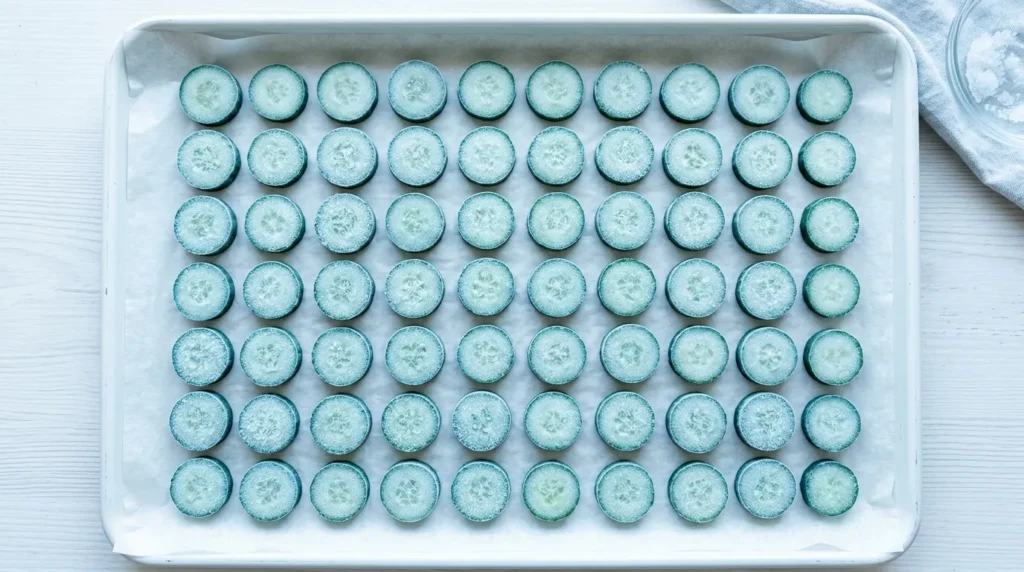
Frozen Cucumber Treat Ideas
Frozen cucumber slices work well as summer treats or post-walk snacks. A few options:
- Plain frozen slices. Peel, slice, lay flat on a baking sheet, freeze for 2 hours. Store in a zip bag.
- Cucumber and watermelon blend. Blend cucumber and seedless watermelon — a dog-safe fruit — pour into an ice cube tray, freeze. Feed one cube at a time.
- KONG stuffing. Blend cucumber with a small amount of plain, unsweetened peanut butter (confirm it contains no xylitol), stuff into a KONG toy, freeze overnight. Keeps dogs occupied for 15–30 minutes.
What If Your Dog Eats Too Much Cucumber?
If your dog got into a bag of cucumber slices or grabbed a whole cucumber off the counter, don’t panic immediately. One cucumber is unlikely to cause serious harm in a medium or large dog. For small dogs, the main risks are GI upset and, with a large whole piece, a potential blockage.
Watch for these signs in the 12–24 hours after:
- Vomiting or repeated retching
- Loose stool or diarrhea
- Lethargy or reduced energy
- Loss of appetite
- Bloated or hard abdomen
- Whimpering when touched near the belly
Mild loose stool usually resolves on its own within 24 hours. If you see vomiting that continues for more than a few hours, you’ll want to understand what’s causing it before waiting it out. Similarly, persistent diarrhea in dogs after eating something new can signal more than just mild sensitivity. Any blood in the stool or a hard distended belly warrants a vet call immediately — don’t wait on those symptoms. You can also use our pet symptom checker for a quick first read on what your dog might be experiencing.
Can Puppies Eat Cucumbers?
Yes, puppies can eat cucumber. Keep the pieces very small — about the size of a pea for a tiny breed puppy. A puppy’s gut flora is still developing, so any new food can cause a temporary reaction.
Introduce cucumber as a single ingredient at a time. Give one small piece. Wait 24 hours. If there’s no reaction — no vomiting, no diarrhea, no unusual lethargy — it’s safe to continue occasionally.
Never give a puppy cucumber in place of a meal. It’s a treat, not a nutritional staple.
Cucumber as a Low-Calorie Training Treat
This is something most articles skip entirely. If you train your dog with food rewards, the caloric load of training sessions adds up quickly. Thirty repetitions with standard treats is several hundred calories for some dogs.
Cucumber slices are 8 calories per half cup. A single thin slice is roughly 1–2 calories. For dogs that are food-motivated, many will work for cucumber just as readily as for commercial treats — especially once they’re used to the flavor.
It’s worth testing during a short training session before relying on it fully. Some dogs won’t find cucumber motivating enough. But for dogs that do respond to it, it’s a practical way to get through a 10–15 minute training session without burning through a significant portion of daily calories.
What Other Vegetables Can Dogs Eat Safely?
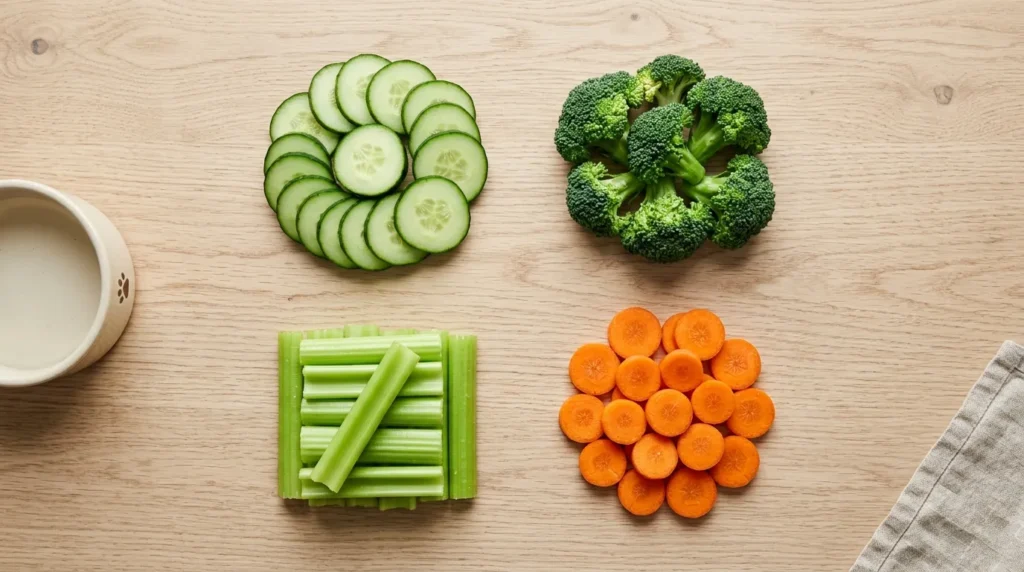
If your dog enjoys cucumber, there’s a good chance they’ll take to other low-calorie vegetables too. Celery is another crunchy, water-rich option that most dogs enjoy and handles similarly to cucumber. Broccoli is safe in small amounts — though it’s higher in fiber and should be introduced slowly. For a full breakdown of safe options, our guide to what vegetables dogs can eat covers everything with portions and prep notes. If you want to branch out to fruit as well, we’ve got a matching guide on what fruits dogs can eat — including cherries, which come with some specific warnings worth knowing.
Final Thoughts
Cucumbers are one of the more straightforward human foods when it comes to dogs. They’re safe, low-calorie, and genuinely useful for dogs that need to lose weight or just enjoy a cold, crunchy snack.
The main things to remember: peel it, slice it thin, remove the seeds, and skip the pickles. Keep portions within the 10% treat guideline, and introduce it slowly the first time.
If your dog has an underlying health condition — diabetes, kidney disease, or a history of GI problems — run it by your vet before adding anything new to their diet. That applies to cucumbers just like anything else.
And if you’ve ever wondered why your cat sprints out of the room when they spot one — that’s a whole different story. Our article on why cats are afraid of cucumbers has the answer, and it’s more interesting than you’d expect.