

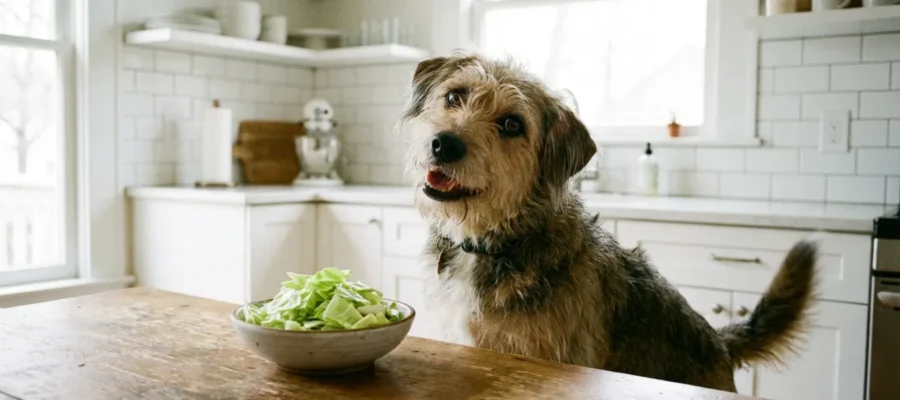
The Short Answer
Yes, dogs can eat cabbage. It’s non-toxic, low in calories, and packed with nutrients that genuinely benefit your dog’s health. The catch is portion size. Too much cabbage causes gas — sometimes severe bloating — and in large quantities over time, it can interfere with thyroid function. Feed it in moderation, prepare it correctly, and most dogs handle it just fine.
Not sure whether other vegetables are safe too? Check out our full guide on what vegetables can dogs eat for a complete breakdown.
Nutritional Profile of Cabbage for Dogs
Cabbage is a cruciferous vegetable from the Brassica oleracea family — the same family as broccoli, Brussels sprouts, and kale. It’s dense in nutrition relative to its calorie count, which makes it a reasonable addition to a dog’s diet when used as an occasional treat.
Key Vitamins and Minerals
A single cup of raw cabbage contains:
- Vitamin K — supports blood clotting and bone metabolism
- Vitamin C — antioxidant, supports immune response
- Vitamin B6 — involved in protein metabolism and brain function
- Potassium — regulates heart function and fluid balance
- Folate — essential for cell production
- Manganese — supports bone development and enzyme function
- Calcium — structural support for bones and teeth
Dogs produce their own vitamin C, so they don’t depend on dietary sources the way humans do. But the antioxidant load still contributes to cellular health.
Fiber Content and Digestive Impact
Cabbage is moderately high in fiber. That’s useful in small amounts — it supports healthy bowel movements and feeds beneficial gut bacteria. But fiber from cabbage ferments in the large intestine. That fermentation produces gas. This is why cabbage, even in healthy dogs, almost always causes some flatulence.
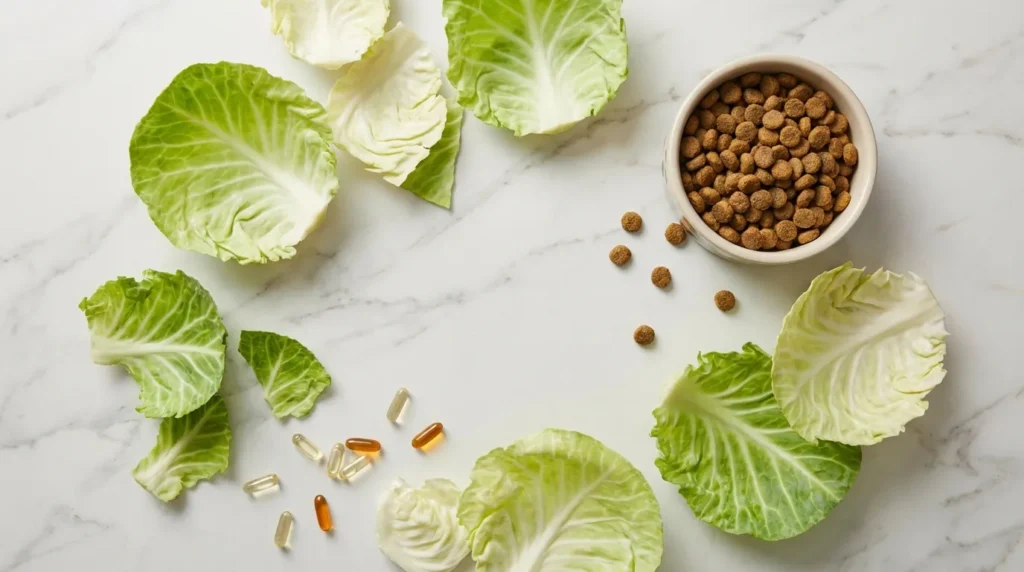
Health Benefits of Cabbage for Dogs
Antioxidants and Immune Support
Cabbage contains polyphenols and antioxidant compounds that reduce oxidative stress at the cellular level. Oxidative stress contributes to aging and chronic disease in dogs the same way it does in humans. It won’t reverse damage, but regular small doses of antioxidant-rich foods support long-term immune function.
Red and purple cabbage varieties carry higher concentrations of anthocyanins — a class of flavonoid with strong antioxidant activity. If you’re choosing between green and red cabbage for your dog, red cabbage offers more nutritional upside.
Digestive Health
Small amounts of cabbage fiber help regulate digestion. Dogs dealing with mild constipation may benefit from a tablespoon of cooked cabbage added to their meal. For more targeted advice on digestive issues, see our guide on how to help a constipated dog — it covers safe food-based options alongside cabbage.
Don’t use it as a remedy for ongoing digestive problems without talking to your vet first.
Anti-Inflammatory Properties
Cabbage contains glucosinolates, which break down into compounds with anti-inflammatory properties during digestion. There’s limited dog-specific research on this, but the mechanism is well-documented in human nutrition. Dogs with joint inflammation or dogs prone to inflammatory conditions may see mild benefit from consistent, small servings over time.
Risks of Feeding Cabbage to Dogs
Gas and Bloating
This is the most common problem. Cabbage ferments during digestion. That produces hydrogen and methane gas. In small dogs, even a few large pieces can cause visible discomfort — bloating, gurgling, and significant flatulence.
Large breed dogs, especially deep-chested breeds like Great Danes, Boxers, and Dobermans, face a more serious risk. These breeds are prone to gastric dilatation-volvulus (GDV), commonly called bloat. GDV is a life-threatening emergency. Gas-producing foods should be fed cautiously to these breeds, and in very small amounts.
Thyroid Interference (Thiocyanate Warning)
This is the risk most pet owners overlook. Here’s what’s actually happening.
Cabbage contains compounds called glucosinolates. When digested, glucosinolates convert into thiocyanates. Thiocyanates block the thyroid gland’s ability to absorb iodine. Without adequate iodine, the thyroid can’t produce enough of its hormones. Over time, this leads to hypothyroidism.
For a dog eating a tablespoon of cabbage twice a week, the thiocyanate level is negligible. The risk becomes real when cabbage is fed daily, in large quantities, or to a dog already managing a thyroid condition.
Dogs on thyroid medication should not eat cabbage without veterinary approval. The interaction can disrupt hormone regulation.
Cooking cabbage significantly reduces glucosinolate content — typically by 30–60% depending on cooking method and duration. This is the main practical reason cooked cabbage is safer than raw for regular feeding.
Choking Hazard in Large Pieces
Raw cabbage leaves are tough and fibrous. Whole leaves fed to a dog who eats fast are a choking risk. Always chop cabbage into small, bite-sized pieces before feeding. For small dogs, pieces should be roughly thumbnail-sized or smaller.
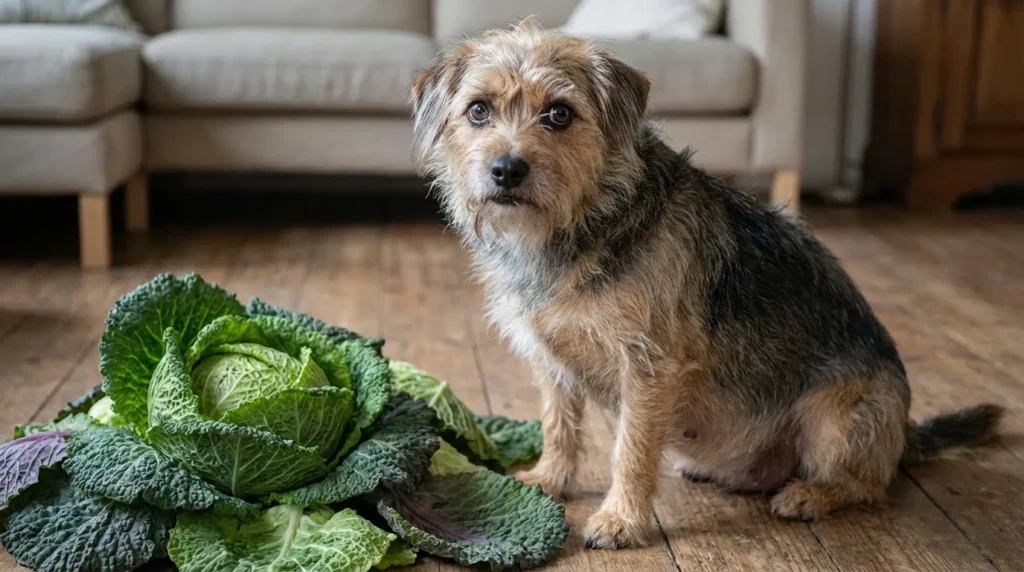
If your dog shows signs of distress after eating cabbage or any new food, use our pet symptom checker to help identify what might be going on before calling your vet.
Raw vs. Cooked Cabbage — Which Is Better?
Both are safe. The decision comes down to frequency and your dog’s specific health needs.
Raw cabbage retains more vitamin C and folate since heat destroys some water-soluble vitamins. It’s fine for occasional feeding in small pieces. But raw cabbage has higher glucosinolate content, which means more thiocyanate production in the gut.
Cooked cabbage reduces glucosinolates by 30–60%. It’s softer, easier to chew, and gentler on the digestive system. Steaming is the best cooking method — it preserves more nutrients than boiling while still reducing glucosinolates. Never add butter, oil, garlic, onion, salt, or seasoning. Plain only.
If your dog eats cabbage more than once or twice a week, cooked is the better option.
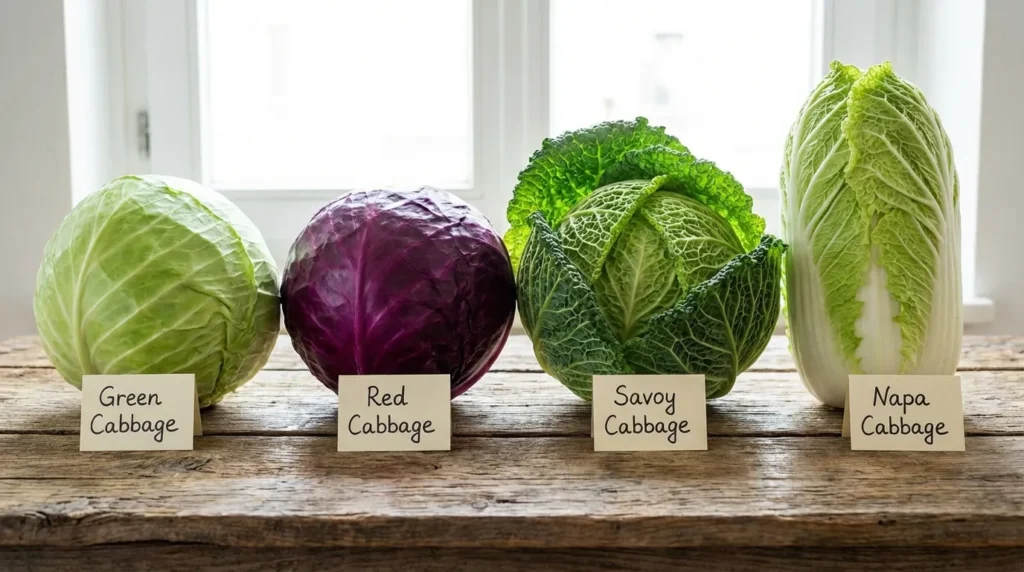
Types of Cabbage: Which Are Safe?
Green Cabbage
The most common variety. Safe for dogs. Mild flavor means most dogs accept it without resistance. Good starting point if you’re introducing cabbage for the first time.
Red / Purple Cabbage
Also safe, and nutritionally superior. Higher anthocyanin content means more antioxidant benefit. Slightly more bitter — some dogs reject it. Worth trying if your dog is an adventurous eater.
Savoy Cabbage
Safe for dogs. Softer leaves and a more delicate flavor. Easier to chew raw than green cabbage, though you should still chop it.
Napa (Chinese) Cabbage
Safe. Milder and higher water content than standard cabbage. Lower fiber density, so less likely to cause gas. A reasonable choice for dogs prone to digestive sensitivity.
Bok choy — a close relative in the Brassica family — is also safe for dogs in small amounts, following the same preparation rules.
How Much Cabbage Can Dogs Eat?
Use the 10% rule: treats and supplemental foods should make up no more than 10% of your dog’s daily caloric intake. Cabbage counts as a treat, not a meal component.
| Dog Size | Body Weight | Max Single Serving |
|---|---|---|
| Extra Small | Under 10 lbs | 1–2 teaspoons |
| Small | 10–25 lbs | 1–2 tablespoons |
| Medium | 25–60 lbs | 2–4 tablespoons |
| Large | 60–100 lbs | ¼ cup |
| Extra Large | Over 100 lbs | ¼ to ½ cup |
These are maximum amounts per serving — not daily totals. Feed cabbage 2–3 times per week at most. Every day is too frequent given the thyroid and gas concerns.
Start smaller than these amounts the first time. Introduce any new food gradually and watch for loose stool, vomiting, or unusual gas within 24 hours. If you’re ever unsure whether a food is safe, our pet food safety checker is a quick way to verify before you feed it.
How to Prepare and Serve Cabbage to Your Dog
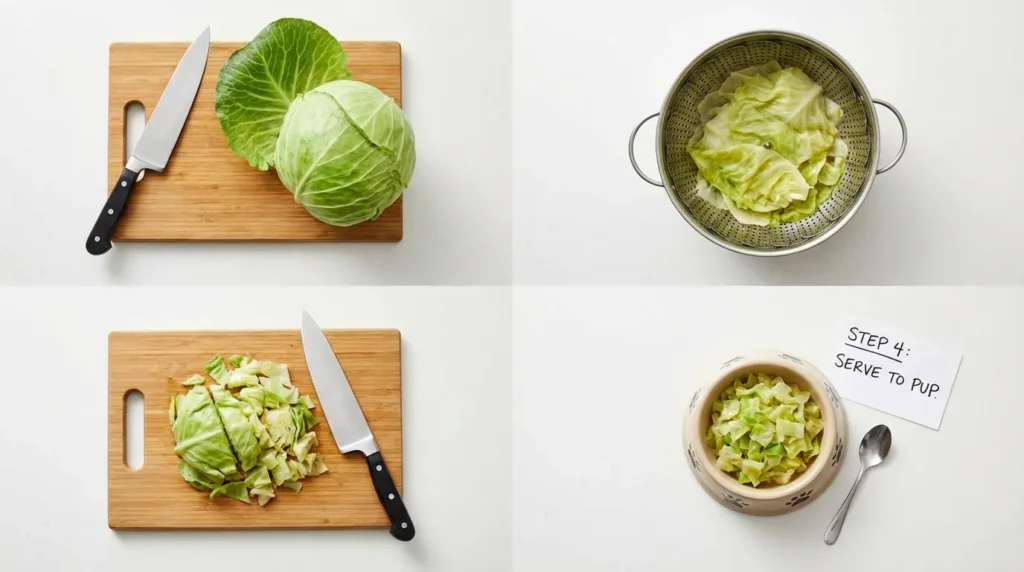
- Wash thoroughly. Cabbage holds pesticide residue in its outer leaves. Remove the two outer layers and rinse the rest under cold water.
- Remove the core. The core is dense and tough. It’s a choking risk and harder to digest. Cut it out entirely.
- Chop into small pieces. Size depends on your dog. Thumbnail-sized pieces for small dogs. Slightly larger for big dogs. No whole leaves.
- Steam until tender. 5–7 minutes over boiling water softens the cabbage without stripping all nutrients. No oil, butter, salt, garlic, or onion — ever.
- Cool completely before serving. Dogs don’t know when food is too hot. Let it reach room temperature.
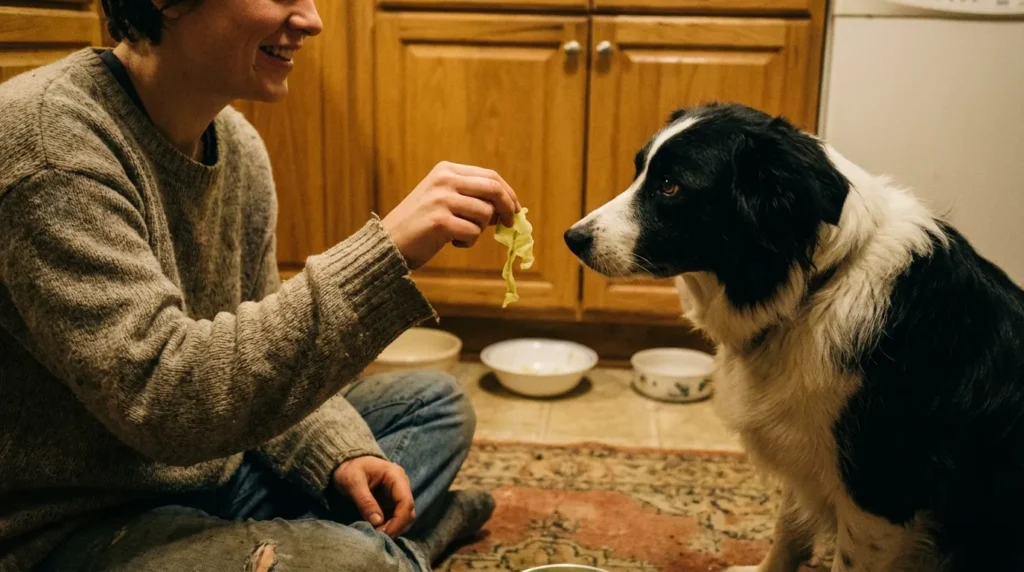
- Serve plain. Mix it into kibble, offer it as a standalone treat, or layer it into a food puzzle. Keep it simple.
Looking for other crunchy low-calorie vegetable treats? Can dogs eat celery and can dogs eat cucumbers are worth reading — both make excellent alternatives for dogs that enjoy snapping through something crisp.
When to Avoid Feeding Cabbage
Skip cabbage entirely in these situations:
- Your dog has a diagnosed thyroid condition or is on thyroid medication
- Your dog is a deep-chested large breed prone to bloat (GDV risk)
- Your dog has irritable bowel syndrome (IBS) or chronic digestive problems
- Your dog is a puppy under 12 weeks — their digestive systems are still developing and new foods should be introduced one at a time under veterinary guidance
- Your dog just had abdominal surgery — any gas-producing food is risky during recovery
If your dog ate a large amount of cabbage and starts vomiting, our guide on why your dog is vomiting explains the common causes and when it’s time to call your vet.
Frequently Asked Questions
Can dogs eat cabbage every day?
No. Daily feeding increases thiocyanate accumulation, which over time can suppress thyroid function. Two to three times per week is the safe upper limit for most healthy adult dogs.
Can puppies eat cabbage?
Puppies over 12 weeks can have a very small amount — a teaspoon or less — of plain cooked cabbage occasionally. Puppies under 12 weeks should not have it. Their digestive systems are immature and any new food carries higher risk of GI upset. Always check with your vet before adding new foods to a puppy’s diet.
Can dogs eat coleslaw?
No. Commercial coleslaw contains mayonnaise, vinegar, sugar, salt, and often onion or garlic — all harmful to dogs. Onion and garlic are toxic to dogs at any amount. Even homemade coleslaw with “simple” ingredients is not appropriate. Plain cabbage only.
Can dogs eat cabbage soup?
Only if it’s made with plain cabbage and water — nothing else. Most cabbage soups contain onion, garlic, salt, and spices. All of those are off-limits. If you’ve made a basic soup using only cabbage and unsalted broth, a small spoonful is fine. Store-bought or restaurant cabbage soup should never be shared with dogs.
Is fermented cabbage (sauerkraut) safe for dogs?
In very small amounts, plain sauerkraut — without caraway seeds, garlic, or added salt — may be tolerated. It contains probiotics that support gut health. But commercial sauerkraut is high in sodium, which is harmful to dogs. It’s not worth the risk unless you’re making your own low-sodium version.
What other vegetables can dogs safely eat?
Cabbage is just one of many dog-safe vegetables. Can dogs eat green peppers — yes, and they’re high in vitamin C. Can dogs eat edamame — also yes, in plain form with no seasoning. Can dogs eat potatoes — cooked only, never raw or fried. Each comes with its own rules, so it’s worth checking before you share.
Final Thoughts
Cabbage is a safe, nutritious food for most dogs when fed in the right amounts and prepared correctly. It’s low in calories, high in vitamins, and adds fiber and antioxidants to your dog’s diet without the risks that come with many human foods.
The two things to remember: keep portions small, and cook it if you’re feeding it regularly. The thyroid risk from thiocyanates is real but avoidable — it only becomes a problem with daily, large-volume feeding. A tablespoon of steamed plain cabbage a few times a week is a solid, harmless treat for most adult dogs.
If your dog has thyroid issues, digestive conditions, or you’re unsure whether cabbage is right for their specific diet, talk to your veterinarian before adding it. And if you want to keep exploring safe food options, our guide on what fruits can dogs eat is a great next read.