


Ham ends up on a lot of dinner tables — and a lot of dogs end up staring at it. If you’ve ever wondered whether it’s safe to toss your dog a piece, the answer isn’t simple. Ham isn’t outright toxic in the way grapes or xylitol are. But it’s far from a safe treat. The sodium alone can cause real problems. So can the fat, the glazes, the preservatives, and — if there’s a bone involved — the physical damage to your dog’s digestive tract.
This article breaks down exactly why ham is a poor choice, what happens when dogs eat it, and what to offer instead. If your dog is showing symptoms after eating something they shouldn’t have, use our pet symptom checker to help assess what’s going on before you call the vet.
The Quick Answer
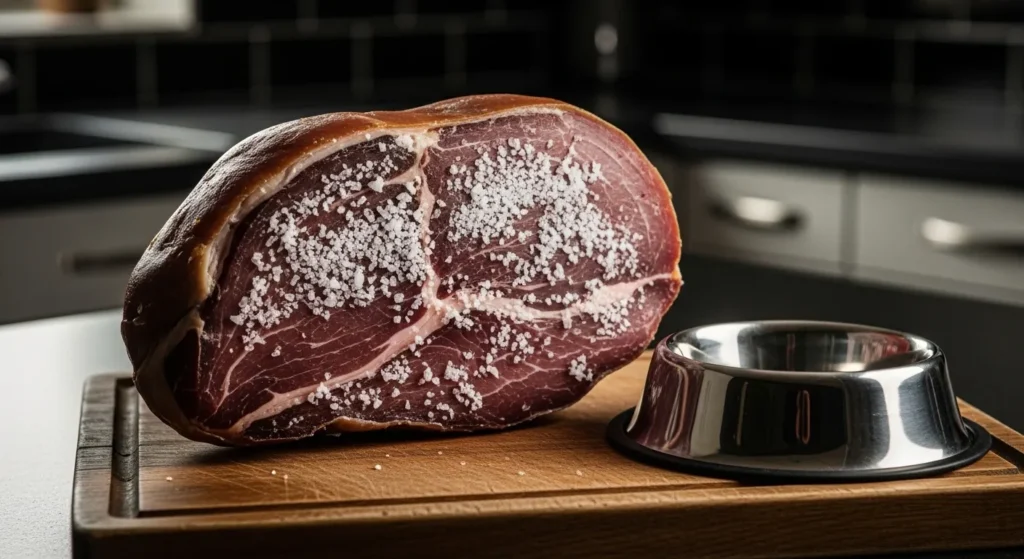
Dogs should not eat ham. It’s not recommended as a treat, and it should never be a regular part of their diet. Ham is high in sodium, high in fat, and often loaded with seasonings or preservatives that are harmful to dogs. A tiny piece of plain, cooked ham is unlikely to send a healthy adult dog to the emergency vet — but it offers zero nutritional benefit and carries real risks, especially in larger amounts.
If your dog already ate ham, scroll down to the symptom guide. You can also run their symptoms through our pet symptom checker for a quick first assessment.
Why Ham Is Not Good for Dogs
The Sodium Problem — With Numbers
Ham is one of the saltiest meats available. A standard 3-ounce serving of cured ham contains between 800 and 1,500 mg of sodium, depending on the brand and preparation method.
Dogs have much lower sodium tolerance than humans. The National Research Council puts the safe daily sodium intake for a 33-pound dog at roughly 100 mg. A single 3-ounce serving of ham can contain 8 to 15 times that amount.
Too much sodium causes osmotic imbalance — the body pulls water out of cells to compensate. That leads to dehydration, excessive thirst, and in serious cases, sodium ion toxicosis. Symptoms can appear within 30 minutes to 3 hours of ingestion.
Small dogs and dogs with kidney disease or heart conditions face the highest risk. If you own a small breed, our guide to small dog breeds that barely shed touches on the specific sensitivities of smaller dogs that owners often overlook.
The Fat Problem and Pancreatitis Risk
Ham averages 5 to 7 grams of fat per ounce. Compare that to plain cooked chicken breast, which contains roughly 1 gram of fat per ounce. That difference matters.
The pancreas produces enzymes that break down dietary fat. When a dog suddenly consumes a large amount of fat — especially fat they’re not accustomed to — the pancreas can become inflamed. That condition is called pancreatitis.
Pancreatitis ranges from mild discomfort to life-threatening illness. Vets see a spike in pancreatitis cases every holiday season, almost entirely tied to owners sharing fatty table scraps. Symptoms typically appear 12 to 24 hours after the meal and can require hospitalization, IV fluids, and pain management.
Fat content above 20 grams per meal is considered a significant pancreatitis trigger for most medium-sized dogs.
Seasonings, Glazes, and Hidden Toxins
Plain cured ham is already problematic. Seasoned or glazed ham adds more risk.
Garlic and onion are common in savory ham recipes. Both contain compounds — N-propyl disulfide in onions, organosulfur compounds in garlic — that damage a dog’s red blood cells. This leads to hemolytic anemia, where the body destroys red blood cells faster than it can replace them. Even small doses accumulate over time.
Honey glazes and brown sugar coatings add concentrated sugar that dogs don’t need. Artificial sweeteners are the bigger danger. Xylitol, found in some sugar-free glazes and certain processed products, triggers a rapid insulin release in dogs that can drop blood sugar to dangerous levels within 30 to 60 minutes.
Check every label if you’re unsure what’s in the ham your dog got into. Our pet food safety checker can help you quickly verify whether a specific ingredient is safe for your dog.
Preservatives in Processed and Deli Ham
Store-bought ham — deli slices, canned ham, pre-packaged holiday ham — contains nitrates and nitrites used as preservatives and color stabilizers. These are safe for humans in standard quantities. For dogs, high doses of nitrates interfere with hemoglobin’s ability to carry oxygen, a condition called methemoglobinemia.
Processed ham also tends to be saltier than home-cooked ham. Some deli hams contain over 1,000 mg of sodium per 2-ounce serving. This is one reason dogs eating bacon raises the same concerns — both are cured, processed pork products with dangerously high sodium and fat levels.

Can Dogs Eat Ham Bones?
Why Cooked Bones Splinter and Injure
No. Ham bones are not safe for dogs — cooked or raw.
Cooked bones lose structural integrity. When a dog bites down, the bone doesn’t flex — it fractures into sharp shards. Those fragments can puncture the esophagus, stomach lining, or intestinal wall. Even a fragment the size of a fingernail can cause intestinal perforation, which is a surgical emergency.
Cooked ham bones also pose a choking risk and can obstruct the digestive tract entirely. This is the same reason rawhide is a risk for dogs — both can break into fragments that the digestive system can’t safely pass.
Raw ham bones carry a different risk: bacterial contamination, particularly Salmonella and Listeria, both of which can cause severe gastrointestinal infection in dogs — and in humans who handle the bone.
What to Do Immediately If Your Dog Swallowed a Ham Bone
Call your vet within one hour. Don’t wait for symptoms. By the time signs of internal injury appear — vomiting, bloody stool, abdominal pain, or lethargy — damage may already be significant.
Your vet may recommend x-rays to locate the bone fragment. Depending on where it is, treatment ranges from monitoring to emergency surgery.
Do not try to induce vomiting without veterinary guidance. If a vet does advise you to help your dog vomit, read our guide on how to make a dog throw up safely — the method matters and doing it wrong can cause more harm. Forcing a dog to vomit after swallowing a bone can cause the fragment to lacerate the esophagus on the way back up.
What About Different Types of Ham?
Cooked Ham
Not recommended. Even plain, unseasoned cooked ham carries the sodium and fat problems outlined above. If it’s seasoned — which most cooked ham is — the risk increases further.
Raw Ham
No. Raw pork can carry Trichinella spiralis, a parasitic roundworm. It can also harbor Salmonella and other bacteria. If you’re curious about the broader raw meat debate, our article on whether dogs can eat raw chicken covers similar bacterial risks in more detail.
Smoked Ham
Not recommended. Smoking doesn’t remove sodium or fat. Smoked hams are often more heavily brined than non-smoked varieties and may contain added smoke flavoring that doesn’t agree with dogs.
Honey Ham and Glazed Ham
Worse than plain ham. The sugar and glaze add empty calories and potential toxins. If the glaze contains xylitol, it becomes an emergency situation. Always check the ingredient list.
Deli Ham and Ham Lunch Meat
No. Deli meats are among the most processed and sodium-dense forms of ham. They frequently contain nitrates, nitrites, and sodium concentrations well above what’s safe for dogs of any size. The same principle applies to hot dogs — another processed pork product that owners often assume is harmless in small amounts.
Ham Hocks
Not recommended. Ham hocks are heavily salted during curing. They also contain bones, connective tissue, and high fat content. The bone risk alone disqualifies them.
Canned Ham
No. Canned ham is high in sodium, contains preservatives, and often includes additives dogs shouldn’t consume. It’s shelf-stable specifically because it’s loaded with salt.

How Much Ham Can a Dog Eat (If Any)?
Size and Weight Considerations
The smaller the dog, the faster sodium accumulates to toxic levels. A 10-pound Chihuahua reaches a problematic sodium intake much faster than a 90-pound Labrador. Small breeds are also more prone to pancreatitis.
Puppies face higher risk than adult dogs because their digestive systems are still developing and their kidneys process sodium less efficiently. The answer for puppies is no ham at all. If you’re wondering about general puppy growth and development milestones, our guide on when dogs stop growing explains how body size and organ maturity develop across breeds.
Senior dogs with any history of kidney disease, heart disease, or pancreatitis should not eat ham under any circumstances.
What “A Small Piece” Actually Means
Most articles say “a small piece is probably fine.” That phrase is vague enough to be dangerous.
Here’s a more useful estimate:
- Dogs under 20 lbs: No more than a piece the size of a pea, plain, unseasoned, no more than once a month — and only if no health conditions exist.
- Dogs 20–50 lbs: No more than a 1/2-inch cube of plain, unseasoned ham, extremely rarely.
- Dogs over 50 lbs: Still not worth the sodium and fat load. The serving size that’s “safe” provides zero nutritional value.
In practice, there’s no situation where ham is the best treat option. Plain chicken or turkey provides protein without the risk.
What to Watch for If Your Dog Ate Ham
Sodium Poisoning Symptoms and Timeline
Sodium toxicity symptoms typically appear within 30 minutes to 3 hours of ingestion. Signs include:
- Excessive thirst and frequent urination
- Vomiting and diarrhea
- Lethargy or weakness
- Muscle tremors
- Swollen abdomen (fluid accumulation)
- Seizures (in severe cases)
- Coma (in extreme cases)
If your dog is showing tremors or seizures after eating ham, this is an emergency. Go directly to the nearest animal hospital. For other cases, use our pet symptom checker to help identify whether what you’re seeing warrants an urgent call.
If your dog has diarrhea after eating ham, our guide on why your dog has diarrhea covers what’s normal and when it becomes a concern.
Pancreatitis Symptoms and Timeline
Pancreatitis symptoms usually develop 12 to 24 hours after a fatty meal. Watch for:
- Hunched back posture
- Vomiting (repeated)
- Diarrhea
- Reluctance to move or lie down flat
- Distended or painful abdomen
- Loss of appetite
- Fever
Mild pancreatitis sometimes resolves with rest and a bland diet. Severe pancreatitis requires hospitalization. Don’t assume it will pass on its own if vomiting is persistent or your dog seems to be in pain. Our article on why dogs vomit and what to do about it helps break down the difference between a one-off episode and something that needs vet attention.
When to Call the Vet — Urgency Guide
| Situation | Action |
|---|---|
| Dog swallowed a ham bone | Call vet within 1 hour |
| Dog ate large amount of ham (any type) | Call vet within 2 hours |
| Tremors, seizures, or collapse | Emergency vet immediately |
| Repeated vomiting or bloody stool | Same-day vet visit |
| Small amount of plain ham, no symptoms | Monitor for 24 hours |

Healthier Alternatives to Ham for Dogs
Lean Cooked Proteins
Plain cooked chicken, turkey, and lean beef are far better options. No seasoning, no skin, no bones. These proteins deliver real nutritional value — amino acids, zinc, B vitamins — without the sodium and fat load.
Chicken breast contains 1 gram of fat per ounce. Ham contains 5 to 7. That’s the difference between a safe treat and a pancreatitis risk. Wondering about other proteins? Our articles on whether dogs can eat tuna and whether dogs can eat shrimp cover more lean protein options worth knowing about.
Dog-Safe Fruits and Vegetables
Carrots, green beans, cucumber slices, and blueberries make excellent low-calorie treats. Carrots provide fiber and dental benefits. Blueberries deliver antioxidants. None of them carry sodium or fat concerns.
A few safe options to keep on hand:
- Carrots (raw or cooked, no seasoning)
- Green beans (plain)
- Apple slices (seeds removed)
- Blueberries
- Watermelon (seedless, no rind)
For a broader picture of what produce is safe, our guides on what vegetables dogs can eat and what fruits dogs can eat give you a full safe list to reference. Avoid grapes, raisins, onions, and garlic in any form — all toxic to dogs.
Purpose-Made Dog Treats
Commercial treats designed for dogs are formulated to deliver palatability without the risks of human food. Look for treats with limited ingredients and low sodium. Many pork-flavored options give dogs the savory taste they’re after without cured ham’s downsides.
Not sure which treats suit your dog’s breed or size? Our pet breed finder quiz can help you better understand your dog’s specific dietary sensitivities and what treat profiles are best suited to them.
Frequently Asked Questions
Can puppies eat ham? No. Puppies should not eat ham. Their kidneys and digestive systems are not equipped to process high sodium and fat loads. The risk of digestive upset and long-term organ stress is higher in puppies than in adult dogs.
Can dogs eat Easter ham or Thanksgiving ham? Holiday hams are typically glazed, seasoned, and high in sodium — often the worst versions of ham from a dog safety standpoint. Skip the table scraps during holiday meals and offer a dog-safe treat instead.
Is one bite of ham dangerous? A single small bite of plain, cooked ham is unlikely to harm a healthy adult dog. It won’t provide any nutritional benefit, but it’s not an emergency. The concern is that it becomes a habit, or that the “one bite” is actually seasoned, glazed, or includes bone fragments.
Can dogs eat ham fat? No. Trimmed ham fat is pure fat with no protein value. It’s one of the fastest ways to trigger pancreatitis, even in small amounts. This includes fat you’ve trimmed off intentionally — don’t offer it as a treat.
What should I do if my dog ate a lot of ham? Call your vet. Describe how much they ate, what type of ham it was (glazed, plain, with bones, deli slices), and your dog’s size and age. Your vet will advise whether to come in or monitor at home. You can also use the pet symptom checker to track developing symptoms while you wait for guidance.
Can cats eat ham too? Cats face very similar risks — processed meat, high sodium, and toxic seasonings. Our dedicated article on whether cats can eat ham covers the feline-specific concerns in full.
Final Thoughts
Ham is not the treat it looks like at the dinner table. It’s cured in salt, often glazed with sugar or seasoned with ingredients that are toxic to dogs, and fatty enough to trigger a serious pancreatic condition. The bones are a separate hazard on their own.
There’s no version of ham — cooked, smoked, canned, or deli-sliced — that’s genuinely appropriate for regular feeding. The safer move is simple: lean plain chicken, turkey, or a dog-specific treat provides what your dog actually needs without the risk.
If your dog got into ham and you’re unsure what to do, call your vet. Early advice is always better than watching and waiting. And if you’re rethinking your dog’s diet more broadly, it might be worth checking our common dog owner mistakes guide — feeding human food is one of the most frequent errors that leads to avoidable vet visits.