


Dogs should not eat fresh pomegranate. The seeds, rind, peel, and juice can all cause digestive problems — and in some cases, a blockage serious enough to require emergency surgery. Pomegranate is not classified as toxic to dogs the way grapes or chocolate are, but “not toxic” doesn’t mean safe. Here’s the full breakdown.
The Short Answer
No — fresh pomegranate is not safe for dogs to eat.
The seeds are hard to digest and can cause vomiting, diarrhea, and intestinal blockages. The rind and stem can cause physical obstructions, especially in small dogs. The peel contains trace amounts of cyanide — not enough to be immediately lethal, but not something your dog should be eating either.
Pomegranate extract and specially formulated dog supplements are a different story. Those can be safe and even beneficial in the right doses. But fresh pomegranate, off your cutting board or out of the trash? Keep it away from your dog.
Not sure what other fruits are off-limits? Check out what fruits dogs can eat for a complete safe-list.
Is Pomegranate Toxic to Dogs?
Technically, no. Pomegranate is not listed as a toxic fruit by the ASPCA in the same category as grapes, raisins, or macadamia nuts.
But that distinction matters less than you’d think.
Dr. Jerry Klein, Chief Veterinarian for the American Kennel Club, puts it this way: “Just because you can, doesn’t mean you should.” The fruit causes real harm — it just doesn’t work through a poison pathway. It works through physical damage: blockages, irritation, and digestive failure.
Think of it like this. A large wad of chewing gum isn’t “toxic” either, but you wouldn’t let your dog swallow it. The danger isn’t in the chemistry — it’s in what the body can’t handle.
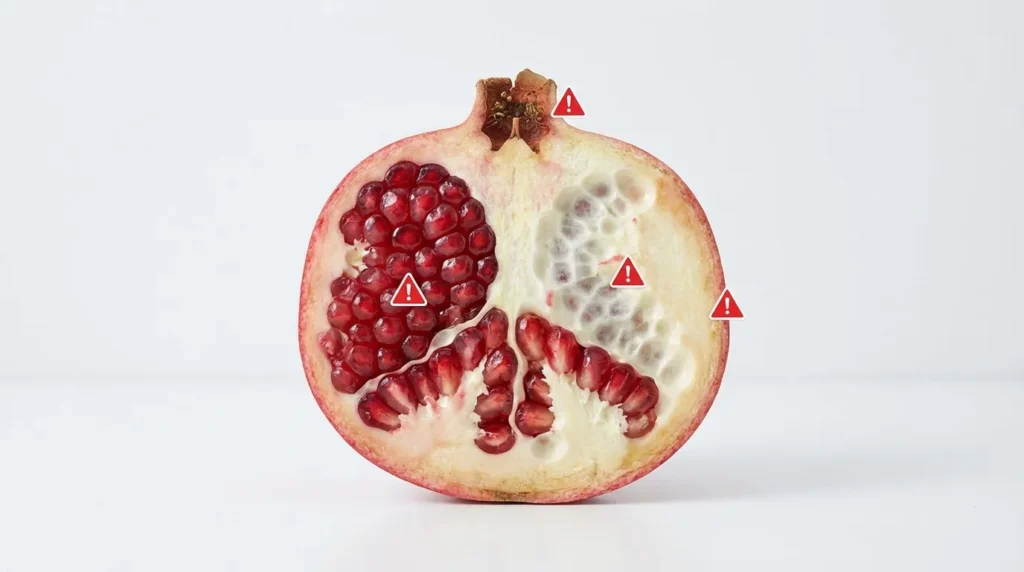
Why Dogs Shouldn’t Eat Fresh Pomegranate
The risk isn’t the same for every part of the fruit. Here’s what each part actually does.
Pomegranate Seeds (Arils)
The seeds — also called arils — are the main thing people eat. They’re also the most common danger for dogs.
Pomegranate seeds have a tough outer coating. Human digestive systems handle them reasonably well. Dogs don’t. The coating resists breakdown in a dog’s gut, which leads to irritation and loose stool. If a dog eats a significant number of seeds, the undigested mass can clump together and create a blockage in the intestinal tract.
Vomiting and diarrhea usually appear within a few hours of eating seeds. These are signs the digestive system is trying to get rid of something it can’t process.
One or two seeds that fell on the floor? Probably not a crisis for a healthy adult dog. A quarter of a pomegranate? That’s a vet call. If your dog is already prone to stomach issues, even small amounts can tip the scales — find out why dogs vomit and what it means for their gut health.
Pomegranate Rind and Peel
The outer rind is tough, fibrous, and hard to chew properly. In smaller dogs especially, chunks of rind can get lodged in the throat or intestines. An intestinal obstruction is a surgical emergency. Signs include repeated vomiting, lethargy, bloating, and refusal to eat — and they can show up 12 to 24 hours after eating.
The peel also contains trace amounts of cyanide. Your dog would need to eat a large quantity to reach dangerous cyanide levels, but why introduce even a small amount when there’s no benefit? If you’re worried about something else your dog chewed on, the pet food safety checker can help you quickly assess the risk.
Pomegranate Juice
Commercial pomegranate juice creates two separate problems.
First, it’s high in sugar. Dogs don’t need concentrated fruit sugar. Regular exposure can contribute to weight gain and blood sugar spikes, particularly in dogs prone to diabetes.
Second — and more seriously — many commercial pomegranate juices and supplements made for humans contain xylitol, an artificial sweetener that is highly toxic to dogs. Even small amounts of xylitol can cause a rapid drop in blood sugar (hypoglycemia) and liver damage.
Never assume a fruit product made for humans is safe to share with a dog. Always read the ingredients label.
Pomegranate Leaves, Stems, and Flowers
These parts of the plant contain higher concentrations of tannins — naturally occurring polyphenol compounds. Tannins interfere with protein digestion and can cause significant gastrointestinal distress. They’re also the reason some dogs vomit shortly after eating pomegranate plant material even in small amounts. This is similar to how certain essential oils affect dogs — something many owners don’t expect until it’s too late. See our guide on is peppermint oil safe for dogs for another example of plant-based risks.
What Are the Symptoms of Pomegranate Ingestion in Dogs?
Watch for these signs after any pomegranate exposure:
- Vomiting — often the first sign, usually within 1–4 hours
- Diarrhea — can be severe if seeds were eaten in large quantity
- Lethargy — unusual tiredness or reluctance to move
- Loss of appetite — refusing food or water
- Abdominal bloating or pain — dog hunches over or resists belly touching
- Repeated retching without producing vomit — possible sign of obstruction
- Drooling excessively — can indicate nausea or throat irritation
- Pale gums — sign of serious distress; contact a vet immediately
Mild vomiting once or twice may resolve on its own. Persistent symptoms, any signs of obstruction, or pale gums require immediate veterinary attention. Not sure if your dog’s symptoms add up to something serious? Use the pet symptom checker to get a clearer picture before you call the vet.

My Dog Ate Pomegranate — What Do I Do?
If They Ate 1–2 Seeds
Stay calm. A small number of pomegranate seeds is unlikely to cause serious harm in a healthy adult dog. Monitor them for the next 12–24 hours. Watch for vomiting, unusual lethargy, or changes in stool. If your dog seems completely normal, you’re likely in the clear.
If They Ate the Rind, Stem, or a Large Amount of Seeds
Act quickly. Follow these steps:
- Estimate how much they ate. Look at what’s left of the fruit. Note the size of your dog — a 10-pound dog faces much higher risk than a 70-pound dog with the same amount.
- Call your vet or an emergency animal clinic. Don’t wait for symptoms to develop if you suspect significant consumption.
- Contact the ASPCA Animal Poison Control Center: (888) 426-4435. Available 24/7. A consultation fee may apply but they can advise you based on your dog’s weight and what they ate.
- Do not induce vomiting unless a vet specifically instructs you to. If you need guidance on when vomiting is appropriate and how to do it safely, read this guide on how to make a dog throw up safely — but always get vet approval first.
- Bring any packaging if the pomegranate came from a store. Ingredient labels matter, especially if there was xylitol in any product.
Knowing your dog’s exact age and weight helps vets assess risk more accurately. If you’re unsure, our pet age calculator can help you pin that down.
The Nutritional Profile of Pomegranate (And Why It Doesn’t Help Dogs Much)
Pomegranate is genuinely impressive nutritionally — for humans. One cup of arils contains roughly:
- 144 calories
- 3.5g fiber
- 205mg potassium
- 18% of daily vitamin C (human RDI)
- 36% of daily vitamin K (human RDI)
- Significant amounts of folate and polyphenols
The problem is that dogs eating a complete, AAFCO-approved diet already get everything they need. They don’t require extra vitamin C from fruit — dogs synthesize their own vitamin C, unlike humans. And the risks of feeding fresh pomegranate far exceed whatever antioxidant benefit might theoretically exist.
The fruit is a nutritional powerhouse for the species that evolved eating it. Dogs didn’t. If you’re looking to add vegetables rather than fruit to your dog’s diet, here’s a full breakdown of what vegetables dogs can safely eat.
Are Pomegranate Supplements and Dog Treats Safe?
This is where the answer changes.
Pomegranate in processed, properly dosed formats — such as pomegranate peel extract added to commercial dog food or formulated dog supplements — can be genuinely beneficial.
What the Research Says
A 2017 peer-reviewed study published in the Journal of Nutritional Science (Cambridge University Press) found that pomegranate peel extract, at controlled doses, supported digestive health in dogs by positively affecting hindgut fermentation — the process by which bacteria in the large intestine break down food. The study also found improvements in dogs’ antioxidant status.
A separate study found that pomegranate can slow lipid oxidation in dog food, meaning it helps keep the fat content in kibble from going rancid. This is partly why you’ll see pomegranate listed in the ingredients of some premium dog foods.
These benefits come from concentrated, controlled extracts — not from letting your dog snack on the fruit.
Xylitol Warning in Human Supplements
If you’re considering a pomegranate supplement for your dog, only use products formulated specifically for dogs. Human pomegranate supplements — capsules, powders, gummies — often contain xylitol or other sweeteners that are dangerous to dogs.
Before adding any supplement to your dog’s diet, run it by your veterinarian. They can recommend dosing based on your dog’s weight, age, and health conditions. This same caution applies to other human foods: something as everyday as peanut butter can be dangerous for dogs if it contains xylitol.
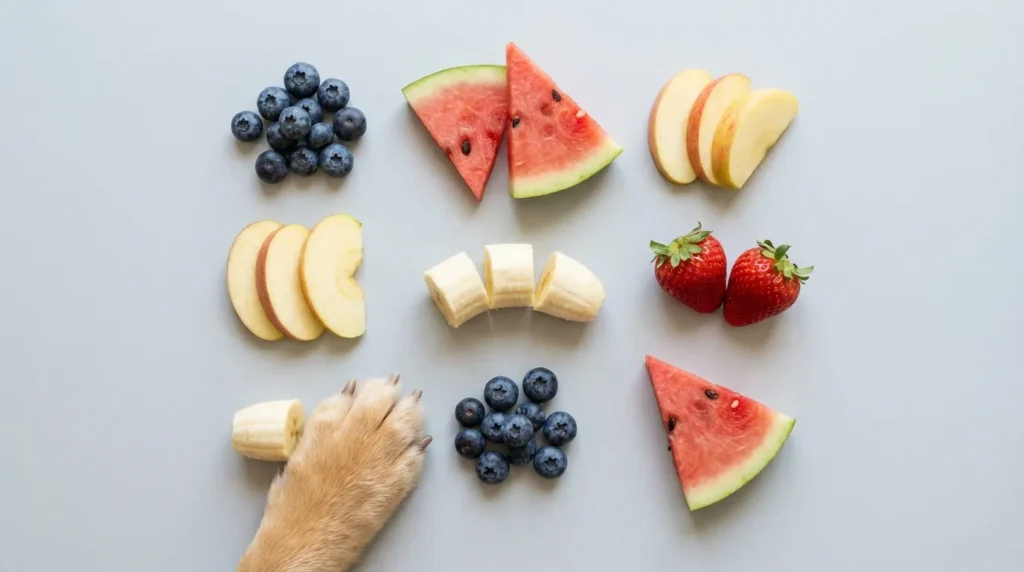
Safe Fruits to Give Your Dog Instead
If you want to share fruit with your dog, these are well-tolerated and nutritious options. Always remove seeds and give in small quantities:
- Blueberries — high in antioxidants, easy to eat, low calorie
- Watermelon (seedless, no rind) — hydrating, dogs love it. Here’s everything you need to know about watermelon for dogs
- Apple slices (no seeds or core) — fiber and vitamin C
- Banana (small amounts) — high in potassium, but also sugar
- Strawberries — vitamin C and fiber, cut into small pieces
- Blackberries — a great low-sugar option; see our full guide on can dogs eat blackberries
- Mango (no pit, no skin) — sweet and nutrient-rich
- Pineapple (fresh, no core) — bromelain supports digestion. Learn more: can dogs eat pineapple
- Cantaloupe (no rind) — hydrating, moderate sugar. Full breakdown: can dogs eat cantaloupe
- Oranges — safe in small amounts but high in acid. Read: can dogs eat oranges
Avoid grapes, raisins, cherries (pits), and anything with added sweeteners. For the complete guide: what fruits can dogs eat.
Frequently Asked Questions
Can dogs eat pomegranate seeds?
No. Pomegranate seeds are hard for dogs to digest and can cause vomiting, diarrhea, and intestinal blockages. One or two seeds from the floor probably won’t cause lasting harm in a healthy adult dog, but regular exposure or larger amounts are a real risk.
Can dogs drink pomegranate juice?
No. Commercial pomegranate juice contains high sugar levels and may contain xylitol, which is toxic to dogs. Even xylitol-free versions offer no nutritional benefit to dogs and can contribute to weight gain and blood sugar issues.
Can dogs have pomegranate extract?
Yes — when it’s formulated specifically for dogs. Pomegranate peel extract in controlled doses has been shown to support canine digestive health and antioxidant status. Only use products made for dogs, and consult your vet before starting any supplement.
Are small dogs at higher risk from pomegranate?
Yes. A rind fragment or cluster of seeds that a large dog might pass without major issue can cause a life-threatening blockage in a small dog. Size matters significantly when it comes to obstruction risk. If you have a dog under 20 pounds and they ate any amount of pomegranate rind or stem, call your vet. If you’re not sure what category your dog falls into, the pet breed finder quiz can help you understand your dog’s size group and related sensitivities.
Is pomegranate in commercial dog food safe?
Generally yes. If you see pomegranate listed in your dog’s kibble or treats, it has been processed and dosed for safe canine consumption. It’s typically used for its antioxidant properties and to slow lipid oxidation in the food. The concern is with fresh, raw pomegranate — not processed, controlled amounts in manufactured dog food.
Final Verdict
Fresh pomegranate is not safe for dogs. The seeds block digestion. The rind causes obstructions. The peel contains cyanide in trace amounts. The juice may contain xylitol. None of those risks are worth it when your dog has no nutritional need for this fruit.
Pomegranate extract in dog-specific products is a different matter — there’s real science behind its digestive and antioxidant benefits at controlled doses.
If your dog ate fresh pomegranate, monitor them closely. If they ate the rind, stem, or more than a few seeds, call your vet or the ASPCA Poison Control line at (888) 426-4435 before symptoms appear — not after.
When in doubt: keep the pomegranate to yourself and give your dog a blueberry instead. If you want to keep tabs on your dog’s overall diet and health going forward, bookmarking the pet food safety checker is a smart move.