


Dogs can eat raw chicken, but that doesn’t mean they should. The real answer depends on the dog, the source of the chicken, how it’s handled, and whether it’s part of a balanced diet — or just something they grabbed off the counter.
This guide covers both sides honestly. You’ll get the risks, the nutritional facts, what different parts of the chicken actually do, and what to do if your dog already ate some. If you’re ever unsure whether a specific food is safe, the Pet Food Safety Checker at Petfel gives you a quick answer by ingredient.
Nutritional Value of Raw Chicken for Dogs
What’s Actually in Raw Chicken
Raw chicken is a solid protein source. A 100g serving of raw chicken breast contains roughly 23g of protein, 2g of fat, and a range of nutrients dogs genuinely need.
Those include:
- B vitamins (B3, B6, B12) — critical for energy metabolism and nerve function
- Selenium — supports thyroid function and acts as an antioxidant
- Zinc — immune support and wound healing
- Phosphorus and magnesium — bone structure and muscle function
- Taurine — heart health (particularly relevant in raw diets)
Raw chicken bones add calcium in a highly bioavailable form. Connective tissue from joints, carcasses, and feet provides glucosamine, chondroitin, and collagen — all useful for joint health.
The protein in raw chicken is highly digestible. Dogs process animal protein efficiently. Less digestive waste means less strain on the kidneys. That’s one argument raw feeding advocates make, and it holds up nutritionally.
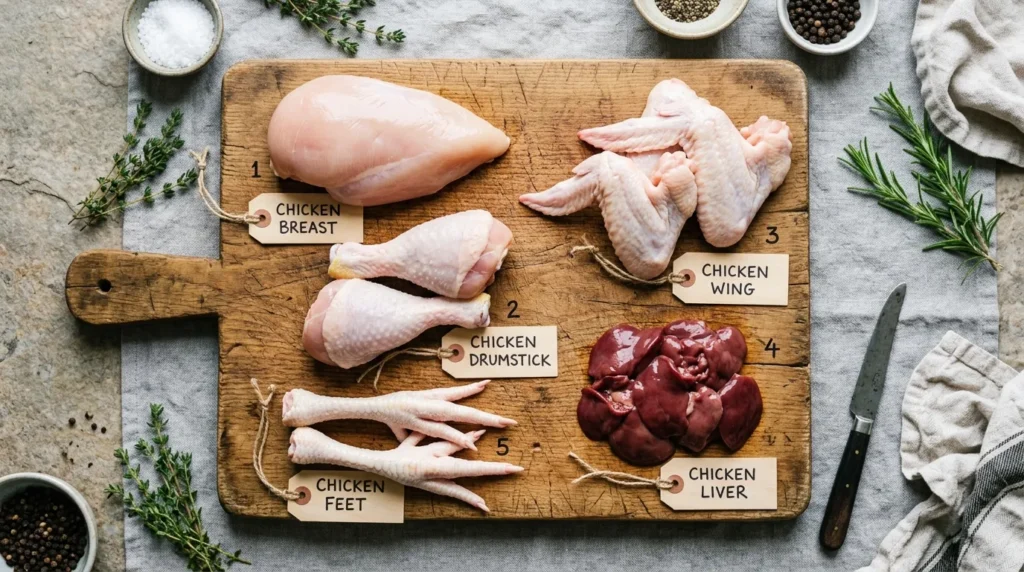
Why Raw Chicken Alone Isn’t Enough
Raw chicken covers protein and several key minerals. It doesn’t cover everything.
Feed a dog nothing but chicken breast and you’ll create deficiencies in calcium (if no bones are included), vitamin D, vitamin E, iodine, and omega-3 fatty acids. Over time, that causes real problems — brittle bones, poor coat condition, immune dysfunction.
Knowing what vegetables dogs can eat alongside their protein can help round out a home-prepared diet. Raw chicken works as part of a complete diet. On its own, it’s not one.
The Risks of Feeding Raw Chicken to Dogs
Bacterial Contamination — Salmonella, Campylobacter, and Listeria
This is the main risk, and it’s real.
Raw chicken sold at supermarkets is produced assuming it will be cooked. That means it’s not tested for pathogens. Salmonella, Campylobacter, and Listeria are commonly found on raw poultry. The FDA and AVMA both cite this as the primary concern with raw meat diets for pets.
Dogs have a more acidic stomach than humans — gastric pH sits around 1 to 2, compared to 1.5 to 3.5 in humans. Their digestive tract is also shorter, which means less time for bacteria to multiply before passing through. For these reasons, dogs can tolerate a higher bacterial load than we can.
That tolerance has limits.
A dog can contract salmonella. The risk is lower than for humans, but it exists — particularly with a heavy contamination load or a compromised immune system.
Can Dogs Get Salmonella?
Yes. Dogs can get salmonella from raw chicken.
More concerning: a dog can shed salmonella in its stool or saliva without showing any signs of illness. That means your dog could pass the bacteria to you or your family through normal contact — licking, face contact, or touching contaminated surfaces near their food bowl.
This is a zoonotic risk. It doesn’t require the dog to be visibly sick. If your dog starts showing digestive symptoms after eating raw meat, use the Pet Symptom Checker to assess what you’re seeing before calling the vet.
Parasites
Raw chicken can carry parasites. In commercially farmed chicken from reputable sources, the risk is relatively low. But low isn’t zero.
Freezing raw chicken for a minimum of 3 days before feeding reduces this risk. Cold temperatures inhibit most parasites without destroying the nutritional value of the meat.
Nutritional Imbalance
Already covered above, but worth repeating as a standalone risk. Feeding raw chicken exclusively — without organs, bones, and variety — causes deficiencies within weeks to months. Don’t let the simplicity of “it’s just chicken” create a false sense of completeness. The same principle applies to other single-food diets — see why feeding dogs ham or bacon as a protein staple creates similar problems.
Food Intolerance and Allergies
Chicken is one of the top 10 allergens for dogs. It ranks alongside beef, dairy, wheat, and egg.
Because chicken appears in so many commercial dog foods, dogs can develop sensitivity over time from repeated exposure. Signs include itchy skin, recurring ear infections, paw licking, and digestive upset.
If your dog shows these signs after eating chicken — cooked or raw — speak to your vet before continuing.
Can Dogs Eat Raw Chicken Bones?
Raw Bones vs. Cooked Bones — Why the Difference Matters
Raw chicken bones are generally safe. Cooked chicken bones are not.
This distinction matters and it’s firm. Cooking changes the structural integrity of bone. Cooked bones become brittle. They snap into sharp splinters that can lacerate the mouth, throat, esophagus, stomach, and intestines. Internal injuries from cooked bone fragments are serious and sometimes fatal.
Raw bones are softer and more pliable. Dogs can gnaw them down without the same splintering risk. The bone matter digests reasonably well in a dog’s acidic stomach environment.
Chicken bones are softer than beef or lamb bones, which makes them more appropriate for smaller breeds. If you’re looking for safer chew alternatives, it’s worth understanding whether rawhide is bad for dogs before adding chews to the rotation — the risks there are different but real.
Choking and Blockage Risk
Even raw bones carry a choking risk if the piece is too large to chew down safely. Dogs with a tendency to gulp food are at higher risk.
Size-match the bone to the dog. A chicken wing is fine for a medium dog; it may be too small for a large breed that could swallow it whole. A carcass works well for bigger dogs with room to gnaw.
Always supervise a dog that has any type of bone.
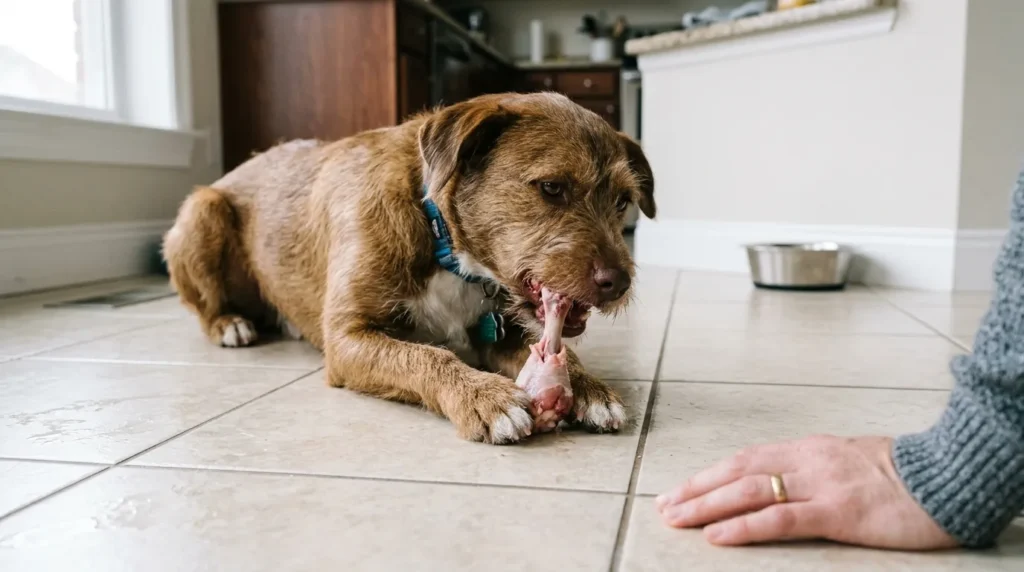
Which Parts of the Chicken Can Dogs Eat Raw?
Chicken Breast
Safe. A clean source of lean protein with minimal fat. Good for dogs that need controlled caloric intake. Won’t cause the stomach upset that fattier cuts sometimes do. It doesn’t provide calcium — bones need to be part of the meal if nutritional balance matters.
Chicken Wings
Safe for most dogs. Soft bones that most medium and large dogs can handle without difficulty. A good introductory bone for younger dogs. Hold one end the first few times for puppies learning to gnaw, rather than swallow.
Chicken Drumsticks
Safe. Higher in protein than breast. Good source of B12, zinc, and iron. Bone marrow inside the drumstick provides collagen and additional B vitamins. The skin is high in fat — remove it for dogs prone to pancreatitis or those on a calorie-restricted diet.
Chicken Liver
Safe in small amounts. Liver is the most nutrient-dense part of the chicken. It provides vitamin A, B vitamins, iron, copper, taurine, choline, and the antioxidant CoQ10.
Too much liver causes digestive upset — loose stool is common when fed in excess. Keep it to roughly 5% of the total diet if you’re building a raw meal plan. A thumbnail-sized piece works as a standalone treat.
Chicken Feet
Safe. Looks unusual, but nutritionally solid. Chicken feet are rich in connective tissue — high in glucosamine, chondroitin, and collagen. Good for joint health. Trim the nails before giving them to your dog, as sharp nails can cause minor mouth injuries.
Chicken Skin
Safe in small quantities. Not a daily addition. Chicken skin is high in fat and typically high in omega-6 fatty acids — the pro-inflammatory end of the fatty acid spectrum. Too much disrupts the omega-3 to omega-6 balance. For dogs with pancreatitis, avoid it entirely.
Chicken Carcass
Safe for most dogs, and one of the most complete raw chicken options available. A carcass includes meat, bone, connective tissue, and marrow. It covers a wide nutritional range and gives dogs a full gnawing workout — which has documented benefits for mental wellbeing through endorphin release. Supervise throughout.
Vulnerable Dogs — Extra Caution Required
Not all dogs face the same level of risk from raw chicken.
Puppies have developing immune systems. Their gastric acid production isn’t yet at adult levels, which reduces their natural defense against pathogens. The risk of bacterial illness is meaningfully higher in dogs under 6 months. If you’re raising a young dog and are unsure what stage they’re at, the Pet Age Calculator can help you assess your dog’s developmental stage.
Senior dogs often have declining immune function. Age-related changes to the gut and immune system reduce their ability to neutralize bacterial contamination.
Immunocompromised dogs — those on corticosteroids, chemotherapy, or with conditions like Addison’s disease or diabetes — have reduced capacity to fight off bacterial infections. Raw feeding carries substantially higher risk in this group.
Pregnant or nursing females are also more vulnerable. A bacterial infection during pregnancy can affect the litter.
If your dog falls into any of these categories, consult a vet before introducing raw chicken.

Raw Chicken vs. Cooked Chicken for Dogs
Both are safe options when handled correctly. The differences come down to nutrition and risk.
| Raw Chicken | Cooked Chicken | |
|---|---|---|
| Protein bioavailability | Higher | Slightly reduced by heat |
| Bacteria risk | Present | Eliminated by cooking |
| Bone safety | Raw bones are safe to feed | Cooked bones must never be fed |
| Nutrient retention | Higher (heat-sensitive vitamins preserved) | Some B vitamins lost in cooking |
| Digestive upset | Possible with high fat or bacterial load | Less likely; good for sensitive stomachs |
| Allergen risk | Same as cooked | Same as raw |
For a dog with a sensitive stomach, an upset digestive system, or recent illness — cooked, plain, unseasoned chicken is the safer short-term option. For owners committed to a raw diet with proper sourcing and hygiene, raw chicken is nutritionally superior.
One point that isn’t negotiable: never feed cooked bones regardless of which path you choose.
Chicken isn’t the only protein worth considering. If you’re diversifying your dog’s diet, check what’s safe before introducing anything new — guides like can dogs eat tuna and can dogs eat shrimp follow the same safety-first framework.
What Vets and Health Organizations Say
The FDA does not recommend raw diets for pets. Their official position cites the risk of Salmonella, Listeria, and other pathogens — both to the pet and to humans in the household. They also note that even pets that don’t show symptoms can shed bacteria through saliva and feces.
The American Veterinary Medical Association (AVMA) discourages feeding raw or undercooked animal protein to dogs. Their policy states that the risk of pathogen exposure outweighs the nutritional benefits, particularly for dogs in households with children, elderly individuals, or immunocompromised people.
These positions are based on human household safety as much as dog health. The concern isn’t only whether the dog gets sick — it’s whether the dog becomes a vector for illness in the home.
Raw feeding advocates counter that commercial raw pet food is tested for pathogens, unlike supermarket chicken, and that proper handling eliminates most of the practical risk. That’s a fair distinction. The FDA’s concern applies most directly to raw chicken handled the same way as human food — not to commercially produced, tested raw pet food.
Speak to your vet before making any significant dietary change. The right answer will depend on your dog’s health status, your household composition, and your ability to maintain consistent food hygiene.
How to Feed Raw Chicken Safely (If You Choose To)
Sourcing and Storage
Buy chicken from a reputable butcher or grocery source. For more consistent safety, consider commercially produced raw dog food — these products are tested for pathogens before sale, unlike retail chicken intended for human cooking.
Store raw chicken in a sealed container in the freezer until you’re ready to use it.
Freezing Protocol
Freeze raw chicken for a minimum of 3 days before feeding. This doesn’t kill all bacteria, but it significantly reduces the bacterial load and eliminates most parasites. Thaw in the refrigerator — never at room temperature.
Don’t rinse raw chicken before feeding it. Rinsing spreads bacteria across your sink, surrounding surfaces, and potentially your hands.
Hygiene Steps
Follow the FDA’s recommended protocol:
- Wash hands with soap and water for at least 20 seconds after handling raw meat, bones, or contaminated surfaces
- Clean and disinfect all surfaces that contacted the raw chicken — countertops, cutting boards, bowls, utensils. Wash with hot soapy water first, then sanitize with a solution of 1 tablespoon bleach per 1 quart of water
- Confine feeding to an easy-to-clean area — tile or hardwood, not carpet
- Teach children not to handle raw chicken or touch the dog’s feeding area during or after a raw meal without washing their hands
- Dispose of uneaten raw chicken within 30–60 minutes. Don’t leave it sitting in the bowl

What to Do If Your Dog Ate Raw Chicken
Symptoms to Watch For and Timeline
If your dog ate a small amount of raw chicken — a piece off the counter, a stolen drumstick — most dogs will be fine. Monitor them for the next 7 days.
Bacterial illness symptoms typically appear within 6 to 72 hours of exposure. In some cases, particularly with heavier contamination, symptoms can take up to 7 days to develop.
Watch for:
- Vomiting
- Diarrhea (may contain blood in severe cases)
- Loss of appetite
- Lethargy
- Fever (normal dog temperature is 101–102.5°F / 38.3–39.2°C — above 103°F warrants attention)
- Dehydration — sunken eyes, dry gums, skin that doesn’t spring back when gently pinched
If your dog is vomiting repeatedly, learn why your dog is vomiting to understand when it crosses from minor upset into a vet-visit situation. Similarly, persistent loose stool after eating raw food is covered in the guide on why dogs get diarrhea.
When to Call the Vet
Call your vet immediately if:
- Your dog swallowed cooked chicken bones
- Your dog ate a large quantity of raw chicken
- Symptoms appear — especially vomiting combined with lethargy, or any bloody stool
- Your dog is a puppy, senior, pregnant, or has a known health condition
For small amounts of raw chicken in a healthy adult dog with no symptoms — monitor closely and call your vet if anything changes. And never try to make your dog vomit at home without vet guidance — read how to make a dog throw up safely first to understand what’s appropriate and what isn’t.
Frequently Asked Questions
Can puppies eat raw chicken? Technically yes, but with elevated risk. Puppies have immature immune systems and lower gastric acid levels, making them more vulnerable to foodborne bacteria. If you want to include raw chicken in a puppy’s diet, consult a vet and use commercially produced, pathogen-tested raw food rather than retail chicken.
Can dogs eat raw chicken every day? Raw chicken can be fed daily as part of a complete, balanced raw diet. It should not be the only food your dog eats. Variety in protein sources and inclusion of organ meat, bone, and other nutrients is necessary to prevent deficiencies over time.
How long after eating raw chicken will a dog get sick? If contaminated chicken causes illness, symptoms typically appear within 6 to 72 hours. Monitor for up to 7 days. Many dogs eat raw chicken without any reaction at all.
Is raw chicken better than cooked for dogs? From a nutritional standpoint, raw chicken retains more heat-sensitive vitamins and offers higher protein bioavailability. From a safety standpoint, cooked chicken eliminates bacterial risk. Neither is universally “better” — it depends on the dog, the household, and whether proper handling is consistently maintained.
What other proteins can dogs eat safely? Dogs handle a range of animal proteins well. Other safe options include cooked shrimp, tuna in moderation, and plain cooked eggs. For a broader picture of safe foods, the what fruits can dogs eat and what vegetables can dogs eat guides are good starting points for building a varied diet.
Final Word
Raw chicken isn’t automatically dangerous for dogs, and it isn’t automatically safe either. The outcome depends on the source, the handling, and the dog.
Most healthy adult dogs can tolerate raw chicken without incident. The risks — bacterial, parasitic, and nutritional — are real but manageable with the right practices. Vulnerable dogs need more caution. And cooked chicken bones should never be fed under any circumstances.
If you’re unsure, start with cooked, plain, unseasoned chicken. It’s safe, nutritious, and gives your dog most of the benefit without the handling complexity of raw meat. If you’re committed to raw feeding, work with your vet and source from a supplier that tests for pathogens.
Not sure which diet suits your dog’s breed type and size? The Pet Breed Finder Quiz can help you understand your dog’s specific nutritional tendencies before you make a change.