

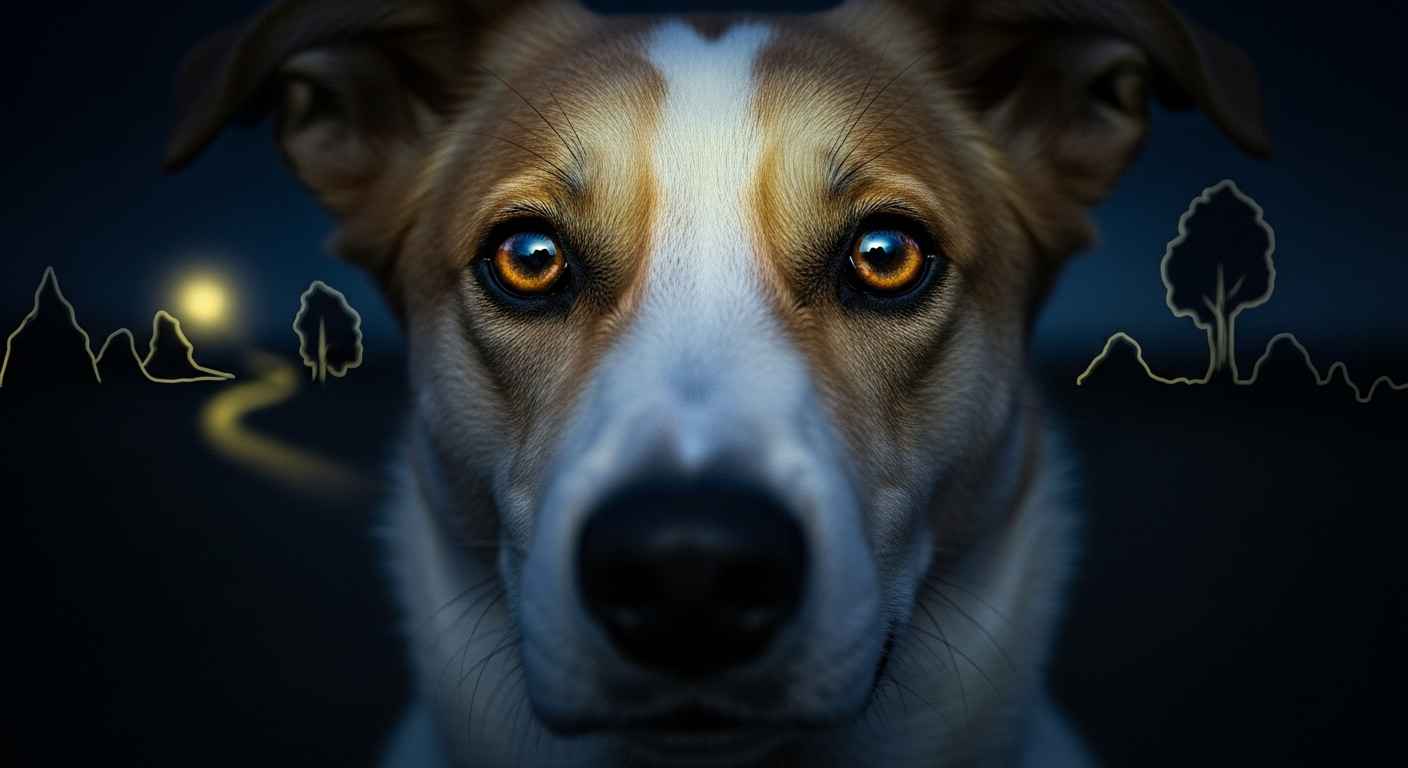
Dogs often move around at night with ease. Many owners wonder if their pets can see in low light. The answer is yes, but with limits. Dogs handle dim settings better than humans. This comes from their eye structure. Below, we explain how dogs see in the dark, their limits, and tips to support them, based on the latest research and common questions.
How Dog Eyes Work
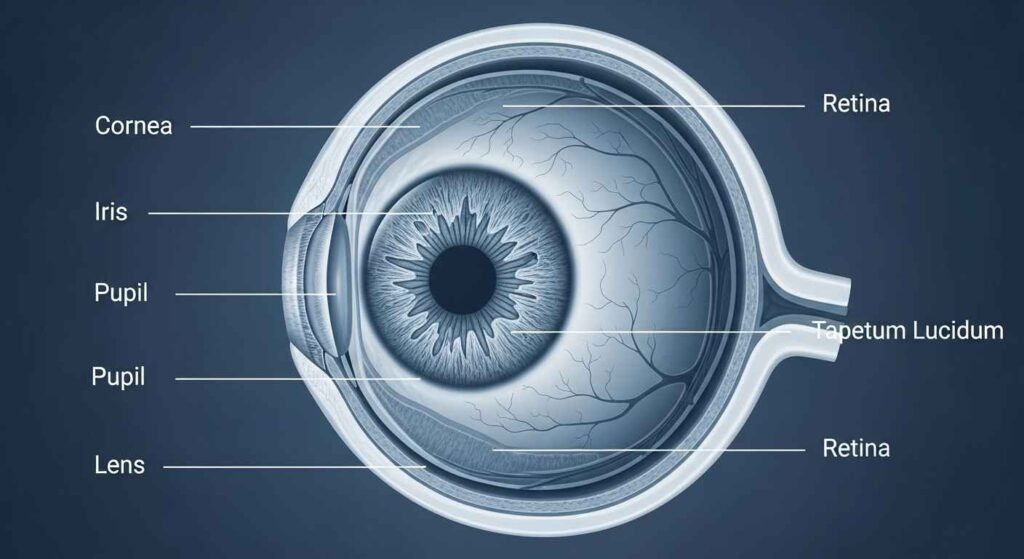
A dog’s eye is similar to a human’s but built for low light. Key parts make this possible.
Key Parts of a Dog’s Eye
- Cornea: Clear layer that bends light.
- Iris and Pupil: Colored ring and black center that control light. Dogs have larger pupils for more light.
- Lens: Focuses light onto the retina.
- Retina: Back layer with rods for dim light and cones for color.
- Tapetum Lucidum: Reflective layer that boosts light.
These parts help dogs see in dim conditions.
Why Dogs See Better in Low Light
Dogs descend from wolves, active at dawn and dusk. Their eyes suit this lifestyle.
- More Rods: Dogs have more rod cells in their retinas, which detect motion and work in low light.
- Tapetum Lucidum: This layer reflects light back through the retina, doubling light use. It causes the glowing eyes in photos.
- Larger Pupils: Let in more light than human pupils.
Dogs detect motion five times better than humans in dim light. They see shapes and movement clearly at dusk.
Limits of Dog Night Vision
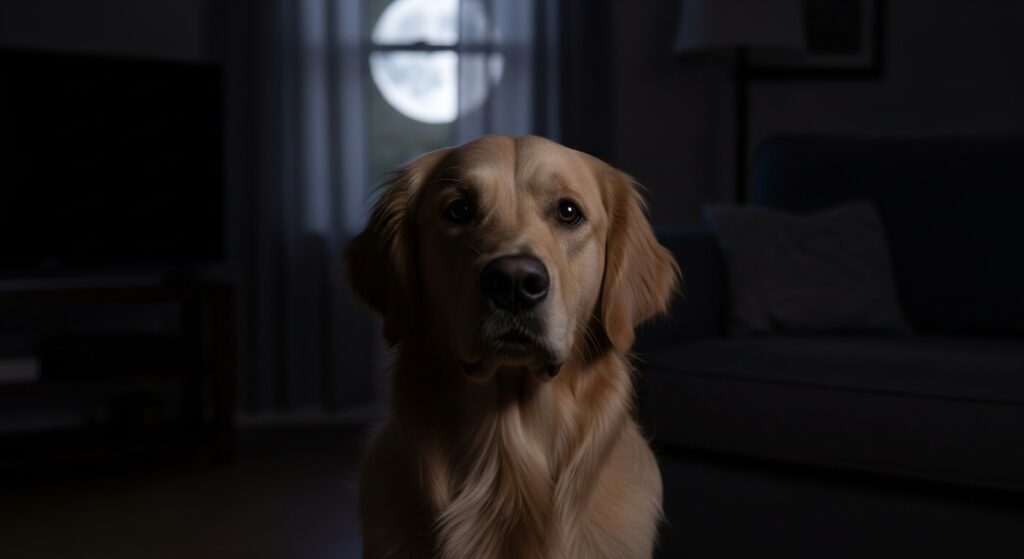
Dogs don’t see in complete darkness. They need some light, like moonlight or streetlights. Without it, they rely on smell and hearing.
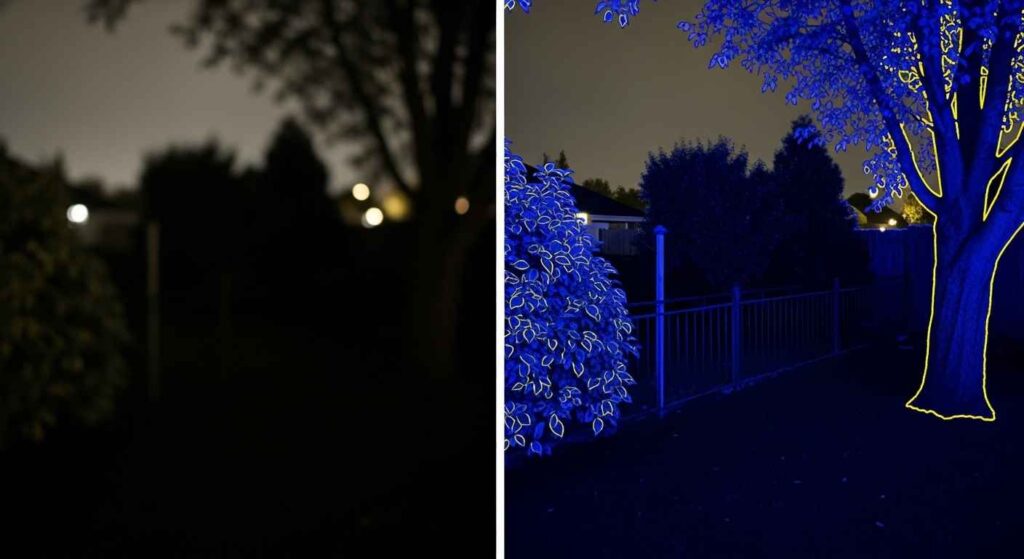
- Color Vision: Dogs see blues and yellows but not reds or greens. Colors look muted.
- Clarity: Their vision is less sharp, around 20/75 compared to human 20/20.
- Detail: Dogs struggle with fine details up close.
For more on dog senses, check how many teeth do dogs have.
Dogs vs. Humans vs. Cats
Humans need bright light for clear vision, focusing on color and detail. Dogs outperform humans in dim light due to more rods and the tapetum. Cats, however, excel most. Their slit pupils let in more light, and their tapetum is more efficient, making them top night hunters.
If your dog struggles at night, check for eye issues with our pet symptom checker.
Signs of Eye Problems in Dogs
Healthy eyes are key for night vision. Look for:
- Cloudy or red eyes.
- Excessive rubbing.
- Bumping into objects.
- Uneven eye glow.
Aging dogs may develop cataracts, clouding vision. Vets can diagnose issues. Learn more about dog health in can dogs get hiccups or what can I give my dog for pain.
Tips for Dogs at Night
- Lighting: A nightlight helps anxious dogs, but most don’t need it.
- Walks: Use reflective gear for evening walks.
- Toys: Choose blue or yellow toys for visibility.
- Health: Check food safety with our pet food safety checker. Avoid risks like can dogs eat mushrooms.
- Fun Tools: Try our pet name generator for a new pup or pet breed finder quiz for breeds with strong vision.
Dogs rely on smell and hearing too. A strong nose helps them navigate.
Common Questions About Dog Vision
From Google’s “People Also Ask” and “Related Searches”:
- Do dogs need lights at night? No, unless they seem scared or clumsy.
- Can dogs see TV? Yes, but screens flicker to them.
- What colors do dogs see? Blues, yellows, and grays.
- Can dogs see ghosts? No evidence, but they hear faint sounds.
- When do puppies see well? Full vision by eight weeks. Use our pet age calculator.
For more pet facts, visit are cats color blind.
Dogs’ night vision is impressive but not perfect. Understanding it helps you support your pup. Share your dog’s nighttime habits in the comments!