

Benadryl can help dogs with allergies, itching, or motion sickness. Always consult a veterinarian before giving it to your dog. This guide provides safe dosage information, uses, and precautions based on current veterinary advice as of 2025.
What Is Benadryl?
Benadryl is a brand name for diphenhydramine, an antihistamine. It blocks histamines in the body that cause allergic reactions like itching, swelling, or sneezing. Vets often recommend it for dogs to manage mild symptoms, though it’s not a cure-all.
Is Benadryl Safe for Dogs?
Benadryl is generally safe for dogs when given in the correct dose. It’s not FDA-approved for veterinary use but is commonly used off-label by vets. Avoid giving Benadryl to dogs with:
- Heart disease
- High blood pressure
- Glaucoma
- Seizure disorders
- Prostate issues
Do not use it for pregnant or nursing dogs. Puppies under 6 months need veterinary approval. Always check the label to ensure the product contains only diphenhydramine. Avoid versions with added ingredients like acetaminophen, pseudoephedrine, or alcohol, as these are toxic to dogs. Liquid Benadryl may contain xylitol, a sweetener harmful to dogs.
Uses of Benadryl for Dogs
Benadryl can address several conditions in dogs. Here are the main uses:
Allergies
Benadryl reduces itching, redness, or swelling from seasonal, environmental, or food allergies. It works best for mild cases. For severe allergies, a vet may recommend stronger treatments. Check our Pet Food Safety Checker to identify potential food allergens.
Insect Bites or Stings
It helps reduce swelling from bee stings or insect bites. Administer it soon after the incident. If your dog shows severe swelling or breathing issues, seek a vet immediately.
Motion Sickness
Benadryl can ease nausea during car trips. Give it 30-60 minutes before travel. Other medications like Cerenia may work better for this purpose.
Mild Anxiety
The drowsiness from Benadryl may calm some dogs in stressful situations like vet visits. It’s not effective for severe anxiety, such as during fireworks. Consult a vet for better anxiety solutions. Read more in our post on Common Dog Owner Mistakes.
Vaccine Reactions
Vets may suggest Benadryl before vaccinations to prevent mild reactions in sensitive dogs.

Benadryl Dosage for Dogs
Dosage depends on your dog’s weight. The standard guideline, per the Merck Veterinary Manual (updated 2025), is 2-4 mg per kilogram of body weight, or about 0.9-1.8 mg per pound. A simpler rule is 1 mg per pound, given 2-3 times daily.
Dosage Chart:
| Dog Weight (lbs) | Dosage (mg) |
|---|---|
| 10 | 10 |
| 20 | 20 |
| 30 | 30 |
| 50 | 50 |
| 75 | 75 |
| 100 | 100 |
For example, a 25-pound dog can take 25 mg, which is one adult tablet or two 12.5 mg children’s tablets. For liquid Benadryl (12.5 mg/5 ml), a 10-pound dog needs 4 ml (10 ÷ 2.5 = 4 ml). Always confirm the dose with your vet, as health conditions or medications may affect it. Give no more than 3 doses in 24 hours, spaced 8-12 hours apart.
How to Administer Benadryl to Your Dog
Benadryl comes in tablets, capsules, or liquid form. Here’s how to give it:
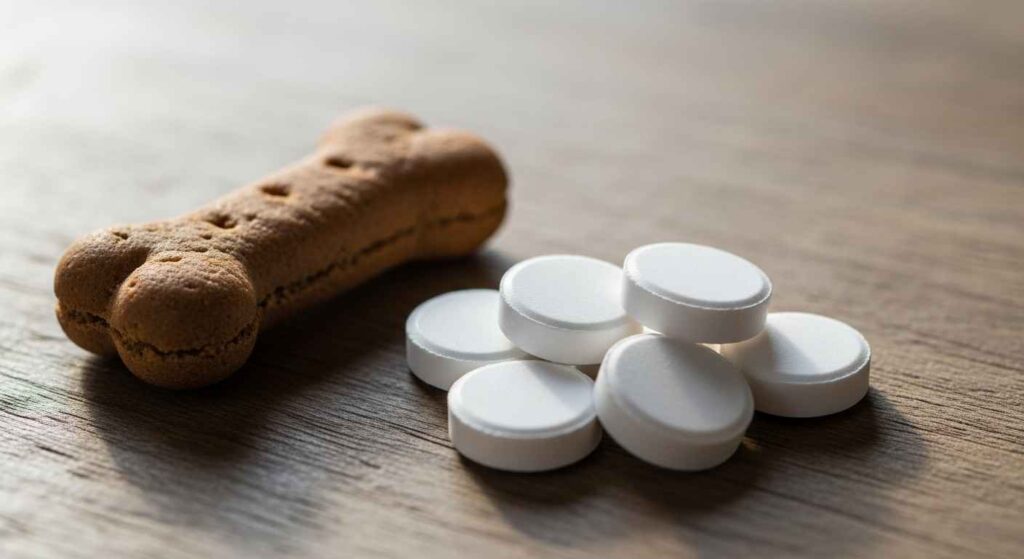
- Tablets/Capsules: Hide in a treat like plain peanut butter. Use 25 mg or 50 mg tablets. Split tablets for accurate dosing.
- Liquid: Use a syringe or dropper for precise measurement. Mix with food if needed. Ensure it’s free of xylitol or alcohol.
Start with the lowest effective dose (1 mg per pound). Monitor your dog for reactions. For small dogs under 10 pounds, children’s liquid Benadryl is easier to dose. For tips on giving medication, see our guide on How to Give a Cat a Pill, which has similar techniques for dogs.
Side Effects of Benadryl
Most dogs tolerate Benadryl well. Common side effects include:
- Drowsiness or lethargy
- Dry mouth
- Reduced urination
Less common side effects:
- Increased heart rate
- Vomiting
- Diarrhea
- Loss of appetite
Some dogs may become hyperactive instead of sleepy. Overdose symptoms include seizures, rapid breathing, or collapse. If you notice these, contact your vet or the ASPCA Animal Poison Control at (888) 426-4435 immediately.
When to Contact a Veterinarian
Benadryl isn’t suitable for all conditions. Seek veterinary care if your dog has:
- Worsening symptoms
- Facial swelling
- Difficulty breathing
- Chronic allergies
A vet can diagnose underlying issues. Use our Pet Symptom Checker to track symptoms and decide when to seek help. For older dogs, check their health with our Pet Age Calculator.
Alternatives to Benadryl
If Benadryl isn’t effective, consider these options after vet approval:
- Cetirizine (Zyrtec): 0.5 mg per pound, once daily.
- Loratadine (Claritin): 0.2 mg per pound, once daily.
- Medicated Shampoos: Soothe itchy skin.
- Omega-3 Supplements: Reduce inflammation.
- Prescription Meds: Apoquel or Cytopoint for severe allergies.
- Natural Remedies: Quercetin or coconut oil (vet-approved).
Ensure other antihistamines contain no toxic additives. For more on safe treatments, read What Fruits Can Dogs Eat? for natural relief ideas. Learn about environmental triggers in our post on Can Dogs Get Poison Ivy?.
People Also Ask: Common Questions Answered
How much Benadryl for a 20-pound dog?
Give 20 mg, or one 25 mg tablet. Split if needed for accuracy.
Can dogs take Benadryl daily?
Yes, for short-term use. Long-term use requires vet supervision.
What happens if my dog gets too much Benadryl?
Overdose can cause seizures, breathing issues, or coma. Call a vet immediately.
Is children’s Benadryl better for small dogs?
Yes, it’s easier to dose accurately for dogs under 10 pounds.
Does Benadryl stop dog itching?
It helps with allergy-related itching but not infections or other causes.
Benadryl can be a helpful tool for your dog’s mild symptoms. Always prioritize veterinary guidance to ensure safety and effectiveness. Use our Pet Symptom Checker for ongoing health monitoring.