
Yes — dogs can get poison ivy. But it happens far less often than it does in people, and most dogs walk through a patch without developing any reaction at all.
Here’s what catches most owners off guard: even when your dog shows zero symptoms, they can carry the rash-causing oil on their fur and transfer it directly to you. That’s the part of this story worth paying close attention to.
This guide covers the real risk level, which dogs are actually vulnerable, what symptoms look like, how to properly wash your dog after exposure, and exactly when to call the vet.
Why Dogs Usually Don’t Get a Rash
Poison ivy doesn’t cause a rash on its own. The problem is an oily resin called urushiol, which coats every part of the plant — leaves, stems, roots, and berries. When urushiol contacts skin, the immune system identifies it as a threat and triggers an inflammatory response: redness, swelling, itching, and blisters.
Dogs have a built-in advantage over humans: fur. A thick coat acts as a physical barrier that prevents the oil from ever reaching the skin. For most dogs, that’s enough protection. The urushiol sits on the outer coat, causes no visible reaction, and eventually washes off.
But “most dogs” isn’t “all dogs.”
Which Dogs Are Actually at Risk?
Coat coverage determines the risk more than anything else. Dense double-coated breeds like Huskies, Golden Retrievers, and German Shepherds are well protected. The oil rarely gets through.
Short-haired, thin-coated breeds are a different situation. Weimaraners, Vizslas, Boxers, Greyhounds, and Dalmatians have very little between the plant oil and their skin. They’re genuinely more likely to develop a contact rash after exposure.
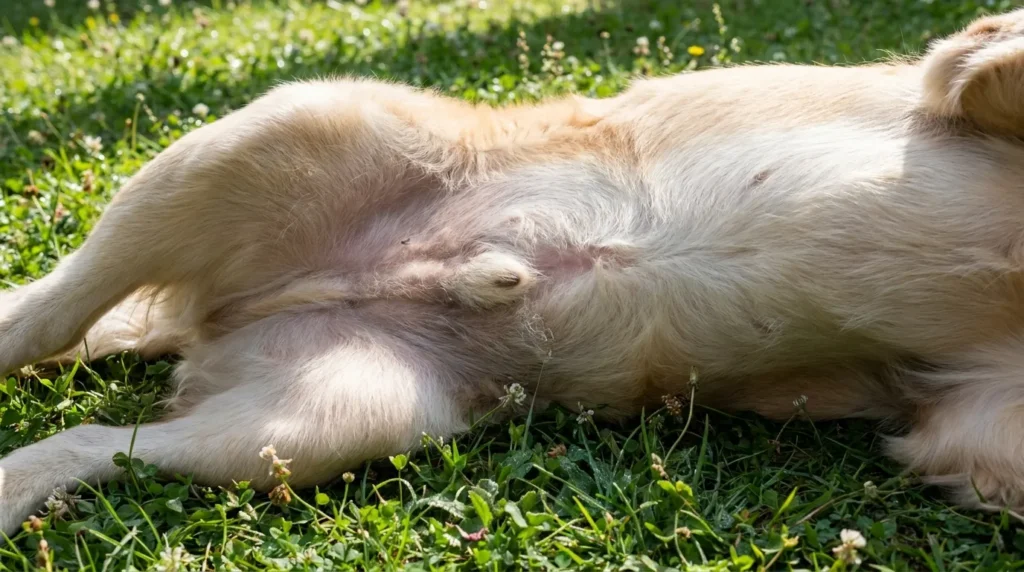
Body area matters too, regardless of coat type. Even heavily coated dogs have exposed, lightly furred skin on the belly, groin, and inner thighs. Shorter dogs are at higher risk from this angle — they brush plants at belly height during walks and hikes, directly exposing their least-protected skin.
If you’re not sure what coat type your breed has, the dog breed quiz can help you identify your dog’s characteristics, including general skin and coat type.
Symptoms of Poison Ivy in Dogs
Skin Contact Symptoms
Skin reactions from contact typically develop within a few hours to 3 days. Look for:
- Red, inflamed skin
- Swelling, especially on the face, muzzle, or belly
- Small bumps or fluid-filled blisters
- Intense itching — scratching, licking, or rubbing against furniture
- Scabs from broken skin caused by scratching
The rash appears most often on the belly, groin, muzzle, and inner legs — wherever the skin is thinly covered or exposed.
Ingestion Symptoms
If your dog chewed or swallowed any part of the plant, the reaction looks different. Gastrointestinal symptoms come first:
- Vomiting
- Diarrhea
- Drooling or excessive salivation
- Reduced appetite or reluctance to eat
Most ingestion cases produce stomach upset that clears up within a day or two. However, in rare cases, ingestion can trigger a severe systemic allergic reaction.
Emergency Warning Signs
Get to an emergency vet immediately if you notice:
- Difficulty breathing or labored, shallow breathing
- Swelling around the face, muzzle, or throat
- Sudden collapse or extreme lethargy
- Pale gums
These are signs of anaphylactic shock. It’s uncommon, but it can become fatal within minutes without treatment.
Not sure whether what you’re seeing is serious or mild? The pet symptom checker can help you assess the situation more clearly before calling your vet.
Can You Get Poison Ivy From Your Dog?
Yes — and this is the risk most dog owners never consider.
Urushiol doesn’t cause a rash and disappear. It stays biologically active on surfaces — including your dog’s fur — for hours, days, and in some cases months. Petting an exposed dog, sitting where they’ve been lying, or even handling their collar after a hike can transfer enough oil to trigger a full rash on your skin.
Between 50% and 75% of people are sensitive to urushiol. The odds that you’ll develop a reaction from a contaminated dog are real.
This is exactly why washing your dog after any known exposure matters — even when they show no symptoms whatsoever.
How to Wash Your Dog After Poison Ivy Exposure
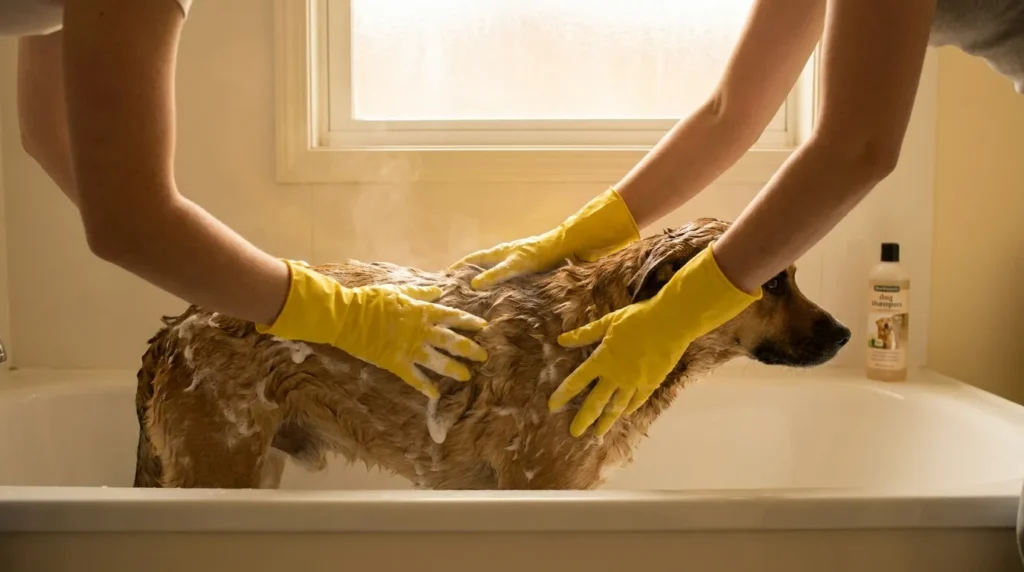
Act quickly. The sooner the oil is off the coat, the lower the risk for both your dog and you.
What You’ll Need
- Rubber or nitrile gloves (no bare hands)
- Long-sleeved shirt
- Dog oatmeal shampoo, Tecnu skin cleanser, or an anti-seborrheic shampoo
- Lukewarm water
Step-by-Step Bathing Protocol
- Gloves and long sleeves on before you touch the dog.
- Rinse thoroughly with cool or lukewarm water. Avoid hot water — it opens skin pores and can increase urushiol absorption.
- Apply shampoo and work it into a full lather across the belly, legs, and all exposed skin areas.
- Keep shampoo away from eyes, ears, and genitals.
- Rinse completely. Soap residue causes its own irritation.
- Towel dry, then wash that towel immediately in hot water with a degreasing detergent.
Everything Else That Needs Washing
Urushiol transfers to every surface your dog touches:
- Collar and leash
- Bedding and blankets
- Furniture cushions the dog has used
- Your clothing
Wash fabric items in hot water with a grease-cutting detergent. Wipe hard surfaces — crates, floors, doorways the dog brushed — with rubbing alcohol.
Getting comfortable grooming your dog at home beforehand makes post-exposure bathing significantly less stressful for both of you, especially if your dog isn’t used to baths.
One important safety note: never burn poison ivy plants to dispose of them. Burning aerosolizes the urushiol. Inhaling it causes severe respiratory reactions and can put both you and your dog in the hospital.
How Vets Treat Poison Ivy in Dogs
Mild Reactions
For minor rashes with moderate itching, an oatmeal bath usually provides enough relief while the reaction clears on its own. Prevent scratching — a cone collar may be necessary to stop your dog from breaking the skin and introducing bacteria.
For short-term itch relief, some vets recommend antihistamines. If you’re wondering whether Benadryl is safe for dogs, the answer is generally yes at the correct weight-appropriate dose — but confirm the dosage with your vet before giving it.
Moderate to Severe Skin Reactions
When the rash spreads significantly or a secondary bacterial infection develops, vets typically prescribe:
- Corticosteroids (oral, topical, or injectable) to reduce inflammation
- Antibiotics if the skin is broken and infected
- Topical medicated ointments to calm and protect the affected areas
Don’t apply human hydrocortisone creams to dogs. The concentration isn’t formulated for canine skin, and the ingredients can cause additional problems.
If Your Dog Ingested Poison Ivy
- Call your vet or the Pet Poison Helpline at 855-764-7661 immediately.
- Do not attempt to induce vomiting without veterinary direction. Learn how to safely make a dog throw up before attempting anything at home — doing it incorrectly causes more harm.
- Watch for vomiting, diarrhea, breathing changes, or lethargy.
Most ingestion cases resolve with supportive care. Severe reactions may require IV fluids or brief hospitalization.
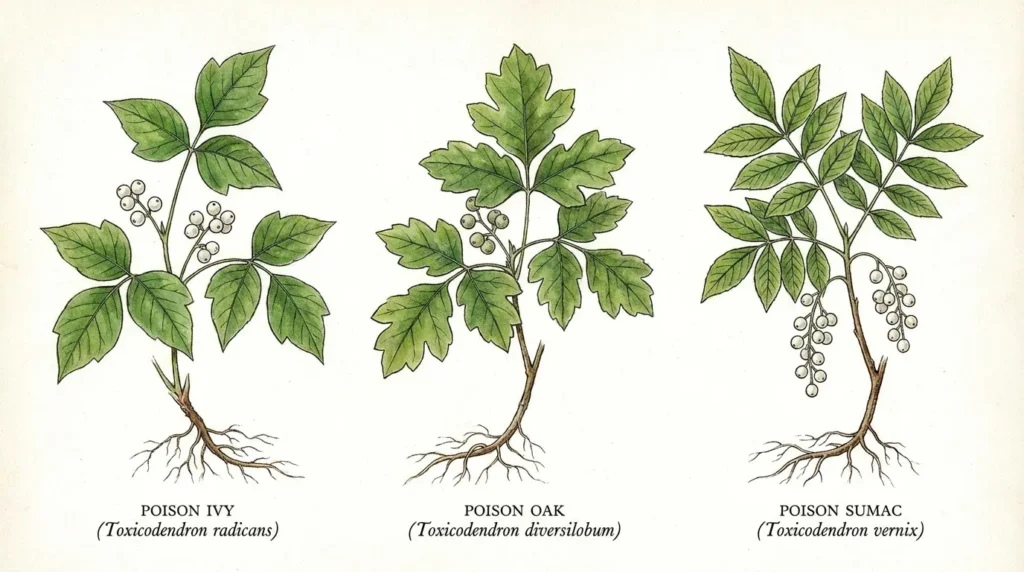
Poison Ivy vs. Poison Oak vs. Poison Sumac
All three plants contain urushiol and cause the same type of reaction in both dogs and humans. Knowing how to tell them apart matters on the trail.
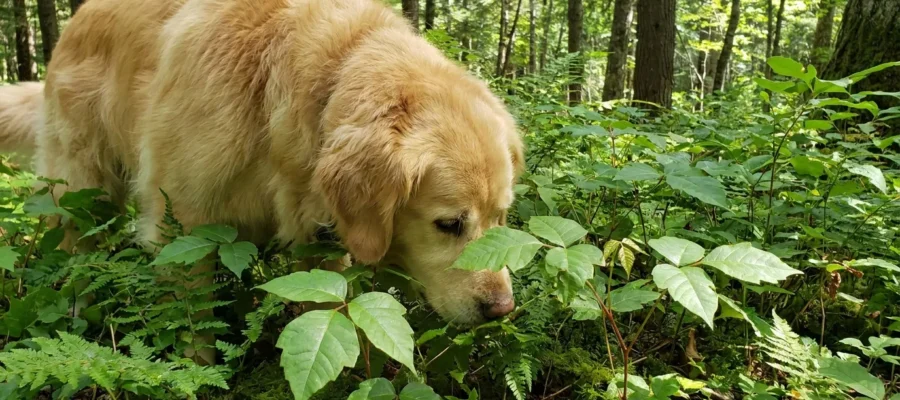
Poison Ivy grows throughout most of the U.S., except Alaska, Hawaii, and parts of the West Coast. Three pointed leaves, glossy surface, smooth or slightly ridged edges. Grows as a vine, shrub, or ground cover.
Poison Oak looks similar but has rounded, fuzzy leaf edges. Common in the eastern and southern U.S. Often grows as a low shrub with white-yellow berries.
Poison Sumac is found in wetlands and marshlands across the Northeast, Midwest, and Southeast. It has 7 or more leaves per stem with smooth edges, and grows as a tall shrub or small tree.
It’s also worth knowing that some plant-derived products can be harmful to dogs in different ways. Peppermint oil, for example, is one many owners don’t realize can be toxic — not all natural things are safe.
How to Prevent Exposure
On Hikes and Trails
- Keep your dog on a leash in wooded, brushy, or marshy areas
- Carry rubber gloves and a small towel for a quick wipe-down before getting back in the car
- Learn to identify all three plants before heading out — a 10-minute review before a trail hike is worth it
- Stick to maintained, cleared trails when possible
Understanding how much exercise your dog actually needs each day helps you plan trail outings at the right intensity without unnecessary plant exposure in overgrown areas.
In Your Yard
- Walk the yard perimeter periodically, especially around fence lines and wooded edges
- Remove plants using gloves and shears — dig out the roots with a shovel rather than pulling them, which releases more oil
- Bag removed plants in sealed garbage bags for disposal (not the compost pile)
- Apply a pet-safe herbicide to the cleared area after removal
When to Call the Vet — Clear Decision Criteria
Home care works fine for mild itching and a minor rash. Call your vet if:
- The rash is spreading or visibly worsening after 24 hours
- Your dog won’t stop scratching and the skin is broken or bleeding
- Vomiting or diarrhea appears after trail exposure
- You suspect the dog ingested any part of the plant
- Your dog is more lethargic than usual after a hike — if your dog is panting heavily or seems uncomfortable, that’s worth a call
Go to an emergency vet immediately for any breathing difficulty or sudden facial swelling. That’s not a wait-and-see situation.
Poison ivy is rarely a serious problem for dogs, but the risk is real — particularly for short-haired breeds and dogs that spend time in wooded areas with exposed belly and groin skin. More importantly, your dog can deliver a full rash to you without ever developing one themselves.
After any trail hike in wooded terrain, a quick rinse takes 15 minutes and is worth every second. Keep gloves on, use a proper shampoo, wash everything the dog contacted, and call your vet if symptoms appear and don’t resolve within 24 hours.