
Feeding your cat the right amount of wet food helps maintain its health and weight. Many cat owners choose wet food for its moisture content, which supports hydration. This guide covers key factors and steps to figure out portions based on reliable advice from veterinarians and pet care experts.
Factors That Affect Feeding Amounts
Several elements play a role in deciding how much wet food your cat needs each day. These include its size, life stage, and daily routine.
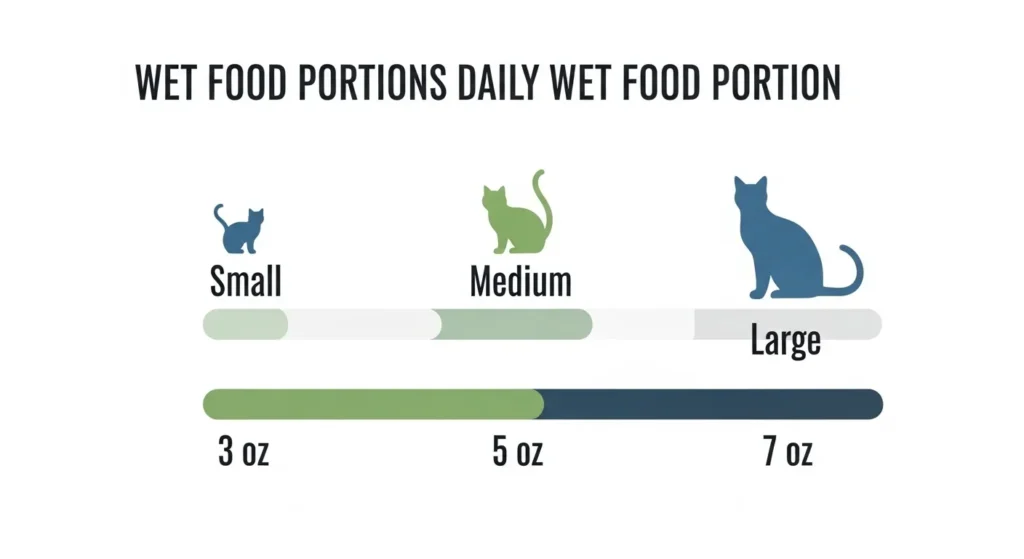
- Body weight stands out as a main guide. For an average adult cat around 10 pounds, portions often range from 3 to 4 small cans, assuming each can holds about 3 ounces. Adjust based on the cat’s exact build.
- Age matters too. Kittens require more calories for growth, sometimes double what adults need. Senior cats might eat less due to lower energy levels. Tools like a pet age calculator can help determine your cat’s life stage more precisely.
- Activity level influences intake. Cats that play a lot or roam outdoors use more energy, so they may need extra food compared to indoor ones that rest most of the time.
- Health and status changes things. Spayed or neutered cats often have a slower metabolism, cutting their needs by up to 30 percent to avoid extra pounds. Pregnant or nursing mothers could require 25 to 50 percent more. Conditions like thyroid issues might increase requirements.
Always check with a vet for tailored advice, as each cat varies by up to 50 percent from averages. If you notice unusual symptoms from feeding changes, try a pet symptom checker for initial insights.
Calculating Daily Calories
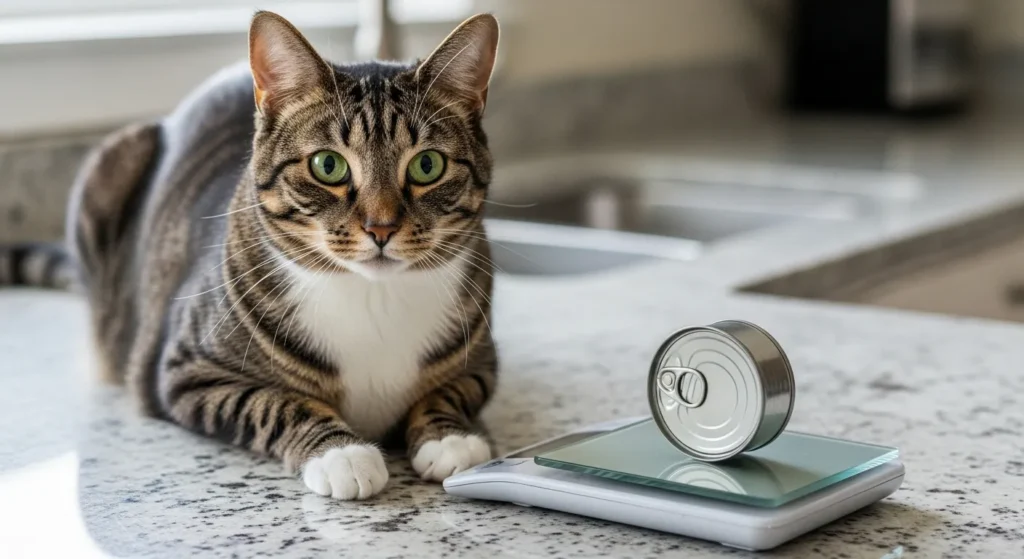
Start by estimating your cat’s daily calorie needs. A common rule for healthy adult cats is about 20 calories per pound of body weight. For a 10-pound cat, that means around 200 calories.
Next, look at the food label for calories per can or pouch. Divide the total daily calories by the amount in one serving to find out how many to offer. For example, if a 3-ounce can has 90 calories, a 10-pound cat might need roughly three cans per day for an all-wet diet.
For kittens, double the adult calculation. A 5-pound kitten could take in about 3.5 cans of the same food. Overweight cats should get less, like 2.5 cans for a 10-pound one aiming to slim down. To ensure the food is safe, use a pet food safety checker before serving.
Guidelines for Different Cat Types
Use these general portions as a starting point, but monitor your cat’s condition and adjust as needed.
Adult Cats
For cats weighing 8 to 12 pounds, aim for one 3-ounce can per 3.5 pounds of body weight daily. That often totals 7 to 11 ounces overall. Breed can impact this; check a pet breed finder quiz to learn more about your cat’s specific traits.
Kittens
Young ones up to 11 weeks can eat freely in three to four small meals. From 11 to 26 weeks, offer about three-quarters of a can per pound of weight, split into meals.
Special Cases
Pregnant cats may need two to three times their usual amount. For mixed diets with dry food, try two-thirds wet and one-third dry, but confirm with your vet. If adding treats, see guides like can cats eat yogurt or what fruits can cats eat to avoid excess calories.
Feeding Tips and Schedule
Divide the daily amount into two or three meals to mimic natural eating habits and prevent overeating. If mixing with dry food, reduce wet portions to keep total calories in check. For homemade options, consider high-protein cat recipes or cheap homemade cat food ideas.
Watch for signs of too much or too little food, like weight changes or leftover meals. Fresh water should always be available, especially with wet food’s high moisture.
Consult product labels for brand-specific advice, but personalize it. Regular vet visits help fine-tune the plan for your cat’s nutrition. For more on cat care, read about when cats stop growing or how long cats can go without eating.