
Cats should not go more than 24 to 48 hours without eating. After that point, the body begins breaking down fat at a rate the liver cannot safely process — triggering a dangerous condition called hepatic lipidosis, or fatty liver disease. It develops fast, it’s serious, and it can be fatal without treatment.
That’s the core answer. But the full picture is more specific. The safe window depends on your cat’s age, weight, and health status. Kittens, senior cats, and cats with existing illness hit critical thresholds much sooner than a healthy adult.
How Long Can Cats Survive Without Food?
With Access to Water
A healthy adult cat with water available can survive roughly 1 to 2 weeks without food. But survival is not the same as safety. Muscle wasting begins within days. Liver stress starts around the 48-hour mark. By day 3 or 4, most cats are in medical territory — not just uncomfortable.
Without Water
This changes everything. Cats can only go 3 to 4 days without water before organ failure becomes a real risk. Dehydration speeds up liver damage, crashes blood pressure, and strains the kidneys simultaneously.
A cat that is not eating and not drinking is an emergency. Don’t monitor and wait. To understand why water is often the more urgent concern, read this guide on how long cats can safely go without water.
Kittens, Senior Cats, and Sick Cats
The 48-hour guideline applies only to healthy adult cats. Other groups reach danger much faster:
- Kittens under 6 months: Blood sugar drops within hours. Call your vet after 6–8 hours of food refusal.
- Senior cats (10+ years): Muscle loss and organ stress accelerate. Act within 12–24 hours.
- Cats with kidney disease, diabetes, or hyperthyroidism: Even one or two skipped meals can destabilize them. Call the same day.
- Overweight cats: Paradoxically the highest risk group for hepatic lipidosis. Their bodies flood the liver with fat when calories drop. A large cat losing 25% of its body weight rapidly is in serious danger.
What Happens Inside a Cat’s Body Without Food
Hepatic Lipidosis — Explained Plainly
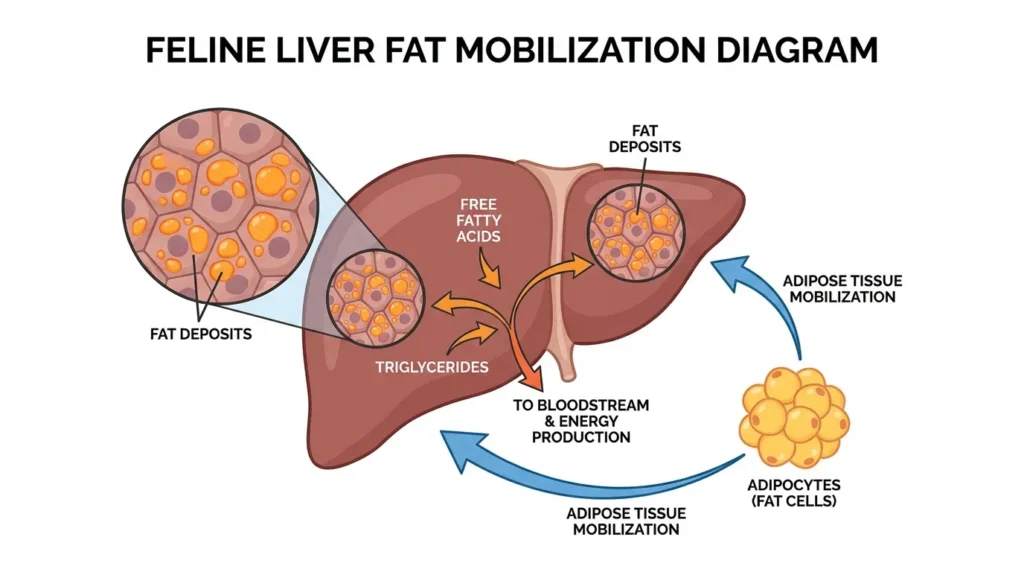
When a cat stops eating, its body starts pulling stored fat to use for energy. That fat gets sent to the liver for processing. The feline liver is not designed to handle large volumes of fat at once. It becomes overwhelmed. Fat accumulates inside liver cells. Normal liver function breaks down.
That’s hepatic lipidosis — the most common form of severe liver disease in cats. Without treatment, it’s often fatal. With early treatment (IV fluids, appetite stimulants, nutritional support), most cats make a full recovery. Early means before day 3 or 4, not after.
Deterioration Timeline
| Time Without Food | What’s Happening in the Body |
|---|---|
| 0–24 hours | Mild hunger; no organ stress in healthy adults |
| 24–48 hours | Blood glucose drops; early fat mobilization begins |
| 48–72 hours | Liver starts receiving excess fat; hepatic lipidosis risk begins |
| 3–5 days | Visible weakness, jaundice possible, muscle wasting accelerates |
| 7+ days | Severe liver damage, potential organ failure without intervention |
Why Cats Stop Eating
Medical Causes
These require a vet visit. Don’t wait them out.
- Kidney disease — appetite loss is one of the earliest signs in older cats
- Dental pain — a broken tooth or infected gum makes eating too painful
- Pancreatitis — causes nausea and severe discomfort around food
- Upper respiratory infection — cats won’t eat what they can’t smell
- Hyperthyroidism — can disrupt appetite in multiple directions
- Intestinal blockage — a surgical emergency; no food will go down
- Cancer — unexplained weight loss plus appetite changes in older cats warrants bloodwork and imaging
If your cat is vomiting repeatedly alongside refusing food, that combination is a same-day vet call — not a wait-and-see situation.
Behavioral and Environmental Causes
- Recent move or home disruption
- New pet or new baby in the house
- Change in the owner’s schedule
- Grief after losing a companion animal
- Anxiety or chronic stress
Food-Related Causes
- Sudden food change without gradual transition
- Spoiled or stale food — cats detect rancidity before we do
- Bowl placed near the litter box or in a high-noise area
- Bowl too deep — causes whisker fatigue, which cats find genuinely uncomfortable
- Food served straight from the refrigerator — many cats refuse cold food
Warning Signs That Need Immediate Attention
Not sure how serious the situation is? Our free Pet Symptom Checker can help you assess your cat’s symptoms and decide whether a vet visit is urgent.
Watch for these signs alongside food refusal:
- Lethargy or weakness — not moving, no interest in surroundings
- Yellow eyes, skin, or gums — jaundice is a direct sign of liver stress
- Repeated vomiting
- Drooling or difficulty swallowing
- Rapid, visible weight loss
- Hiding or unusual social withdrawal
- Not drinking water
- Labored or shallow breathing
- Weakness in the back legs
- Sweet or chemical smell on the breath — can indicate a metabolic crisis
One of these alongside food refusal is enough to call your vet. You do not need multiple symptoms to justify a call.
When to Call the Vet — Exact Thresholds
| Cat Type | Call the Vet After |
|---|---|
| Kittens under 6 months | 6–8 hours without eating |
| Senior cats (10+ years) | 12–24 hours |
| Cats with existing illness | Same day |
| Healthy adult cats | 48 hours — do not wait longer |
| Any cat not eating AND not drinking | Immediate emergency clinic |
These are not conservative estimates. They reflect how quickly hepatic lipidosis can progress and how fast dehydration creates compounding organ stress. When in doubt, call earlier rather than later. A brief phone consult with your vet costs nothing and could save your cat’s life.
How to Encourage a Cat to Eat Again
Safe Methods to Try First
Warm the food. Heat it to around body temperature — roughly 38°C (100°F). This releases aroma and makes food far more appealing to a cat with low appetite.
Switch textures. If your cat normally eats dry kibble, offer wet food instead. Wet food has stronger aroma, higher moisture content, and is easier to eat if there’s any mouth discomfort.
Try a plain protein. Offer a small amount of cooked, unseasoned chicken to spark interest. No salt, no garlic, no onion. Just plain protein.
Change the bowl. Switch to a flat plate or wide shallow dish. Deep bowls press against a cat’s whiskers and can put them off eating entirely.
Move the bowl. Cats don’t eat well near litter boxes, loud appliances, or places with heavy foot traffic. A quiet corner makes a difference.
Hand-feed small amounts. Sometimes direct contact and a calm environment is enough to get a reluctant cat eating again.
Once your cat is eating normally again, you can explore high-protein homemade meal ideas to keep variety in their diet — but only introduce changes gradually and after getting the all-clear from your vet.
Want to make sure your cat’s portion sizes are right after recovery? Use our Cat Calorie Calculator to find the correct daily intake based on your cat’s age, weight, and activity level.
What NOT to Do
Do not force-feed by hand or with a syringe without veterinary instruction. Food entering the airway causes aspiration pneumonia — a dangerous secondary condition. Force-feeding also creates severe negative associations with eating and can make appetite loss worse over time.
If your cat needs assisted nutrition, a vet will place a proper feeding tube. This is a clinical procedure, not a home fix.
Don’t introduce three new foods at once hoping one lands. Don’t assume 48 hours of refusal will self-resolve. And never drastically switch foods without a gradual transition — even in a cat that was previously eating well.
Frequently Asked Questions
Can a cat go without food overnight? Yes. One skipped overnight period is not dangerous for a healthy adult cat. Offer food in the morning and monitor. If they refuse again, start counting hours from the first missed meal.
My cat is drinking water but not eating — is that okay? Drinking water slows the progression of organ stress, so it’s better than nothing. But food refusal still needs to be addressed. Contact your vet if it continues beyond 24–48 hours.
Is it normal for cats to skip a meal? Occasionally. Heat, mild stress, or simply not being hungry can cause a single skipped meal. Two or more in a row is worth monitoring closely. Three or more is a vet call.
How do I know if my cat is in danger? Watch for jaundice (yellow eyes or gums), lethargy, repeated vomiting, hiding, or weakness. Any one of these alongside food refusal is a vet-level concern. Don’t wait for multiple symptoms.
Can stress alone cause a cat to stop eating? Yes — it’s one of the most common non-medical causes. A new pet, a move, construction noise, or changes to your schedule can suppress appetite significantly. If you’ve recently added a new animal to the home, understanding how to introduce a cat to a dog can help reduce the stress that may be behind the food refusal.
The Bottom Line
The safe window is 48 hours for a healthy adult cat — and much shorter for kittens, seniors, and sick cats. Hepatic lipidosis is fast-moving, but it’s also highly treatable when caught early. The cats that don’t recover are almost always the ones whose owners waited too long.
If your cat hasn’t eaten and you’re unsure whether to call, make the call. A two-minute phone consult with your vet is always the right move when the alternative is hoping a serious condition resolves on its own.