

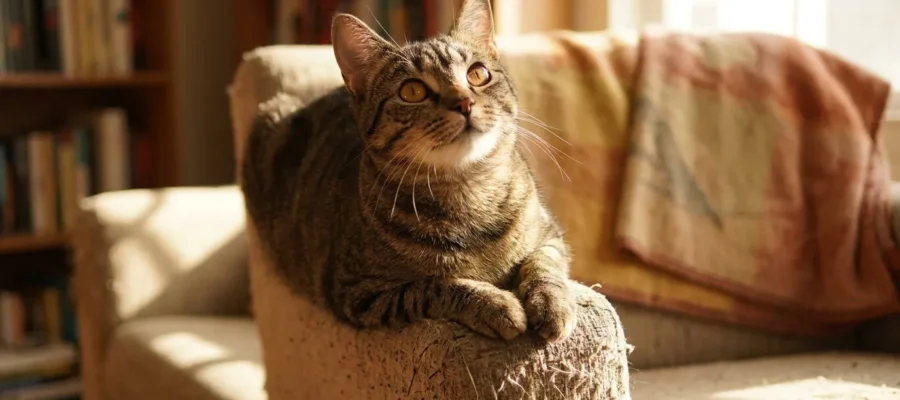
Your cat just clawed the couch again. Or bit your hand during a play session. Or left a mess outside the litter box for the third time this week.
You want to fix the behavior — but you don’t want to scare your cat or wreck the bond you’ve built.
Good news: you can absolutely change your cat’s behavior. You just need to understand how cats actually learn. This guide covers 7 methods that work, what to skip entirely, and how to apply the right approach to specific problems.
Discipline vs. Punishment — Why the Difference Matters
Most people use the word “discipline” when they really mean punishment. With cats, that’s a problem.
Cats don’t respond to punishment the way dogs do. They don’t have the cognitive framework to connect a delayed consequence to an earlier action. If you scold a cat five minutes after it knocked a plant over, it has no idea why you’re upset. It just knows you’re behaving strangely.
Effective cat discipline is behavior modification — not retribution. The goal is to make the unwanted behavior less rewarding and the desired behavior more rewarding. That’s it.
Once you accept that framing, everything else in this guide makes sense. If you also want to build on this foundation, our guide on how to train a cat covers obedience and trick training using the same principles.
Why Is Your Cat Misbehaving?
Before trying to fix anything, identify the cause. Most cat misbehavior falls into one of four buckets:
Instinct. Scratching, climbing, pouncing, and biting are all natural feline behaviors. Your cat isn’t being defiant. It’s doing what cats do.
Boredom and under-stimulation. A cat without enough mental or physical activity will find its own entertainment — usually at the expense of your furniture or your ankles.
Territorial stress. A new pet, a new person, or even a rearranged room can trigger territorial behaviors like spraying, aggression, or elimination outside the litter box.
Medical causes. This one gets missed often. Sudden behavior changes — especially aggression, litter box accidents, or excessive vocalization — can signal pain, a UTI, hyperthyroidism, or cognitive decline. Before trying any discipline method, rule out a health issue. Your vet should always be the first call when behavior shifts abruptly.
What NOT to Do When Disciplining a Cat
These methods are still common. They’re also consistently counterproductive.
Spray Bottles
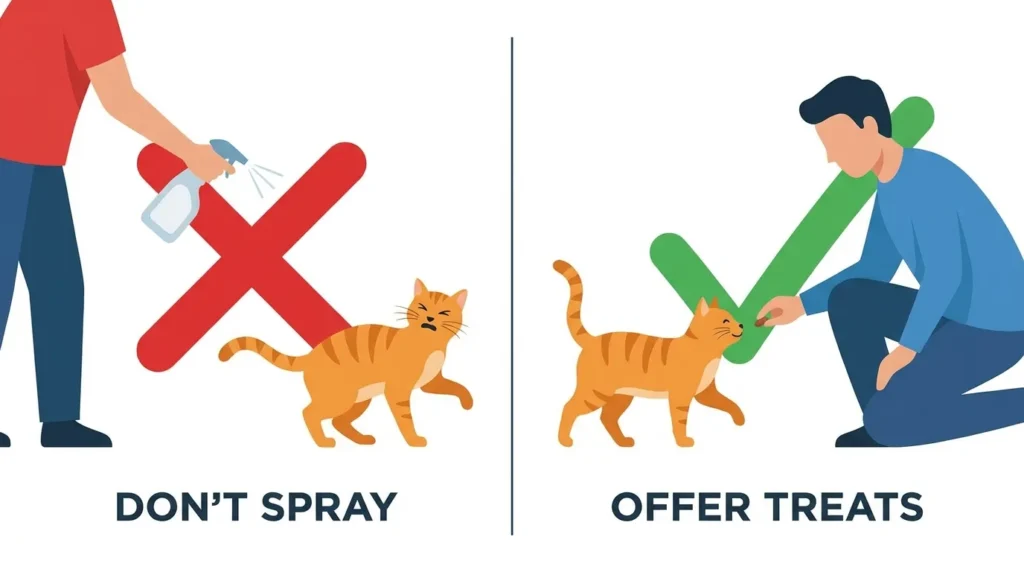
Spraying a cat with water feels intuitive — do something bad, get sprayed. But cats don’t form that association. Research in feline cognition shows cats lack the delayed-association processing needed to link the spray to the behavior. All they learn is that water sometimes appears out of nowhere, or that you are unpredictable. It damages trust without teaching anything.
Physical Punishment
Never hit, shake, swat, or scruff an adult cat as punishment. These methods trigger a fear response, not a learning response. A frightened cat becomes defensive, aggressive, or withdrawn. You also lose the trust that makes every other training method possible.
Yelling or Lecturing
Your cat will not understand a scolding. Long vocal displays read as strange noise. A cat may freeze or hide when you yell, but it’s a stress reaction — not comprehension.
Late Punishment
If you discover the scratched chair two hours after it happened, disciplining your cat now is useless. The correction window is roughly 1–2 seconds. Anything beyond that has zero connection to the behavior in your cat’s mind.
7 Proven Methods to Discipline a Cat
1. Redirect the Behavior — Immediately
Redirection is the single most effective tool in this list. The moment your cat starts an unwanted behavior, guide it to an acceptable alternative.
Cat scratching the couch? Pick it up calmly and place it near the scratching post. Cat about to pounce on your feet? Toss a toy down the hallway. The key word is immediately — redirection only works in the moment.
2. Use Positive Reinforcement for the Alternative
Once you’ve redirected your cat to the right behavior, reward it. A small treat, verbal praise, or a brief petting session all work — use whatever your cat values most.
Timing matters here too. The reward needs to happen within 1–2 seconds of the desired behavior. That’s the window your cat’s brain uses to form the association. This is the foundation of operant conditioning, and it’s far more effective than any form of punishment.
3. Remove Your Attention (Negative Punishment)
This one sounds harsh but isn’t. When your cat bites or scratches during play, stop all interaction immediately. Stand up. Turn away. Leave the room if needed.
You’re not abandoning your cat — you’re removing the reward (your attention) the moment the bad behavior happens. Cats are smart. They figure out quickly that biting ends the fun.
This works especially well for play aggression and attention-seeking behaviors like excessive meowing at night. If you’re dealing with persistent biting, our breakdown of why cats bite their owners covers the root causes in detail.
4. Use a Firm, Distinctive Tone of Voice
A sharp, low “No” or “Ah-ah” — not a shout — can interrupt a behavior in progress. The key is consistency. Use the same word, same tone, every time. Your cat won’t understand the word, but it will learn that this specific sound means something is wrong.
Don’t lecture. One word is enough. Then redirect.
5. Time-Outs — Done Correctly
Time-outs work, but most people do them wrong. The goal isn’t to upset your cat — it’s to remove the cat from an overstimulating or rewarding environment.
Place your cat in a quiet room with water and a litter box. Keep the time-out to 10–20 minutes maximum. Longer doesn’t increase the lesson — it just increases stress. Use this method sparingly, and only immediately after the behavior.
6. Environmental Deterrents
Sometimes you can’t supervise your cat 24 hours a day. That’s where deterrents help.
Double-sided tape on furniture edges is highly effective — cats hate the texture on their paws. Citrus-scented sprays work as surface deterrents, since cats strongly dislike citrus. Aluminum foil on countertops is another low-tech option that works surprisingly well.
For counter surfing specifically, check out these proven methods to keep cats off counters — it goes deeper on environmental management. You can also browse our guide on smells cats hate to find natural deterrents that are safe to use around your home.
7. Enrich the Environment
This is the most under-used method on this list, and one of the most powerful. A significant portion of cat behavior problems disappear when the cat gets enough mental and physical stimulation.
15 minutes of interactive play per day — wand toys, laser pointers, puzzle feeders — dramatically reduces aggression, nighttime energy, and destructive scratching. Cats with enough enrichment don’t need to entertain themselves at your expense.
Add a cat tree near a window. Rotate toys so they stay novel. Hide small amounts of food around the house for foraging. These aren’t luxuries — they’re behavioral necessities for an indoor cat.
Discipline by Behavior Type
How to Stop a Cat from Biting
Biting during play is the most common complaint. The fix is consistent application of Method 3 — remove all attention the instant it happens. No exceptions. If you react sometimes and not others, the behavior gets reinforced unpredictably and becomes harder to stop.
For cats that bite unprovoked, check for signs of overstimulation first. Many cats reach a petting threshold — they enjoy contact up to a point, then bite to communicate that they’ve had enough. Learn to read the warning signs: tail flicking, flattened ears, skin rippling.
How to Stop a Cat from Scratching Furniture
You can’t stop a cat from scratching — it’s a biological need to stretch muscles and maintain claws. What you can do is control where it scratches.
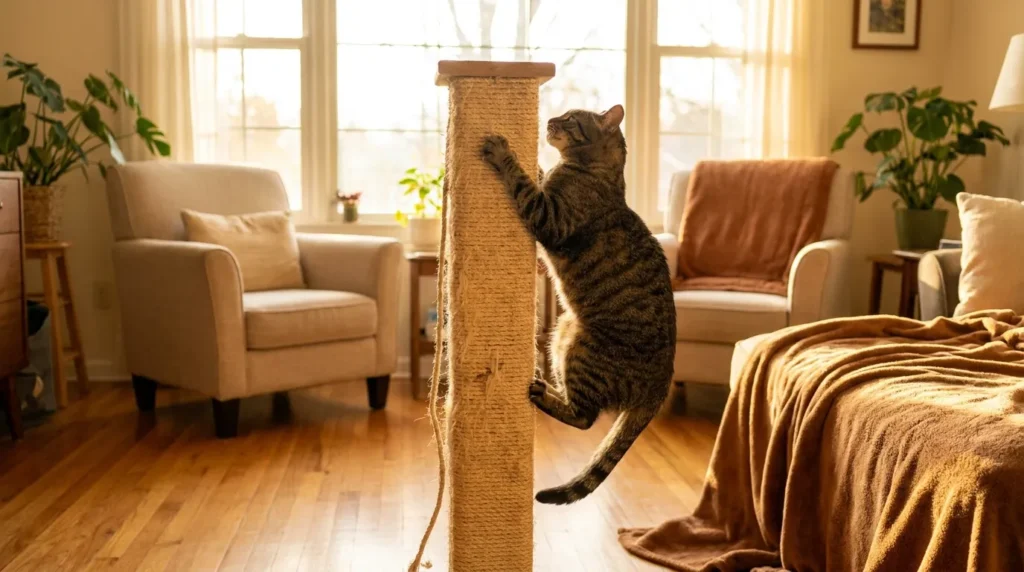
Place a scratching post near the furniture your cat targets. Rub a small amount of catnip into the post to increase interest. When your cat uses it, reward immediately. Keeping your cat’s nails trimmed also reduces the damage — here’s how to trim your cat’s nails safely if you’ve never done it before.
How to Discipline a Cat for Peeing Outside the Litter Box
Rule out medical causes first — UTIs, kidney issues, and diabetes all cause litter box avoidance. If the vet gives a clean bill of health, check the box itself.
Cats are highly sensitive to litter box conditions. A dirty box, the wrong type of litter, a box that’s too small, or a location that feels unsafe (near noisy appliances, for example) can all cause avoidance. The standard recommendation is one box per cat, plus one extra.
Spray enzyme cleaner on any accident spots immediately. Regular cleaners don’t fully break down the urine compounds, and cats will return to spots they can still smell. Our guide on how to get cat pee out of carpet has the full step-by-step process.
Disciplining a Kitten vs. an Adult Cat
Kittens learn faster. Their brains are more plastic, and they haven’t yet built strong behavioral habits. Start setting limits early — consistent redirection from 8–12 weeks forward makes adult behavior significantly easier to manage.
Adult cats can absolutely be retrained, but it takes longer. An adult rescue cat may also have behavioral patterns rooted in past stress or trauma. Expect the process to take weeks, not days, and be consistent throughout.
The core methods are the same for both. The difference is timeline and patience.
When to See a Vet or Professional Trainer
See your vet if:
- Behavior changed suddenly with no obvious trigger
- Your cat is eliminating outside the litter box despite a clean, well-placed box
- Aggression is escalating rather than decreasing
- You notice changes in appetite, thirst, or energy alongside the behavior shift
Not sure what’s going on? Our pet symptom checker can help you assess whether the issue needs a vet visit.
See a certified feline behavior specialist (look for CCBC or IAABC credentials) if weeks of consistent effort aren’t producing results. These professionals identify root causes that owners often miss and build targeted behavior plans.
Frequently Asked Questions
Can you discipline a cat after the fact? No. The correction window is 1–2 seconds. If the behavior already happened, skip the response and focus on preventing the next occurrence.
Should I use a spray bottle on my cat? No. Cats don’t connect the spray to the behavior. It creates stress and damages trust without teaching anything useful.
How long does it take to correct bad cat behavior? Simple redirections (like scratching furniture) can show results in 1–2 weeks with consistent effort. Deeper behavioral issues, especially in adult or rescue cats, may take 4–8 weeks. Consistency is more important than speed.
Is it ever too late to train a cat? No. Older cats take longer to retrain, but they do learn. The methods are the same — the timeline is just extended.