


Yes, dogs can eat celery. It’s non-toxic, low in calories, and packed with vitamins. But there are a few things you need to know before tossing a stalk to your dog — how much to give, how to cut it, and which parts to skip.
Here’s everything, broken down clearly.
Is Celery Safe for Dogs?
Celery is safe for dogs. It doesn’t appear on the ASPCA’s list of toxic plants or foods for dogs, and it’s widely recommended by veterinarians as a healthy snack option — especially for dogs that need to watch their weight.
That said, “safe” doesn’t mean “unlimited.” A few preparation steps make a real difference, which we’ll cover below. If you ever want to double-check any food before giving it to your dog, the Pet Food Safety Checker can give you a fast answer.
Nutritional Benefits of Celery for Dogs
Celery is more nutritious than most people realize. One stalk contains a solid mix of:
- Vitamin A — supports eye health and immune function
- Vitamin C — antioxidant, supports tissue repair
- Vitamin K — important for blood clotting and bone health
- Folate — essential for cell growth
- Potassium — supports heart and muscle function
- Calcium — bone and tooth strength
- Magnesium — nerve and muscle function
- Zinc and iron — immune and metabolic support
- Dietary fiber — supports healthy digestion
Celery also has a very high water content — roughly 95%. That makes it a decent source of hydration on a hot day, though it shouldn’t replace your dog’s water bowl.
One often-overlooked bonus: celery can help freshen your dog’s breath. The act of chewing it mechanically cleans the teeth and gums, and some compounds in celery have mild antibacterial properties. For a more thorough approach to dental hygiene, learning how to brush your dog’s teeth makes a real difference alongside healthy chews.
How Much Celery Can Dogs Eat?
Treats — including celery — should not exceed 10% of your dog’s daily caloric intake. The other 90% needs to come from a complete, balanced dog food.
That’s the standard veterinary guideline, and it applies to every snack, no matter how healthy.
Here’s a rough serving guide based on dog size:
| Dog Size | Weight | Celery Amount Per Day |
|---|---|---|
| Small | Under 20 lbs | 1–2 small pieces (1 inch each) |
| Medium | 20–50 lbs | 2–4 small pieces |
| Large | 50–100 lbs | 4–6 small pieces |
| Extra Large | Over 100 lbs | Up to a full stalk, chopped |
Can dogs eat celery every day? Technically yes, in small amounts — but variety is better. Rotating different low-calorie vegetables keeps things interesting and avoids fiber overload from any single source. For a full breakdown of safe options, see what vegetables dogs can eat.
Important: If your dog already gets other treats during the day, account for those calories first. The 10% budget is shared across everything.
Can Dogs Eat Celery for Weight Loss?
Celery is one of the best low-calorie snacks you can give an overweight dog. One medium stalk contains roughly 10 calories. Compare that to a standard dog biscuit, which can run 30–100 calories depending on the brand and size.
If you’re trying to help your dog lose weight, swapping high-calorie treats for celery pieces is a legitimate strategy. Dogs generally enjoy the crunch, and the high water content makes it mildly filling.
That said, weight loss in dogs is a medical issue. If your dog is significantly overweight, talk to your vet before making major dietary changes. A proper weight-loss plan looks at total caloric intake, meal portions, and exercise — not just treats. It’s worth knowing how much exercise your dog needs daily as part of any weight management approach.

How to Prepare Celery for Dogs
Preparation matters more than most people think. Here’s how to do it right.
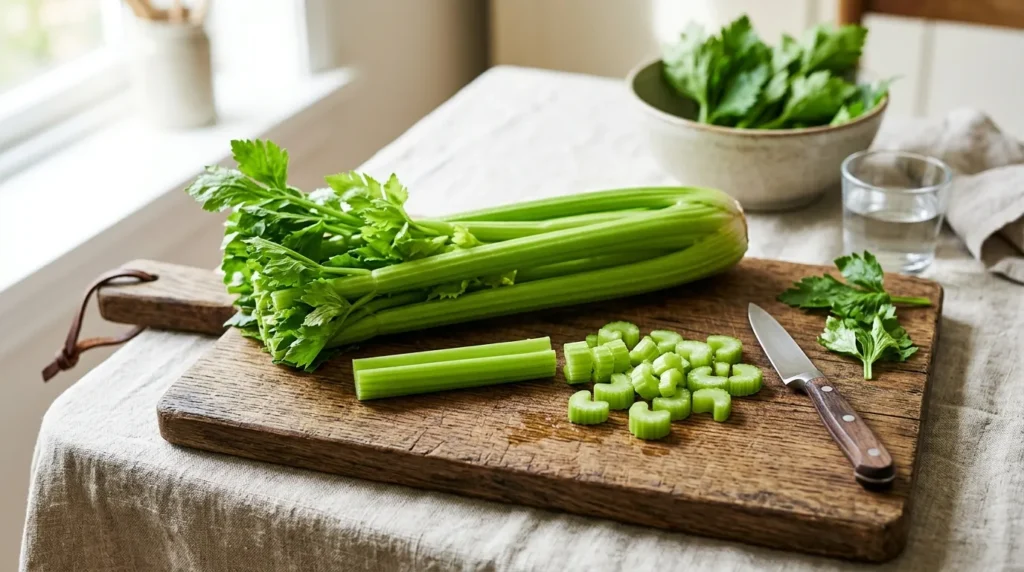
Remove the strings first. Celery has tough, fibrous strings running along the stalks. These don’t digest well and can bunch up in the digestive tract, potentially causing blockages. Pull them off before serving. It only takes a few seconds.
Cut into small pieces. The right size depends on your dog. For small dogs, aim for pieces no larger than your fingertip — roughly half an inch. For large dogs, one-inch chunks are fine. This reduces choking risk and makes it easier to measure portions.
Raw vs. cooked vs. frozen:
- Raw celery is the best option. It retains all the nutrients and gives your dog the dental-cleaning crunch.
- Cooked celery is safe, but loses most of its vitamins and that beneficial crunch. It becomes soft and harder to measure. If you cook it, serve it completely plain — no butter, salt, garlic, or onion.
- Frozen celery can work as a teething aid for puppies or a cool summer treat, but freezing destroys most of the nutrients. It’s fine as an occasional option, not a routine one.
Buy organic when possible. The celery leaves — the leafy tops — contain the highest concentration of pesticide residue of any part of the plant. If you’re feeding conventionally grown celery, remove and discard the leaves before serving. With organic celery, the leaves are safe and actually contain the highest concentration of calcium, potassium, and vitamin C in the whole plant.
Never add seasonings. Celery is often paired with peanut butter dips or served in dishes with onion and garlic. Salt can cause sodium overload. Onion and garlic are toxic to dogs. If you want to use peanut butter as a dip, first check whether it’s actually safe — is peanut butter good for dogs? has a thorough breakdown, including the xylitol warning.
Risks of Feeding Celery to Dogs
Celery is low-risk, but there are a few real concerns worth knowing.
Choking hazard. Whole celery stalks or large chunks are a choking risk, especially for small and medium breeds. Always cut into bite-sized pieces. Supervise the first few times you give celery, particularly with enthusiastic eaters.
Intestinal blockage. Those fibrous strings we mentioned aren’t just a minor inconvenience — they can tangle in the intestines and cause a blockage, especially in small dogs. Remove them every time.
Digestive upset from too much. Celery is high in fiber. A moderate amount supports digestion, but a large serving can cause loose stools, gas, or an upset stomach. If your dog has a sensitive gut, start with a very small piece and watch for any reaction over 24 hours. If diarrhea develops, understanding why your dog has diarrhea can help you figure out next steps.
Pesticide exposure. As mentioned above, celery leaves carry the most pesticide residue. Discard them if you’re using non-organic celery.
Sodium content. Celery has naturally occurring sodium — about 35mg per stalk. For most dogs, this is completely fine. But if your dog has heart disease, kidney disease, or is on a sodium-restricted diet prescribed by a vet, check with your veterinarian before adding celery to their routine.
Can Dogs Eat Celery Leaves?
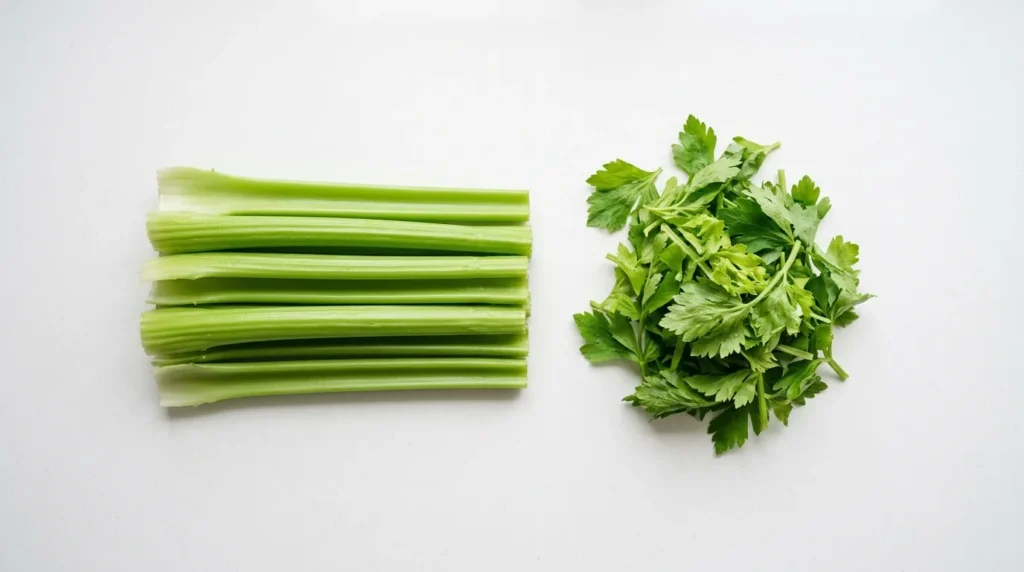
Yes and no. The leaves are not toxic — but they’re also where the highest concentration of pesticides collects on conventionally grown celery. If you’re buying regular grocery store celery, remove the leaves and throw them away.
If you buy organic celery, the leaves are actually the most nutritious part of the plant. They’re higher in calcium, potassium, and vitamin C than the stalks. You can include them with organic produce.
Can Puppies Eat Celery?
Yes, puppies can eat celery — with a bit more caution than adult dogs.
Puppies have smaller airways and are still developing their digestive systems. Cut celery into very small pieces, significantly smaller than you would for an adult dog of similar size. Cooked and softened celery is easier for young puppies to handle than raw, crunchy stalks.
Introduce celery slowly — start with a single tiny piece and wait 24 hours to make sure there’s no digestive reaction before making it a regular snack. Always check with your vet before introducing new foods to puppies, especially under 12 weeks. If you’re unsure how big your puppy will get, the pet age calculator can help you track their developmental stage.
What to Watch For After Feeding Celery
Most dogs handle celery without any problem. But when you’re introducing it for the first time, watch for the following over the next 12–24 hours:
- Vomiting or retching — could indicate the celery irritated the stomach or caused a partial blockage
- Loose stools or diarrhea — usually means the portion was too large, or your dog has a sensitive stomach; reduce the amount next time
- Lethargy or loss of appetite — uncommon, but worth monitoring
- Choking signs — gagging, pawing at the mouth, labored breathing; act immediately and contact your vet
If you see any of these signs and aren’t sure what’s causing them, the Pet Symptom Checker is a useful starting point before calling your vet. If symptoms don’t resolve within a few hours, don’t wait — call your vet.
Other Safe Low-Calorie Vegetables for Dogs
If your dog enjoys celery, they might also like these vet-safe, low-calorie options:
- Carrots — very popular, high in beta-carotene, great for dental health
- Cucumber — extremely low calorie, high water content, mild flavor
- Broccoli — safe in small amounts; too much can cause gas
- Green beans — excellent low-calorie option, high in fiber and vitamins
- Cabbage — safe in moderation, good source of fiber and vitamins
Always introduce new vegetables one at a time, and keep portions within the 10% treat rule. For a wider view, the full guide to what vegetables dogs can eat covers safe and unsafe options in one place.
Frequently Asked Questions
Can dogs eat celery every day? Yes, in small amounts as part of a balanced diet. However, rotating between different vegetables is healthier than feeding any single food every day.
Can dogs eat whole celery sticks? No. Whole celery sticks are a choking hazard and too high in fiber for a single serving. Always cut into small, bite-sized pieces and remove the strings.
Does celery freshen dog breath? Yes. The crunchy texture mechanically cleans teeth and gums, and some natural compounds in celery have mild antibacterial effects. It won’t replace regular dental hygiene, but it’s a real benefit. For a proper dental routine, read how to brush your dog’s teeth at home.
Is celery juice safe for dogs? Plain, unsweetened celery juice in a very small amount is unlikely to cause harm. However, it removes the beneficial fiber, spikes the natural sodium, and offers no dental benefit. There’s no good reason to give a dog celery juice when the whole vegetable is better in every way.
Can dogs eat celery with peanut butter? It depends entirely on the peanut butter. Plain, unsalted peanut butter without xylitol is safe for dogs in small amounts. Xylitol — found in many sugar-free peanut butters — is highly toxic to dogs. Read the full peanut butter safety guide for dogs before using it as a dip.
What other snacks are safe for dogs? Plenty of human foods make safe dog treats. Can dogs eat edamame? Yes, plain and in moderation. Can dogs eat yogurt? Yes, plain and unsweetened. Can dogs eat peanuts? Yes, unsalted and in small amounts. For a full overview, see what fruits dogs can eat and the companion vegetable guide.
Final Word
Celery is a genuinely good snack for dogs. It’s non-toxic, nutrient-dense, low in calories, and naturally supports dental health. Most dogs enjoy the crunch.
The keys are simple: cut it small, remove the strings, skip the leaves if it’s not organic, and keep portions within the 10% treat guideline. If your dog has any existing health conditions — especially heart or kidney disease — check with your vet first.
When in doubt about any new food, your vet is always the right call. You can also use the Pet Food Safety Checker for a quick reference before introducing anything new.