
Catnip is a fascinating herb that can make your cat act playful, relaxed, or even a bit wild. But what exactly does it do, and is it safe? This guide explains catnip’s effects, how it works, its benefits, and safe usage tips. Written in clear, simple language, it’s designed to help cat owners understand and use catnip effectively while keeping their pets happy and healthy.
What is Catnip?
Catnip (Nepeta cataria) is a leafy herb from the mint family, native to Europe and Asia but now common worldwide. It grows in gardens or wild along roadsides, with heart-shaped leaves and small white or purple flowers. The active ingredient, nepetalactone, is an oil in the plant’s leaves, stems, and seeds. When cats smell or eat catnip, it triggers unique behaviors, from playful energy to calm relaxation.

How Does Catnip Affect Cats?
Catnip’s effects come from nepetalactone, which enters a cat’s nose and binds to sensory receptors. This signals the brain’s amygdala and hypothalamus, areas tied to emotions and behavior, mimicking feline pheromones. The result is a temporary “high” or relaxation, lasting 10-15 minutes, followed by a 30-minute to 2-hour period where cats are immune to further effects.
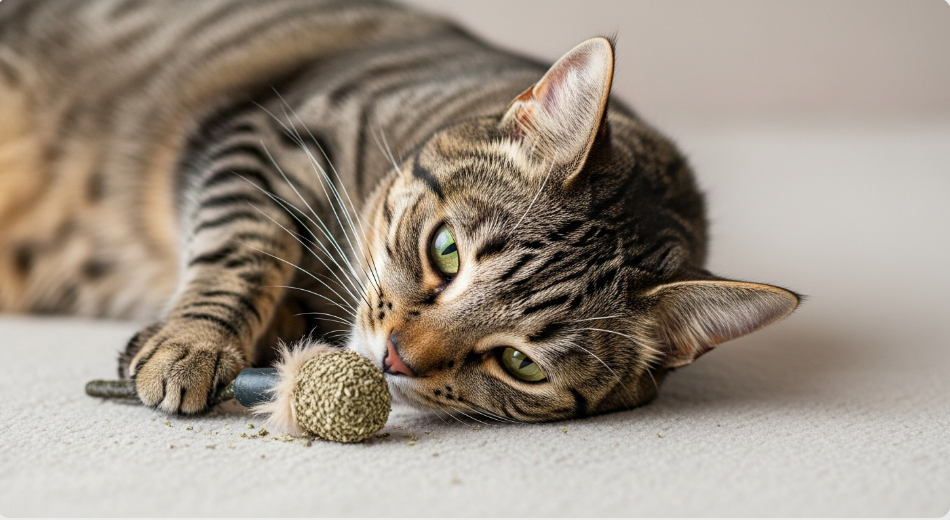
Common Behaviors
- Active Reactions (60% of cats): Rolling, rubbing, jumping, running, meowing, or drooling.
- Passive Reactions (80% of cats): Sitting calmly, zoning out, or relaxing in a “sphinx-like” posture.
- When Eaten: Cats often become mellow or sedated, unlike the stimulation from sniffing.
Why It Happens
Nepetalactone may trigger endorphin release, creating euphoria similar to natural “feel-good” chemicals. A 2022 study suggests it interacts with the opioid system, but unlike drugs, it’s non-addictive and safe. Cats remain aware of their surroundings, unlike human “highs” from substances like marijuana.
Why Don’t All Cats Respond?
Not every cat reacts to catnip, and the reasons are clear:
- Genetics: Sensitivity is hereditary, with 60-80% of cats responding due to a genetic trait. About 20-40% lack this trait and show no reaction.
- Age: Kittens under 3-6 months don’t respond, as their vomeronasal organ (scent analyzer) isn’t fully developed. Senior cats may have weaker reactions.
- Individual Differences: Some cats respond mildly, while others go wild, based on personality or mood.
If your cat doesn’t react, try silvervine or valerian root, which can trigger similar responses in some cats. A 2017 study found 75% of catnip non-responders reacted to silvervine.
Is Catnip Safe for Cats?
Catnip is safe, non-toxic, and non-addictive, as confirmed by veterinary sources like the Humane Society and Small Door Veterinary. Cats can’t overdose on sniffing catnip, but eating too much may cause mild issues:
- Side Effects: Overconsumption can lead to vomiting, diarrhea, or dizziness, though these are rare and resolve quickly.
- Rare Risks: Excessive use may cause temporary coordination issues. Severe symptoms like seizures are extremely uncommon.
- Kittens: Safe but ineffective until 3-6 months old.
Limit catnip to 1-2 times weekly to avoid desensitization. Supervise first uses to monitor reactions, especially in multi-cat homes where overstimulation may lead to aggression.
How to Use Catnip Safely
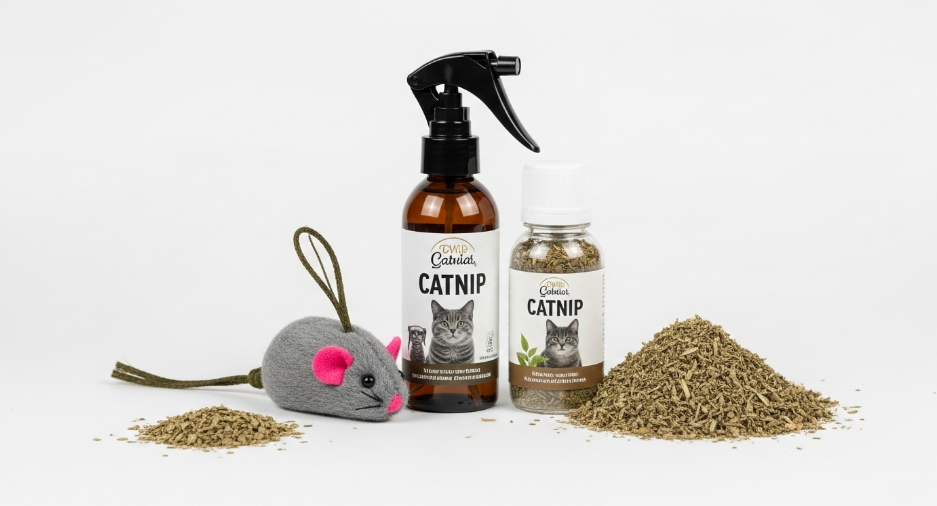
Catnip comes in various forms, each with unique uses:
- Dried Catnip: Sprinkle 1 tablespoon on toys, scratching posts, or bedding.
- Catnip Toys: Mice, balls, or plush toys filled with catnip encourage play.
- Catnip Sprays: Use on objects for cats prone to digestive upset.
- Fresh Catnip: Grow your own for potent effects; crush leaves to release nepetalactone.
Tips for Use
- Start with a small amount to test your cat’s reaction.
- Use in a calm setting to avoid overstimulation.
- Store in an airtight container or freezer to maintain potency.
- Use catnip to attract cats to scratching posts or beds, aiding training.
Benefits of Catnip
Catnip offers several advantages for cats:
- Mental Stimulation: Encourages play, keeping cats active and engaged.
- Stress Relief: Helps calm anxious cats, especially during vet visits or moves.
- Training Aid: Attracts cats to scratching posts, reducing furniture damage.
- Insect Repellent: Nepetalactone may repel mosquitoes, benefiting outdoor cats.
Catnip may help with separation anxiety, making it a useful tool for stressed cats.
Frequently Asked Questions
- Can cats overdose on catnip?
No, but eating too much may cause vomiting or diarrhea. Use 1 tablespoon or less and supervise. - Is catnip addictive?
No, it’s non-addictive. Cats enjoy it but don’t develop dependency. - Can kittens use catnip?
It’s safe but usually ineffective until 3-6 months old. - What if my cat doesn’t react?
About 20-40% of cats don’t respond due to genetics. Try silvervine or valerian root. - How long do effects last?
Effects last 10-15 minutes, with a 30-minute to 2-hour reset period. - Can catnip cause aggression?
Rarely, some cats may growl or swat, especially in multi-cat homes. Monitor interactions.