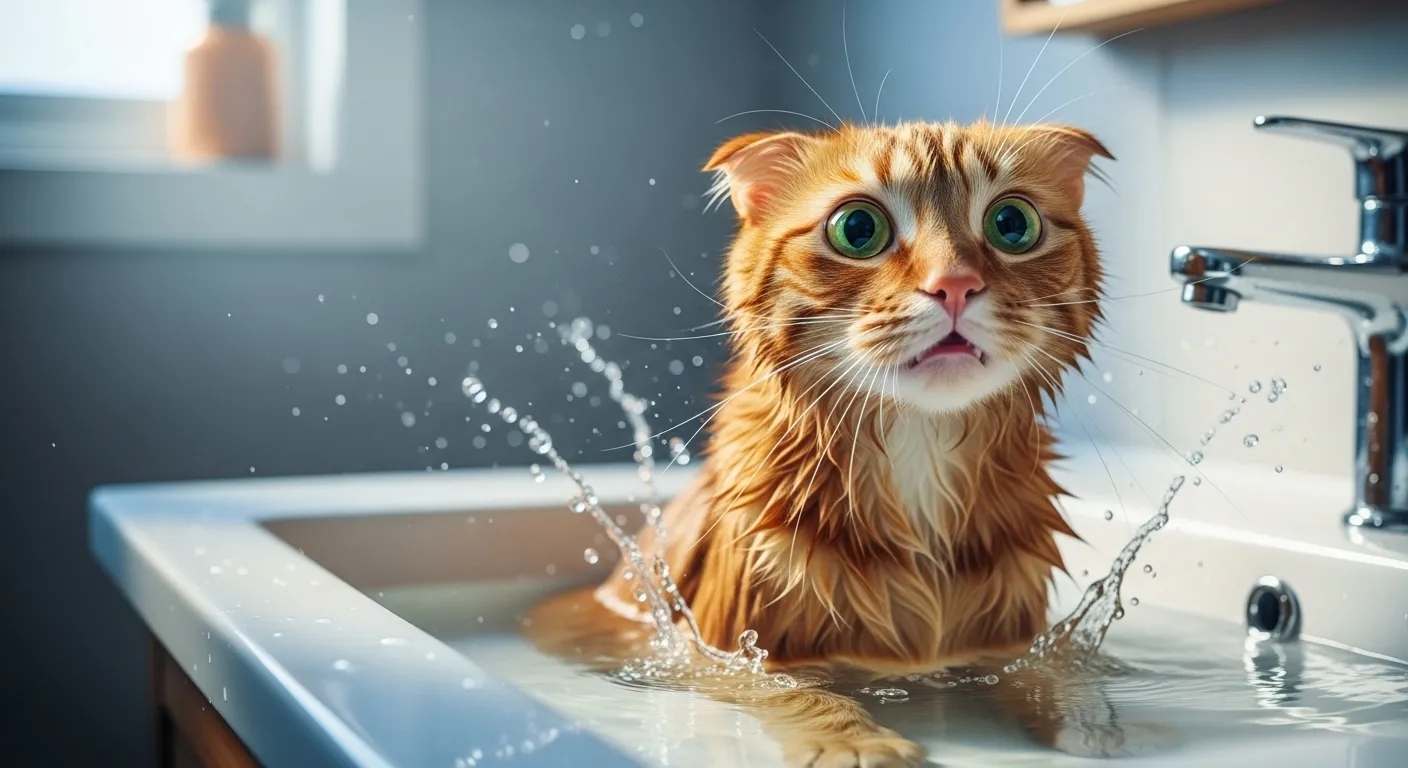
Most cat owners have witnessed the dramatic scene: their beloved feline friend encountering water and reacting as if they’ve met their greatest enemy. But why do cats hate water so much? The answer involves millions of years of evolution, unique physical traits, and fascinating behavioral patterns that make our furry companions the water-avoiding creatures we know today.
The Evolutionary Roots of Cat Water Aversion
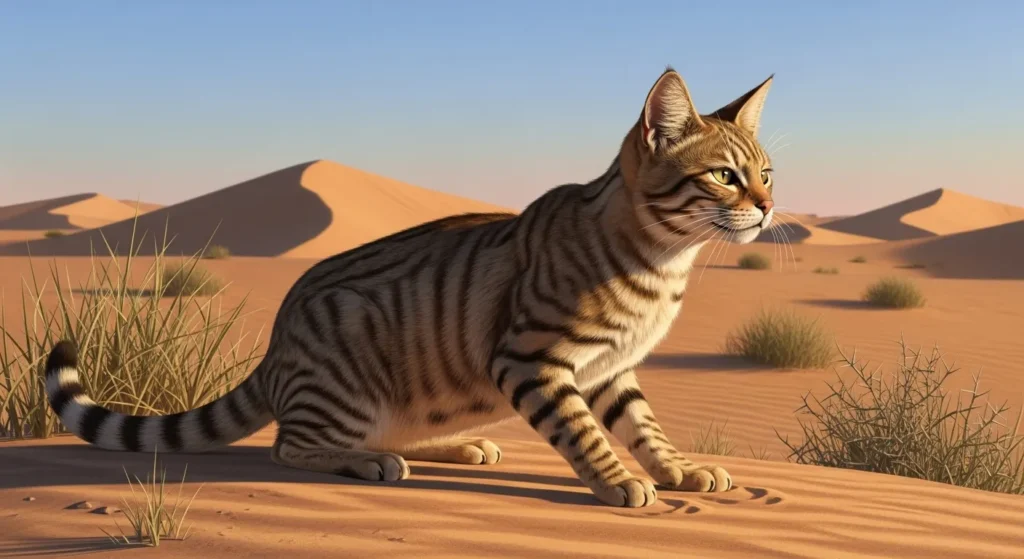
Cats descended from desert-dwelling ancestors in the Middle East and North Africa. These ancient wildcats, particularly the African wildcat (Felis lybica), lived in arid environments where water was scarce. Over thousands of years, they developed incredible efficiency at conserving water through their kidneys and getting moisture from their prey.
This desert heritage explains why modern house cats can survive on much less water than dogs. Their bodies evolved to function without regular water immersion, making swimming unnecessary for survival. Unlike other mammals that needed water for hunting or cooling, cats developed different survival strategies.
Physical Reasons Why Cats Avoid Water
Fur Structure and Water Absorption
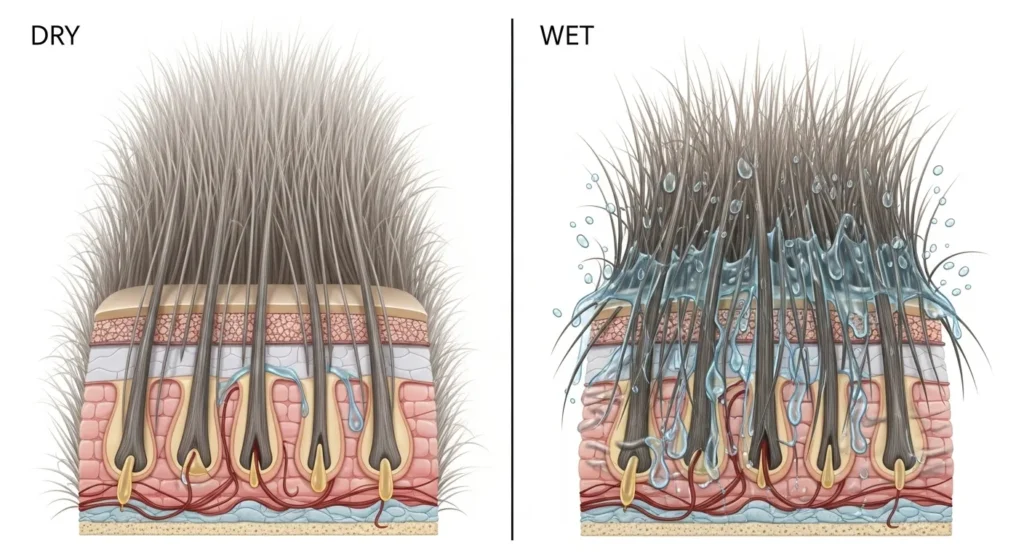
Cat fur differs significantly from water-loving animals like dogs. Most cats have double coats consisting of:
- Guard hairs: Outer protective layer
- Undercoat: Soft, dense insulation layer
When wet, cat fur absorbs water like a sponge, making it extremely heavy and uncomfortable. Wet fur loses its insulating properties, leaving cats vulnerable to temperature changes. This creates an unpleasant sensation that cats naturally want to avoid.
Temperature Sensitivity
Cats maintain higher body temperatures than humans (100-102°F compared to 98.6°F). Sudden contact with cool water creates an uncomfortable temperature shock. Their sensitive skin receptors immediately signal discomfort, triggering their flight response.
Reduced Mobility When Wet
Waterlogged fur significantly impacts cat agility. These natural athletes rely on quick reflexes and precise movements for survival. Heavy, wet fur restricts their ability to escape predators or catch prey, activating their instinctual avoidance mechanisms.
Behavioral and Psychological Factors
Lack of Early Exposure
Cats have critical socialization periods between 2-7 weeks old. Kittens not exposed to water during this window often develop lasting aversions. Unlike puppies, who frequently encounter water through play and exploration, most kittens have limited water exposure beyond their drinking bowl.
Control and Vulnerability Issues
Cats are control-oriented creatures who prefer familiar environments. Water represents an unpredictable element they cannot easily control or escape from. Being wet also makes cats feel vulnerable since they cannot groom effectively or regulate their body temperature normally.
Sensory Overload
The sensation of water triggers multiple uncomfortable responses simultaneously:
- Unexpected temperature changes
- Unusual textures on sensitive paw pads
- Altered hearing due to water in ears
- Reduced traction on wet surfaces
This sensory bombardment overwhelms many cats, creating negative associations with water experiences.
Exceptions: Cats That Actually Like Water
Not all cats hate water. Several factors can create water-loving felines:
Breed Differences
Some cat breeds show less water aversion:
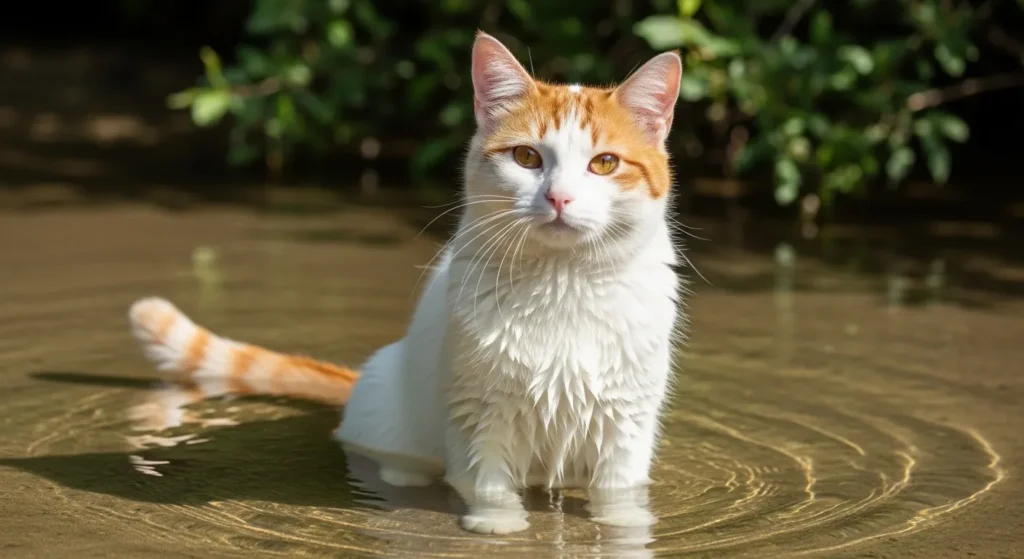
- Turkish Van: Known as “swimming cats”
- Maine Coon: Often tolerate water well
- Bengal: May enjoy water play
- Abyssinian: Sometimes show water interest
Early Positive Experiences
Cats introduced to water gradually and positively during kittenhood often maintain comfort with water throughout their lives. Positive associations formed early can override instinctual aversions.
Individual Personality Traits
Some cats simply have more adventurous, curious personalities that overcome water hesitation. These individuals may investigate water bowls, drink from faucets, or even join their owners in bathrooms.
Signs Your Cat Really Hates Water
Watch for these clear indicators of water aversion:
- Physical responses: Hissing, growling, or yowling
- Escape attempts: Frantic scratching or climbing to get away
- Body language: Flattened ears, dilated pupils, arched back
- Hiding behavior: Avoiding bathroom areas or hiding during bath time
- Stress symptoms: Panting, drooling, or urination from fear
These responses indicate genuine distress, not simple dislike. Respect these signals to maintain trust with your cat.
How to Help Water-Averse Cats
Gradual Desensitization
If your cat needs occasional baths due to medical conditions or outdoor adventures, try these gentle approaches:
- Start small: Let your cat investigate empty bathtubs or sinks
- Add shallow water: Begin with just 1-2 inches of lukewarm water
- Use positive reinforcement: Offer treats and praise during water exposure
- Go slowly: Increase water exposure gradually over multiple sessions
Alternative Cleaning Methods
For most situations, alternatives to full baths work better:
- Cat wipes: Pre-moistened cleaning wipes designed for cats
- Dry shampoos: Powder formulas that absorb oils without water
- Spot cleaning: Damp cloth for small dirty areas
- Professional grooming: Let experts handle necessary baths
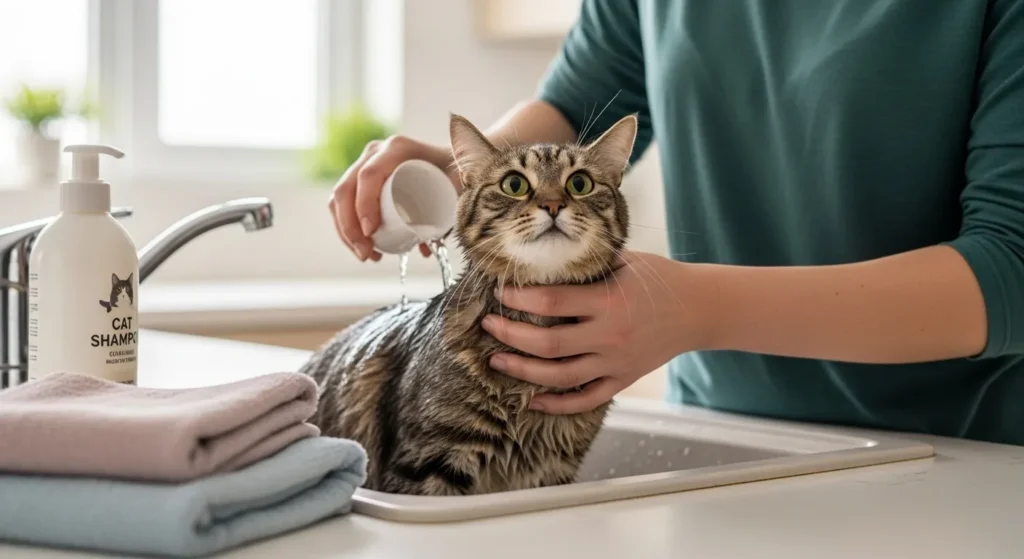
When Baths Are Necessary
Sometimes cats need baths for health reasons:
- Medical conditions: Skin problems requiring medicated shampoos
- Parasite treatment: Flea or mite treatments
- Toxic exposure: Removing harmful substances from fur
- Mobility issues: Senior cats unable to groom properly
In these cases, work with your veterinarian to minimize stress while ensuring necessary care.
Common Myths About Cats and Water
Myth: All Cats Hate Water
Reality: While most domestic cats avoid water, individual preferences vary. Some cats enjoy water play, drinking from faucets, or even swimming.
Myth: Cats Never Need Baths
Reality: Healthy cats rarely need baths due to their excellent self-grooming abilities. However, medical conditions, outdoor adventures, or age-related mobility issues sometimes make bathing necessary.
Myth: Getting Wet Will Make Cats Sick
Reality: Water itself does not make cats sick. However, staying wet for extended periods can cause discomfort and potentially contribute to skin issues if proper drying does not occur.
Myth: Cats Hate Water Because They Cannot Swim
Reality: Most cats can swim instinctively if necessary. Their water aversion stems from evolutionary, physical, and behavioral factors rather than inability to swim.
Understanding Your Cat’s Individual Needs
Every cat is unique. Some may tolerate water better than others based on:
- Age: Younger cats often adapt more easily
- Health status: Medical conditions may affect water tolerance
- Past experiences: Previous positive or negative water encounters
- Breed characteristics: Genetic predispositions toward water
- Personality traits: Individual comfort levels and curiosity
Pay attention to your cat’s specific responses and respect their boundaries. Building trust through gradual, positive experiences works better than forcing water exposure.
When to Consult Your Veterinarian
Contact your veterinarian if:
- Your cat requires regular baths due to medical conditions
- You notice unusual behavioral changes around water
- Your cat shows extreme stress responses to any water contact
- Skin conditions require special bathing protocols
- You need guidance on proper bathing techniques for health reasons
Professional guidance ensures both effective treatment and minimal stress for your feline friend.
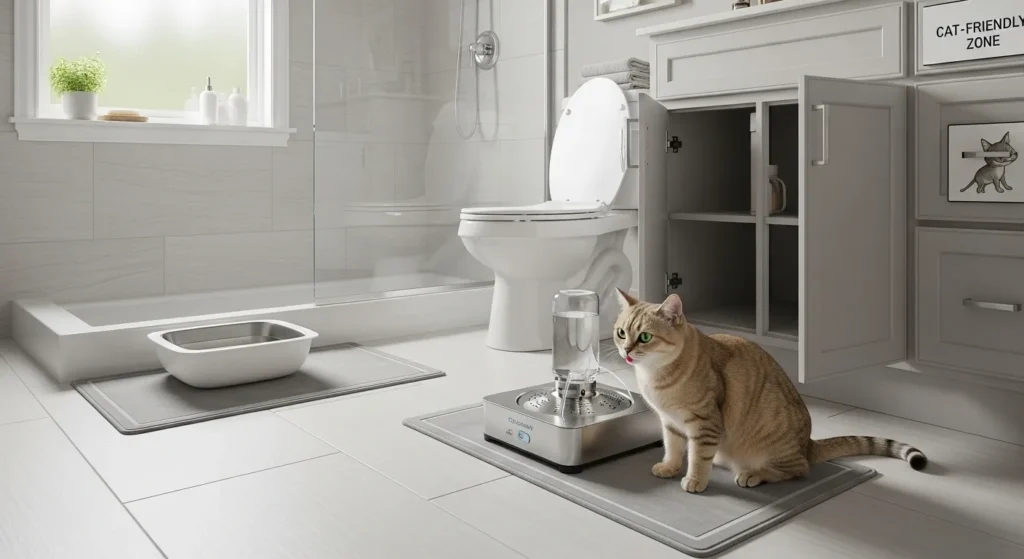
Creating a Cat-Friendly Bathroom Environment
If your cat must share bathroom space, make it comfortable:
Water Bowl Placement
- Keep fresh water available in quiet locations
- Use wide, shallow bowls that do not touch whiskers
- Consider water fountains for cats who prefer moving water
- Clean and refill water bowls daily
Bathroom Safety
- Secure toilet lids to prevent accidental falls
- Provide non-slip mats near water areas
- Keep bathroom doors open so cats do not feel trapped
- Store potentially harmful products out of reach
The Science Behind Cat Grooming
Understanding why cats groom themselves helps explain their water aversion. Cats spend 30-50% of their waking hours grooming because:
Self-Regulation Benefits
- Temperature control: Saliva evaporation provides cooling
- Stress reduction: Grooming releases calming endorphins
- Social bonding: Mutual grooming strengthens relationships
- Health maintenance: Removes parasites and dead skin
Biological Grooming Tools
- Rough tongues: Papillae (tiny hooks) remove dirt and debris
- Flexible spines: Allow cats to reach most body areas
- Saliva properties: Contains enzymes that clean and deodorize
This sophisticated self-grooming system makes external water sources unnecessary for most cats.
Water-Related Health Considerations
While cats avoid water, proper hydration remains crucial for their health:
Hydration Signs to Monitor
- Healthy indicators: Moist gums, clear urine, good skin elasticity
- Dehydration warning signs: Lethargy, dry mouth, concentrated urine
- When to worry: Significant changes in drinking patterns
Many cats do not drink enough water, potentially leading to urinary tract issues. Encourage hydration through:
- Fresh, clean water daily
- Multiple water sources throughout your home
- Water fountains or dripping faucets
- Wet food to increase moisture intake
If you are concerned about your cat’s health or behavior, consider using our Pet Symptom Checker for initial guidance, though always consult your veterinarian for proper diagnosis.
Conclusion
Cats hate water primarily due to evolutionary adaptations, physical discomfort, and behavioral preferences developed over thousands of years. Their desert-dwelling ancestors never needed water for survival beyond drinking, leading to modern cats who find water immersion uncomfortable and unnecessary.
Understanding these natural tendencies helps cat owners respect their pets’ boundaries while ensuring proper care when needed. Most cats live happy, healthy lives without ever needing baths, thanks to their remarkable self-grooming abilities.
Remember that each cat is individual. While most avoid water, some may surprise you with their curiosity or tolerance. The key lies in observing your cat’s specific needs and preferences, providing alternatives when possible, and seeking professional guidance for health-related concerns.
By respecting your cat’s natural instincts while meeting their actual needs, you can maintain a strong, trusting relationship with your feline companion for years to come.
For more helpful information about cat behavior and care, explore our guides on why cats knead, cat grooming techniques, and understanding feline behavior. When in doubt about your pet’s health or behavior, our Pet Symptom Checker can provide initial guidance.