
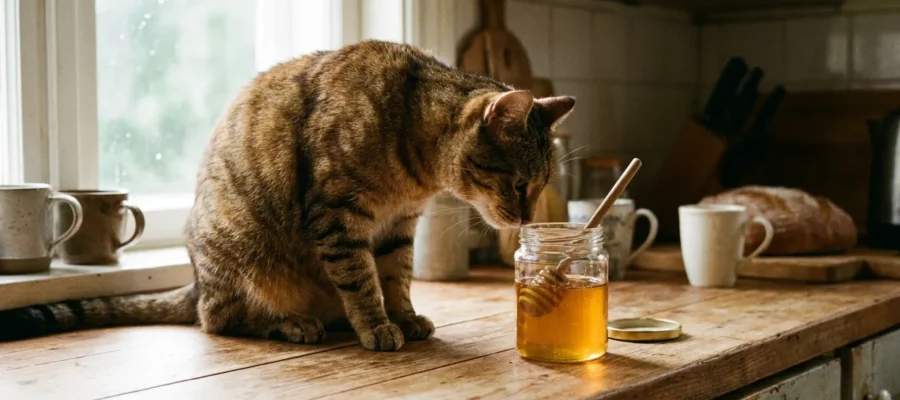
Your cat just licked some honey off the spoon. Or maybe you’ve heard honey can soothe a sore throat and wondered if your cat could benefit too. Either way, you want a straight answer.
Here it is: cats should not eat honey. It isn’t toxic in the way chocolate or xylitol is, but it carries real risks — and zero nutritional benefit for your cat. The gap between “won’t immediately kill them” and “actually safe” is wide, and honey sits firmly on the wrong side.
This guide covers exactly why, what to do if your cat already ate some, and which cats are at the highest risk.
The Short Answer
Honey is not toxic to healthy adult cats in trace amounts. A small accidental lick is unlikely to cause serious harm. But honey should never be fed intentionally or regularly. It offers no nutritional value to cats, is loaded with sugar their digestive systems cannot process, and carries a genuine botulism risk for kittens.
Diabetic cats, kittens, overweight cats, and seniors with weakened immune systems should never have honey — not even a small amount.
Why Honey Doesn’t Belong in a Cat’s Diet
Cats Are Obligate Carnivores
Cats evolved to run entirely on animal protein. Their digestive systems are built to break down meat, not carbohydrates. Honey is roughly 80% sugar — fructose and glucose — with almost no protein and negligible vitamins or minerals. It provides nothing a cat’s body can actually use.
For a healthy adult cat, 1 teaspoon of honey contains around 21 calories. Most cats need only 180–250 calories per day. That single teaspoon represents up to 10% of daily caloric intake from a source with zero nutritional return. Knowing how much your cat actually needs can help you make smarter feeding decisions — the cat calorie calculator is a useful tool for that.
Cats Cannot Taste Sweetness
Here’s something most people don’t know: cats are genetically incapable of detecting sweet flavors. They lack a functional T1R2 taste receptor — the same receptor that gives humans a preference for sweet foods. If your cat shows interest in honey, it’s curiosity or texture, not a craving for sweetness.
This also means there’s no pleasure payoff for the cat. You’d be adding risk with zero reward.
The Real Risks of Feeding Honey to Cats
Sugar Overload and GI Upset
Cats lack sufficient amylase activity in their saliva and intestines to break down sugars efficiently. When a cat consumes honey, undigested sugars move into the gut and ferment, causing bloating, vomiting, and diarrhea. Even a teaspoon can trigger GI distress in a sensitive cat. If you notice your cat throwing up after eating something new, it’s worth checking our guide on why your cat keeps throwing up to rule out other causes.
Weight Gain and Obesity
Excess carbohydrates get stored as fat. Cats don’t burn sugar the way omnivores do. Regular honey exposure — even small amounts — adds up over time and contributes to unhealthy weight gain. Feline obesity increases the risk of diabetes, arthritis, and heart disease, and can shorten a cat’s lifespan by several years.
Blood Sugar Spikes and Diabetes
Honey causes a rapid spike in blood glucose. The feline pancreas then floods insulin to compensate. Repeated exposure can push a healthy cat toward insulin resistance and, eventually, feline diabetes mellitus. For cats already diagnosed with diabetes, even a small amount of honey can trigger a dangerous glycemic crisis. These cats should never have honey under any circumstances.
Dental Damage
Honey is viscous. It sticks to tooth surfaces and creates a sustained sugar environment that feeds oral bacteria. This accelerates plaque and tartar buildup, leading to gingivitis and periodontal disease — conditions that are already common in cats. Unlike a crunchy treat that can partially scrape teeth, honey coats and lingers.
Botulism — Especially Dangerous for Kittens
Raw honey can contain spores of Clostridium botulinum. According to FDA and CDC data, approximately 10% of honey samples test positive for these spores. In adult humans, the digestive system neutralizes them before they can produce toxin. Cats — especially kittens — don’t have that same defense.
Botulism is a neurological condition. The toxin blocks nerve signals to muscles, causing progressive weakness, difficulty swallowing, trouble breathing, and eventually paralysis. There is no specific antidote for feline botulism. Treatment is supportive, and the prognosis is serious if caught late.
Can Kittens Eat Honey?
No. Kittens should never eat honey.
Kittens under 12 months have immature gut flora and underdeveloped immune systems. They cannot neutralize Clostridium botulinum spores the way adult cats might. Botulism risk is real and potentially fatal in young kittens.
This mirrors the rule for human infants — pediatric guidelines recommend no honey for babies under 12 months for exactly the same reason. The same logic applies to cats.
If a kitten has eaten honey, contact your vet immediately — don’t wait for symptoms to appear.
What If My Cat Already Ate Honey?
Stay calm. One small lick is not an emergency for a healthy adult cat. Here’s what to do:
- Check how much was consumed. A quick lick off a spoon is very different from eating a tablespoon.
- Identify the cat’s health status. Kitten, diabetic, or immunocompromised? Call your vet now.
- Monitor for 24 hours. Watch for vomiting, diarrhea, lethargy, muscle weakness, or loss of appetite.
- Offer fresh water. Hydration helps move sugar through their system.
- Don’t induce vomiting at home. This requires veterinary guidance — forcing a cat to vomit without proper technique can cause harm.
- Contact your vet if symptoms appear — or use the pet symptom checker to assess what you’re seeing before you call.
Is Manuka Honey Safer for Cats?
No. Manuka honey is not safer for cats than regular honey.
Manuka honey contains methylglyoxal (MGO), a compound with proven antibacterial effects — but those effects have only been demonstrated in human topical applications and wound care. There is no clinical evidence that manuka honey provides antibacterial or anti-inflammatory benefits when a cat ingests it.
The sugar load is identical to regular honey. The botulism spore risk is the same. Manuka honey is more expensive and no less risky for cats. The reputation it carries in human wellness does not transfer to feline biology.
Topical veterinary use of medical-grade manuka honey on wounds is a separate matter and is done under direct vet supervision — not something to replicate at home.
Raw Honey vs. Pasteurized Honey — Does It Matter for Cats?
For cats, the distinction matters less than people assume. Here’s why:
- Pasteurized honey has lower botulism spore risk because heat treatment reduces spore load — but does not eliminate it entirely.
- Raw honey retains more bioactive compounds, but those compounds offer no proven benefit to cats and carry a higher botulism risk.
- The sugar content is essentially identical in both types.
If a cat is going to be exposed to honey at all, pasteurized is marginally lower risk. But the correct answer for cats is neither — just skip it entirely.
Can Honey Ever Help a Cat Medically?
In one very specific scenario: yes, under direct veterinary instruction.
If a diabetic cat experiences a hypoglycemic episode — a dangerous drop in blood sugar — a vet may recommend rubbing a small amount of honey or corn syrup onto the cat’s gums as a rapid glucose source while getting to the clinic. This is an emergency measure, not a treatment, and it is done under guidance. It does not mean honey is generally safe or therapeutic.
Some sources also mention topical medical-grade honey for wound care in veterinary settings. This is done in clinic, not at home. Do not attempt to treat your cat’s wounds with kitchen honey.
Honey-Flavored Foods Cats Should Avoid
Honey appears in more foods than most people realize. Avoid giving your cat:
- Honey roasted nuts (high sugar, choking hazard, some nuts toxic to cats)
- Honey buns and sweet pastries
- Honey-glazed meats in large amounts (small plain meat is fine — see our guide on whether cats can eat ham)
- Honey-flavored yogurts (added sugars, and many cats are lactose intolerant — here’s what to know about cats and yogurt)
- Cereals like Honey Nut Cheerios
- Energy drinks or protein bars with honey
The general rule: if it has honey added, it has no place in your cat’s diet.
Safe Treat Alternatives to Honey
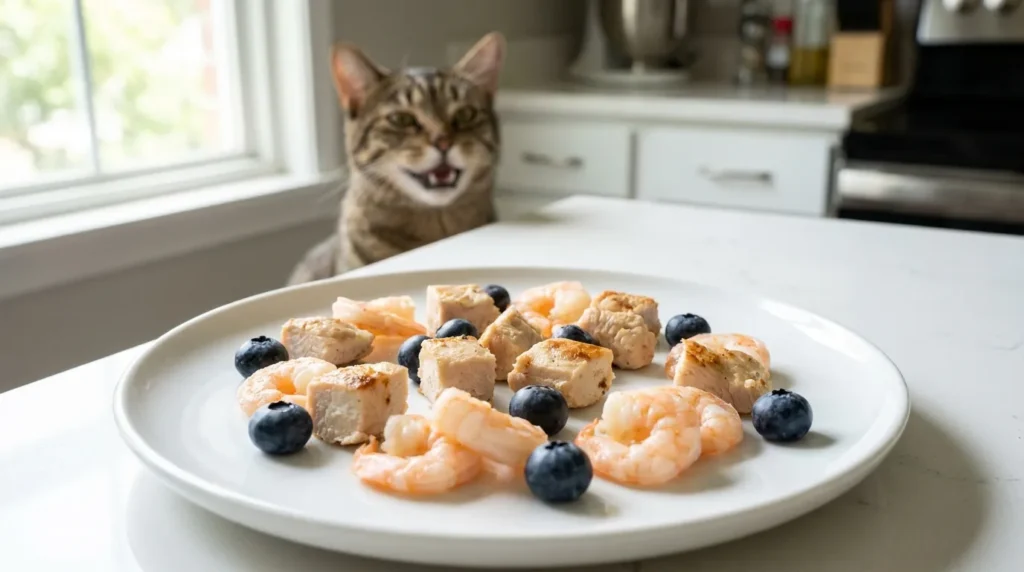
Cats don’t need sweets. Their treat motivation is almost entirely protein-driven. These options are safe, species-appropriate, and genuinely appealing to most cats:
- Small pieces of cooked chicken or turkey — plain, no seasoning. One of the best low-risk treats available. See our full breakdown on whether cats can eat chicken.
- Cooked shrimp — cats love the smell, and shrimp is a lean protein source. Our guide on cats and shrimp covers portion sizes.
- Blueberries — non-toxic, low sugar relative to honey, antioxidant-rich. Occasional and small amounts only. More on cats and blueberries here.
- Plain pumpkin — great for digestive support. See if cats can eat pumpkin and how much is appropriate.
- Commercial cat treats — made specifically for feline nutritional needs, these are always a safer bet than human foods.
If you’re unsure whether a specific food is safe for your cat, the Can Cats Eat tool on our site lets you check quickly before feeding anything new.
For cats that need more structure in their diet, our guide on how much wet food to feed your cat is a solid starting point for getting daily nutrition right.
Final Verdict
Honey is not toxic to healthy adult cats in tiny accidental amounts — but it is not safe, beneficial, or appropriate as a treat or supplement. The risks are real: GI upset, blood sugar instability, dental damage, obesity risk, and botulism in kittens. The benefits for cats are zero.
No vet recommends adding honey to a cat’s diet. The biology simply doesn’t support it. Keep the honey for yourself and reach for something your cat’s body was actually built to enjoy.
When in doubt about any food, talk to your vet — or use the pet food safety checker to get a fast answer before your cat gets into something they shouldn’t.