

The Direct Answer
No. Cats cannot eat oranges safely. Oranges contain three compounds — limonene, linalool, and psoralens — that a cat’s liver cannot properly break down. Even a small amount can trigger vomiting, drooling, and lethargy. There is no safe dose of orange for a cat.
What Makes Oranges Toxic to Cats
Oranges belong to the citrus family. Citrus fruits contain a combination of essential oils and phototoxic plant compounds that are genuinely harmful to cats — not in a “too much is bad” way, but in a “none is safe” way.
The root problem is feline liver metabolism. Cats lack specific enzymes that humans and dogs use to break down certain plant-based compounds. When those compounds enter a cat’s system, the liver can’t clear them efficiently, and toxicity builds.
Limonene — The Primary Threat
Limonene is a monoterpene hydrocarbon. It’s the compound responsible for the sharp, clean scent of citrus peel. In humans it’s used in food flavoring and household cleaners. In cats, it’s a documented liver toxin.
Cats lack adequate glucuronyl transferase enzyme activity — the metabolic pathway that neutralizes limonene. The compound accumulates rather than clears, placing direct strain on the liver.
Linalool and Psoralens
Linalool is a terpene alcohol found in citrus essential oils. It’s toxic to cats even in small amounts. It was previously used in some commercial flea products before its feline toxicity became better understood by veterinary toxicologists.
Psoralens — also called furanocoumarins — are phototoxic compounds concentrated in citrus peel and flesh. These create an additional risk: if psoralen-containing juice or peel oil contacts a cat’s skin and the cat is then exposed to sunlight, it can cause burns and skin irritation without any ingestion at all. This makes orange peel particularly dangerous even as a topical contact.
Every Part of the Orange Is Dangerous
There is no part of an orange a cat can safely eat.
The Flesh
The flesh contains the lowest concentration of toxic oils compared to the peel, but it still contains limonene and linalool. One small bite is enough to cause gastrointestinal upset in most cats. There is no threshold below which orange flesh becomes safe.
The Peel and Zest — Highest Concentration
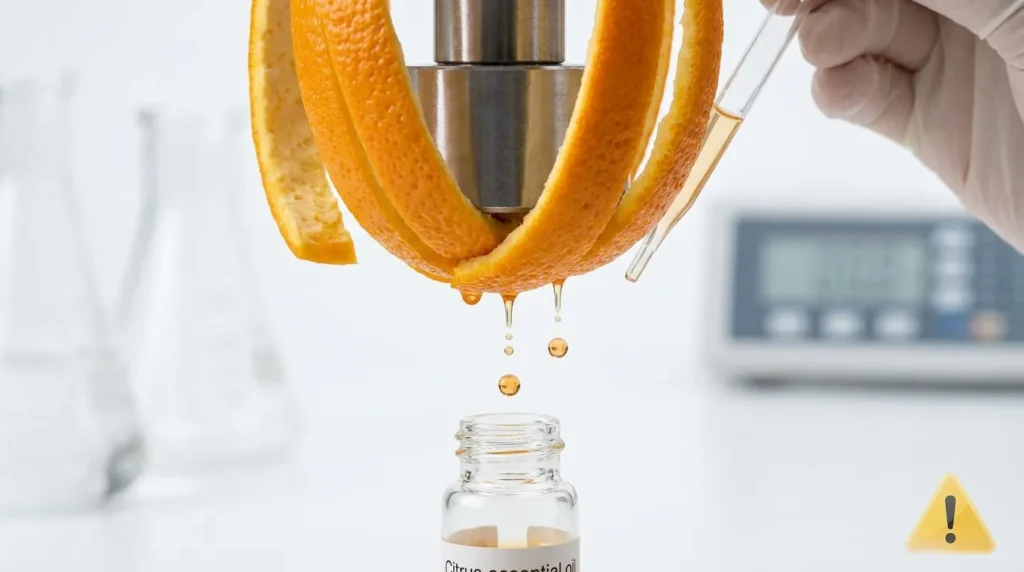
The peel is the most dangerous component. Citrus oil concentration is highest in the outermost layer — the zest. A cat that chews on orange peel or rubs against it gets a concentrated dose of limonene and linalool through both skin contact and potential ingestion. The topical psoralen risk is also highest here.
Seeds
Orange seeds don’t carry the same oil load as the peel, but they’re still unsafe. They contribute no nutritional value and present a minor choking hazard in smaller cats.
Orange Juice and Concentrated Forms
Freshly squeezed orange juice retains significant citrus oil residue. Commercial orange juice is processed to reduce oil content, but still contains trace levels — and still isn’t safe for cats. Concentrated orange juice, citrus syrups, orange extract, and any citrus-derived flavoring product should all be kept away from cats entirely.
Symptoms of Orange Toxicity — What to Watch For
Symptoms typically appear within 30 minutes to 2 hours of ingestion. Onset speed and severity depend on how much was consumed and whether peel was involved.
Gastrointestinal symptoms:
- Vomiting
- Diarrhea
- Excessive drooling
- Refusal to eat
Systemic and neurological symptoms:
- Lethargy or unusual stillness
- Weakness in the hindquarters
- Muscle tremors (larger ingestion amounts)
- Depressed behavior
Skin symptoms (from peel contact):
- Redness or irritation at the contact site
- Photosensitivity — skin burns from sunlight exposure after contact with psoralen-containing juice or peel
If your cat is vomiting repeatedly or showing any neurological signs, do not wait. Treat it as an emergency.
Not sure whether what you’re seeing is toxicity-related? Our pet symptom checker can help you assess symptoms before your vet call.
What to Do If Your Cat Ate an Orange
Step 1: Assess the amount. A cat that licked orange flesh once is in a different situation from one that chewed peel or ate a substantial amount of fruit. Amount and part consumed both affect urgency.
Step 2: Do not induce vomiting at home. Unless a vet explicitly instructs you to, don’t attempt this. Home methods can cause additional harm or distress.
Step 3: Call your vet or a poison hotline immediately.
- ASPCA Animal Poison Control Center: (888) 426-4435 — available 24/7, fee may apply
- Pet Poison Helpline: (855) 764-7661
Step 4: Have this information ready:
- Your cat’s weight
- Which part of the orange was consumed (flesh, peel, seeds, juice)
- Estimated quantity
- Time of ingestion
- Current symptoms, if any
Step 5: Follow vet instructions. Depending on severity, treatment may include activated charcoal to limit further absorption, IV fluid support, or monitoring. Cats showing liver stress symptoms may need bloodwork.

What About Clementines, Mandarins, and Other Citrus?
All citrus fruits share the same toxic compound profile. Smaller size does not mean smaller risk.
Clementines: Toxic to cats. Same limonene and linalool content as oranges.
Mandarins and tangerines: Also toxic. These are citrus hybrids with identical essential oil profiles.
Lemons and limes: Toxic, and their higher citric acid content makes them additionally irritating to the gastrointestinal tract.
Grapefruit: Toxic. Grapefruit contains additional flavonoids that interfere with liver cytochrome P450 enzyme activity — a concern for cats already on medications.
Blood oranges: Still oranges. Still toxic.
There is no variety of citrus fruit that is safe for cats.
Orange-Scented Products Are Also a Risk
This is a hazard most cat care guides skip over entirely.
If oranges are toxic to cats, then products formulated with real citrus oil carry the same risk. Cats can absorb limonene through their paw pads when they walk across treated surfaces, and then ingest it during normal grooming.
Products to watch out for:
- Citrus-based cleaning sprays — many “natural” or eco-friendly formulas use d-limonene as an active ingredient
- Plug-in air fresheners with citrus fragrance oil
- Essential oil diffusers running orange, lemon, or citrus blends
- Flea treatments containing limonene — older product formulations still circulate
Certain essential oils pose real risks to cats that owners often don’t connect to household routines. Citrus oils belong firmly in that category. Check product ingredient lists before using them in rooms your cat frequents, and ensure good ventilation if diffusers are in use.
Why Most Cats Naturally Avoid Citrus
Most cats won’t go near oranges voluntarily. This is largely an evolved scent aversion. The same volatile compounds that make oranges toxic register as intensely aversive through feline olfactory receptors — and cats have roughly 200 million scent receptors compared to a human’s 5 million. To a cat, the smell of an orange is many times more powerful than what you experience.
This strong citrus aversion is actually why orange peel is often recommended as a natural deterrent to keep cats off furniture or out of garden beds. For most cats, the smell alone is sufficient.
The exceptions are young cats still exploring their environment, or cats that associate citrus scent with their owner’s eating habits and investigate out of social curiosity rather than food interest.
Safe Fruits Cats Can Actually Eat
Cats are obligate carnivores — their bodies are built around protein from animal sources, not plant matter. Fruit is not a dietary need. But if you want to occasionally offer a small fruit snack, a few options are genuinely safe. For the full list with portion guidance, see what fruits cats can eat.
Safe in small amounts:
- Blueberries — Antioxidant-rich, low sugar, safe as an occasional treat
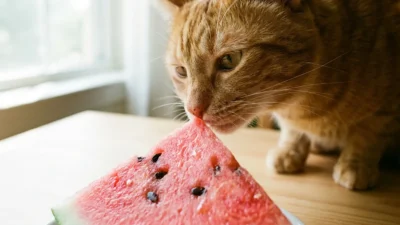
- Watermelon (seedless, no rind) — Hydrating, low-calorie
- Cantaloupe — Safe in small pieces, some cats are drawn to the scent
- Strawberries — Safe occasionally, no toxic compounds
- Apples — Safe if seeds and core are fully removed; seeds contain trace cyanogenic compounds
None of these are nutritionally necessary, and none should make up more than 5–10% of your cat’s diet. They’re treats, not staples.
Unsure whether a specific food is safe? Use our cat food safety checker to verify before offering anything new.

When to Call a Vet Immediately
Call immediately — don’t wait for symptoms — if:
- Your cat chewed or ate any amount of orange peel or zest
- Your cat consumed more than a brief lick of flesh
- Any symptoms are already showing — vomiting, drooling, tremors, lethargy
- You’re uncertain how much was consumed
Monitor closely for 2–4 hours if:
- Your cat had a single brief lick of orange flesh only
- No peel contact occurred
- Your cat is acting completely normal
Even in low-exposure situations, calling your vet to report the incident is always the right call. There is no upside to waiting.
Citrus toxicity in cats is documented by the ASPCA, Pet Poison Helpline, and veterinary toxicology resources. It is not a fringe concern. Any cat that has ingested orange deserves prompt professional assessment.