
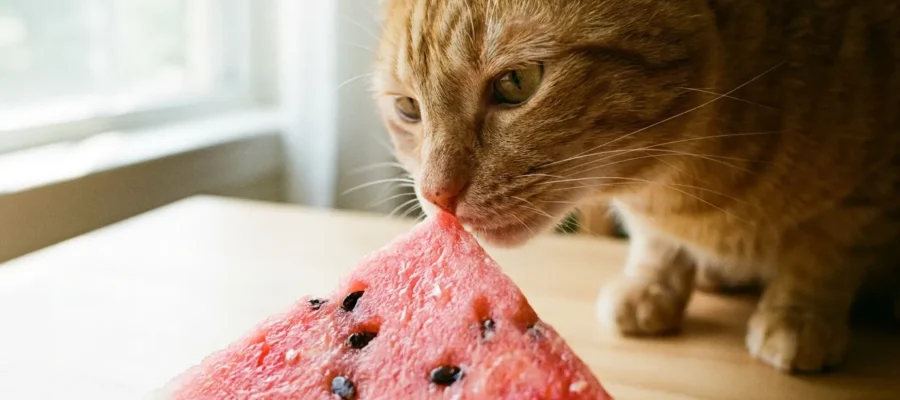
Yes — cats can eat watermelon, but only certain parts. The pink seedless flesh is safe in small amounts. The seeds and rind are not.
Watermelon won’t poison your cat the way grapes or onions do. But safe and beneficial are two different things. Before you hand over a slice, it’s worth knowing exactly what your cat can handle, what to remove, and which cats should skip it entirely.
The Short Answer
Watermelon flesh is safe for cats in small quantities. Seeds are a choking hazard. Rind causes digestive problems. Both should be kept away entirely.
The safe version: seedless pink flesh, cut into small cubes, offered occasionally as a treat — not a dietary staple.
Why Cats Don’t Actually Need Watermelon
Cats are obligate carnivores. Their bodies are built to run on animal protein and fat. They have no nutritional requirement for fruit, plant sugar, or most plant-based vitamins.
There’s a biological reason cats seem indifferent to sweetness. Research from the Monell Chemical Senses Center identified that cats carry a mutation in the tas1r2 gene — one half of the receptor pair responsible for detecting sweetness in mammals. The gene is non-functional. Cats physically cannot taste sweet flavors.
When your cat sniffs a watermelon, any curiosity comes from the moisture, smell, or texture. Not the taste.
That distinction matters. The “treat” you’re offering doesn’t register as pleasurable the way it would for a dog or a human. Understanding what fruits cats can safely eat helps set realistic expectations — most fruits fall into the same category as watermelon: not harmful in moderation, but not necessary either.
What’s Actually in Watermelon
Watermelon is 92% water. The remaining content is mostly natural sugar with modest amounts of vitamins and minerals.
Per 100g of raw watermelon flesh:
- Calories: 30
- Sugar: 6.2g (primarily fructose)
- Vitamin A: 28 mcg
- Vitamin C: 8.1mg
- Potassium: 112mg
- Lycopene: 4.5mg
For humans, that’s a light, hydrating snack with some antioxidant value. For cats, the nutrition profile translates differently. Cats convert Vitamin A from animal sources like liver — not beta-carotene from plants. They synthesize their own Vitamin C. Lycopene has no established role in feline health.
The sugar is the variable worth watching. Cats process fructose less efficiently than humans. Regular exposure to fruit sugar can stress the pancreas over time and contribute to blood sugar issues — especially in cats already predisposed to diabetes or obesity.
One or two cubes now and then? Fine. A regular snack several times a week? The cumulative sugar adds up faster than you’d expect.
Parts of Watermelon That Are Dangerous for Cats
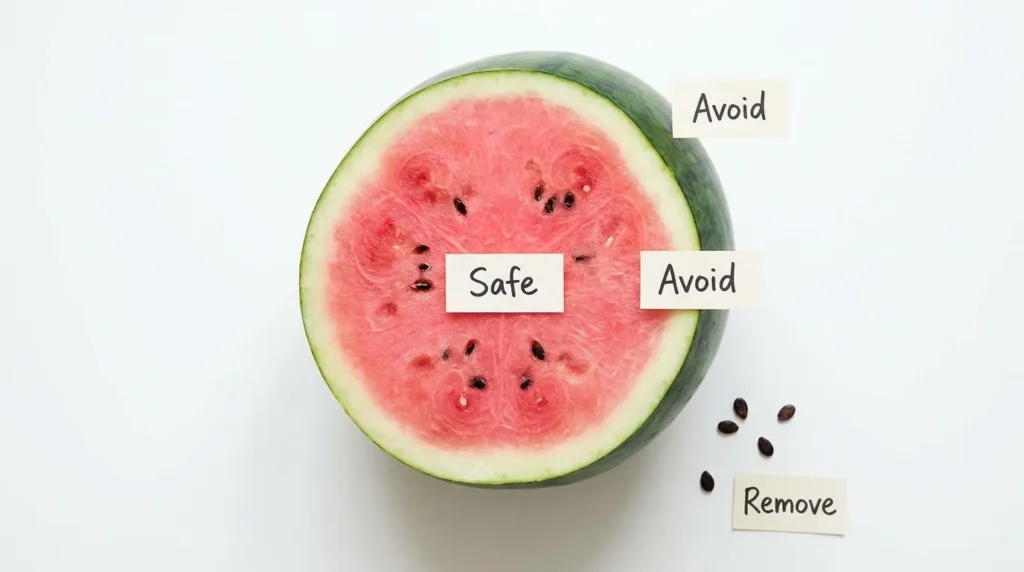
Seeds
Watermelon seeds contain trace amounts of cyanogenic glycosides — compounds that can release cyanide when metabolized. The quantity in a single seed isn’t acutely dangerous, but there’s no reason to expose your cat to any of it. More practically, seeds are a choking hazard, particularly for small or older cats. They can also irritate the intestinal tract or cause a partial blockage if swallowed whole.
Use seedless watermelon whenever possible. If you’re using seeded varieties, remove every visible seed before cutting the flesh into serving pieces.
Rind
The white inner rind and green outer skin are both off-limits. The texture is hard and fibrous — the feline digestive system isn’t designed to break it down efficiently. Eating rind commonly causes vomiting, diarrhea, and stomach cramping. The outer green skin may also carry pesticide or wax residue if not scrubbed thoroughly.
Even if your cat shows interest in chewing the rind, don’t allow it. The texture can be appealing without being safe.
Flavored or Processed Watermelon Products
Watermelon candy, juice, flavored gummies, or anything artificially watermelon-flavored should never be given to cats. These products frequently contain xylitol — a sweetener that is toxic to pets — along with additives, colorings, and concentrated sugar levels far above what raw fruit delivers. Never assume a product is safe because it contains watermelon as an ingredient.
How to Safely Feed Watermelon to Your Cat
Preparation makes the difference between a harmless treat and a digestive problem.
- Start with seedless watermelon — eliminates the seed risk from the beginning.
- Cut the pink flesh completely away from the rind — no white section should remain on any piece.
- Slice into 1-inch cubes or smaller — small pieces are easier to chew and digest.
- Offer 1 to 2 cubes per serving — that’s the right amount for an average adult cat.
- Watch your cat for 12 to 24 hours after the first time — look for vomiting, loose stool, or lethargy.
One practical summer option: freeze small cubes of seedless watermelon flesh for 2 to 3 hours before serving. Some cats respond well to the cool, firm texture on hot days. Keep the pieces small — frozen food moves through the mouth quickly and can be swallowed before it’s properly chewed.
How Much Watermelon Can a Cat Eat?
The standard veterinary guideline is that treats — any treats — should make up less than 10% of a cat’s total daily caloric intake.
An average 10 lb (4.5 kg) adult cat needs roughly 200 to 250 calories per day. Ten percent of that is 20 to 25 treat calories. One cup of watermelon flesh contains about 46 calories. That puts 1 to 2 small cubes (approximately 30g) comfortably within the safe limit.
Frequency matters as much as portion size. Two to three times per week is a reasonable ceiling. Daily fruit treats — even small ones — normalize sugar intake in a way that wasn’t intended for a carnivore’s diet.
If you manage your cat’s diet carefully, the cat calorie calculator can calculate exact daily calorie needs based on weight and activity level, so you know precisely how much treat allowance is left after their main meals. Pairing that with an understanding of how much wet food to feed your cat daily helps you balance everything without guessing.
Cats That Should Not Eat Watermelon
For most healthy adult cats, occasional watermelon flesh is a non-issue. Several categories of cats should avoid it entirely.
Diabetic cats. Fructose elevates blood glucose. Even small amounts can interfere with insulin regulation in cats already managing diabetes. The risk isn’t worth the treat.
Obese cats. Extra sugar — natural or otherwise — works against any weight management plan. If your cat is overweight, fruit treats don’t earn a place in their diet.
Cats with kidney disease. Watermelon contains a meaningful amount of potassium. Cats with impaired kidney function may not clear excess potassium efficiently, which can worsen their condition over time.
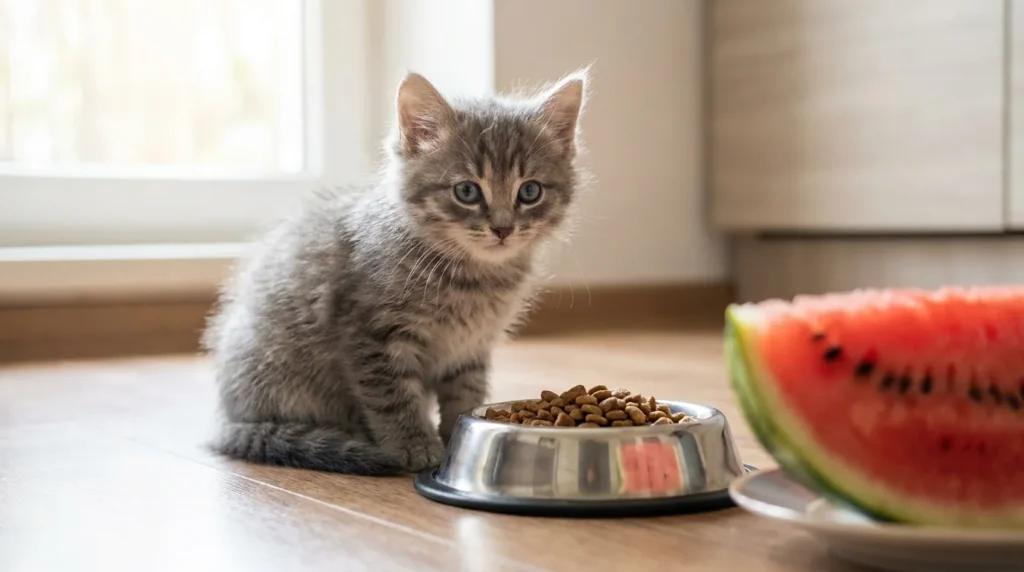
Kittens. Young cats have developing digestive systems that are more reactive to novel foods. High-moisture fruit in particular can trigger diarrhea in kittens whose gut flora is still establishing. Stick to age-appropriate food until they’re fully grown.
If you’re unsure whether a food is appropriate for your cat’s specific health condition, the pet food safety checker lets you verify quickly before offering anything unfamiliar.
Signs Your Cat Had Too Much
If your cat ate more than intended — or managed to chew through some rind — watch for these symptoms:
- Diarrhea — loose or watery stool, usually within a few hours
- Vomiting — most commonly 1 to 4 hours after eating
- Lethargy — unusual stillness or reduced interest in the environment
- Bloating — visible abdominal swelling or signs of discomfort when touched
- Excessive drooling — can signal nausea
Mild stomach upset typically resolves within 24 hours without intervention. If symptoms persist longer, worsen noticeably, or your cat ate seeds in significant quantity — contact your vet. Don’t wait it out if the cat is visibly distressed or stops eating.
FAQ
Can cats eat watermelon seeds? No. Seeds are a choking hazard and contain trace cyanogenic compounds. Always remove them fully or use seedless watermelon.
Can cats eat watermelon rind? No. The rind is fibrous and hard to digest, causing vomiting and diarrhea. The green outer skin may also carry pesticide residue.
Can kittens eat watermelon? It’s best avoided. Kittens have sensitive digestive systems and no nutritional need for fruit at any stage of development.
Do cats actually like watermelon? Some are curious about it, but they can’t taste sweetness due to a non-functional taste receptor gene. Any interest comes from smell or texture.
Is watermelon toxic to cats? The flesh is not toxic. Seeds carry trace harmful compounds, and rind causes digestive upset — but neither is acutely dangerous in small amounts. Both should still be avoided.
Can cats eat seedless watermelon? Yes. Seedless watermelon flesh is the safest option. Still cut away all rind before serving.
How often can cats eat watermelon? Maximum two to three times per week. One to two small cubes per serving. Never as a daily treat.
For a broader look at other foods — from safe fruits to unexpected hazards — the can cats eat guide covers dozens of common foods with clear safety information.
The Bottom Line
Watermelon flesh won’t hurt a healthy adult cat in small amounts. It’s not toxic, not a choking hazard once properly prepared, and some cats are genuinely curious about the texture.
But it isn’t a health food for cats. They can’t taste the sweetness, they don’t benefit from fruit sugar, and no meaningful nutrition transfers from watermelon to a carnivore’s body. The same logic applies to strawberries and similar fruits — safe occasionally, never necessary.
Keep portions small. Always use seedless flesh. Skip it entirely if your cat has diabetes, kidney disease, or is overweight.
When you want to offer a genuine treat your cat will actually benefit from — a small piece of plain cooked chicken is a better choice every time.